
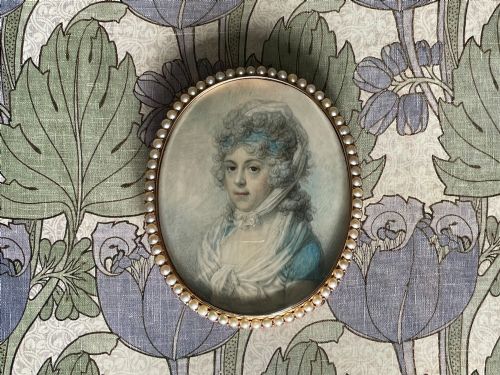
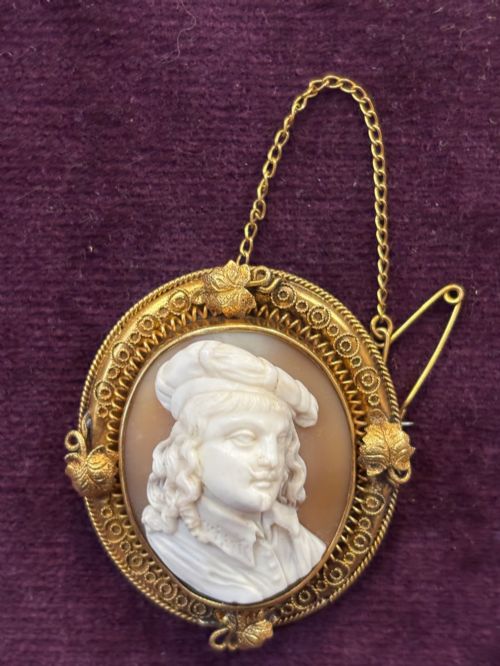


Gold Frame Brooch
A gold frame brooch combines fine metalwork with carved shell, hardstone, or miniature painting, offering a wearable piece of history.
Gold Frame Brooch
When you search for a gold frame brooch, you encounter miniature paintings and carved cameos enclosed in precious metal settings. These jewels span the Georgian, Victorian, and Edwardian periods, showcasing classical motifs and portraits.
The most common examples on this page are shell and hardstone cameo brooches set in nine-carat, fifteen-carat, or eighteen-carat gold mounts. Portrait miniatures painted on glass or ivory also appear, housed in ornate or simple frames from the eighteenth and nineteenth centuries.
Many items serve dual purposes, functioning as both pendants and brooches. The craftsmanship reflects the prevailing neoclassical and revivalist styles of their respective eras.
How they were made
Makers shaped gold into frames using casting, chasing, and wirework techniques to securely mount the central medium. Lower carat gold and pinchbeck appear alongside high-purity yellow gold mounts.
Carvers worked on layered seashells or hardstones to reveal contrasting relief images. Portrait miniatures used delicate watercolour pigments on surfaces protected by glass.
Listings feature Victorian and Georgian eras alongside materials like shell, gold, glass, and diamonds.
What varies in quality
The weight, purity, and decorative complexity of the gold frame establish the overall standard of the piece. Substantial mounts with intricate ornate work elevate the status of the jewellery.
Richard Cosway·Christian Friedrich Zincke·R. Pernice
The Gold Frame Brooch Glossary
- Cameo
- A method of carving an object such as a carved shell or stone in relief. This technique creates a raised design that contrasts in colour with the background layer.
- Hardstone
- A gemstone of significant mineral hardness used for detailed carving. These stones offer lasting durability compared to shell.
- Pinchbeck
- An alloy of copper and zinc developed to resemble gold. It provides a warm metallic appearance without the expense of precious metal.
- Neoclassical
- An artistic style drawing inspiration from classical antiquity. This aesthetic heavily influences the portrait subjects and mythological scenes depicted.
- Portrait Miniature
- A small, highly detailed painting. These works capture likenesses using watercolour on delicate surfaces.
Gold Frame Brooch: Frequently Asked Questions
How do I wear a gold frame brooch?
These pieces pin securely to heavy fabrics like wool coats, scarves, or tailored jackets. Ensure the fastening pin engages properly with the safety clasp before wearing.
Many heavier examples feature hidden loops that allow the piece to hang from a chain as a pendant as well as fastening to clothing.
How do I clean a shell cameo brooch?
Use a soft, dry cloth to gently wipe away dust from the carved surface and the gold frame. Avoid harsh chemical cleaners and ultrasonic baths, which damage delicate shell and painted details.
Keep moisture away from the reverse side where portrait miniatures or paper backing might sit.
What periods do these brooches come from?
The inventory spans the eighteenth, nineteenth, and early twentieth centuries. Georgian and Victorian examples dominate the selection.
Edwardian pieces also appear, reflecting changing jewellery aesthetics up to the First World War.
Are these brooches made of solid gold?
The frames utilise various gold purities, including nine-carat, fifteen-carat, eighteen-carat, and twenty-carat gold. Some historical pieces use pinchbeck or gilt metal instead of solid precious metal.
Each listing specifies the metal composition and mount characteristics for the individual item.