


Carved Shell Pin
A carved shell pin is a delicate piece of portraiture worn on the lapel, prized for its miniature relief sculpture carved straight into natural layers.
Carved Shell Pin
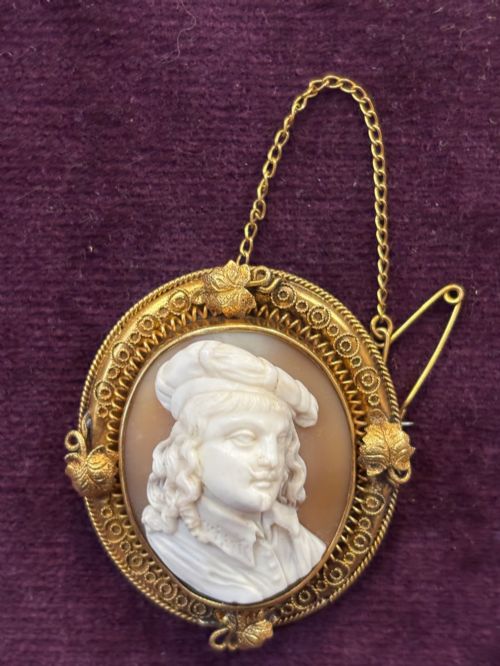
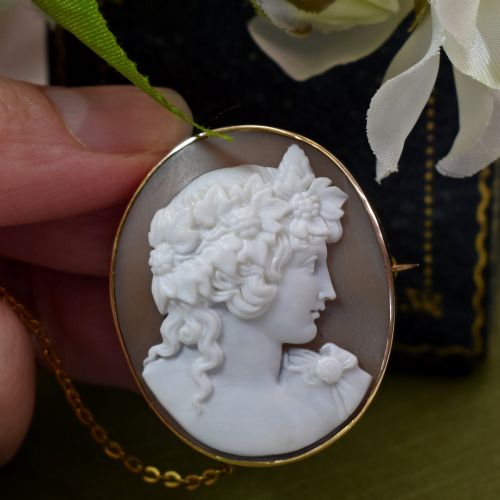
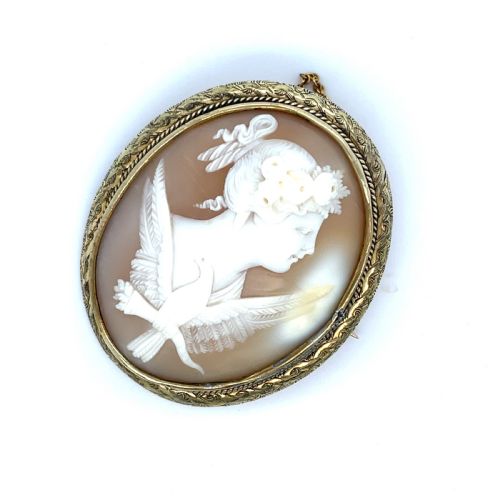
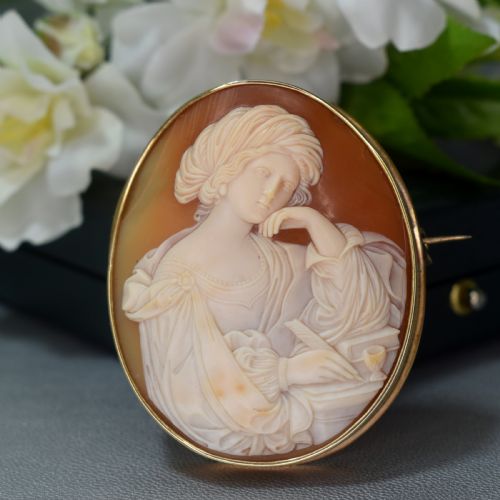
A carved shell pin brings together portraiture and personal adornment, taking the form of a brooch or pin fastened with a simple metal clasp. When searching for a carved shell pin, collectors encounter pieces primarily originating from the Victorian and Georgian periods, alongside Edwardian examples.
The subjects depicted on these pieces draw heavily from classical mythology and antiquity, featuring figures such as Aphrodite, Aurora, the Goddess Flora, and Psyche with Cupid. Italian workshops produced many of these miniature reliefs, often depicting classical deities or sibyls carved with notable depth.
What varies in quality
The metal frame provides another measure of standard, distinguishing between solid high-carat gold or silver mounts and base metal alloys like pinchbeck. Heavier, ornately worked gold settings and matched suites indicate higher workshop ambition compared to standard production pins.
The documented periods represented in these items stretch from the Georgian era through the Victorian age and into the Edwardian years.
R.Pernice
The Carved Shell Pin Glossary
- Cameo
- A method of carving an object such as a engraved gem or shell where a design is raised in relief above a contrasting background. This technique exploits the natural colour bands found within specific shell varieties.
- Pinchbeck
- An alloy of copper and zinc invented in the eighteenth century to imitate gold. It provides a warm yellow metallic finish frequently utilised for period jewellery frames.
- Filigree
- Delicate jewellery ornamentation formed from fine twisted gold or silver threads soldered together in open patterns. This wirework often decorates the edges of Victorian brooch frames.
- Grand Tour
- A cultural journey undertaken by wealthy young Europeans during the eighteenth and nineteenth centuries to view classical antiquities. Travellers frequently acquired carved Italian shell cameos as souvenirs of this journey.
- Bezel
- A collar of metal pushed or hammered over the sloping edge of a carved shell to secure it firmly within its frame. It forms a neat, protective border around the perimeter of the cameo.
Carved Shell Pin: Frequently Asked Questions
How do I wear a shell cameo pin?
These pieces pin securely to heavy fabrics such as woollen lapels, shawls, or thick winter coats where the weight of the gold frame is properly supported.
Ensure the safety catch or C-clasp is fully engaged before wearing to prevent loss during movement.
How do I clean an antique shell pin?
Dust the carved surface gently with a soft, dry artist's brush to remove particles settled within the relief recesses.
Avoid soaking shell jewellery in water or chemical cleaning solutions, as moisture can weaken the organic material and loosen the foil or backing.
How can I tell a Victorian pin from a Georgian one?
Georgian examples typically feature earlier neoclassical subject matter and simpler, flatter mounting styles that reflect eighteenth-century tastes.
Victorian pieces often display deeper relief carving, heavier ornate gold frames, and more elaborate depictions of mythological figures.
What shell materials were used for these brooches?
Carvers selected specific marine shells with contrasting colour layers, such as the West Indian helmet shell, which yields a creamy white upper stratum over a dark sardonyx ground.
These natural variations meant no two carved portraits shared the exact same background hue or translucency.