

Antique Entry Seat
An antique entry seat welcomes visitors with sturdy timber and practical storage, offering a traditional focal point for the hallway.
Antique Entry Seat
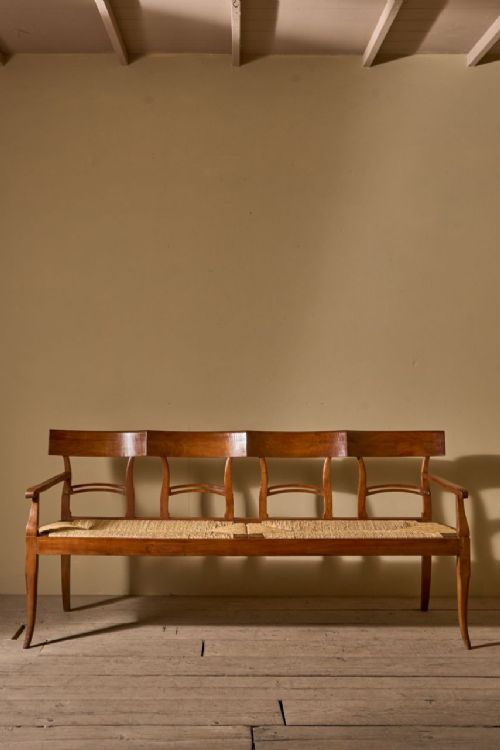
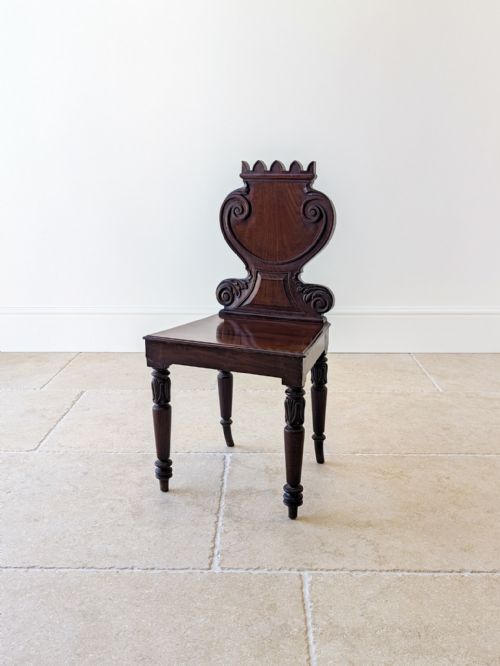
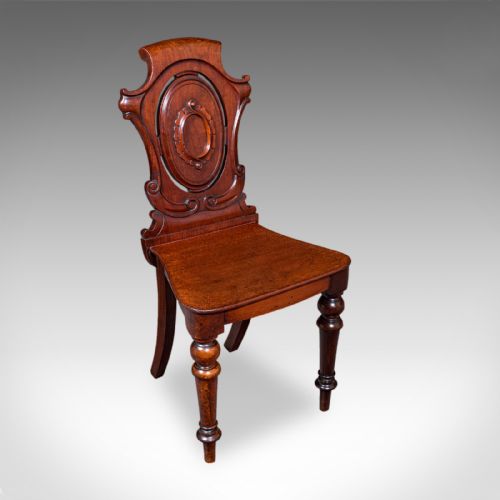
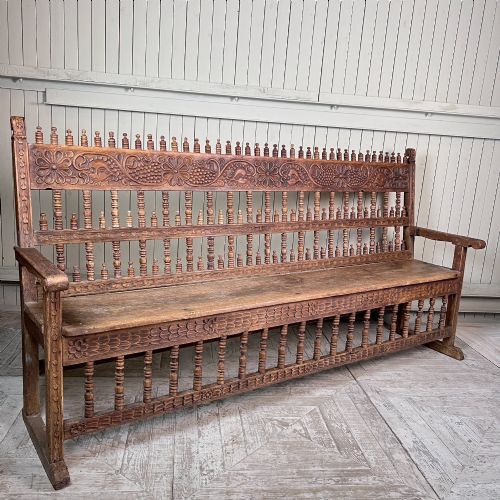
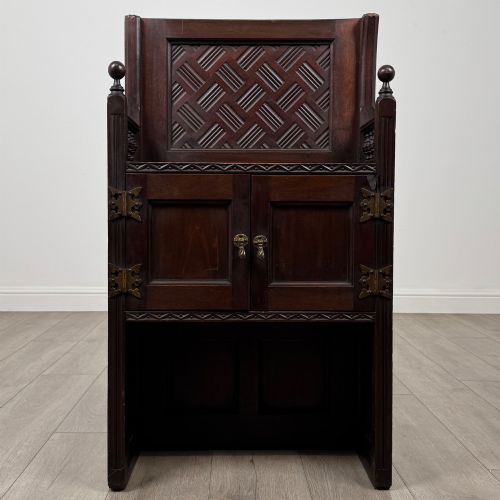
When you search for an antique entry seat, you encounter a practical hallway furnishing designed for utility near the door, encompassing bench forms, settles, and dedicated hall chairs. These pieces originate across diverse historical periods, including Georgian, Regency, Victorian, and Edwardian eras.
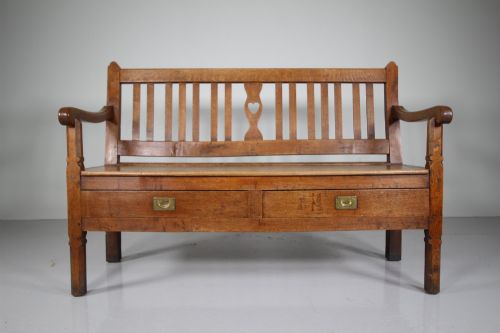
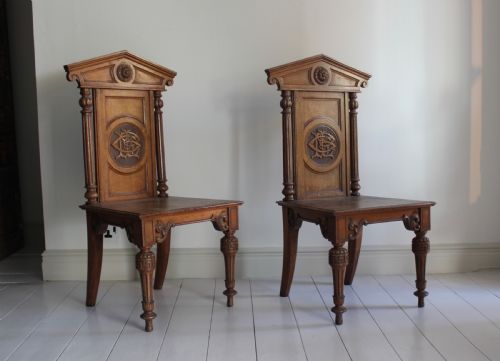
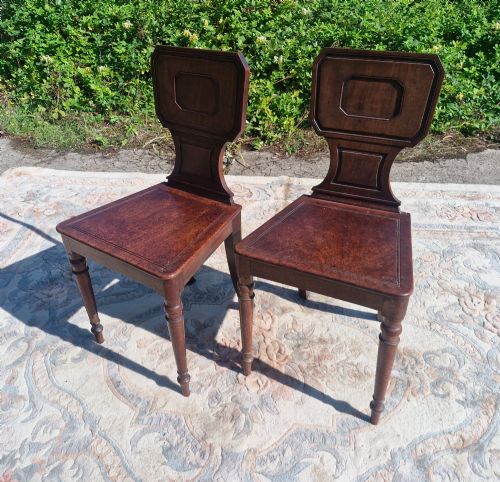
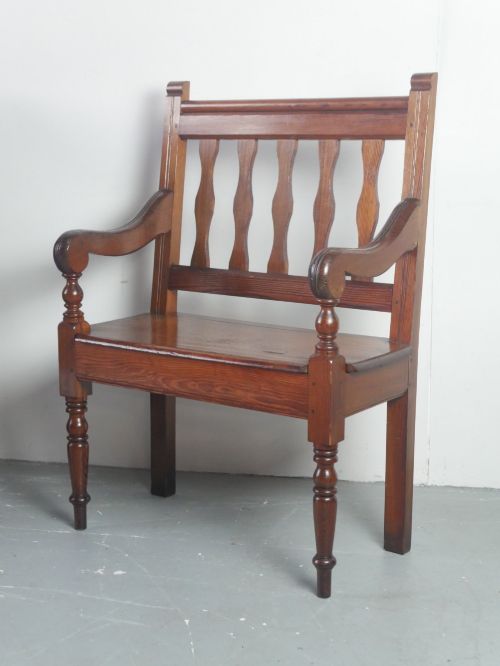
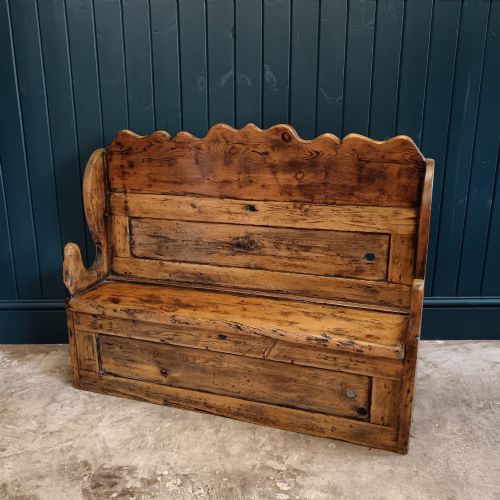
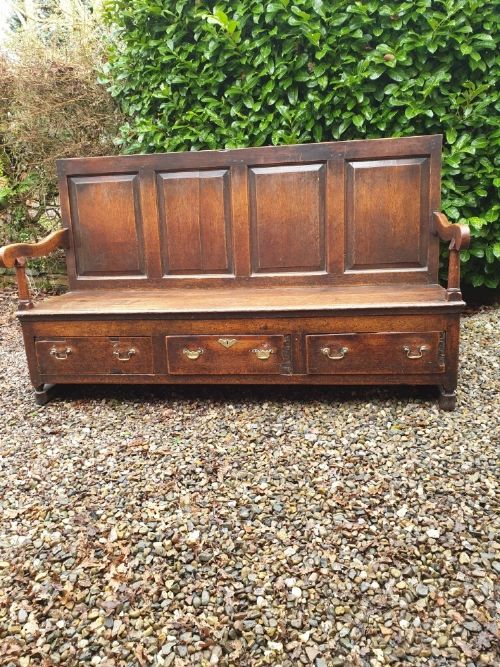
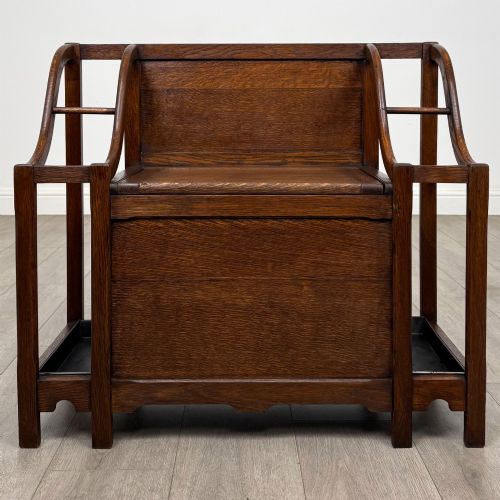
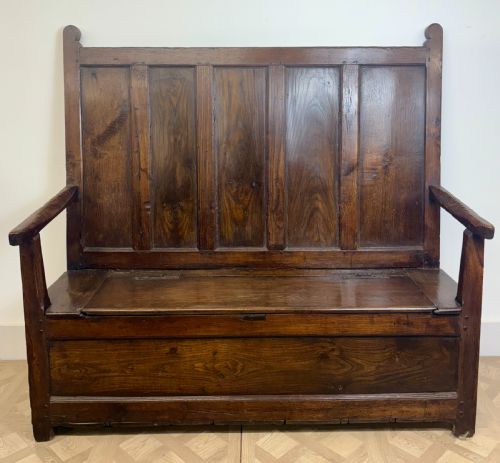
The most common versions on this page are timber hall benches and wooden settles, often constructed with lift-up seats or box compartments. Buyers also frequently find individual hall chairs and paired seating arrangements originating from English, Welsh, Scottish, Irish, and Hungarian country houses.
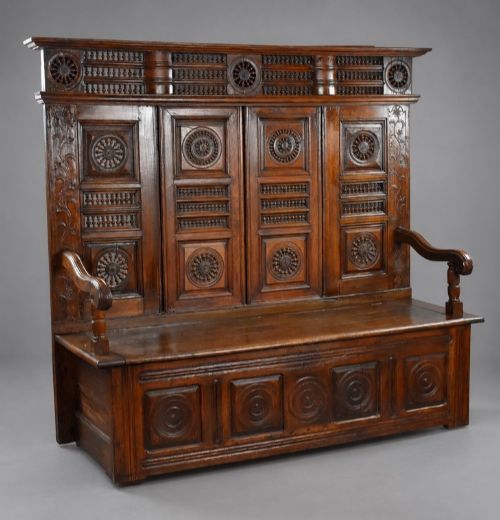
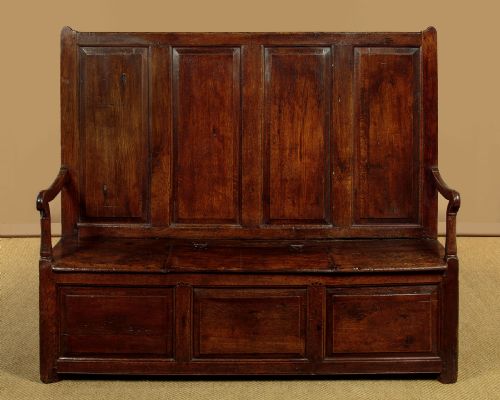
Regional variations span from 18th-century Welsh oak box settles to late 19th-century Victorian pitch pine pews and panelled oak seats. These functional items served households for storing outerwear and sitting down to remove muddy boots.
Judging Timber and Joinery
Quality rests upon the selection of timber and the integrity of the original construction, distinguishing sturdy structural integrity from later alterations or replaced elements. Superior examples display dense grain patterns in figured mahogany or quarter-sawn oak, coupled with crisp hand carving on panelled backs.
The degree of wear on seating surfaces and footings indicates the honesty of the piece, where original hinges on box settles and untouched surface patinas command greater appreciation. Lesser quality often involves replaced timber panels, excessive structural rebuilding, or mismatched components within paired chairs.
Listings feature multiple periods ranging from 18th-century Georgian pieces to Edwardian items, constructed primarily in oak, mahogany, and pine.
The Antique Entry Seat Glossary
- Settle
- A wooden bench with high back, solid arms, and often a hinged box seat compartment underneath for storage. This form kept draughts away from the user in cold hallways.
- Hall Chair
- A rigid wooden seat, usually without upholstery, designed for occasional use in an entrance hall. These often display carved family crests or shield backs.
- Box Settle
- A bench featuring an enclosed storage box beneath the seat base accessed by lifting the lid. It provided practical containment for boots and household linens.
- Pitch Pine
- A durable resinous softwood utilised extensively for Victorian pews and heavy hallway benches. Its distinct grain accepts waxing well.
- Sgabello
- A Renaissance-style chair type featuring trestle supports and an octagonal seat, seen in early oak examples. These serve primarily as decorative side seating.
Antique Entry Seat: Frequently Asked Questions
How were antique entry seats used?
Households placed these sturdy wooden benches and settles near the front door for sitting while changing footwear or waiting to be received. The enclosed box compartments stored outer garments, rugs, and everyday utility items.
In larger country houses, formal hall chairs lined the corridors for visiting guests and servants alike. Their unyielding wooden construction discouraged lounging and maintained formal posture.
What woods appear most often?
Oak and mahogany dominate the inventory, appearing across Georgian, Victorian, and Edwardian periods in various regional workshops. Pine, elm, and ash also feature prominently in country house seating and vernacular settles.
Selected pieces incorporate secondary timbers or display painted surfaces, particularly Hungarian and Welsh vernacular examples. Pitch pine emerges frequently in later church pews and institutional hall benches.
How do I date an entry seat?
Stylistic clues such as carved linenfold panels, pegged joinery, and heavy proportions point towards 18th-century Georgian and earlier eras. Later Victorian and Edwardian pieces incorporate machine assistance, revival motifs, and lighter structural elements.
Examining the tool marks, timber shrinkage, and hinge types reveals the manufacturing era. Patina accumulated around the seat edges and armrests confirms age through genuine use.
Will a box settle fit my hallway?
Measuring both the floor clearance and the depth required for the lid to open upwards is essential before positioning a box settle. Many historical hall benches offer narrow profiles specifically scaled for tight corridors and entrance spaces.
Consider the height of the backrest in relation to coat racks or windows situated nearby. Slim hallway benches and individual hall chairs provide alternatives where deep seating proves impractical.