

Antique Entry Bench Seating
These antique entry bench seating pieces offer sturdy hallway utility and period character, bringing practical timber seating to corridors and boot rooms.
Antique Entry Bench Seating
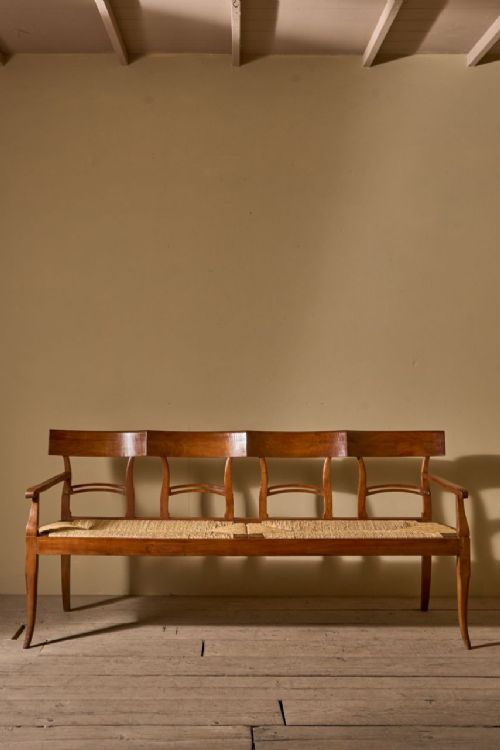
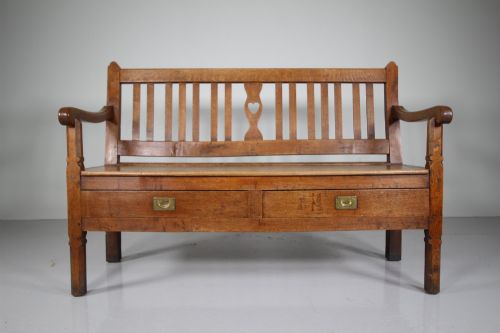
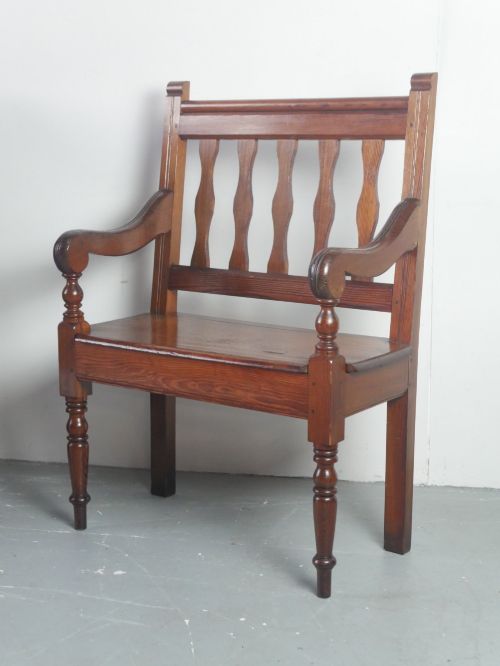
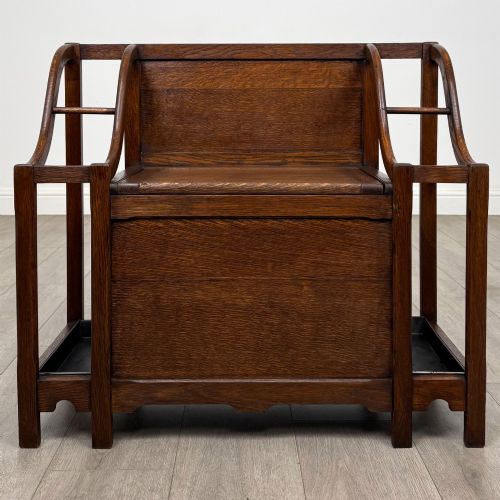
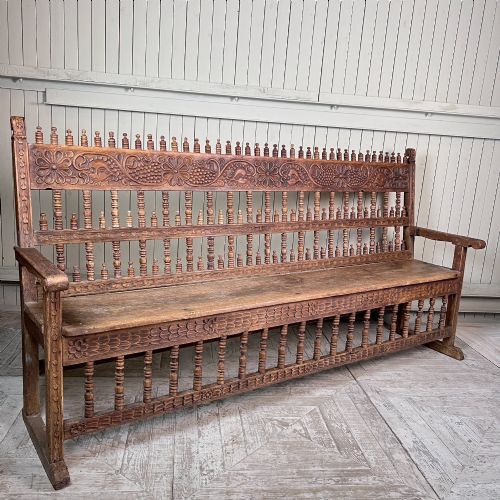
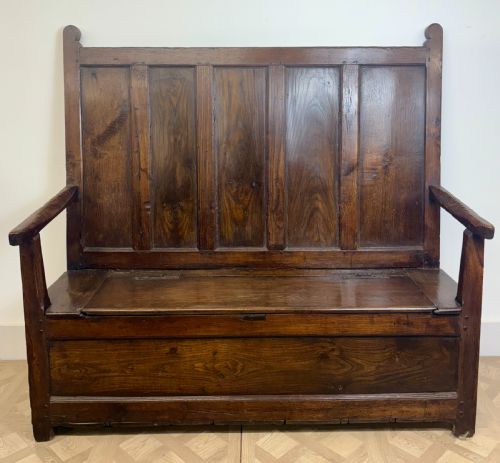
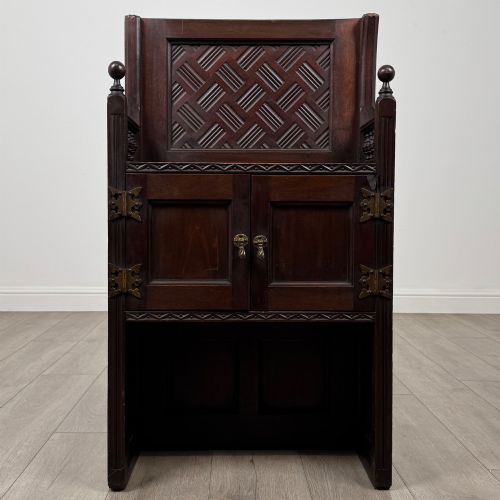
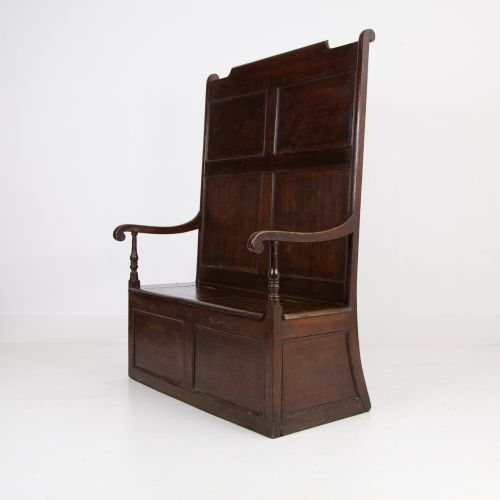
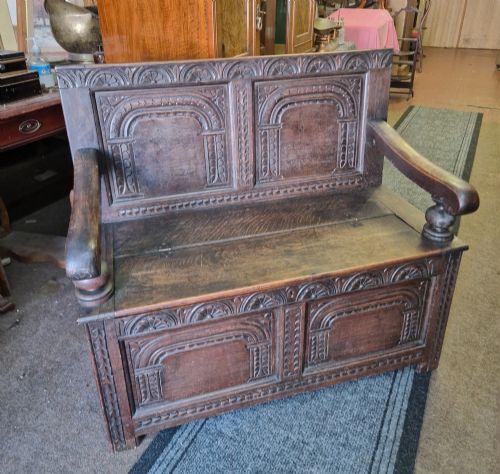
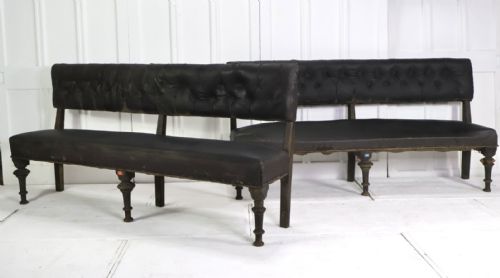
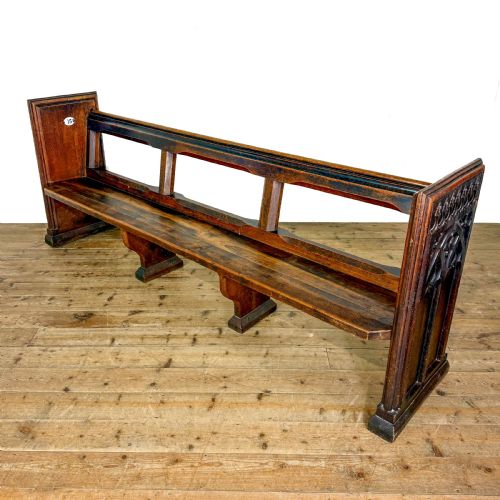
Antique entry bench seating encompasses heavy timber settles, hall benches, window seats, and monks benches spanning from the eighteenth century through to the early twentieth century. You encounter regional box settles, panelled church pews, and painted pine hall seats originating from British, Irish, and continental workshops.
The nineteenth century and Victorian eras supply a large proportion of these sturdy hall seats, frequently executed in carved oak or painted pine with lift-up lids and high backs. Georgian country pieces and earlier eighteenth-century examples appear alongside Edwardian golden oak designs and Arts and Crafts movements.
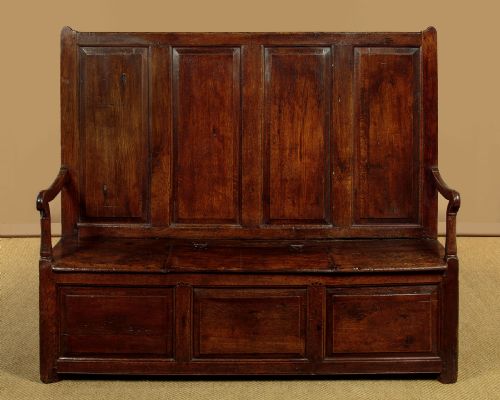
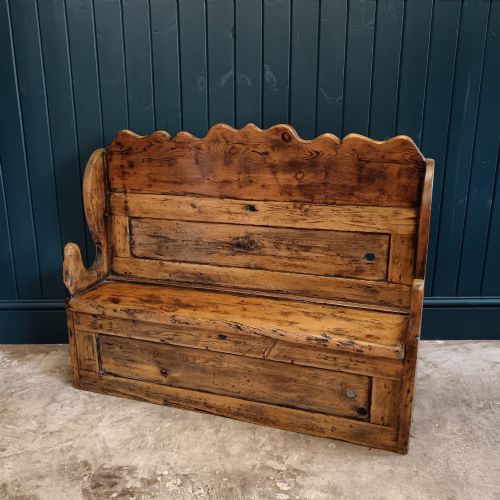
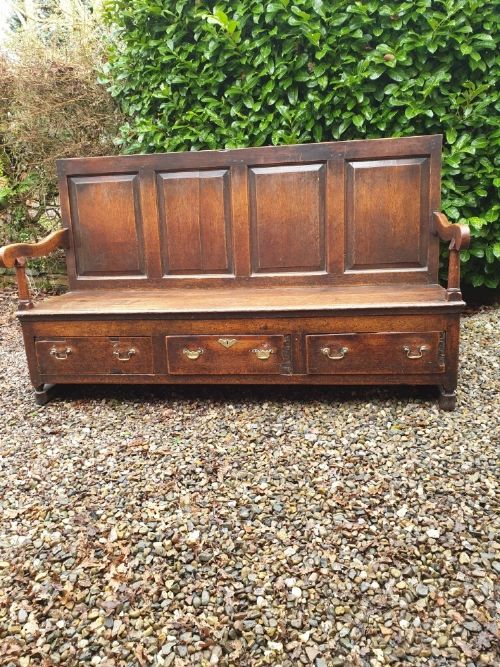
Forms vary from slim hallway benches and tavern benches to substantial three and four-seater box settles designed to block draughts in traditional entrances. Buyers select these functional seats to anchor a hallway while providing concealed storage beneath hinged or panelled lids.
Materials and construction
Carpenters relied principally on native timbers such as oak, pine, elm, and ash, building robust framework joints designed to withstand heavy daily use in busy entranceways. Box settles and panelled benches utilise thick solid boards assembled with pegged mortise and tenon joinery.
Many pine and hardwood examples retain historic or original painted finishes in grey, cream, green, or blue, whilst other pieces display waxed surfaces that highlight the natural grain of cherrywood, walnut, and mahogany. Secondary materials include rush for seating, iron hardware, and brass fixtures.
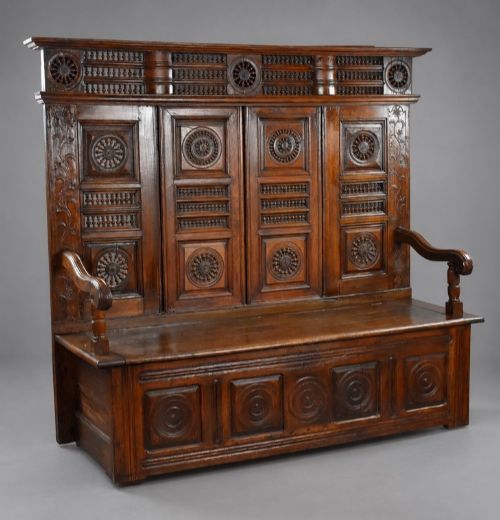
Upholstered variants incorporate supportive fabrics such as linen over sturdy wooden frames, whilst specialised church pews and window seats showcase detailed hand-carved panels and linenfold motifs typical of Gothic Revival and Jacobean styles.
Evaluating the pieces
Quality rests upon the integrity of the timber framing and the honesty of the surfaces, distinguishing honest country furniture from heavily altered or later constructed items. Original painted finishes and genuine patination carry significant weight among collectors who value untouched domestic history.
The sophistication of the joinery and carving separates ordinary utilitarian seating from superior country house pieces, particularly in panelled backs and shaped armrests. Substantial thickness in the seat boards and original iron hinges or box bases indicate superior provincial craftsmanship.
Shapland and Petter·Liberty
The Antique Entry Bench Seating Glossary
- Settle
- A wooden bench with a high back, solid arms, and often a enclosed box base beneath the seat. This form protected inhabitants from cold draughts in historical hallways.
- Monks bench
- A convertible piece of furniture featuring a hinged top that folds down to form a table surface or serves as a backrest when upright. These items save space in compact rooms.
- Box settle
- A heavy wooden bench incorporating a lidded storage compartment directly beneath the seat squab. It provided practical containment for blankets and cloaks.
- Pew
- A long wooden bench originally manufactured for ecclesiastical settings but frequently adapted for domestic hallways and country houses. They display linear timber construction and simple backrests.
- Hall bench
- A narrow seating option designed specifically for entryways, corridors, and vestibules. They offer a place to sit when removing footwear without blocking narrow thoroughfares.
Antique Entry Bench Seating: Frequently Asked Questions
What is an antique settle bench?
A settle bench is a traditional wooden seat featuring a high back and solid armrests designed to block cold air in historic entryways. Many examples include integrated box storage beneath the hinged seat.
These pieces served as practical seating and storage in country houses, farmhouses, and halls before modern hallway furniture became common.
How do I use a hall bench today?
Antique entry bench seating provides a functional focal point in modern hallways, boot rooms, and large corridors. They offer a convenient spot to sit while putting on shoes.
Models with box storage or lift-up lids also conceal clutter such as bags, scarves, and seasonal accessories out of sight.
Are these benches comfortable to sit on?
Most antique wooden settles and hall benches feature solid timber seats designed for utilitarian durability rather than deep lounging. Cushions or pads are frequently added for extra comfort.
Certain variations include upholstered pads or recovered fabric surfaces over sprung or padded bases for a softer seat.
How do I date an old wooden bench?
Dating relies on examining construction methods, tool marks, timber species, and stylistic details such as panel carving or painted finishes. Georgian and eighteenth-century examples often display pegged joinery and hand-planed surfaces.
Later Victorian and Edwardian iterations incorporate machine-sawn timber, revival styles, and different hardware that distinguish them from earlier country pieces.