


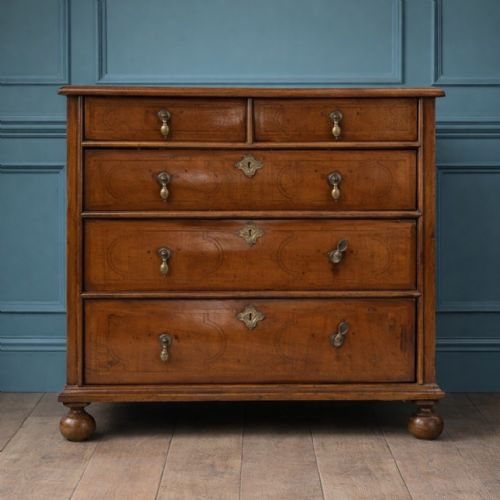


Antique English Walnut Dresser
An antique English walnut dresser brings rich grain and deep history to a room, offering practical storage with undeniable character.
Antique English Walnut Dresser
When you search for an antique English walnut dresser, you encounter case furniture spanning multiple centuries, most frequently appearing as chests of drawers, chests on stands, and tallboys rather than traditional sideboards.
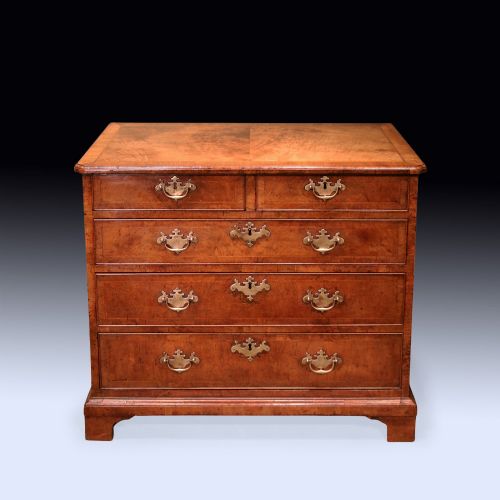
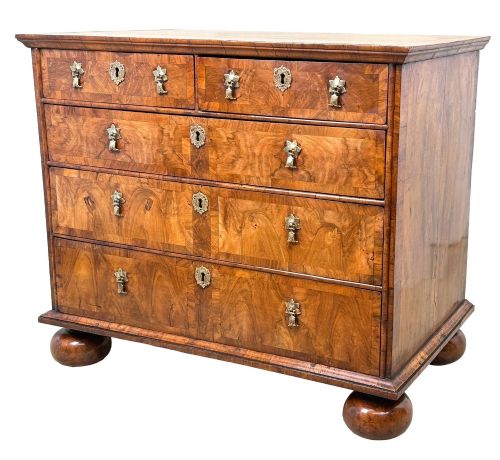
The pieces on offer stretch from the 17th century through the Georgian and Victorian eras, with William and Mary, Queen Anne, and George I examples showing the height of early cabinet-making.
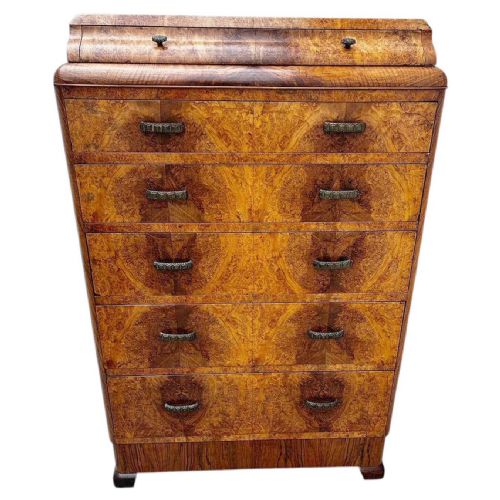
Later 20th-century Art Deco interpretations also emerge, bringing figured burr walnut surfaces into the scope of this search.
How they were made
Cabinet-makers relied on walnut, burr walnut, and olivewood veneers applied to foundational timbers like oak, complemented by fruitwood and boxwood details.
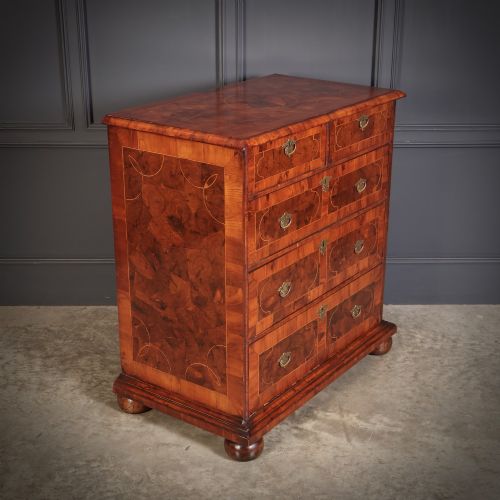
Advanced techniques such as oyster veneering and complex floral marquetry created intricate patterns across the drawer fronts and top surfaces.
Metal hardware, including brass handles and escutcheons, completed the construction alongside feather-banded borders.
Listings span from the 17th century through the Georgian and Victorian eras, concluding with 1930s Art Deco pieces.
What varies in quality
Quality rests upon the selection and matching of the timber veneers, where symmetrical burr walnut or crisp oyster cutting distinguishes the finest examples from plain surfaces.
The precision of the marquetry inlay and the subtlety of feather-banding reveal the skill of the original workshop.
The integrity of the construction, such as whether a chest retains its original stand or has been adapted over time, defines the standing of a piece.
The Antique English Walnut Dresser Glossary
- Oyster veneering
- Cutting small branches of walnut or olive diagonally to produce circular patterns resembling oyster shells. This technique flourished during the late 17th century.
- Marquetry
- Inlaying various woods to form decorative floral or geometric patterns across the surface. Artisans utilised contrasting tones like boxwood and fruitwood for depth.
- Feather-banding
- Applying narrow strips of veneer in a herringbone pattern around the edges of drawer fronts. This detail frames the primary grain.
- Tallboy
- A chest of drawers stacked vertically, often comprising a chest on a chest or a chest on a stand. These pieces maximised storage in smaller spaces.
- Burr walnut
- Timber taken from the abnormal growths of a walnut tree, yielding swirling and highly figured grain patterns. Cabinet-makers prized this for statement panels.
Antique English Walnut Dresser: Frequently Asked Questions
How do I identify a William and Mary walnut chest?
William and Mary chests typically feature geometric oyster veneers, floral marquetry, and stand on elevated legs connected by stretchers.
They date from the late 17th century and often utilise walnut combined with olivewood and fruitwood.
What is the difference between a chest on stand and a tallboy?
A chest on stand places a drawer section upon a separate framed base with legs, common in the late 17th and early 18th centuries.
A tallboy generally refers to a taller configuration of stacked drawer sections or a wardrobe-style chest from later periods.
How should I care for antique walnut furniture?
Keep walnut furniture away from direct sunlight and strong heat sources to prevent the wood veneers from drying and cracking.
Apply a traditional wax polish occasionally and buff gently with a soft cloth to maintain the natural sheen.
Are Art Deco walnut chests considered antiques?
Art Deco walnut chests from the 1930s represent 20th-century design rather than traditional antique periods like the Georgian or 17th century.
They showcase high-quality burr walnut surfaces and clean lines distinct from earlier marquetry work.