



Antique English Pastoral Scene
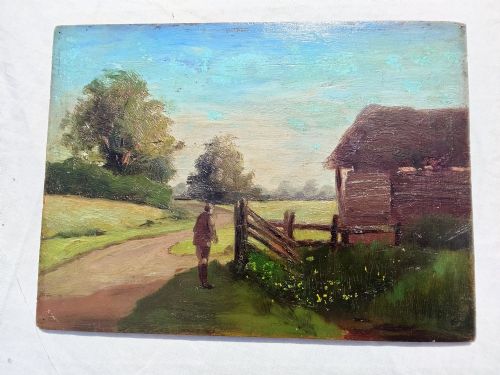
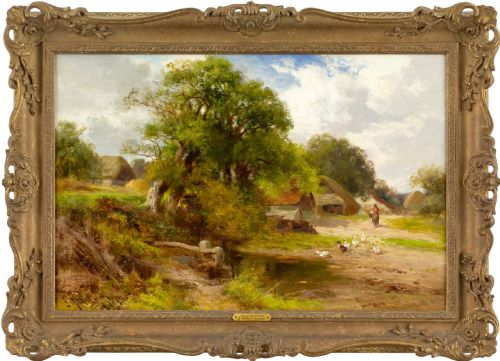
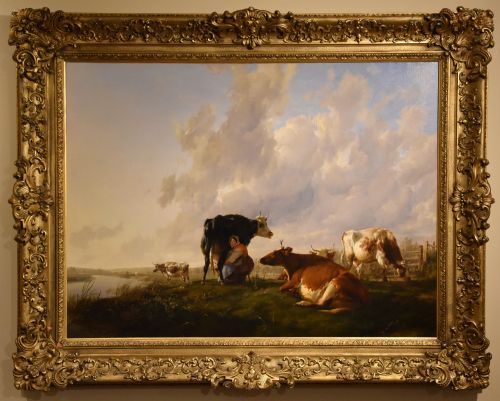
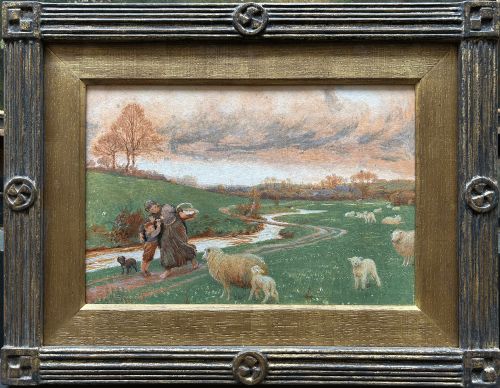
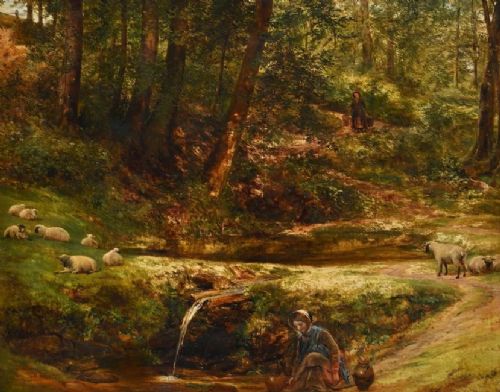
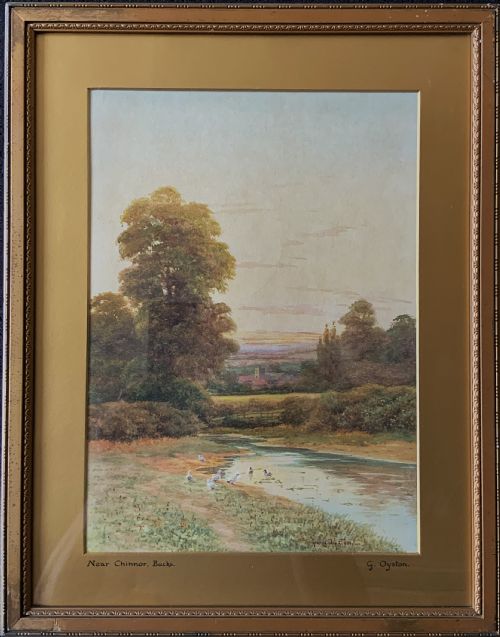
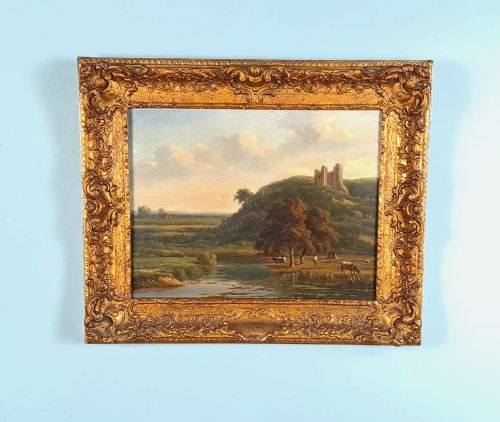
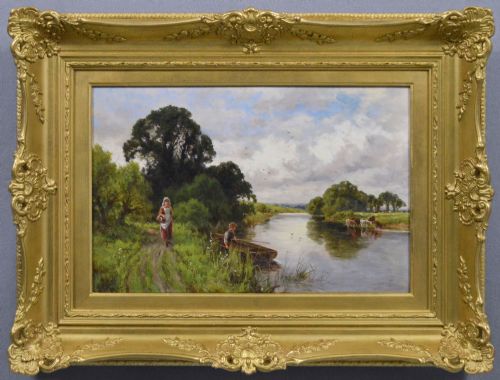
An antique English pastoral scene captures the quiet rhythms of the countryside through oil paintings and watercolours depicting farm workers, rivers, and grazing cattle.
Antique English Pastoral Scene
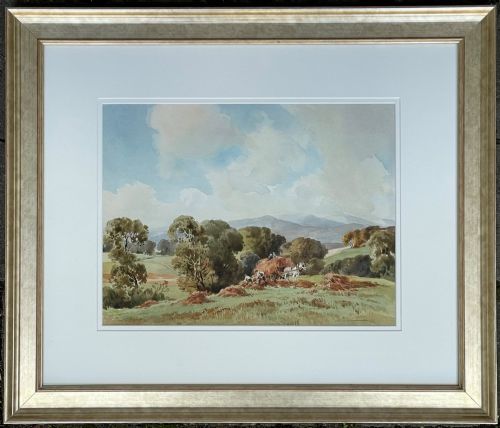
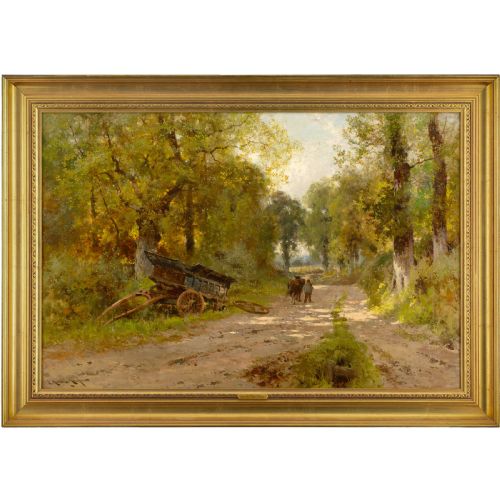
When buyers search for an antique English pastoral scene, they encounter framed works depicting rural life, agricultural labour, and tranquil riverbanks across the British countryside. These pieces predominantly take the form of oil paintings on canvas or wooden board, alongside detailed watercolours on paper produced during the eighteenth, nineteenth, and early twentieth centuries.
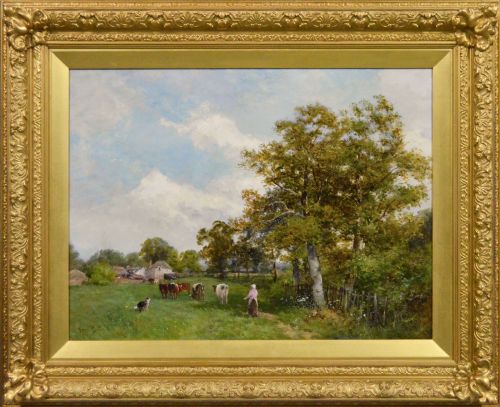
The subjects on this page range from harvest fields and dairy farms with cattle to figures resting beneath willow trees or navigating locks on the Thames. Most examples date from the Victorian period through to the Edwardian era, reflecting a sustained cultural appetite for idyllic rural scenery painted by artists working within traditional British landscape schools.
Materials and construction methods
The visual depth of these works relies on traditional oil paint applied to stretched canvas, wooden panels, or heavy paper boards, often built up with gesso grounds. Watercolours utilise finely ground pigments on paper, capturing light through translucent washes rather than opaque layers.
Many surviving examples retain their original wooden frames, sometimes embellished with gesso mouldings that complement the period of the painting. Support structures range from robust canvas stretched over wooden frames to compact wooden boards utilised for smaller plein air studies.
Geese, ducks, and shaggy cart-horses frequently photobomb the human workers in these quiet fields.
Factors determining quality
Quality in these rural compositions rests on the artist's handling of light, atmospheric perspective, and the naturalistic rendering of figures and livestock within the landscape. Finer pieces demonstrate confident brushwork and precise tonal control, particularly in capturing water reflections and changing weather across harvest fields.
The integration of human activity with the surrounding topography distinguishes accomplished works from more formulaic topographical records. Original framing and the stability of the paint surface also influence the overall standing of an individual piece.
George Graham·Percy Lancaster·John Horace Hooper·David Bates·Thomas Sidney Cooper·Frederick Walker·Richard Redgrave·George Oyston·T C Hofland·Henry H Parker·Miles Birkett Foster·Henry John Kinnaird·James William Booth·Frederick Septimus Lewis·Samuel Joseph Clark·James Hardy Junior·Robert John Hammond·Frederick James Knowles·Robert Thorne Waite·Charles Vickers·John Linnell·Robert Finley McIntyre·Benjamin Williams Leader·Florence Hess·Lorenzo Headley
The Antique English Pastoral Scene Glossary
- Oil on canvas
- Pigment suspended in a drying oil medium and applied to a woven fabric support stretched over a wooden frame. This combination allows for rich colour blending and textured brushwork.
- Watercolour painting
- Artworks created using water-soluble pigments on paper supports. They rely on the white of the paper showing through translucent washes to create luminosity.
- English School
- A classification for artists trained or working primarily within Britain, sharing stylistic approaches to landscape and portraiture. It encompasses regional traditions from the Georgian era through to the early twentieth century.
- Gesso
- A plaster-like mixture used as a prepared surface for painting on wood panels or as a moulding material for decorative frames. It provides a smooth, stable base for fine artistic work.
- Enamel
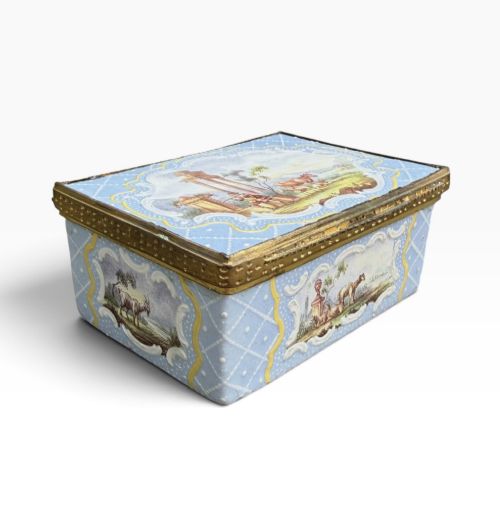
- A decorative coating fused to a metal substrate through high-heat firing, frequently seen on small decorative items such as antique snuff boxes.
Antique English Pastoral Scene: Frequently Asked Questions
What subjects appear in these pastoral scenes?
These works primarily depict rural British life, featuring farm labourers at work, figures herding cattle or sheep, and quiet river landscapes with cottages and willow trees. Common motifs include harvest fields, milkmaids, and watermills situated along waterways like the River Severn or the Thames.
The focus remains on traditional countryside activities from eras when agriculture formed the backbone of rural society. Artists recorded these everyday scenes with an emphasis on calm, orderly interactions between people and their natural surroundings.
How do I care for antique paintings on paper?
Watercolours and works on paper require protection from direct sunlight to prevent the fading of delicate pigments. Framing behind conservation-grade glass helps shield the paper from airborne pollutants and moisture damage.
Displaying these pieces in rooms with stable humidity levels prevents warping of the paper and degradation of the underlying support. Regular gentle dusting of the exterior frame keeps the assembly safe from accumulation.
How can I identify the period of a landscape painting?
Clues to a painting's date often emerge from the style of dress worn by the figures, the framing materials, and the technical execution of the brushwork. Victorian and Edwardian works frequently exhibit distinct approaches to light and realism compared to earlier Georgian compositions.
Signatures, artist dates, or inscription details on the reverse of the canvas or board provide direct confirmation of the creation period. Stylistic markers align with the broader shifts in British landscape art across the nineteenth century.
Where were these rural scenes typically painted?
Artists painted across various English counties, with particular concentrations in rural locations known for picturesque countryside, such as Berkshire, Buckinghamshire, and Worcestershire. Many works capture specific local landmarks, riverbanks, and agricultural estates familiar to the painters.
En plein air sketching trips allowed artists to record natural light directly from the landscape before finishing larger canvases in their studios. This direct observation contributed to the topographical accuracy found in many period works.