

Antique English Commode
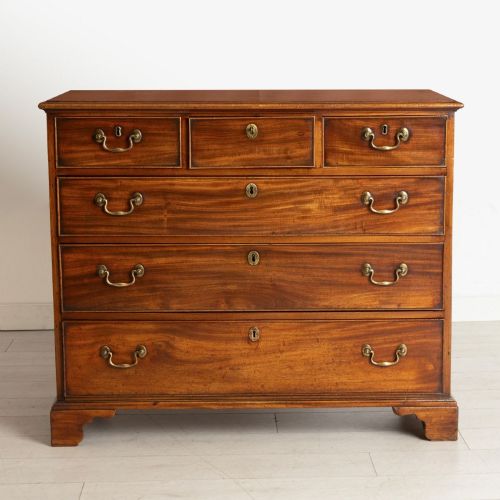
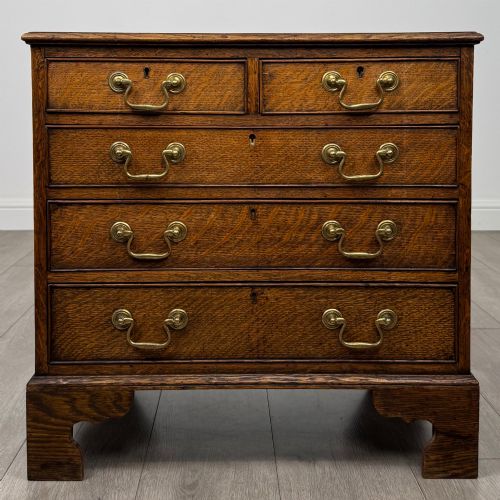
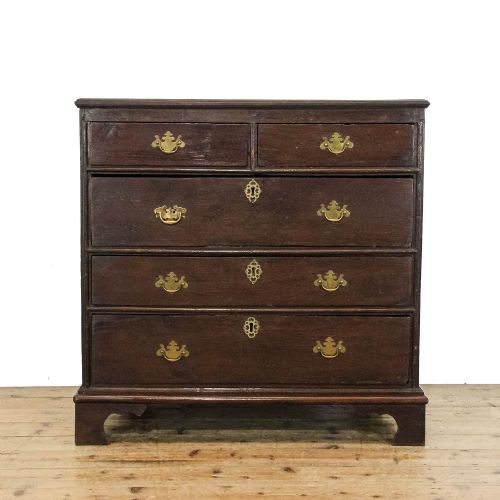
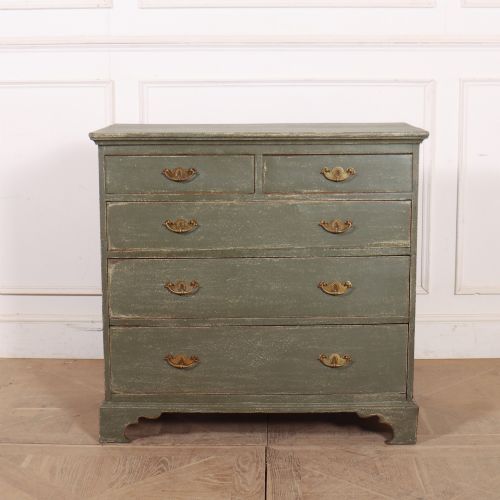
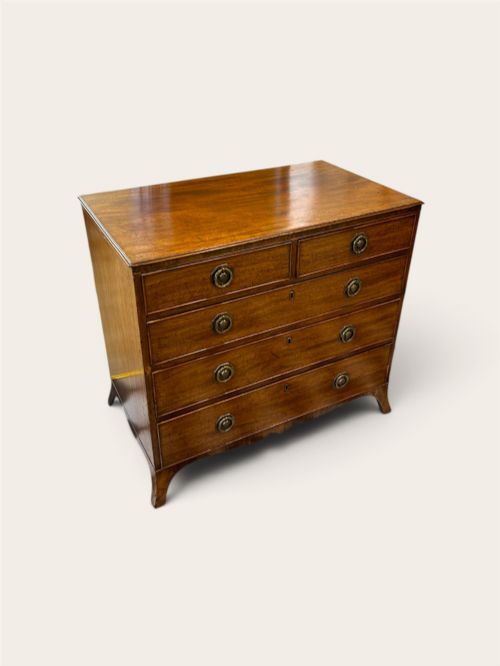
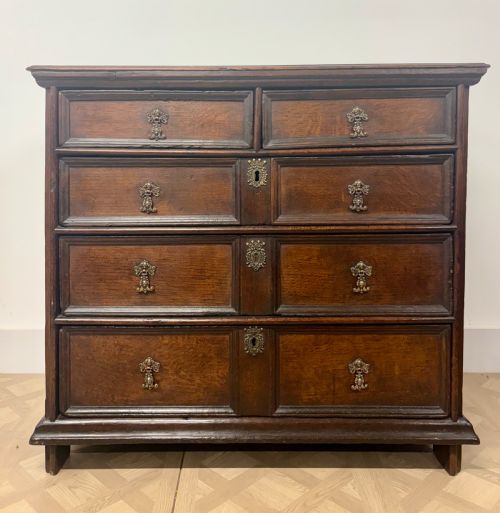
An antique English commode is a practical storage piece, often taking the form of a chest of drawers or bedside table in mahogany, oak or walnut.
Antique English Commode
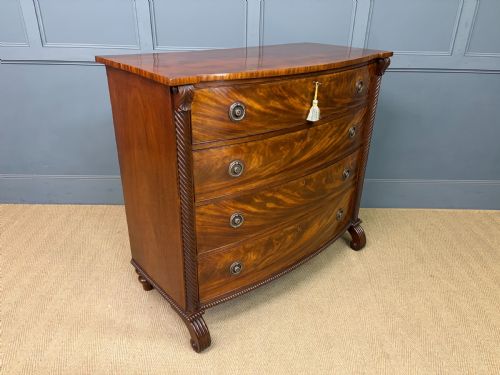
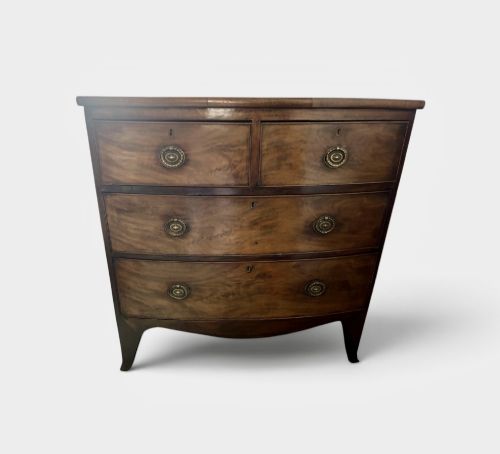
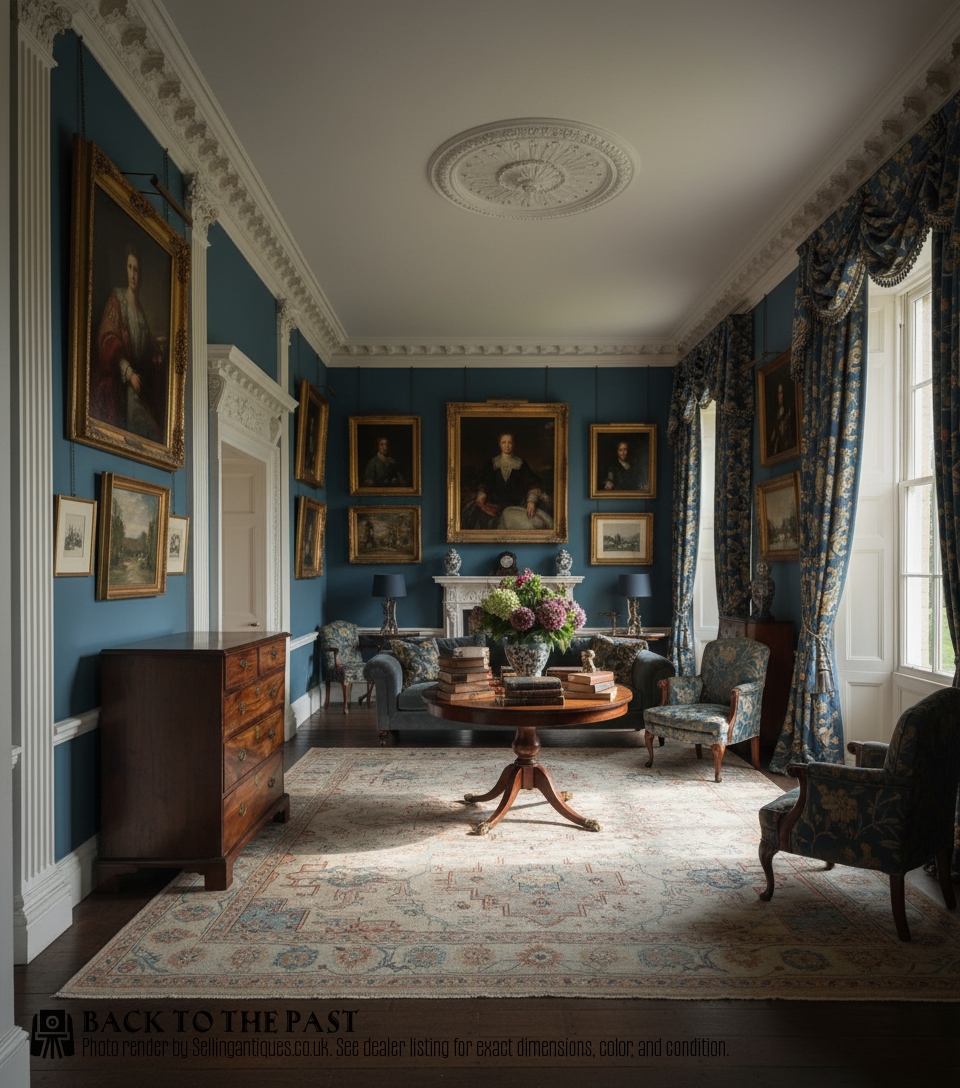
When you search for an antique English commode, you encounter a variety of forms including chests of drawers, bedside tables, side cabinets, and occasional commode chairs from the seventeenth century through to the twentieth century. The selection spans distinct eras such as the Georgian, Regency, and Victorian periods, reflecting shifting domestic habits and tastes.
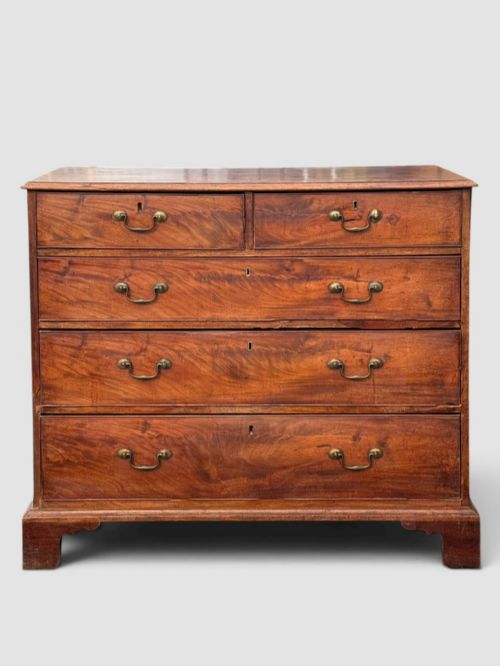
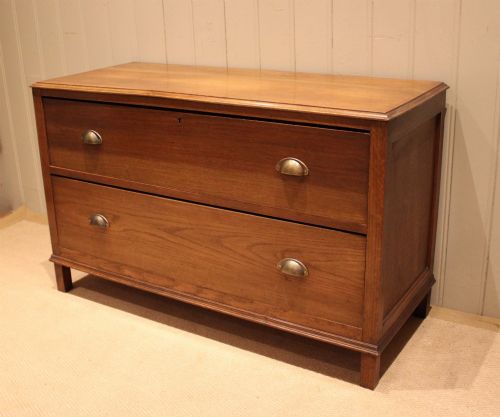
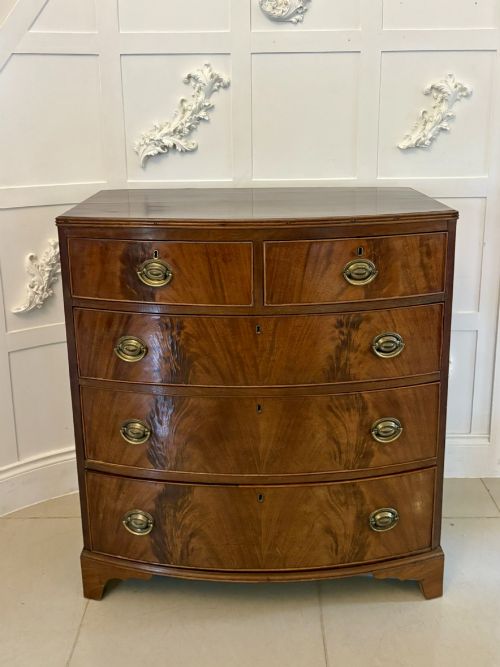
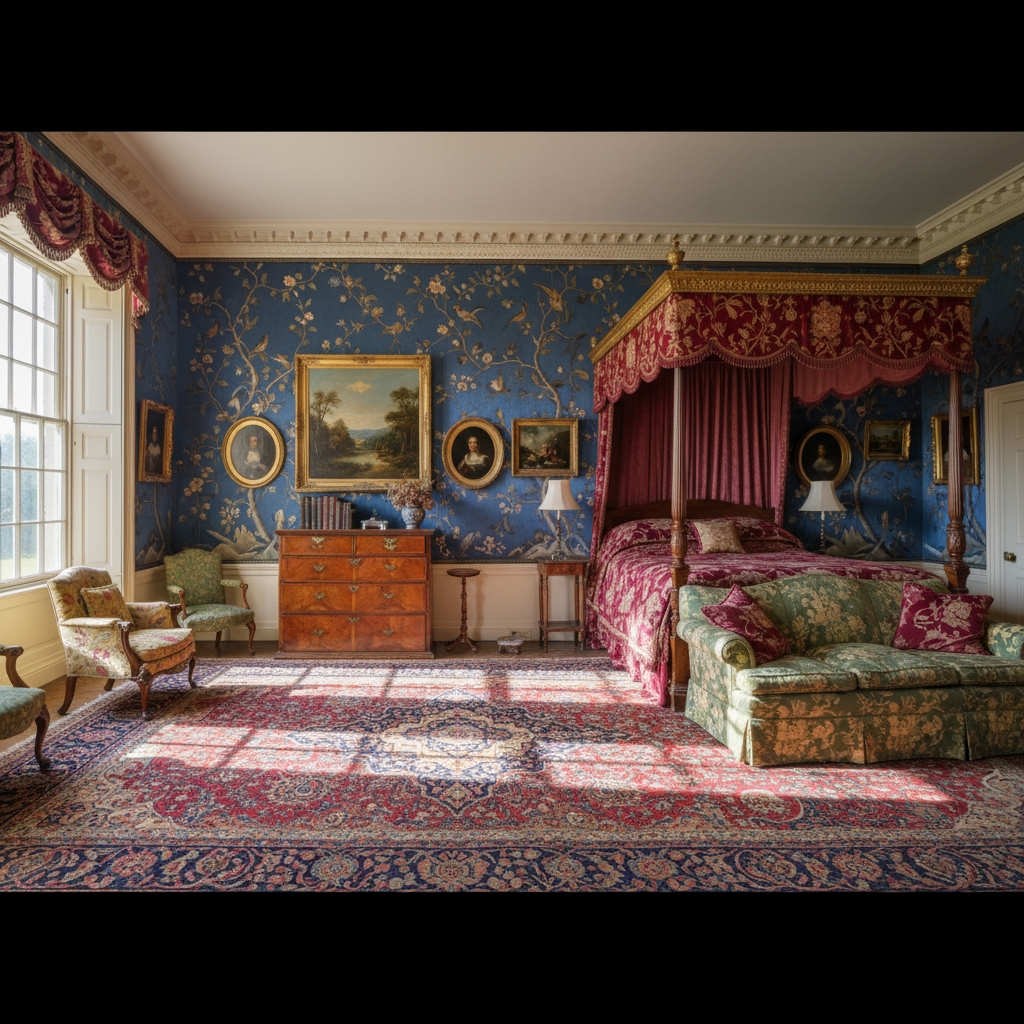
The version you are most likely to meet on this page is the mahogany or oak chest of drawers, sometimes with a bow front or serpentine profile, alongside occasional pieces like commode-shaped teapots and bedside cupboards. These items served functional roles in bedrooms and living spaces across English country houses and town residences.
Makers and craftsmen utilised timbers native to Britain or imported colonial woods like mahogany, shaping them into sturdy, compartmentalised furniture. The surviving examples demonstrate the enduring utility of these storage pieces across multiple centuries of English design.
What varies in quality
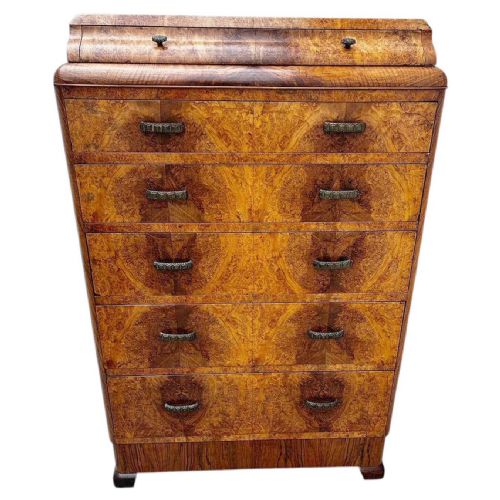
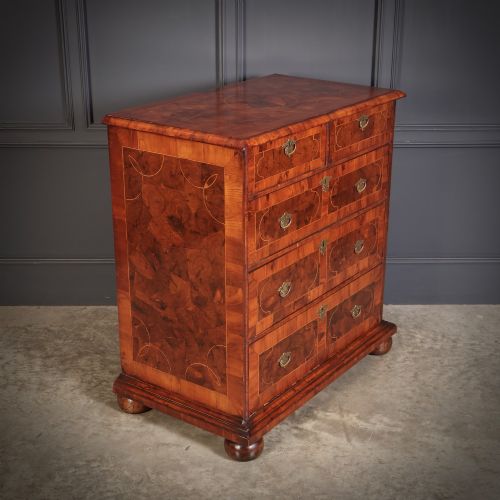
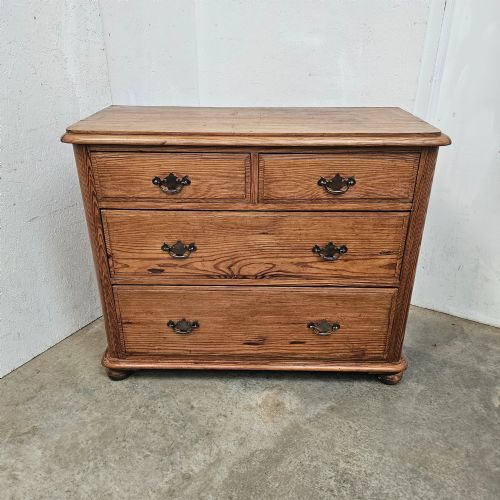
The refinement of the timber and the complexity of the veneer work distinguish different grades of these pieces, with figured mahogany, burr walnut, and olive oyster veneers marking out the more ambitious examples. Simpler pieces in oak, pine, or painted finishes rely on honest construction rather than decorative ostentation.
Proportion and execution set apart the finer pieces, such as serpentine chests or those with precise feather-banded borders and marquetry, from standard domestic utility furniture. The handling of secondary woods and the neatness of internal drawer dovetails indicate the level of care taken in the workshop.
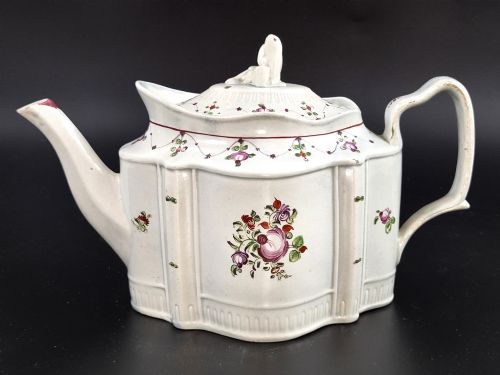
An eighteenth-century potter once shaped a ceramic teapot to mimic a commode, complete with a widow finial on the lid.
The Antique English Commode Glossary
- Bow front
- A convex curved front to a chest of drawers or cabinet that softens the rectangular silhouette.
- Serpentine
- A front shape characterised by a central convex curve flanked by two concave curves, typical of finer Georgian case furniture.
- Oyster veneering
- A technique of cutting small branch wood transversely to produce circular or oval patterns resembling oyster shells, popular in the seventeenth century.
- Feather-banding
- A decorative inlay of thin wood strips arranged in a herringbone or V-shape pattern around the borders of drawer fronts.
- Marquetry
- The art of applying pieces of veneer to a structure to form decorative patterns and pictures, seen on high-status walnut pieces.
Antique English Commode: Frequently Asked Questions
What is an antique English commode?
An antique English commode typically refers to a chest of drawers, bedside cabinet, or specific enclosed storage piece made in England during the seventeenth, eighteenth, or nineteenth centuries. These items were designed for domestic use to hold clothing, personal items, or bedside necessities.
Over time, the term has encompassed various forms including bow-fronted chests, tallboys, and occasional chair commodes. They utilise traditional timbers like mahogany, oak, and walnut.
How do I identify a Georgian commode?
Georgian pieces are identified by their classic proportions, use of solid mahogany or walnut, and characteristic hardware such as brass drop handles. Stylistic markers include straight or bow fronts, bracket feet, and occasionally detailed stringing or feather-banding.
The era spans the reigns of the Georges, bringing refinements in cabinet making and a shift towards lighter, more elegant proportions by the late eighteenth century.
Were these pieces used in bedrooms?
Yes, many of these storage items were built specifically for bedrooms to hold linens, garments, and personal effects. Bedside tables and night cupboards served adjacent functions close to the sleeping quarters.
Larger chests and tallboys provided primary wardrobe storage in domestic rooms before fitted closets became common in British homes.
What woods were used in English commodes?
Cabinet makers utilised a range of native and imported timbers, most notably mahogany, oak, walnut, pine, and fruitwoods. Burr walnut and olive wood were selected for decorative veneering on high-status items.
Secondary timbers like deal or pine were frequently employed for internal drawer linings and carcass backs, hidden from view.
How do I care for an antique wood chest?
Care involves keeping the wood away from direct heat sources and strong sunlight to prevent the timbers and veneers from drying out and splitting. Regular dusting with a soft cloth maintains the surface without the need for heavy chemical polishes.
Maintaining a stable room humidity helps preserve the original polish and prevents movement in the old joints and panels.