







Walnut Two Over Three
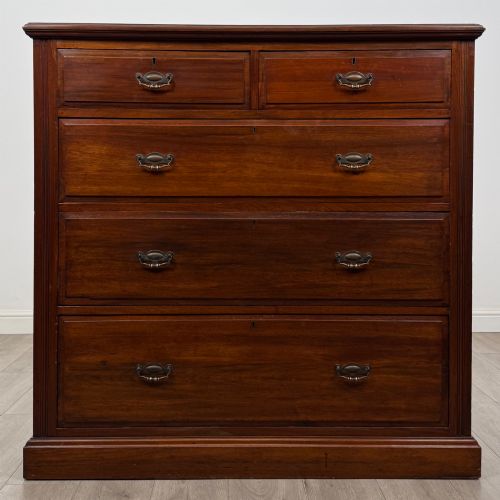
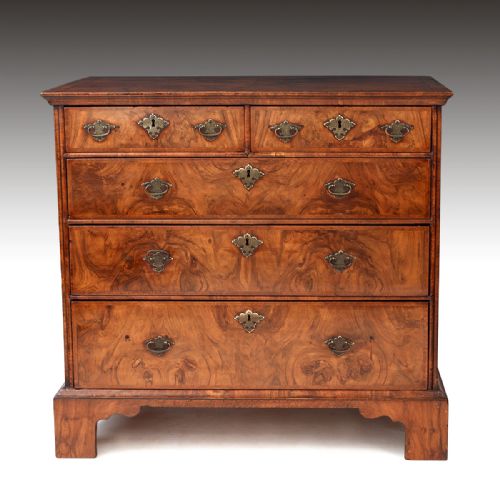
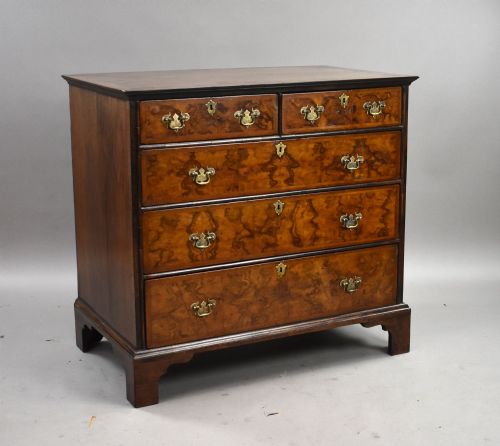
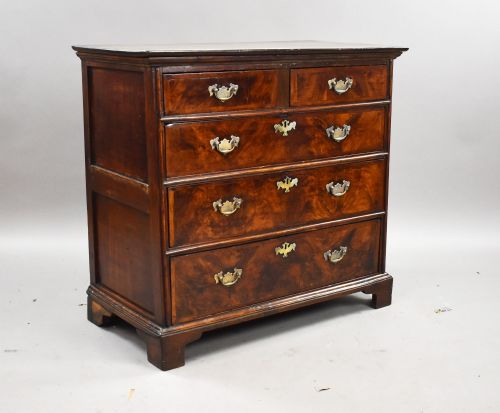
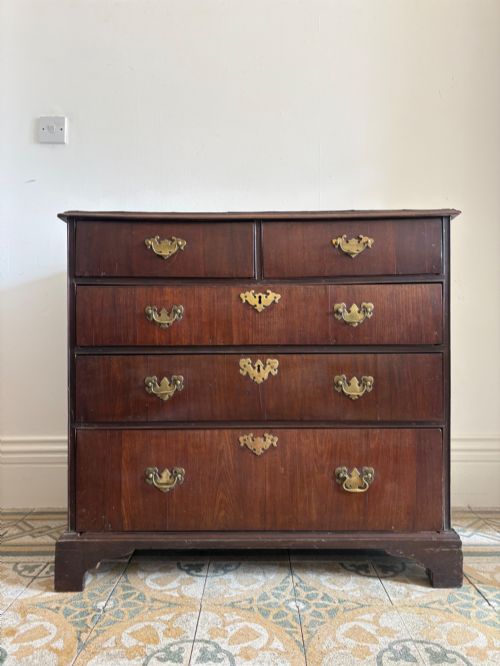
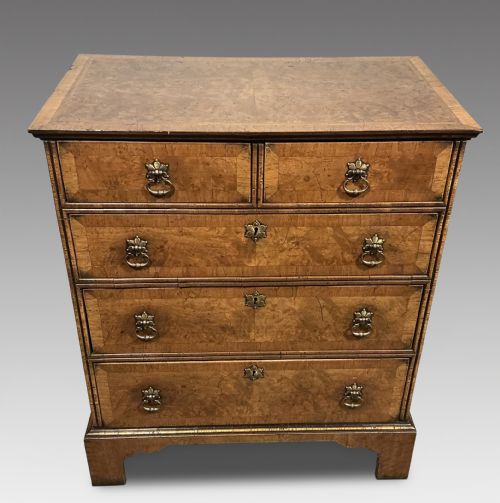
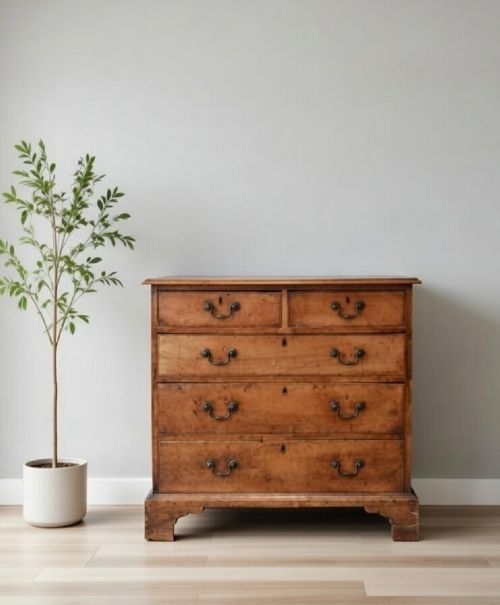
These walnut two over three chests of drawers offer the ideal proportion of two compact upper drawers above three wider ones.
Walnut Two Over Three
A walnut two over three chest of drawers presents a distinctive arrangement of five graduated storage drawers within a sturdy timber carcass. This specific configuration divides the storage space into two smaller drawers at the top and three larger drawers beneath.
Most examples found within this selection date from the seventeenth and eighteenth centuries, spanning the William and Mary, Queen Anne, and Georgian periods. Makers constructed these pieces using rich timbers such as figured burr walnut, red walnut, and sometimes oak.
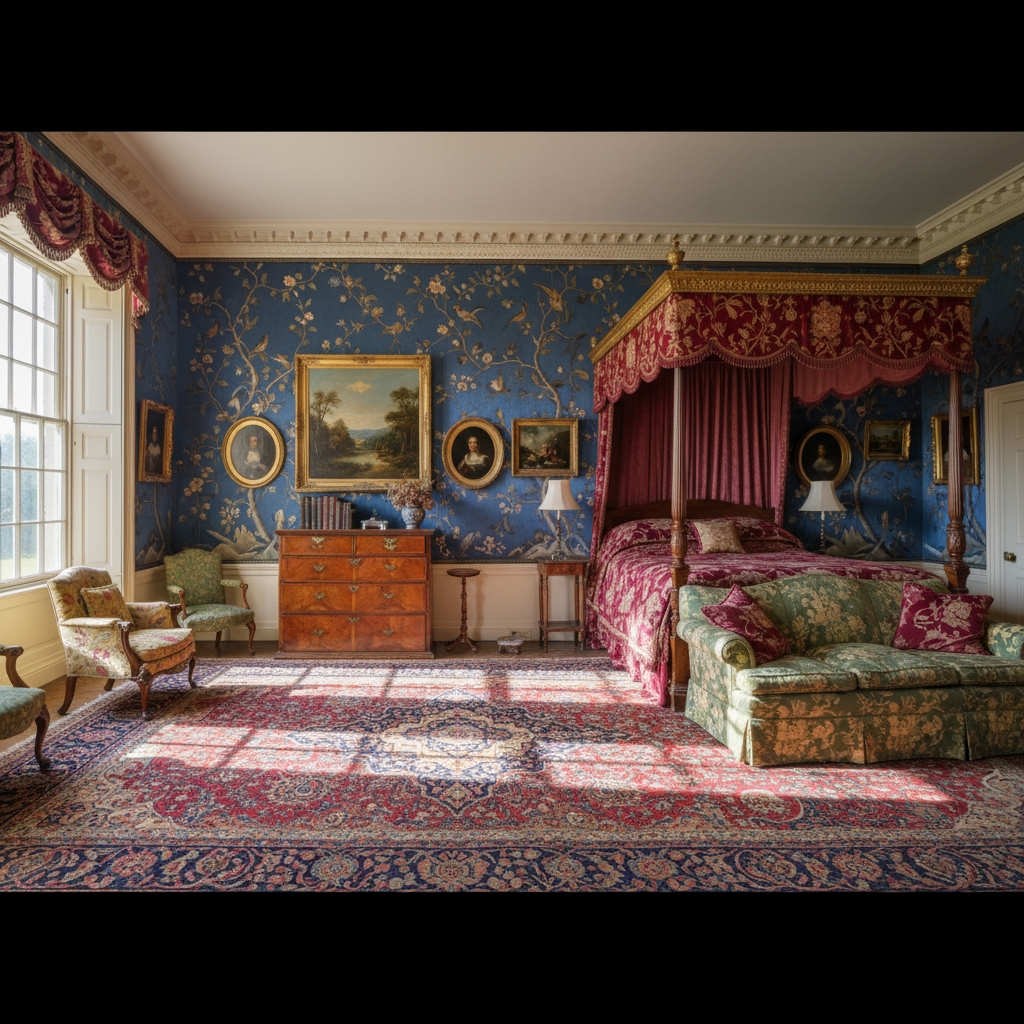
Buyers will encounter various formats ranging from early seventeenth-century models with bold grain patterns to later Victorian interpretations and Edwardian pieces. These chests serve as practical bedroom storage while providing a strong visual anchor for a room.
What varies in quality
Quality depends heavily on the selection and matching of the walnut veneers across the drawer fronts. Finer examples display carefully aligned grain patterns that create a cohesive visual texture rather than a random patchwork.
The depth of colour and the preservation of the original timber surface differentiate superior pieces from heavily restored ones. Subtle details in the brasswork and the precision of the dovetail joints further distinguish the output of skilled workshops.
Some early walnut timbers display such intense burr figuring that the drawer fronts appear to ripple in the candlelight.
The Walnut Two Over Three Glossary
- Burr walnut
- A specialised timber cut from the gnarled growths of a walnut tree, prized for its swirling and complex grain patterns. Craftsmen sliced this wood into thin veneers to cover large drawer surfaces.
- Graduated drawers
- An arrangement where drawers decrease in depth from the bottom to the top of the chest. This design creates a balanced visual hierarchy.
- Red walnut
- A descriptor used for certain eighteenth-century walnut timbers exhibiting a warm, reddish tone. It relates to specific variations in the heartwood rather than a distinct botanical species.
- Carcass
- The main structural body or frame of a chest of drawers, excluding the drawers themselves. It usually consists of a secondary wood like oak or pine.
- Escutcheon
- A protective plate surrounding the keyhole of a drawer or cabinet door. These plates are typically cast in brass and match the drawer handles.
Walnut Two Over Three: Frequently Asked Questions
What is a two over three chest?
A two over three chest is a storage unit featuring two smaller drawers placed above three wider, full-width drawers.
This specific layout became popular during the late seventeenth century and remained a staple of domestic furniture design through the Georgian era.
How do I date an antique walnut chest?
Dating relies on examining the construction methods, handle hardware styles, and timber types visible across the piece.
Early pieces from the seventeenth and early eighteenth centuries often feature distinct carcass framing and characteristic walnut veneers that differ from later Victorian or Edwardian revivals.
Where should I place a walnut chest?
These chests suit bedrooms, hallways, or living spaces where their substantial timber presence and practical storage prove useful.
Keep them away from direct sunlight and sudden temperature changes to protect the delicate walnut veneers from drying out.
Are all walnut chests made of solid wood?
Many examples use a secondary timber like oak for the main structure and apply fine walnut or burr walnut veneers to the exterior faces.
This technique allowed makers to utilise decorative grain patterns without risking the warping associated with large boards of solid figured timber.