


Antique English Ceramic Dogs
These antique English ceramic dogs bring hearths, mantelpieces and sideboards the steady gaze of Victorian spaniels, greyhounds and poodles.
Antique English Ceramic Dogs
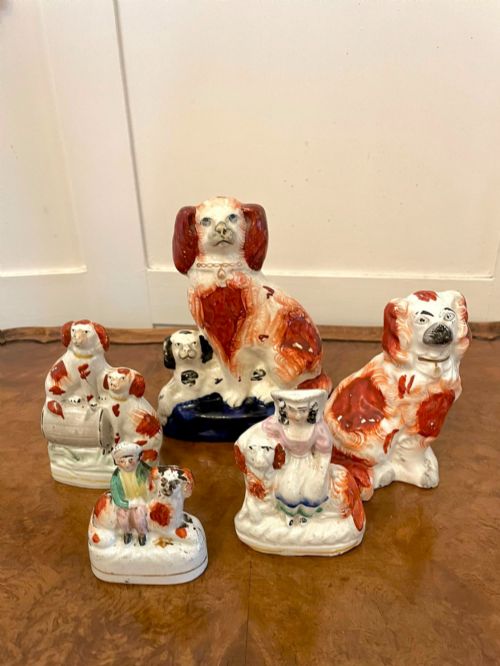
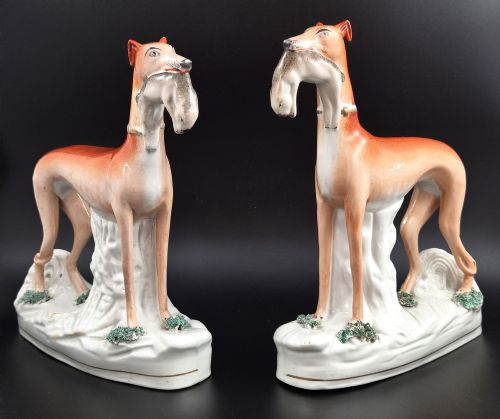
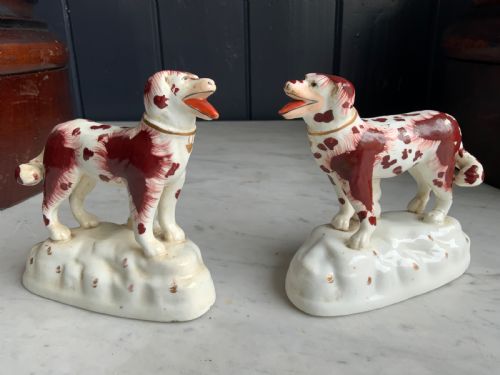
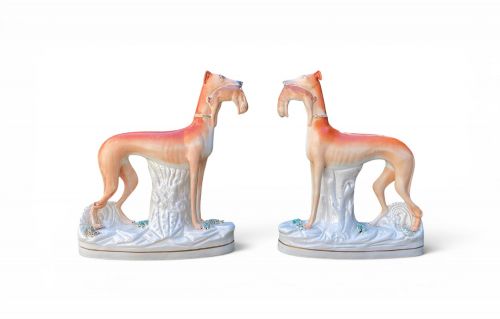
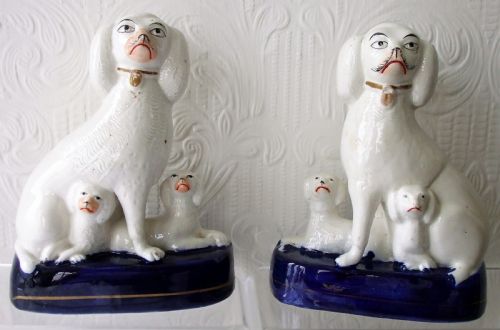
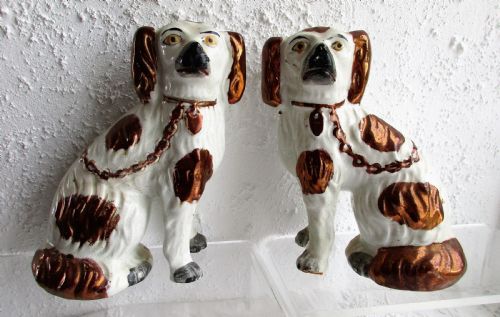
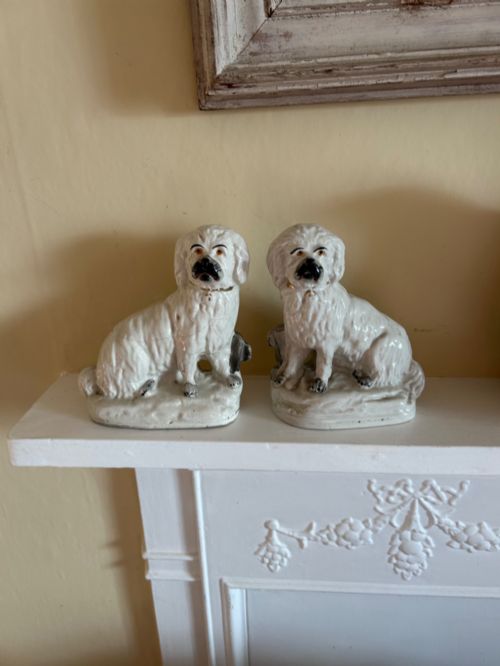
When you search for antique English ceramic dogs, you encounter figures that served as domestic ornaments and mantel decorations across the nineteenth century. The majority of pieces on this page stem from the Victorian period, appearing as earthenware spaniels, greyhounds, poodles and pugs.
Makers shaped these animals as single figures, seated pairs and elaborate figure groups complete with hares or pups. Alongside Victorian Staffordshire pottery, earlier examples emerge from Georgian porcelain manufactories, taking the form of seated bagpipers, hunting dogs and candlestick bases.
The assortment spans utilitarian country pottery and refined porcelain figures, reflecting the varied tastes of nineteenth-century households. Pairs dominate the selection, intended originally to sit symmetrically on either side of a fireplace.
Materials and production methods
Potters shaped these figures using earthenware, stoneware and porcelain, applying lead glaze to seal the body before decoration. Many pieces received hand-painted enamel colours over the glaze, occasionally accented with gold leaf or gilt details.
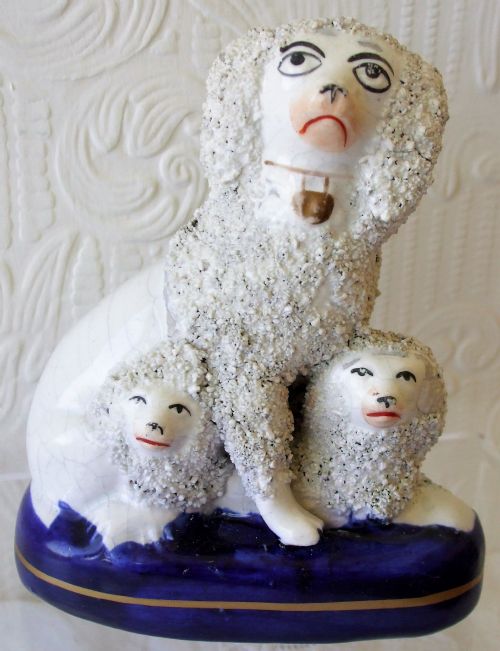
Moulds dictated the forms of the animals, allowing workshops to produce consistent pairs of spaniels, greyhounds and poodles. Workers added texture through modelled curls on poodles or distinct markings on dalmatians and black and white hounds, finishing the pieces with firing in kilns.
Several poodles arrive accompanied by tiny sculpted pups clinging to their sides.
Judging quality and character
Quality rests in the crispness of the moulding and the control of the hand-painting upon the ceramic body. Superior examples display carefully rendered facial expressions, clean enamel separation and well-applied gilt highlights.
Modelling depth differentiates standard production ware from finer sculptural interpretations. Pieces with well-defined paws, expressive eyes and balanced proportions demonstrate greater skill from the potter or modeller.
Derby porcelain·Minton porcelain·Mason's Ironstone·Royal Dux
The Antique English Ceramic Dogs Glossary
- Staffordshire pottery
- Earthenware figures produced in the pottery towns of Staffordshire. These form the bulk of nineteenth-century mantel dogs found today.
- Comforter spaniels
- The pairing of seated spaniels traditionally placed on mantelpieces. They represent King Charles spaniels and related breeds.
- Lead glaze
- A glossy coating applied to ceramic bodies before firing. It creates a smooth, reflective surface across earthenware figures.
- Enamel
- Opaque colours painted onto the glazed ceramic surface. Workers applied these pigments by hand before a secondary low-temperature firing.
- Ironstone
- A durable type of heavy earthenware patented in the nineteenth century. It provides a dense, sturdy body for decorative vessels and figures.
Antique English Ceramic Dogs: Frequently Asked Questions
Why were ceramic dogs made in pairs?
Makers produced ceramic dogs in pairs so owners could place them symmetrically on either side of a fireplace mantelpiece. This arrangement reflected Victorian interior design conventions for balance and display.
Pairs typically mirrored each other in posture and colouring, facing inward toward the centre of the mantel or hearth.
How do I date an antique ceramic dog?
Dating relies on stylistic clues, ceramic composition and manufacturing techniques. Victorian Staffordshire pieces often feature distinct glaze characteristics and hand-painted enamel details typical of the mid-nineteenth century.
Earlier Georgian figures from factories like Derby show finer porcelain bodies and different glaze formulations associated with the eighteenth century.
What breeds are most common?
Spaniels, particularly the comforter spaniel, appear most frequently among nineteenth-century Staffordshire pottery. Greyhounds, poodles and pugs also feature prominently across the available selections.
Sporting dogs and hounds occasionally appear in earlier porcelain pieces alongside human figures in hunting or pastoral scenes.
Where were these figures displayed?
Households placed these ceramic figures primarily on mantelpieces above fireplaces, where they served as domestic ornaments. They also populated sideboards, tables and cabinets in Victorian parlours. Some specialised forms, such as greyhound quill holders, served functional roles on writing desks alongside their decorative purpose.