



Victorian Mantel Spaniels
Victorian mantel spaniels are classic ceramic figures that anchor a fireplace with domestic symmetry and Victorian charm.
Victorian Mantel Spaniels
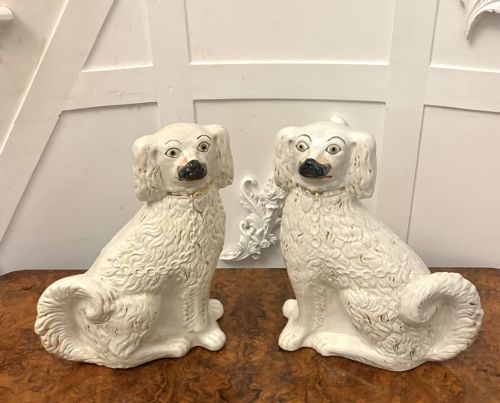
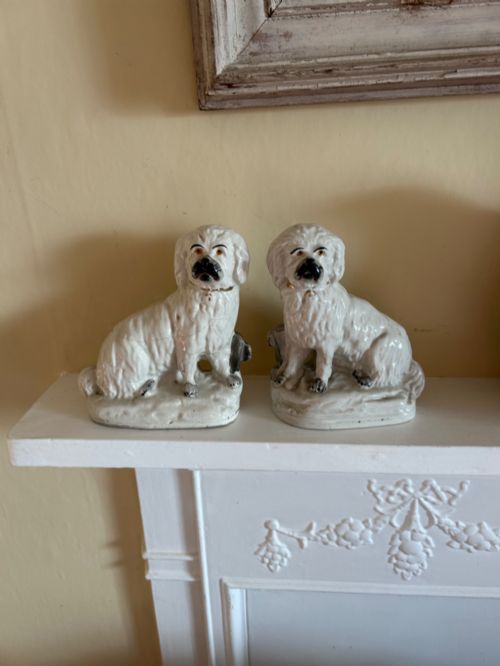
Victorian mantel spaniels are ceramic figures modelled as seated dogs, most frequently encountered in pairs designed to sit facing each other upon a hearth. These decorative objects originate from the nineteenth century, spanning periods through eighteen-sixty, eighteen-eighty, and nineteen hundred.
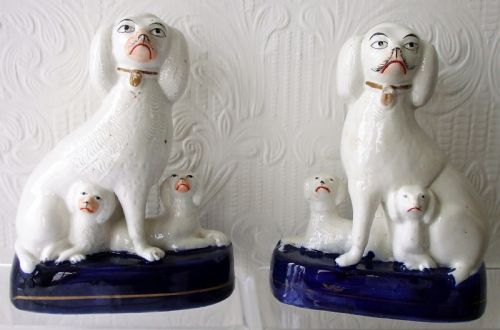
The selections available include standard seated spaniels alongside variations such as comforter spaniels, dogs with puppies, spill vases, and clock groups. English traditional styles dominate the forms, often taking the shape of Staffordshire pottery dogs.
How they were made
Makers utilised earthenware and ceramic bodies, shaping the figures through traditional pottery methods before applying glazes. Lead glaze and enamel finishes provided the protective and decorative surfaces seen across the pieces.
Victorian Mantel Spaniels Retail Price Guide 2026
Typical asking prices for victorian mantel spaniels among the pieces listed under this phrase on Sellingantiques today, from the lower quarter to the upper quarter. They describe what is for sale here now, not the wider market.
Some spaniels wear gilded chains and padlocks, standing ready to guard the hearth against intruders.
What varies in quality
The definition and crispness of the moulding separate standard examples from superior pieces, particularly in the rendering of facial expressions and fur texture. Softer, blurred details indicate worn moulds or hurried production.
The application of paint and lustre dictates visual refinement, with careful brushwork on the eyes, snout, and gilt accents elevating the decorative impact. Rich copper lustre and cleanly separated enamel patches distinguish the finer pairs.
The Victorian Mantel Spaniels Glossary
- Earthenware
- Porous pottery fired at lower temperatures, serving as the standard ceramic body for these Staffordshire figures. It requires a glaze to become impermeable.
- Spill vase
- A hollow ceramic figure incorporating an attached cylinder designed to hold wooden spills for lighting fires. These functional vessels often depict dogs or figures alongside the main subject.
- Copper lustre
- A metallic glaze finish imparting a coppery, reflective sheen to the ceramic surface. This technique creates rich, gleaming coats on the pottery dogs.
- Lead glaze
- A glossy coating containing lead oxide applied to earthenware before firing. It produces a smooth, glassy finish that enhances the painted details underneath.
Victorian Mantel Spaniels: Frequently Asked Questions
What are mantel spaniels?
Mantel spaniels are ceramic decorative figures modelled on dogs, traditionally displayed in symmetrical pairs on fireplace mantels during the nineteenth century.
They represent a staple of Victorian domestic interior decoration and English pottery production.
How were they displayed?
Owners placed them facing inwards toward each other at either end of a fireplace mantelpiece. This traditional arrangement created a balanced framing effect for the hearth.
Some examples also functioned as spill vases or flanked clock groups on the mantel.
How do I date these dogs?
Dating relies on stylistic clues, ceramic bodies, and specific decorative techniques like copper lustre or gilt highlights. Most pieces belong to the nineteenth century, with distinct variations appearing across decades from eighteen-sixty to nineteen hundred.
Examining the base and the crispness of the moulding helps place the piece within the Victorian era.
Are they always found in pairs?
Many examples were produced and kept as pairs designed to mirror one another on a shelf. However, individual figures and specialised forms like spill vases or single dog and puppy groups also occur.
Matching pairs remain the most common configuration encountered by collectors.