




Antique English Breakfast Table
An antique english breakfast table brings morning dining and central presence together through centuries of mahogany, rosewood, and tilt-top engineering.
Antique English Breakfast Table
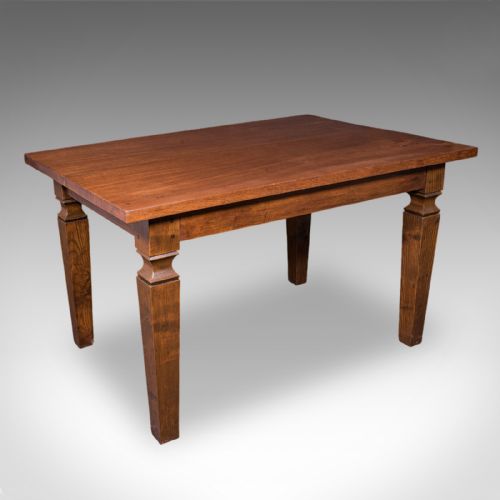
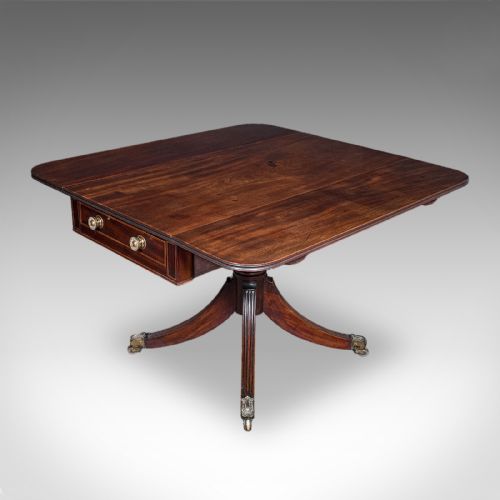
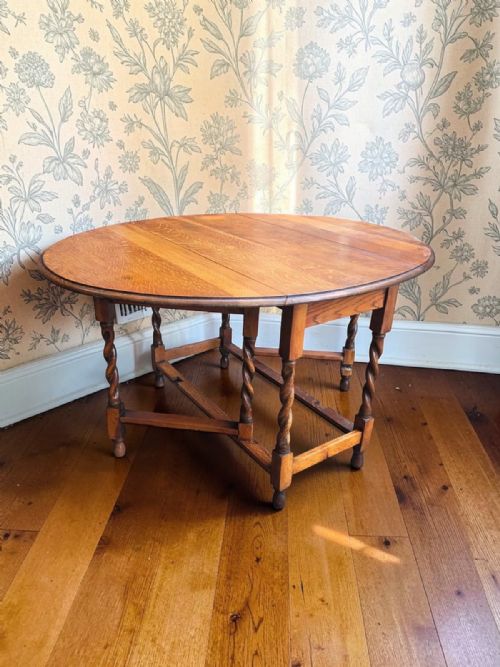
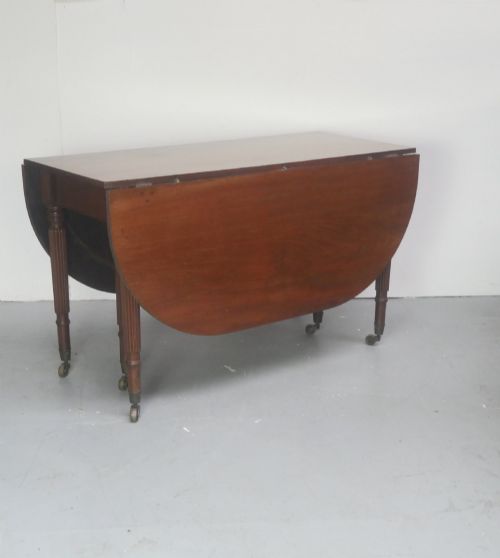
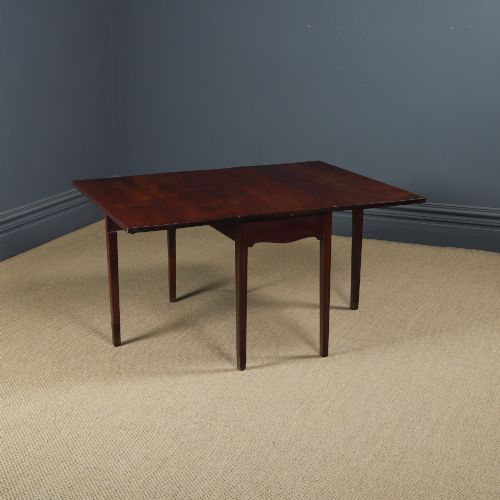
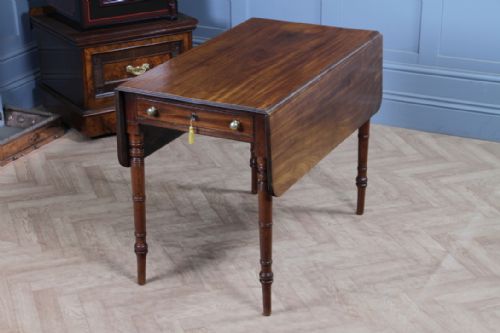
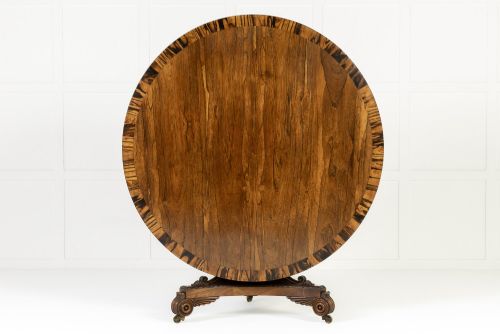
An antique english breakfast table serves as a flexible piece designed for morning dining, intimate meals, and central placement within a room. Buyers searching this phrase encounter circular or rectangular forms resting upon central pedestals with tilting tops or supported by gateleg frames.
The pieces appearing on this page span the Georgian, Regency, William IV, and Victorian periods. Mahogany and burr walnut dominate the selection, often finished with figured veneers and pedestal bases.
How They Were Made
Joiners utilised solid mahogany, oak, and walnut, applying figured veneers such as rosewood and burr walnut to the primary surfaces. Timber selection governed the visual depth of the top, while brass fittings and castors reinforced the pedestals.
Tilting mechanisms relied on sophisticated catch and block joints that allowed the large top to fold vertically when not in use. Pedestal bases featured column shafts supported by tripartite or quadrupartite scroll feet.
Listings span Georgian, Regency, William IV, and Victorian periods, constructed from mahogany, rosewood, walnut, oak, and brass.
What Varies in Quality
The sophistication of the timber figuring and the crispness of the pedestal carving separate standard examples from finer works. Master cabinet makers selected veneers with intense flame or burl patterns that caught the light across the central surface.
Proportion and structural stability under the weight of a heavy tilt top dictate the craftsmanship level. Refined pivot mechanisms and balanced pedestal bases ensure the table operates smoothly and rests firmly.
The Antique English Breakfast Table Glossary
- Tilt-top
- A hinged table top that rotates into a vertical position to save floor space when the piece is stored against a wall. This mechanism relies on a brass or wooden catch fixed to the pedestal block.
- Pedestal
- A single central column supporting the main table top instead of four corner legs. These columns often feature reeded, fluted, or turned details above substantial scroll feet.
- Figured mahogany
- Timber cut to reveal distinctive grain patterns such as flame, feather, or fiddleback. Cabinet makers placed these veneers symmetrically across the top to create decorative impact.
- Loo table
- A large round or oval Victorian table designed for evening games as well as morning meals. They share the heavy tilt-top pedestal construction characteristic of breakfast tables.
Antique English Breakfast Table: Frequently Asked Questions
How do I use an antique breakfast table today?
These tables function well as four-seat dining surfaces in compact spaces or as central display tables in a hallway. Their versatile size suits daily dining or occasional entertaining.
Tilting the top allows the table to stand flat against a perimeter wall when floor space is required. This historic feature remains practical for modern rooms.
What is the difference between Regency and Victorian tables?
Regency examples typically display restrained classical lines, flame mahogany veneers, and brass paw castors. The timber tones tend to be warm and golden brown.
Victorian pieces often feature heavier burr walnut veneers, darker finishes, and more robust pedestal carvings. They frequently include oval shapes designed for loo and breakfast use.
How do I care for a polished wood surface?
Maintain the finish by dusting with a soft dry cloth and applying traditional beeswax periodically. Avoid placing hot items or liquids directly onto the wood.
Keep the table away from direct heat sources and strong sunlight to prevent the timber veneers from drying or fading over time.
Why do some tables have tilting tops?
Dining rooms in earlier centuries served multiple functions throughout the day, requiring furniture to be moved aside easily. A tilting top enabled servants to clear the floor space quickly.
This mechanism also made it simpler to transport large tables between rooms or houses during the nineteenth century.