



Antique Elm Wheelback Chairs
These antique elm wheelback chairs bring sturdy country comfort to a dining table.
Antique Elm Wheelback Chairs
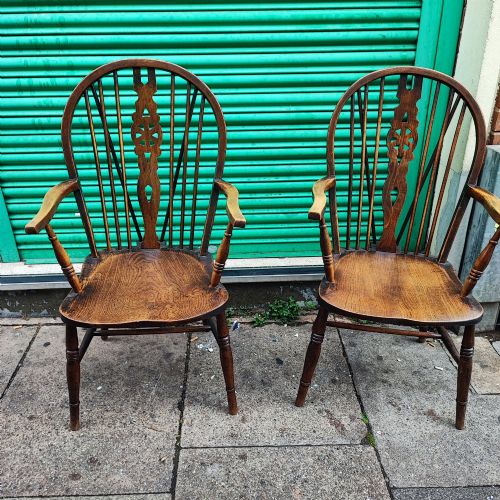
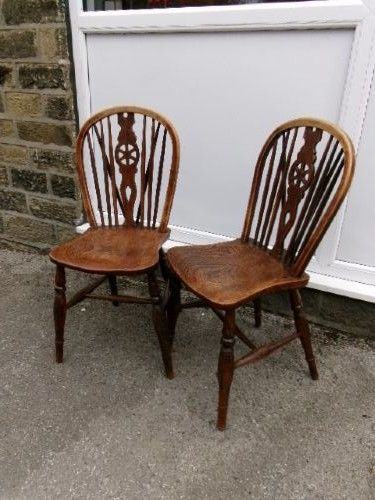
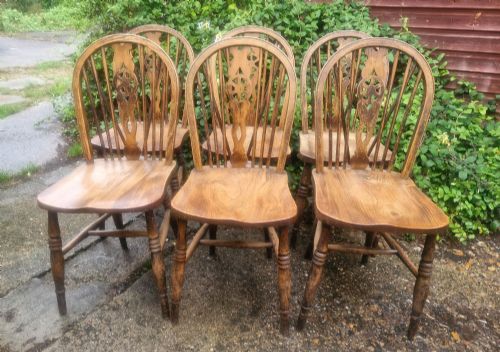
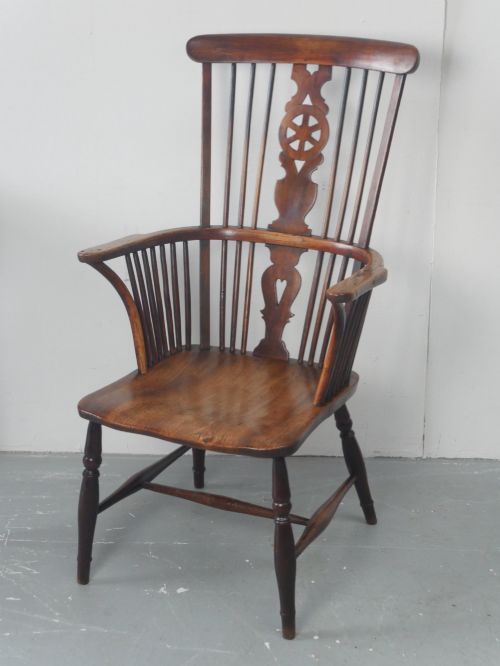
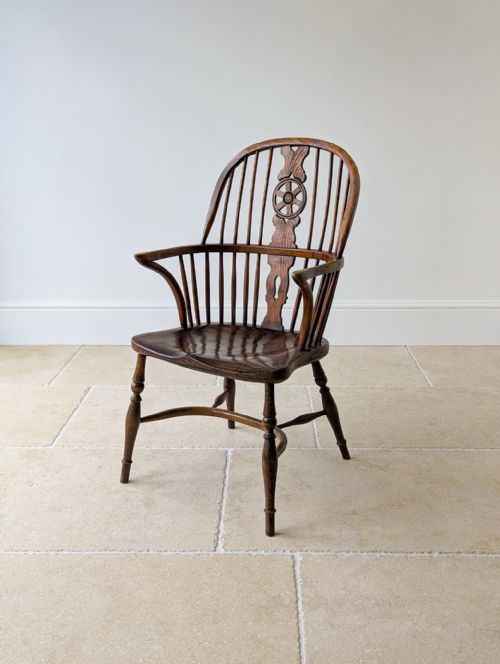
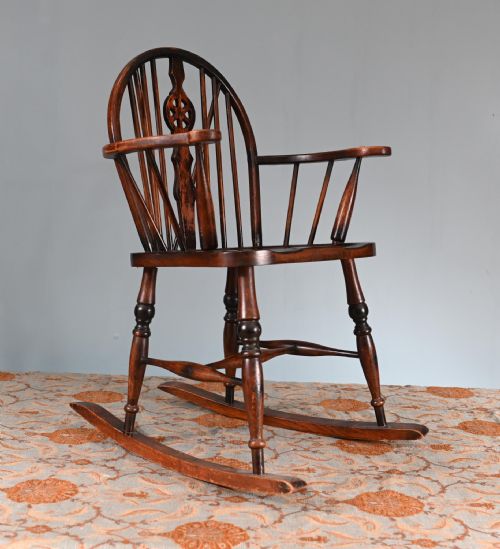
When you search for antique elm wheelback chairs, you encounter robust wooden seating built for daily use in farmhouses and country homes. These pieces range from individual armchairs to large dining sets.
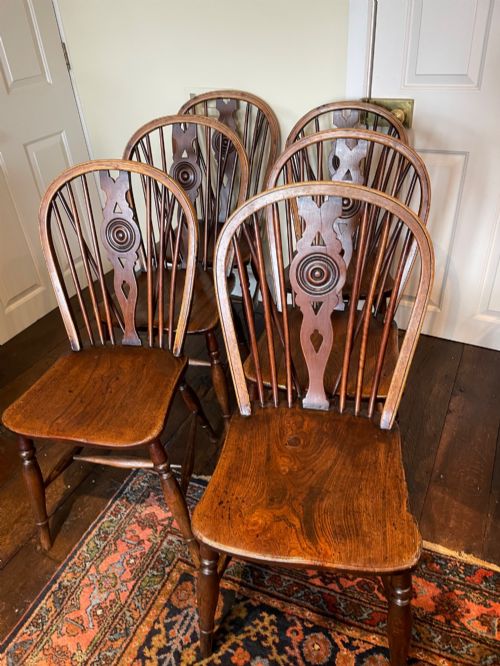
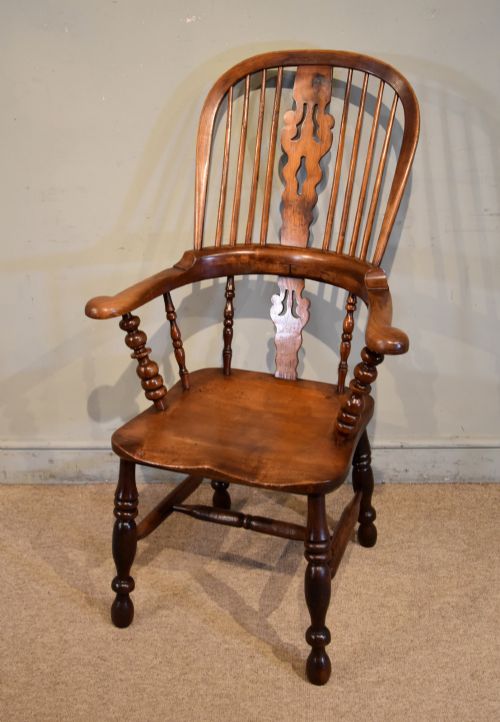
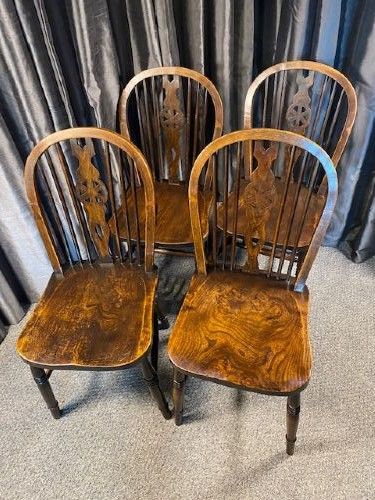
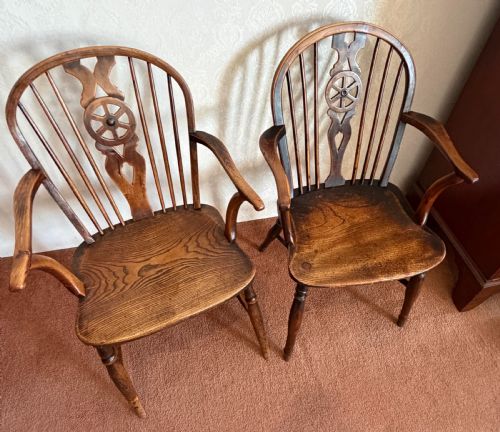
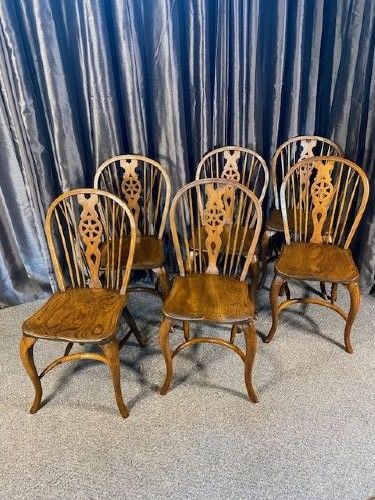
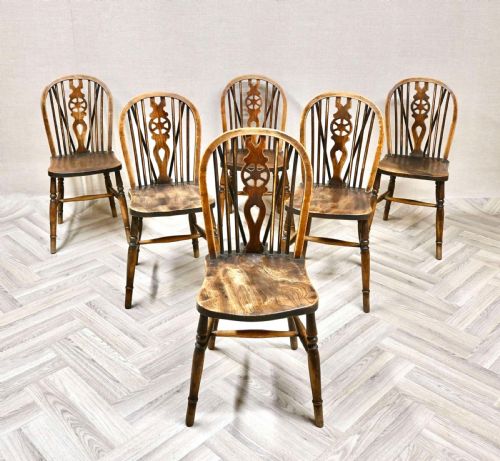
The most common forms on this page include nineteenth-century Windsor chairs featuring the characteristic pierced splat shaped like a carriage wheel. You will find single armchairs alongside sets of six or eight kitchen chairs.
Origins stretch across English country workshops, with regional variations appearing in the turnings and the combination of timbers. Many pieces date from the nineteenth century, though George III and Victorian examples also feature.
How they were made
Maker's workshops combined local hardwoods, selecting elm for the substantial, sculpted seats. This timber provided a tough, resilient surface that resisted splitting.
Frameworks relied on contrasting woods, pairing ash or beech for the spindles, legs, and bow backs. Steam bending shaped the continuous back rail while turned components locked the rigid structure together.
Antique Elm Wheelback Chairs Retail Price Guide 2026
Typical asking prices for elm wheelback chairs among the pieces listed under this phrase on Sellingantiques today, from the lower quarter to the upper quarter. They describe what is for sale here now, not the wider market.
At least one maker left their mark quite literally, stamping their name firmly into the timber.
What varies in quality
Quality depends heavily on the sculptural depth of the elm seat and the grace of the spindle turnings. Superior examples show careful shaping where the seat meets the thighs and back.
Construction integrity separates standard utility chairs from finer regional pieces. Well-matched grain in larger sets and robust wedged joints indicate superior cabinetmaking.
Fred Walker
The Antique Elm Wheelback Chairs Glossary
- Wheelback
- A Windsor chair back featuring a central wooden splat pierced and carved into the shape of a spoked carriage wheel. This design became popular during the nineteenth century in country kitchens.
- Windsor chair
- A chair built with a solid wooden seat into which the legs and back spindles are inserted directly. These seats often feature a saddle shape carved for comfort.
- Carver armchair
- A sturdy wooden armchair designed with arms, often used at the head of a dining table. They frequently match a set of smaller side chairs.
- Thames Valley
- A regional style of English chairmaking known for the use of yew wood and generous proportions. These pieces display distinct local turning patterns.
- Harlequin set
- A group of dining chairs that match in general style and material but show subtle variations in detail. Such sets were assembled over time rather than bought as one.
Antique Elm Wheelback Chairs: Frequently Asked Questions
Are wheelback chairs comfortable for daily dining?
The solid elm seats are carved with a depression that shapes to the body, offering surprising support during long meals.
Adding a simple cushion can make them even more practical for everyday kitchen use.
How do I care for antique elm furniture?
Keep the wood away from direct heat sources and sudden temperature shifts to prevent the timber from splitting.
Apply a light application of beeswax occasionally to maintain the natural lustre of the grain.
Can I mix different chairs around a table?
Harlequin sets of dining chairs have a long tradition in country homes, combining similar wheelback designs with slight variations in turning.
Matching the wood tone and approximate height creates a cohesive look across the room.
How do I distinguish regional chair styles?
Regional pieces often reveal their origin through the choice of secondary timbers like ash or yew and the specific profile of the leg turnings.
Thames Valley examples frequently exhibit distinctive grain patterns and larger proportions.