




Antique Elm Trunk
An antique elm trunk brings rich domestic timber and sturdy vernacular carpentry straight into a modern interior.
Antique Elm Trunk
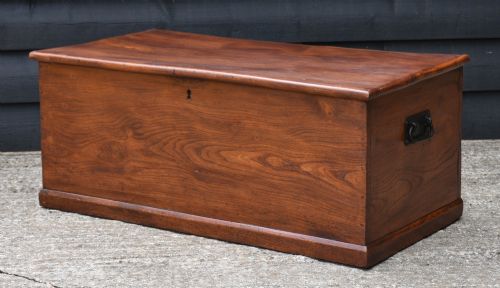
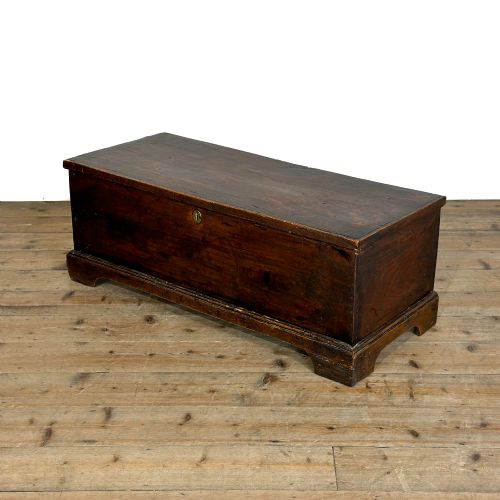
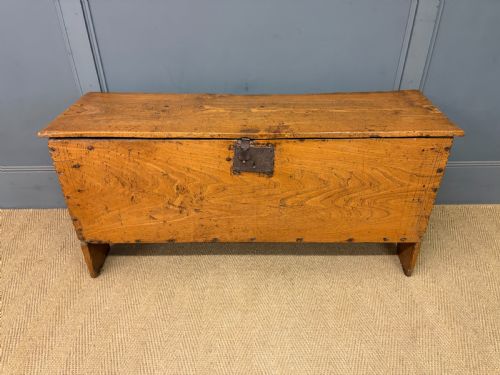
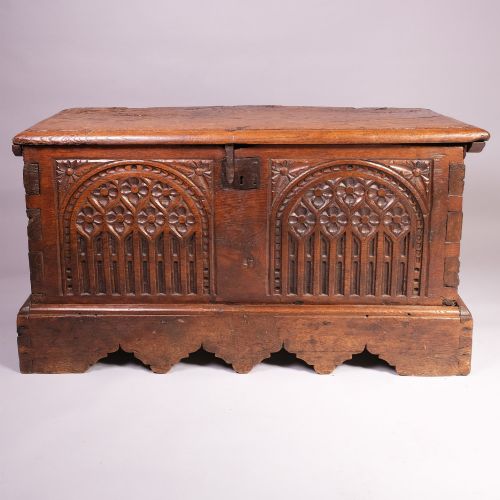
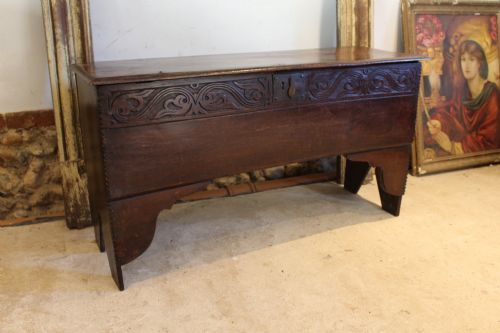
When searching for an antique elm trunk, buyers encounter robust domestic storage pieces ranging from humble six-plank coffers to refined Georgian blanket chests. The pieces recorded here span centuries of practical storage, appearing as blanket boxes, mule chests, and heavy strongboxes.
The version most commonly met on this page is the English Georgian blanket chest, often constructed with a flat top and simple board construction. Alongside these domestic items, regional vernacular pieces and occasional continental or Asian examples appear in the selection.
Constructed primarily for utility, these receptacles served to hold household textiles, valuables, or tools. Their forms vary from plain utilitarian boxes to pieces featuring internal tills and brass or iron mounts.
How they were made
Carpenters utilised solid timber boards joined by simple plank construction or dovetailing, frequently selecting elm for its toughness and resistance to splitting. Burr elm panels also appear in finer cabinet work, adding ornamental grain patterns to the surface.
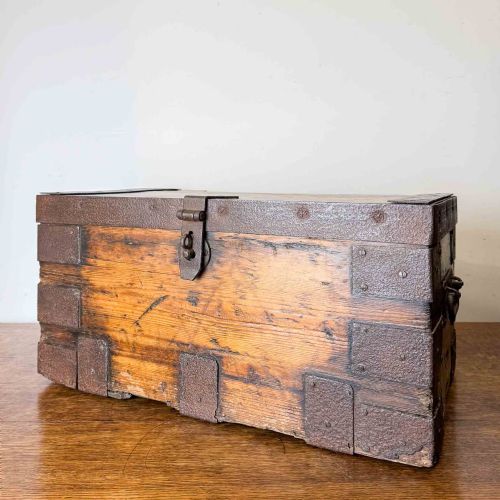
Iron and brass hardware provides structural reinforcement and security. Makers applied wrought iron hinges, hasps, carrying hoops, and strapwork to manage heavy use and protect the contents.
Listings feature elm alongside oak, pine, and iron, documenting forms from simple six-plank coffers to refined Georgian mule chests.
What varies in quality
The grade of an antique elm trunk depends heavily on the selectiveness of the timber and the refinement of the joinery. Plain domestic boxes made with basic edge-joined planks sit at one end, while pieces incorporating figured burr panels or sophisticated dovetail joints occupy the upper tier.
Hardware integration also dictates standard. Simple strap hinges indicate utilitarian workshop origin, whereas flush-mounted brass mounts and locking mechanisms reflect sophisticated urban cabinet making.
The Antique Elm Trunk Glossary
- Six-plank coffer
- A simple chest constructed from six individual boards joined directly at the edges. This represents the earliest and most direct method of box construction.
- Mule chest
- A storage chest fitted with one or more drawers beneath the main compartment. It bridges the transition between the simple trunk and the chest of drawers.
- Strongbox
- A heavily reinforced trunk designed for security, typically featuring substantial iron straps and robust locking mechanisms. These were utilised for protecting valuables and documents.
- Bandaji chest
- A traditional Korean storage chest featuring distinctive metal strapwork and hinges. These pieces utilise native elm and serve as refined furniture.
- Till
- A small internal compartment built into the upper corner of a trunk. It provides secure containment for smaller items separate from the main cavity.
Antique Elm Trunk: Frequently Asked Questions
What were antique elm trunks used for?
These pieces served primarily for domestic storage, holding textiles, bedding, and personal valuables securely within the home or during travel.
Their robust construction allowed them to double as benches or tables in modest households over the centuries.
How do I date an antique elm trunk?
Dating relies upon observing construction methods, such as hand-cut dovetails, ironwork style, and board thickness. Earlier examples often employ simple six-plank assembly or pegged joints.
Later pieces from the Georgian and Victorian periods display more refined joinery and occasionally incorporated brass hardware or internal drawers.
Where were these trunks made?
The pieces originate from various regions, with many hailing from English rural workshops as vernacular country furniture. Continental European and Asian examples also appear in the record.
Regional styles often reflect the local timber availability and domestic carpentry traditions of their source.
How do I care for an elm trunk?
Keep the timber away from direct heat sources and sudden temperature fluctuations to prevent the native wood from splitting. Maintenance generally involves applying appropriate natural waxes to nourish the surface.
Allowing the timber to breathe naturally helps preserve the historical patina developed over generations.