
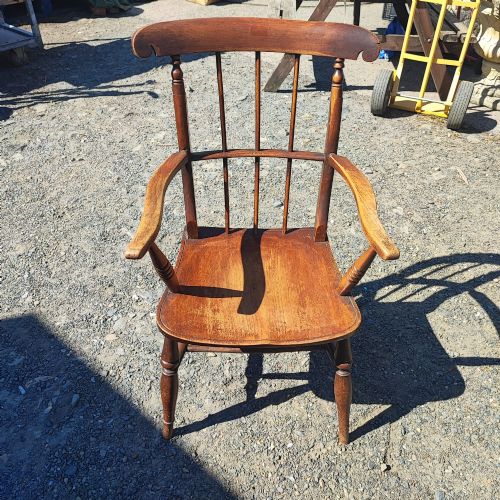
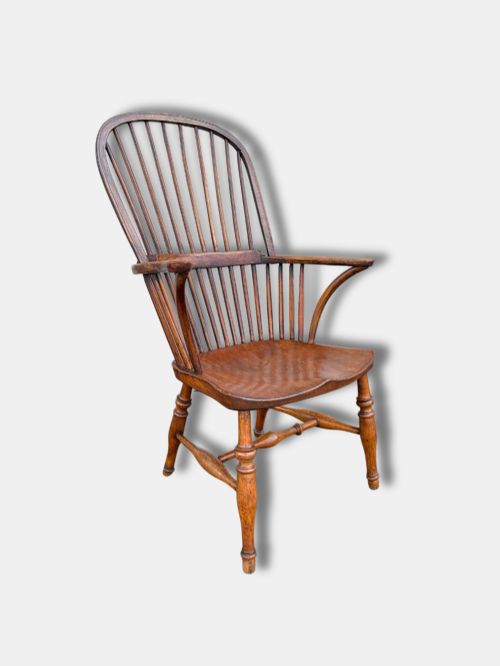
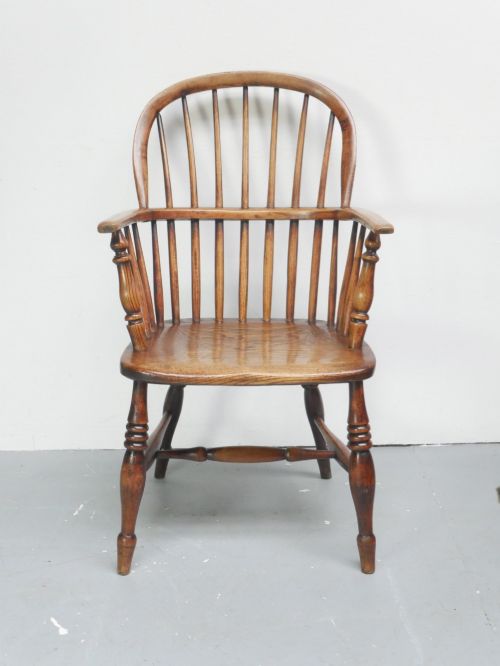
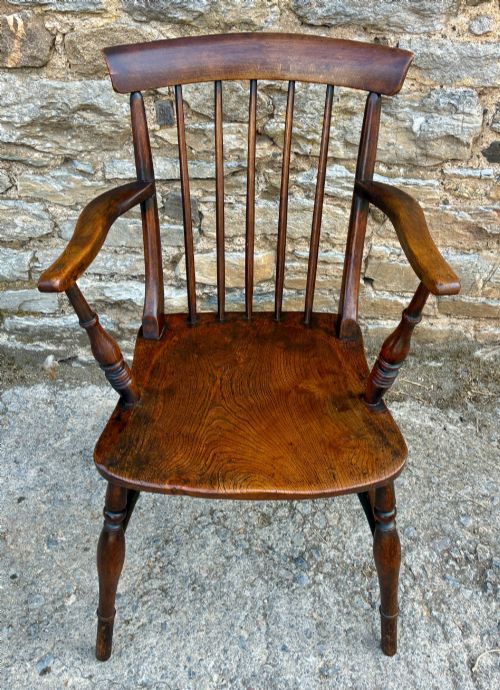
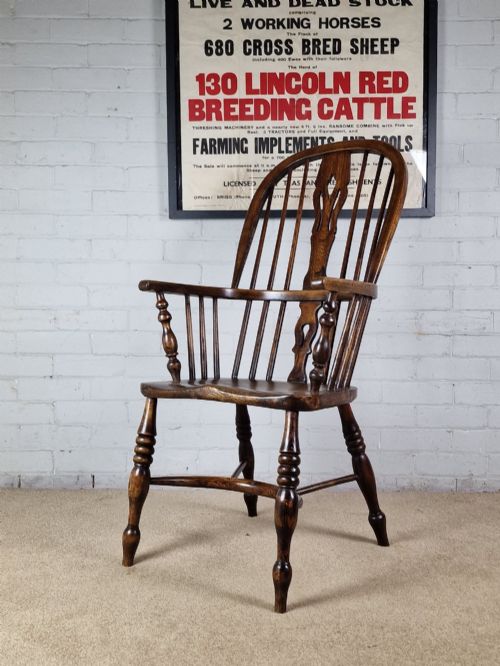
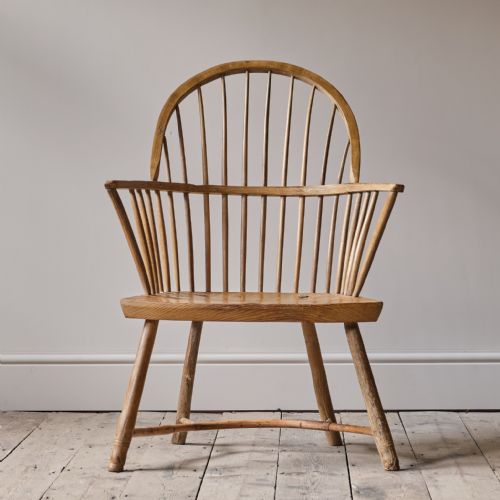
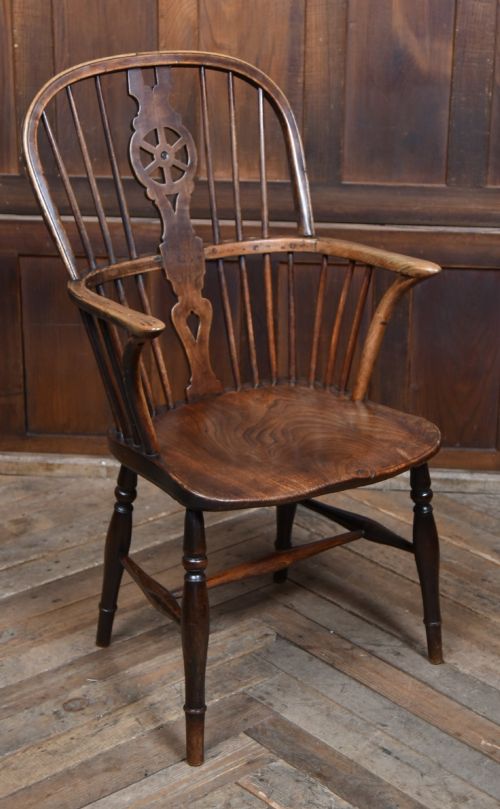
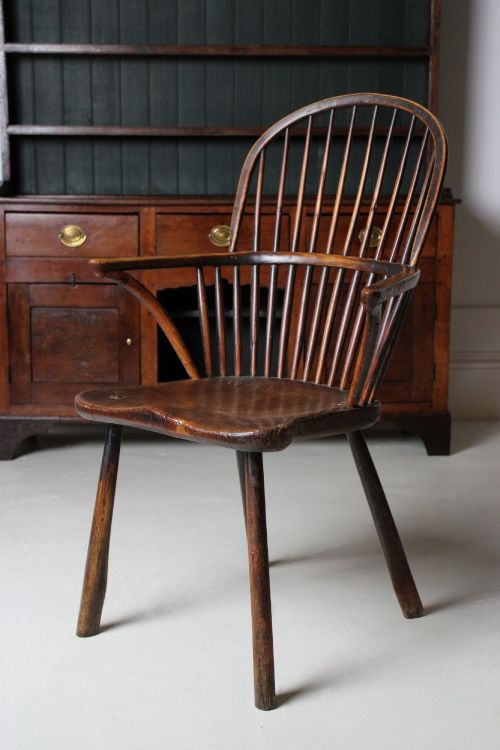
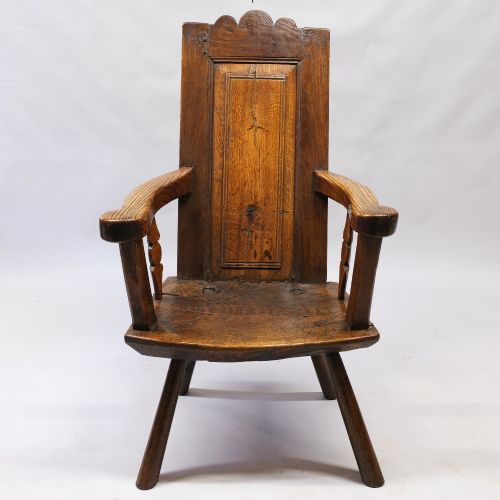
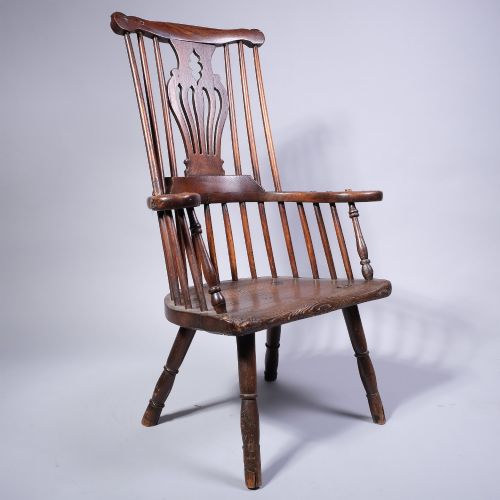
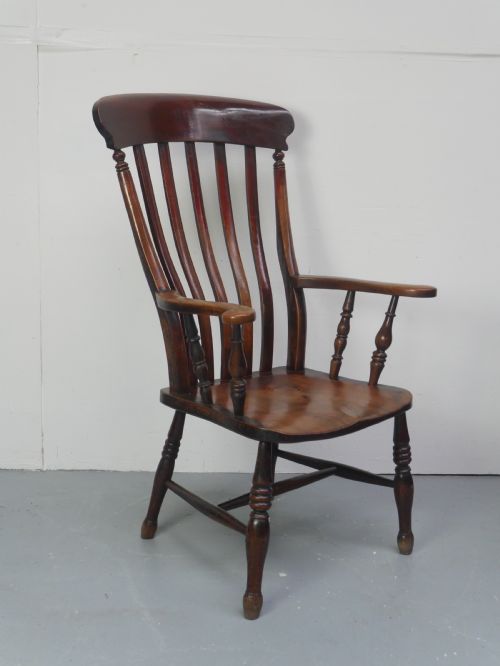
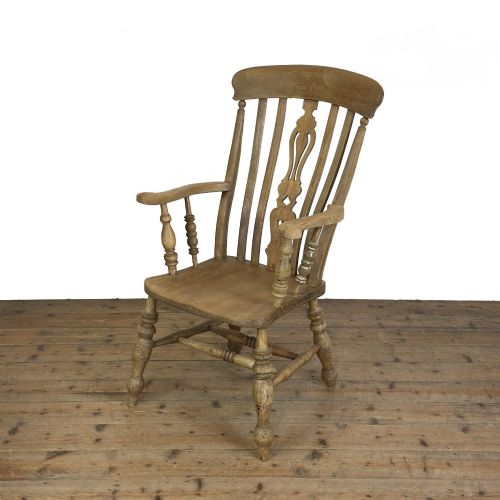
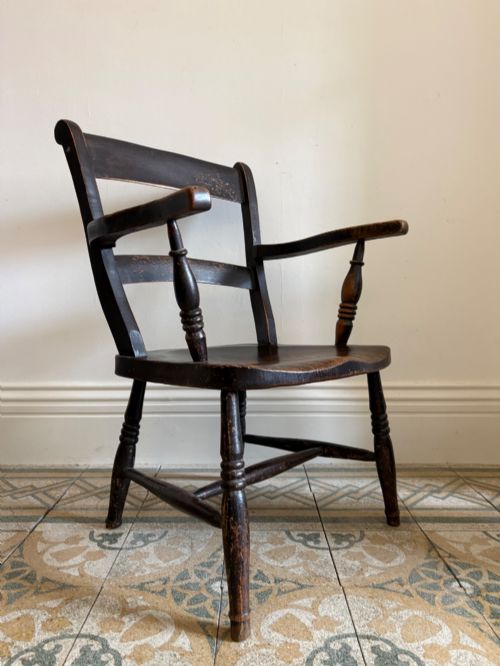
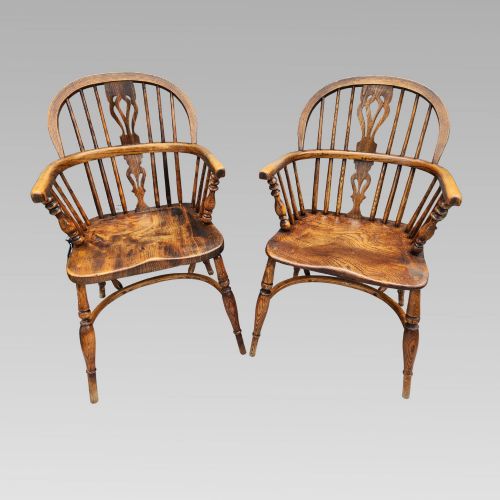

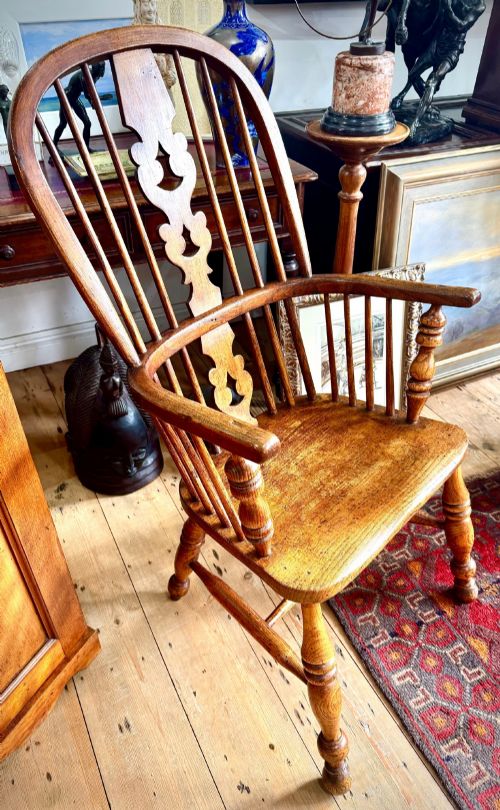
Antique Elm Fireside Armchair
An antique elm fireside armchair provides a sturdy seat built for warmth, combining traditional vernacular craftsmanship with durable country timbers.
Antique Elm Fireside Armchair
An antique elm fireside armchair draws on vernacular woodworking traditions, taking the form of a low seating choice suited to domestic hearths. Buyers searching for an antique elm fireside armchair encounter solid timber seats paired with supportive upright frames designed for daily use.
The pieces appearing on this page span several centuries, with examples stretching from the eighteenth century through the Victorian era. Windsor forms dominate the selection, alongside spindle-back, comb-back, and stick-back variations shaped by regional British makers.
Originating largely from English and Scottish country workshops, these chairs combine elm seats with supporting woods such as ash, beech, and fruitwood. The resulting forms range from simple farmhouse chairs to broader, more ornate Windsor armchairs.
How They Were Made
Makers utilised solid elm for the saddle-shaped seats, choosing the timber for its resistance to splitting when subjected to the stress of turned legs and spindles. This dense seat base typically receives mortise-and-tenon joints securing the vertical members.
Frameworks incorporate contrasting timbers such as ash, beech, and yew for the bentwood hoops, arms, and spindles. Steam-bending techniques allow straight-grained woods to form the curved backrests and arm bows characteristic of Windsor designs.
Surface finishes rely on traditional methods, occasionally including ebonising or simple waxing to protect the timber while preserving the natural grain patterns of the fruitwood and elm components.
Many historical country chairs bear the subtle indentations of past sitters who sat comfortably close to the warmth.
What Varies in Quality
The harmony of the timber combination dictates much of the visual success, as makers frequently paired a thick elm seat with well-matched ash or yew spindles. Subtle variations in the turning of the legs and arm supports separate standard production from more ambitious workshop output.
Structural integrity depends on the original tension within the steam-bent back bows and the tightness of the wedged joints securing the undercarriage. Pieces retaining their original surface patination demonstrate superior historical survival compared to examples stripped or heavily refinished.
Fred Walker
The Antique Elm Fireside Armchair Glossary
- Comb back
- A Windsor chair variation where the vertical spindles extend upward to support a horizontal top rail resembling the teeth of a comb.
- Hoop back
- A continuous bentwood rail forming the back and arms of a chair, secured directly into the solid wooden seat.
- Saddle seat
- A thick wooden seat carved with hollows and contours to provide ergonomic comfort for the sitter.
- Vernacular
- Objects designed by regional craftsmen for practical utility rather than following strict academic architectural styles.
- Windsor chair
- A timber chair constructed with an undercarriage and back fitted directly into a solid sculpted seat rather than a continuous frame.
Antique Elm Fireside Armchair: Frequently Asked Questions
What is an antique elm fireside armchair?
An antique elm fireside armchair is a traditional wooden seat featuring a solid sculpted elm bottom and an upright spindle or hoop back. These chairs were built in British country workshops for domestic hearthside use.
They combine vernacular woodworking techniques with durable local timbers like ash and beech, resulting in sturdy chairs designed to withstand generations of daily sitting.
How were these chairs used?
These chairs served as primary seating beside the domestic fireplace, where their solid wooden construction blocked drafts and provided sturdy support. Their compact proportions made them easy to position near open hearths.
Some examples include rocking bases, allowing sitters to rock gently while warming themselves by the fire in farmhouse kitchens and country parlours.
How do I live with an antique elm fireside armchair?
Living with one of these chairs involves placing it in a stable environment away from direct heat sources and sudden humidity changes to protect the timber. Regular dusting and occasional waxing keep the wood nourished.
Because of their robust construction, they function well as everyday seating in living rooms or studies, bringing historical character and tactile warmth to modern interiors.
How do I tell periods and types apart?
Dating these chairs involves examining the construction methods, turning styles, and the specific combination of woods used for the seat and superstructure. Eighteenth-century examples often feature lower profiles and broad comb-backs or panel backs.
Victorian pieces frequently incorporate steam-bent hoops, wheel-back carvings, or rockers, reflecting the industrial improvements and regional preferences of the later nineteenth century.