



Antique Elm Console
An antique elm console brings a tactile, honest grain to a hallway or living space through sturdy provincial craftsmanship.
Antique Elm Console
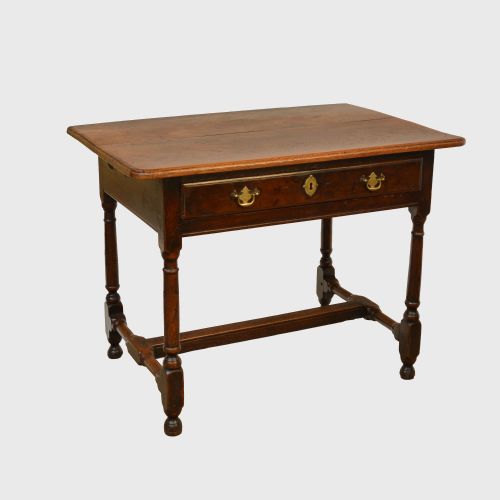
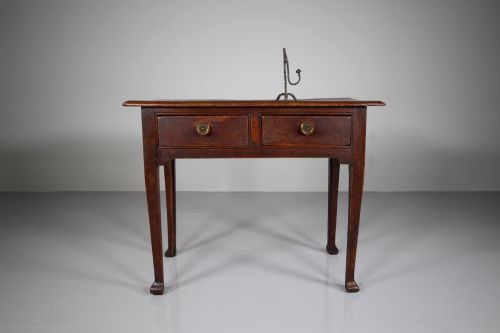
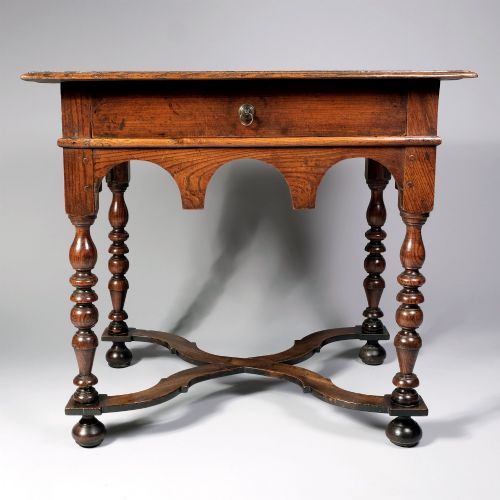
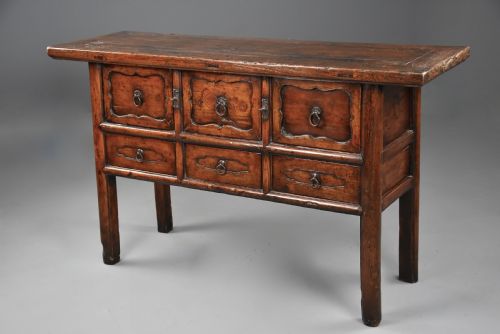
When searching for an antique elm console, buyers encounter a robust mix of English country furniture, European provincial forms, and Chinese export or domestic tables. These tables serve primarily as narrow surface furniture for hallways, living rooms, and dining spaces where floor space is at a premium.
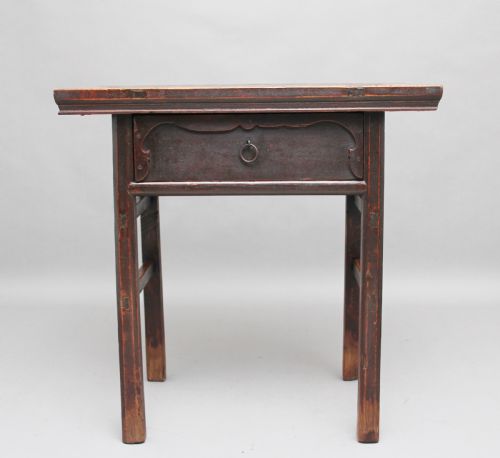
The English examples lean heavily towards the Georgian and William and Mary periods, often utilising secondary timbers like oak and fruit wood alongside the primary elm. Meanwhile, the Chinese provincial pieces bring distinct altar styles, side tables, and small dressers marked by structured joinery and substantial plank tops.
European variations also appear in the form of French country scrubbed trestle tables and Scandinavian interpretations. Across all these origins, the forms remain functional and understated, prioritizing the natural character of the timber over elaborate ornamentation.
How they were made
Makers relied on solid elm for its fibrous, interlocking grain which resists splitting, often pairing it with oak, yew, or fruit wood for structural integrity. Surfaces frequently display scrubbed finishes, natural wax applications, or occasional red lacquer coatings.
Joinery is straightforward and robust, utilising traditional pegged mortise and tenon joints to support heavy daily use in domestic or workshop settings. The integration of brass hardware or secondary hardwoods like sycamore appears selectively to strengthen drawers and aprons.
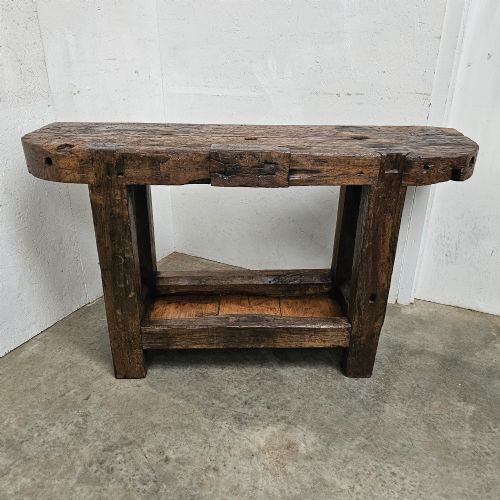
Several rustic pieces started life as French workbenches before finding a second career as hallway consoles.
What varies in quality
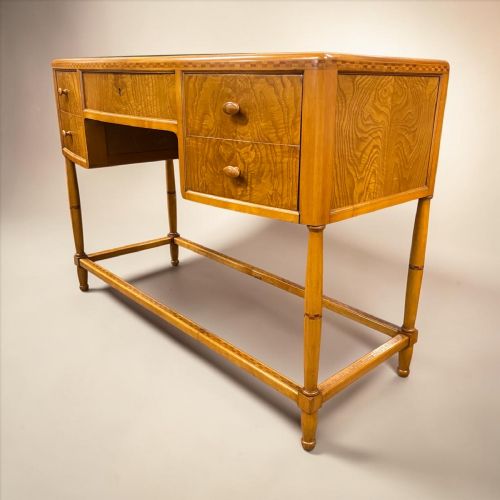
Quality rests primarily on the integrity of the timber and the depth of the surface patina accumulated over centuries of use. Tables featuring well-figured burr elm or untouched original scrubbed surfaces sit comfortably above those with heavily stripped or over-restored timber.
Proportion and construction detail also divide the range, as pieces with balanced drawer configurations and tight, honest joints demonstrate superior craftsmanship. The subtlety of the grain and the honesty of the wear distinguish standard utilitarian items from exceptional survivals.
The Antique Elm Console Glossary
- Patina
- The surface sheen and mellowing developed through age, handling, and regular polishing. This layered finish is a key indicator of authenticity and historical depth.
- Burr elm
- A growth deformity in the tree that produces highly swirled, knotted grain patterns. Furniture utilising this timber is prized for its decorative visual complexity.
- Altar table
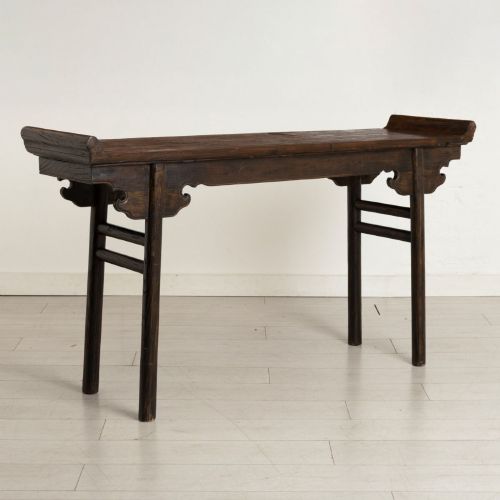
- A traditional Chinese form featuring an elongated narrow top with upturned ends or recessed legs. These pieces translate well into modern hallway consoles.
- Trestle table
- A table construction where the top rests on two or more support frames rather than four individual corner legs. This form often appears in French provincial and country workshops.
- Demi lune
- A half-moon shape characteristic of certain tea and console tables designed to sit flush against a wall. This format saves floor space while providing a distinct geometric profile.
Antique Elm Console: Frequently Asked Questions
Are these tables suitable for daily use?
Elm is a notoriously tough, fibrous wood that was historically chosen for heavy-duty furniture like workbenches and tavern tables. These consoles are built to handle everyday placement of keys, mail, and decorative items.
Routine care requires little more than occasional waxing to protect the surface. Avoid placing them in direct sunlight or extreme humidity to preserve the integrity of the antique timber.
What is the difference between English and Chinese elm consoles?
English country versions typically date from the Georgian or seventeenth centuries, often combining elm tops with oak or fruit wood bases. Their aesthetic is rooted in vernacular domestic life and tavern culture.
Chinese examples often feature distinct altar table proportions, floating panel tops, and traditional frame construction. They bring a completely different architectural silhouette while sharing the same tough, resilient timber.
How can I tell an older elm table apart?
Look closely at the construction methods, tool marks, and the way the wood has seasoned over generations. Hand-cut joints and timber movement tell a story of long-term organic settling.
Surface wear should look natural rather than manufactured, with soft edges and a deep, unforced patina. Examining the underside often reveals the honest framing methods of earlier centuries.