
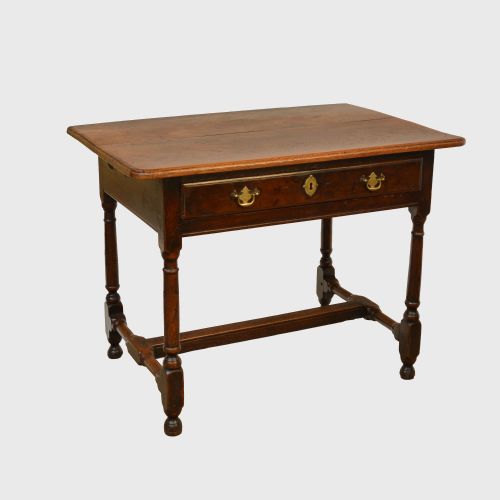
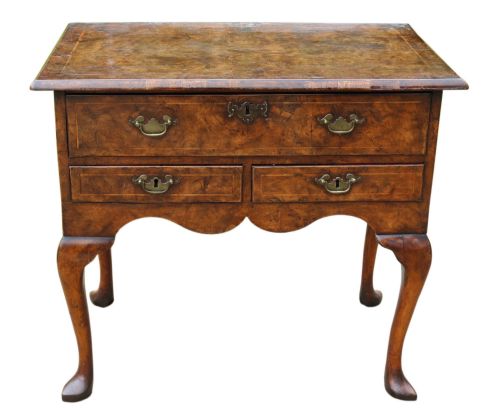
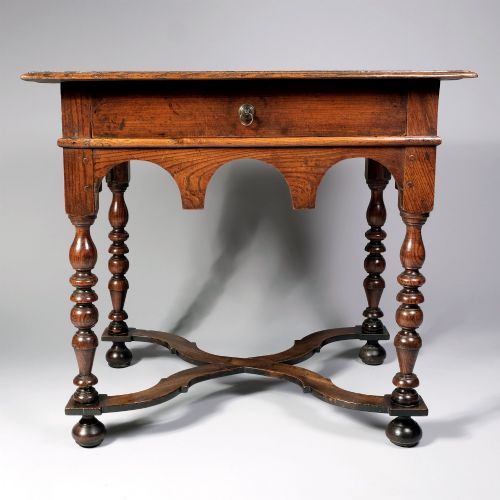
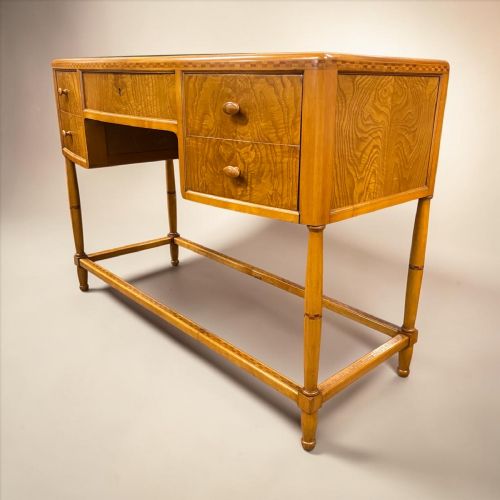
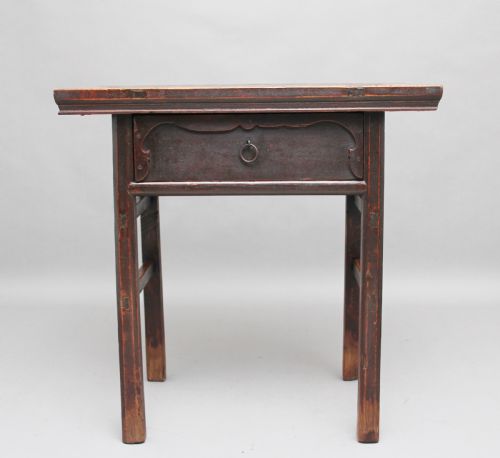


Antique Elm Hall Table
An antique elm hall table brings rustic grain and warmth to an entrance, spanning English country workshops and Chinese provincial makers.
Materials and Construction
Elm provides the primary structural timber, valued for its interlocking grain pattern which resists splitting during daily use. Cabinetmakers frequently paired this resilient wood with secondary timbers such as oak, fruitwood, and yew.
Surface treatments range from scrubbed natural finishes to traditional lacquer and polished patinas developed over centuries. Brass handles and drawer pulls appear on pieces fitted with storage, while structural joinery relies on pegged mortise and tenon joints.
Assessing Quality
The distinction between tiers rests upon timber selection, evident in figured, burr, or quilted grain patterns that elevate simple side tables into decorative focal points. Grain movement and plank width reveal the careful selection of the tree.
Proportion and structural integrity dictate the standing of a piece, particularly where legs meet the frieze in early English lowboys or Chinese altar tables. Original surface patination and minimal timber replacement preserve the historical character valued by collectors.
Elm timber was traditionally chosen for coffin boards and water pipes because it refuses to rot when kept wet.
The Antique Elm Hall Table Glossary
- Lowboy
- A small table with one or more drawers, standing on relatively tall legs. These pieces typically functioned as dressing tables or side tables in domestic interiors.
- Altar table
- A long, narrow console table originating from Chinese traditions, featuring distinct upturned flange ends or recessed legs. They served ceremonial purposes before finding utility in domestic halls.
- Demi-lune
- A half-moon shape used for console and tea tables designed to sit flush against a wall. This format conserves floor space in narrow hallways and entrance passages.
- Trestle table
- A board resting on two or more supports, utilised for side and working surfaces. French examples frequently pair elm tops with scrubbed sycamore frames.
- Burr elm
- A growth deformity in the tree that produces intricate, swirling grain patterns. Cabinetmakers prize this timber for decorative tabletops and drawer fronts.
Antique Elm Hall Table: Frequently Asked Questions
Where should I place an elm hall table?
These narrow tables suit entrance halls, narrow corridors, and transitional spaces where floor space is limited. Their shallow depth allows them to sit against walls without obstructing movement.
They function well beneath mirrors or artwork, providing a surface for daily items like keys and post while adding natural texture to the entryway.
How do I clean antique elm furniture?
Dust the surface regularly with a soft, dry cloth to prevent particulate buildup in the textured grain. Avoid modern chemical polishes that can degrade historical finishes.
Apply occasional applications of traditional beeswax to nourish the timber and maintain the soft patina developed over centuries of handling.
Are these tables sturdy enough for daily use?
Elm is inherently tough and resilient due to its interlocking grain structure, making these tables well-suited for practical placement in busy hallways. Historical examples have endured centuries of domestic life.
Joints remain stable when kept away from excessive heat sources and sudden humidity shifts, which can cause timber movement.