

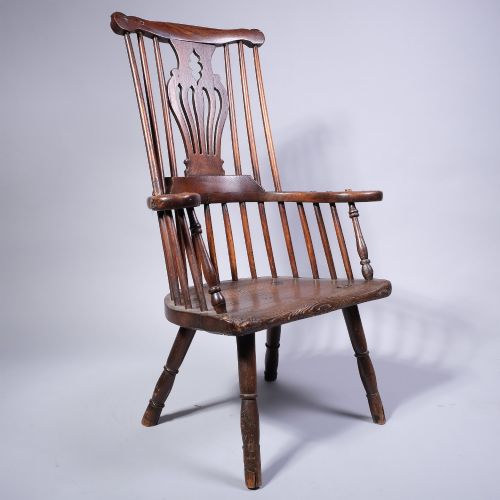
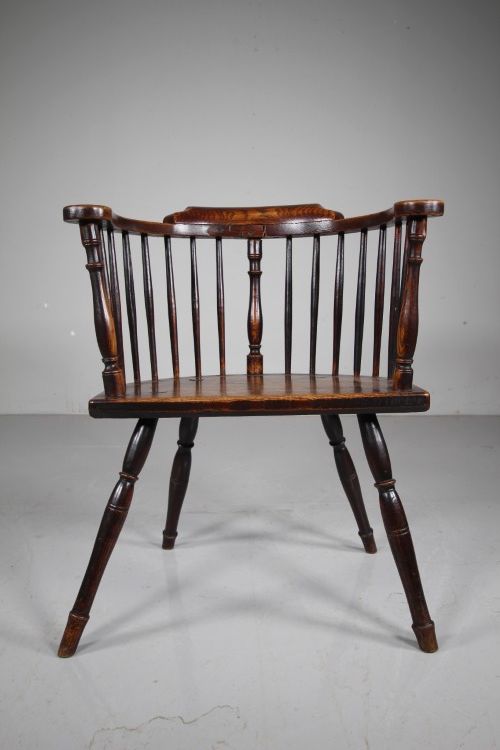


18th Century Elm Desk
An 18th century elm desk offers the robust timber and honest craftsmanship characteristic of Georgian country workshops.
18th Century Elm Desk
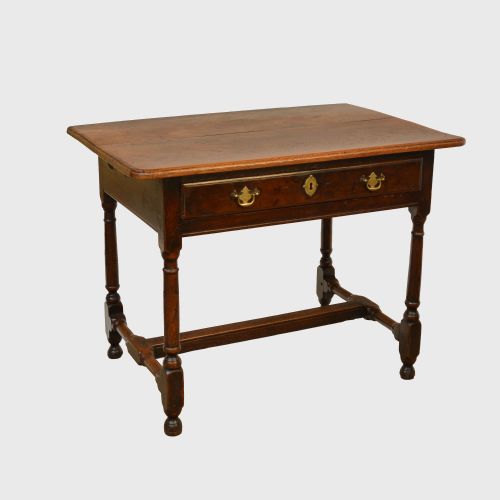
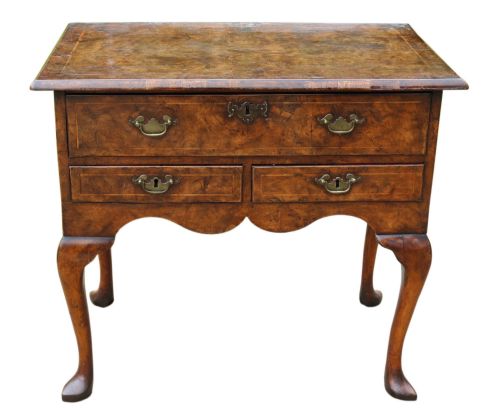
When searching for an 18th century elm desk, buyers encounter forms that range from compact kneehole desks and bureaus to table top variants produced during the Georgian and George II periods. These pieces originate primarily from regional English makers working within vernacular traditions.
The timber itself defines the appearance, often showing rich grain patterns and warm tones combined occasionally with secondary woods such as oak, ash, or fruitwood. The construction reflects utility and durability, suited for domestic writing and administrative tasks in country houses.
While formal walnut and mahogany furniture dominated metropolitan workshops, provincial cabinetmakers utilised locally sourced elm for its strength and distinctive figure. This creates a tangible link to 18th-century domestic life through practical writing furniture.
Assessing Quality and Character
The quality of an elm desk rests upon the selection of the timber, particularly where figured burr elm is utilised on the primary writing surfaces or drawer fronts. Superior examples display thoughtful book-matching and minimal patching in timber known for natural knots and movement.
Proportion and untouched patination further separate standard utilitarian pieces from exceptional regional work. Original brass drawer pulls, intact interior pigeonholes, and minimal timber replacement maintain the integrity and historical value of the piece.
Listings feature elm alongside secondary woods including oak, ash, fruitwood, and yew, spanning the 18th century through to the Victorian era.
The 18th Century Elm Desk Glossary
- Burr elm
- A growth deformity in the elm tree that produces highly figured, swirling grain patterns. Cabinetmakers prized this wood for decorative drawer fronts and writing surfaces.
- Vernacular
- Furniture made by regional craftsmen following local traditions rather than metropolitan academic designs. These pieces emphasise practical construction and regional material choices.
- Kneehole desk
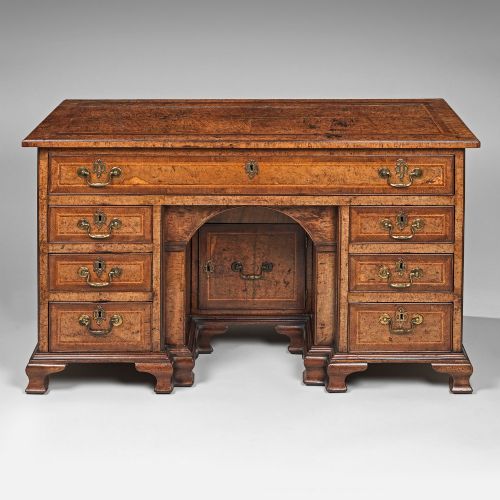
- A compact desk featuring a central recessed space for the legs flanked by pedestals of small drawers. This form became popular during the Georgian period.
- Bureau
- A desk featuring a sloping fall-front that opens to reveal a fitted interior of small drawers and pigeonholes. The writing flap rests upon pull-out lopers when lowered.
- Patina
- The surface sheen and deep colour developed by timber over centuries of handling, exposure to light, and waxing. It serves as an indicator of age and genuine use.
18th Century Elm Desk: Frequently Asked Questions
How do I identify genuine 18th-century elm?
Genuine 18th-century elm displays a distinctive interlocking grain that resists splitting, often accompanied by natural rippling or burr formations. Hand-cut dovetailing and the use of secondary timbers like oak inside the drawers confirm the period.
Examine the patination across the surfaces, looking for the dry, mellow finish that develops from centuries of cleaning and use. Regional tool marks and pegged joinery further distinguish authentic provincial furniture from later reproductions.
Where were these desks made?
These desks were produced predominantly in provincial English workshops by regional cabinetmakers and joiners. Rural makers utilised local hardwoods available in the British countryside rather than imported exotic timbers.
Because production was decentralised, specific regional characteristics often emerge in the choice of secondary woods such as ash or fruitwood. This local sourcing gives each piece a distinct geographical identity tied to English country craftsmanship.
How do I care for an elm desk?
Maintain the timber by applying traditional beeswax periodically to nourish the dry wood and protect the historic surface. Avoid placing the desk near direct heat sources or in fluctuating humidity to prevent the elm from warping.
Keep the piece out of direct sunlight to prevent the warm tones of the timber from fading. Gentle dusting with a dry cloth is sufficient for routine maintenance.
What is a kneehole desk?
A kneehole desk is a freestanding form featuring a central recess for the user's legs, flanked by two banks of small drawers. This configuration provides ample storage while maintaining a compact footprint suitable for smaller rooms.
During the 18th century, these desks served as refined writing tables for correspondence and estate management. The arrangement of drawers typically included a long shallow drawer above the knee space.