
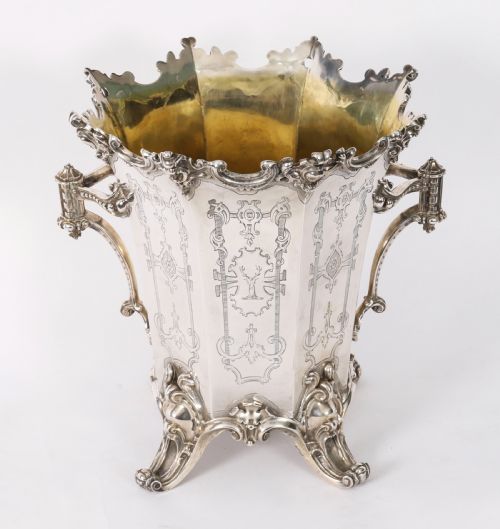


Antique Elkington Silver
These pieces of antique elkington silver span dining tables and writing desks, offering solid silver and silver plate from the nineteenth and early twentieth centuries.
Antique Elkington Silver
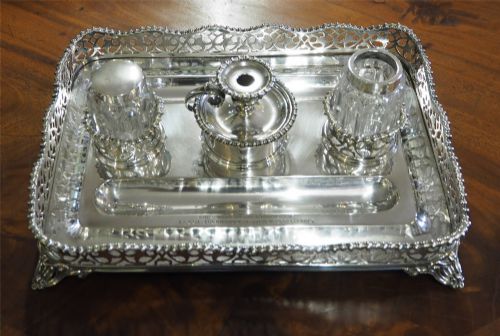
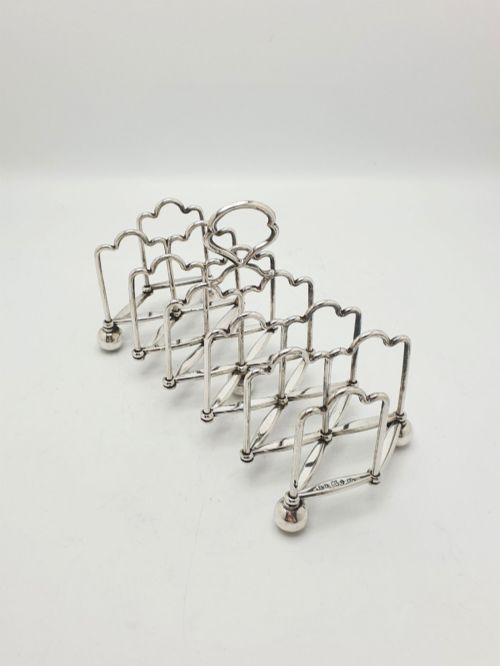
When examining antique elkington silver, buyers encounter functional and decorative items produced by the renowned firm from the nineteenth century onward. The selection spans domestic utility and display, including wine coolers, toast racks, candlesticks, tea services, and desk accessories.
Most pieces met on this page date from the Victorian period through the Edwardian era to the Art Deco years of the 1920s and 1930s. Forms range from simple table accessories to elaborate centrepieces, candelabra, and cased cutlery sets.
How they were made
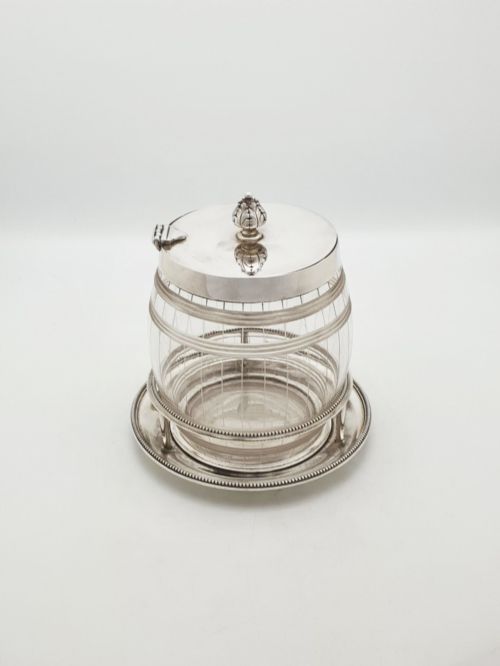
Makers utilised both solid sterling silver and electroplated nickel silver, a technique pioneered and perfected by the firm to democratise high-end tableware. Cut glass and crystal often combined with the metal framework in items such as biscuit barrels, claret jugs, and cruet sets.
Decoration relied on hand-engraving, chasing, and applied cast ornament in styles varying from Victorian Rococo Revival and Neo-Classical to Chippendale and Celtic revivals.
Listings demonstrate a broad material range including electroplated nickel silver, sterling silver, cut glass, brass, and oak.
What varies in quality
Quality in these items rests on the crispness of the cast mounts, the weight of the silver or the intactness of the plating over the nickel base, and the complexity of the design. Heavier gauges of metal and deep, detailed hand-chasing separate standard utility items from exhibition-grade presentation pieces.
The integrity of secondary materials, such as undamaged cut glass inserts and unblemished mirror plateaus, contributes significantly to the overall standard of a surviving piece.
Elkington & Co·Elkington, Mason & Co·Frederick Elkington
The Antique Elkington Silver Glossary
- Electroplated Nickel Silver
- A base metal alloy coated with a layer of silver using an electrical process. This innovation allowed manufacturers to produce durable tableware with the appearance of solid silver.
- Silver Gilt
- Silver that has been coated with a thin layer of gold on its surface. This technique was frequently applied to the interior of mugs, goblets, and presentation cups.
- Electrotype
- A replica or object produced by depositing metal in an electrolytic bath against a mould. Elkington utilised this method to reproduce historical metalwork for study and display.
- Salver
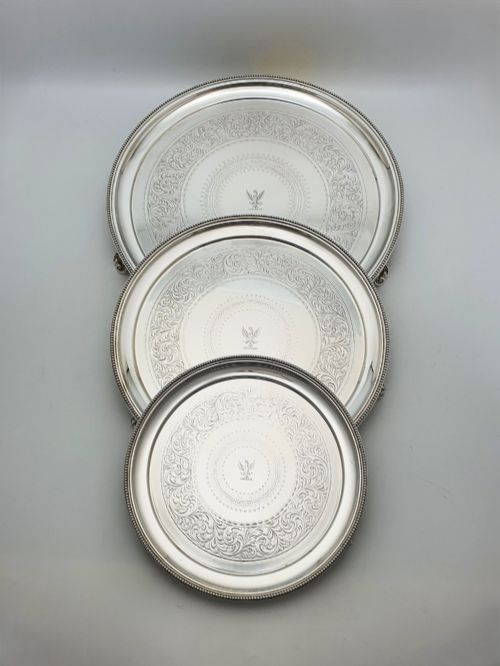
- A flat tray used for serving food or drinks, or for presenting cards and letters. These objects often rest on small feet and display engraved crests or floral borders.
- Cruet Set
- A matched set of small bottles or containers designed to hold condiments such as oil, vinegar, salt, and pepper. They typically sit within a dedicated metal frame or stand with a central handle.
Antique Elkington Silver: Frequently Asked Questions
How do I clean silver plate?
Maintenance requires a soft cloth and a specialised silver polish formulated for plated items to avoid wearing through the thin metal layer.
Aggressive scrubbing and abrasive cleaners should be avoided, particularly around engraved lines and raised cast mounts where the base metal might become exposed.
Did Elkington make solid silver?
While the firm is primarily known for pioneering commercial electroplating, production included substantial quantities of solid sterling silver items.
Sterling pieces bear standard British hallmarks indicating the assay office, date letter, and maker's mark, distinguishing them from electroplated nickel silver wares.
What styles were popular?
Victorian designs drew heavily on historical revivals, incorporating Rococo, Gothic, and Neo-Classical motifs into tableware and centrepieces.
Later production shifted towards cleaner architectural lines during the Edwardian period, culminating in the geometric forms of the Art Deco style in the 1920s and 1930s.
How can I date my piece?
Dating relies on manufacturer date letters stamped into the metal alongside the company marks, as well as stylistic clues from the period of manufacture.
Design registrations numbers found on items from the late nineteenth and early twentieth centuries also provide precise years of introduction.