


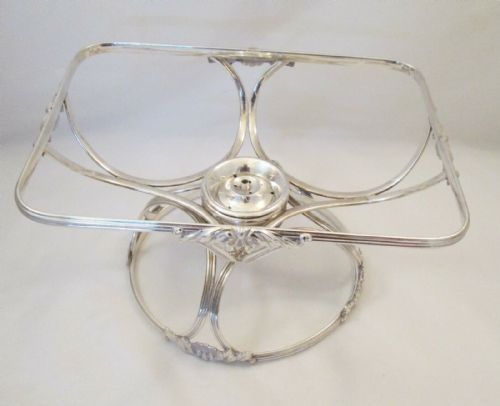
Victorian Silver Entree Dish
A victorian silver entree dish brings nineteenth-century dining elegance to the table, offering a covered vessel designed to keep fine food warm.
Victorian Silver Entree Dish
A victorian silver entree dish is a covered serving vessel designed for the nineteenth-century dining table to keep food warm during formal meals. These pieces typically take rectangular, double, or warming forms intended for presentation and practical use alike.
The versions most commonly found here include silver plated serving dishes and tureens dating from the nineteenth century, alongside matching pairs and specialised warming formats with burners or hot water compartments.
How they were made
The construction of these pieces relies heavily on silver plate, electroplated nickel silver, and sterling silver applied over base metals such as copper and nickel silver. Manufacturers utilised durable base metals to provide structural strength for heavy covers and handles.
Techniques range from traditional Sheffield plating methods to nineteenth-century electroplating processes, creating a hardwearing metallic surface suited to frequent dining use.
Some warming dishes include internal burners small enough to keep your midnight gravy bubbling with Victorian dedication.
What varies in quality
Quality in these items is determined by the weight of the underlying metal and the thickness of the silver application, which dictates how well the piece survives decades of polishing. Substantial gauge metal ensures the dish retains heat effectively and resists bending.
Execution of cast handles, engraved crests, and tight-fitting lids distinguishes standard production items from those produced by prominent silversmiths and workshops.
Hamilton and Inches·Mappin and Webb·Edward and John Barnard·Walker and Hall·Elkington·William Hutton and Sons·Dan Holy
The Victorian Silver Entree Dish Glossary
- Silver Plate
- A thin layer of silver fused or electroplated onto a base metal such as copper or nickel silver. This technique allowed makers to produce substantial vessels at a lower cost than solid silver.
- Electroplated Nickel Silver
- An alloy of copper, nickel, and zinc coated with a layer of pure silver using an electrical current. It became a standard manufacturing method during the nineteenth century.
- Entree Dish
- A covered serving vessel intended for the second course of a formal meal. These dishes often feature removable handles to allow the base to function as an independent open platter.
- Tureen
- A deep covered bowl designed for serving soups, stews, or entree items. They frequently appear as matched pairs in nineteenth-century dining services.
- Warming Dish
- A specialised serving vessel equipped with a compartment for hot water or a burner. These pieces were engineered to maintain food temperature throughout lengthy Victorian dinners.
Victorian Silver Entree Dish: Frequently Asked Questions
How were these dishes used at the table?
These covered vessels served to transport food from the kitchen and keep it warm at the dining table during multi-course meals. The lids often doubled as secondary serving platters when removed.
Many examples incorporated hot water compartments or burners underneath to ensure meat and vegetable dishes remained hot throughout long dinner parties.
Can I use silver plated entree dishes for dining today?
These items remain fully functional for modern dining and hospitality use, provided they are washed by hand with mild soap. Their thermal properties make them practical for keeping hot dishes warm on a buffet or dining table.
Care should be taken to avoid abrasive cleaners that might wear away the historic silver plating over time.
What is the difference between sterling silver and silver plate?
Sterling silver consists of a solid precious metal alloy containing a high percentage of pure silver throughout the entire object. Silver plate involves a thin coating of silver bonded to a cheaper base metal such as copper or nickel.
Objects made from silver plate often bear maker marks indicating the plating technique or the quality of the underlying white metal alloy.
How do I identify a warming dish?
Warming dishes feature double-walled bases, internal water reservoirs, or fitted frames designed to house a burner underneath. These structural additions allowed hot water or direct heat to warm the food cavity from below.
They are typically heavier than standard serving dishes and often include small side handles or spouts for filling and draining.