


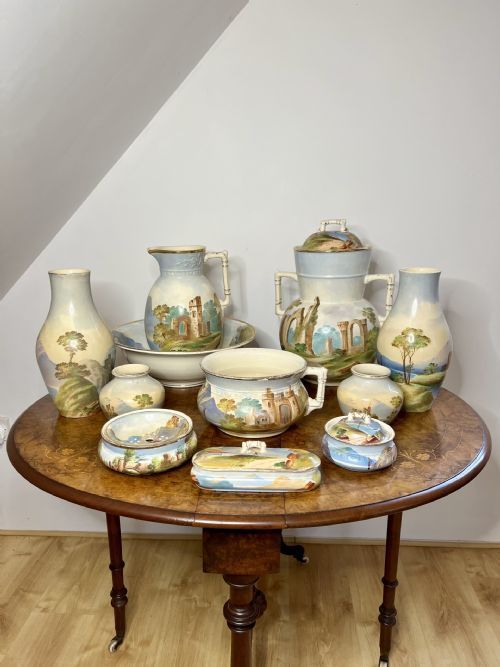


Antique Earthenware Wash Bowl
An antique earthenware wash bowl brings utilitarian history into the modern home, offering robust ceramic forms that once anchored the bedroom washstand.
Antique Earthenware Wash Bowl
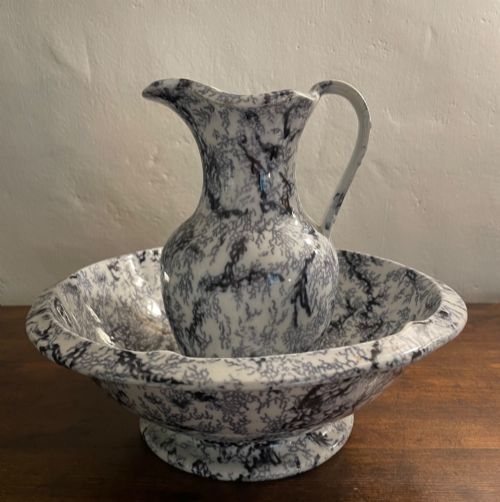
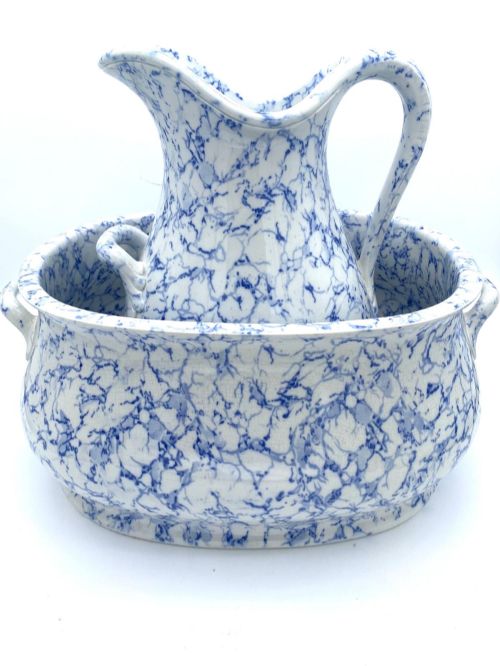
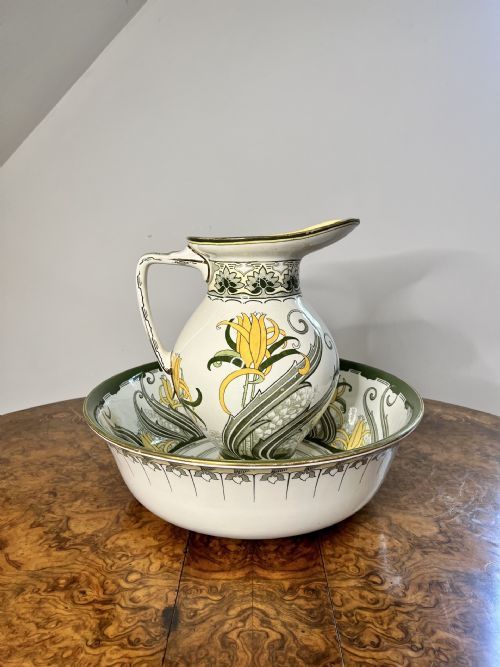
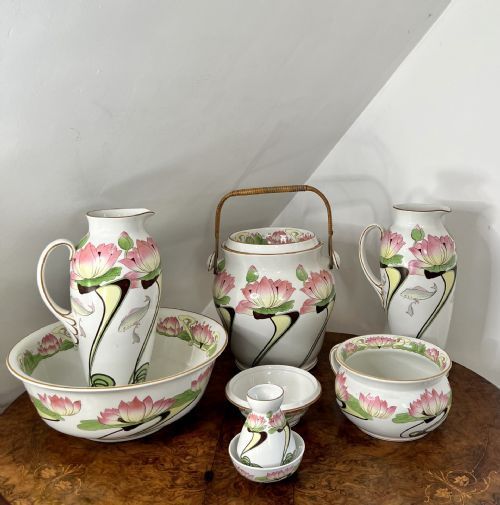
When you search for an antique earthenware wash bowl, you encounter domestic ceramic vessels produced primarily during the nineteenth and early twentieth centuries. These pieces encompass standalone basins, large footbaths, and components of matched jug and bowl sets.
The selections available here span diverse regional origins and periods, ranging from early nineteenth-century Staffordshire and Regency examples to Edwardian bathroom sets and French provincial tian bowls. Most items met practical hygiene needs in period bedchambers before retiring to decorative roles.
Makers such as Minton, Mann and Co, Doulon Burslem, and mark Jones & Sons appear among these earthenware vessels, alongside unmarked country pottery and Verwood pieces. Buyers most frequently meet Edwardian blue and white sets and Victorian transfer-printed basins on this page.
Materials and Manufacture
Potters shaped these vessels from earthenware and terracotta clay bodies, utilising lead glazes and specialised surface treatments to render porous ceramics watertight. Many examples employ transfer-printing techniques to apply blue and white or polychrome patterns onto the clay body before firing.
Makers integrated decorative elements such as gold leaf and enamel detailing on select Victorian and Edwardian pieces, while other utilitarian forms relied purely on the natural qualities of green glaze, creamware, or spongeware decoration.
Distinctions in Quality
The standard of an antique earthenware wash bowl depends on the crispness of the transfer print, the evenness of the glaze application, and the complexity of the ceramic form. Finer pieces demonstrate superior control during the kiln firing, resulting in smooth surfaces and well-defined decorative motifs.
Maker attribution and unusual decorative patterns, such as Italian Marble or Gaudy Welsh designs, elevate certain basins above standard utilitarian wares. The thickness of the ceramic body and the preservation of delicate enamel or gold leaf details also separate ordinary domestic vessels from exceptional examples.
Minton·Mann and Co·Doulon Burslem·mark Jones & Sons·Verwood
The Antique Earthenware Wash Bowl Glossary
- Earthenware
- Porous pottery fired at relatively low temperatures, requiring a glaze to hold water. It forms the structural base for the majority of these wash bowls.
- Flow Blue
- A nineteenth-century transfer-printing technique where the cobalt blue pigment intentionally blurred into the surrounding white glaze during firing. This chemical reaction created a hazy, atmospheric aesthetic popular in Victorian ceramics.
- Spongeware
- Pottery decorated by dabbing pigment onto the ceramic body with a sponge or fabric pad, producing mottled or speckled patterns. It represents a traditional country pottery technique.
- Creamware
- A refined, pale yellow earthenware developed in the eighteenth century and continued into the nineteenth. Its warm tone provided an ideal canvas for subsequent enamel decoration.
- Footbath
- A large, deep ceramic vessel designed for soaking feet, often possessing substantial proportions and side handles. These pieces double as decorative planters or heavy utility bowls today.
Antique Earthenware Wash Bowl: Frequently Asked Questions
How were wash bowls used originally?
These basins sat within wooden washstands in bedchambers, paired with matching jugs to hold water for morning and evening ablutions before indoor plumbing became standard.
Servants filled the jugs from larger water cans, and the user washed their face and hands over the bowl, often discarding greywater into a matching slop pail.
Can I use an antique wash bowl today?
Most of these earthenware vessels serve well for display, holding dried florals, or functioning as planters in a garden room or hallway.
Due to age, historical glaze crazing, and potential hairline cracks, modern daily use for washing or holding standing water is generally discouraged to preserve the ceramic.
How do I distinguish Victorian from Edwardian pieces?
Victorian examples often feature heavier transfer-printed patterns, robust terracotta bodies, or vibrant multi-coloured palettes like Gaudy Welsh styles.
Edwardian sets frequently lean toward lighter aesthetic sensibilities, featuring refined blue and white florals or coordinated bathroom set components that reflect early mass-production improvements.
What is a tian bowl?
A tian bowl is a large, traditional earthenware vessel originating from rural France, utilised originally in agricultural settings for food preparation or laundry.
These pieces are typically defined by heavy green lead glazes and generous diameters, setting them apart from standard English bedroom wash basins.