





Antique Earthenware Chargers
Antique earthenware chargers are large ceramic display plates spanning centuries of tin-glaze and transferware traditions.
Antique Earthenware Chargers
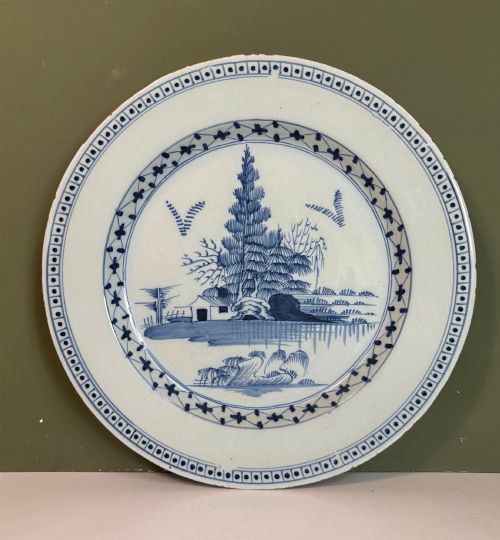
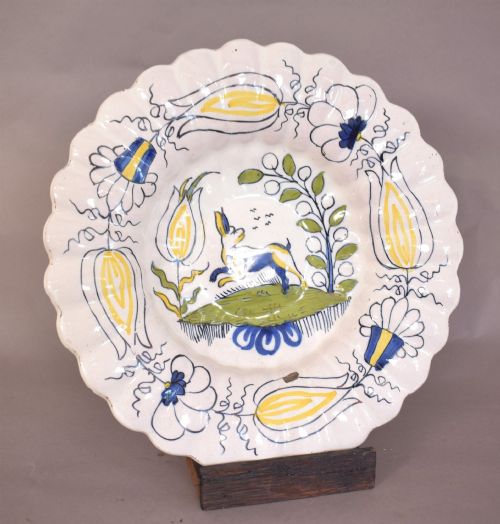
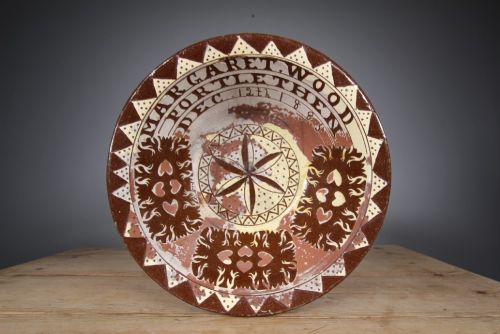
Antique earthenware chargers are wide ceramic plates designed primarily for display or service rather than daily dining. The pieces seen here span from the seventeenth century through to the twentieth century, encompassing English, Dutch, and continental European traditions.
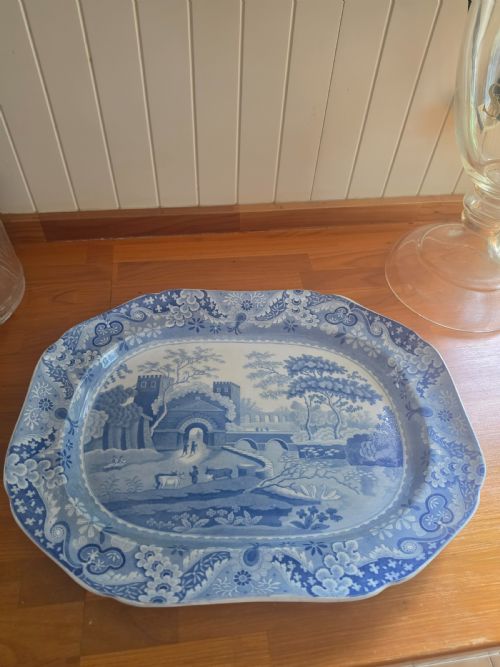
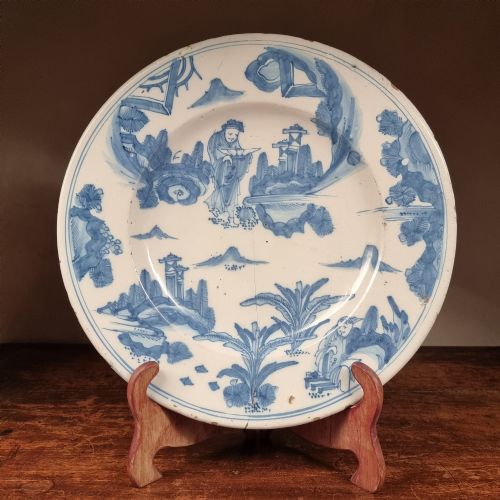
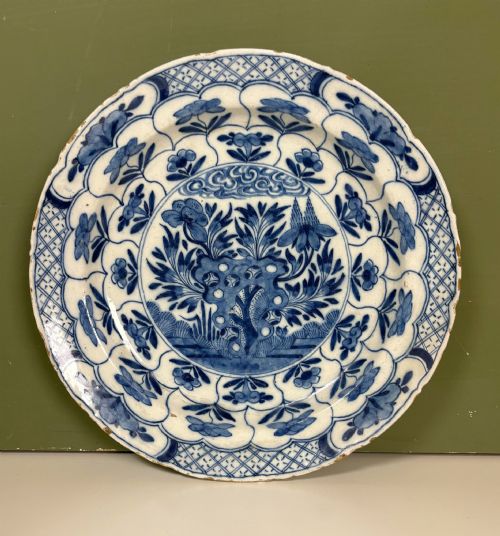
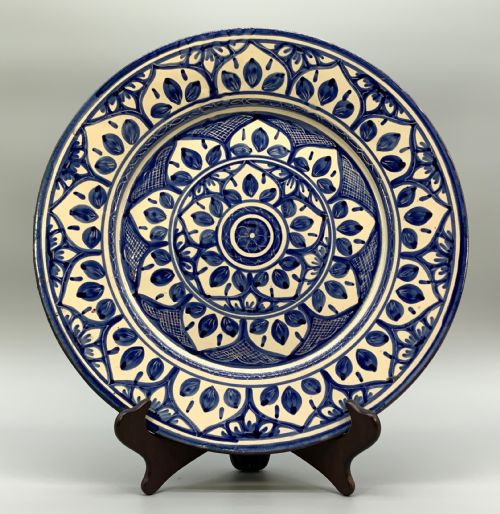
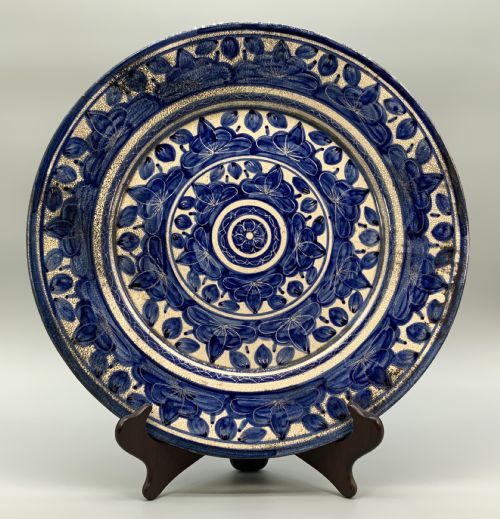
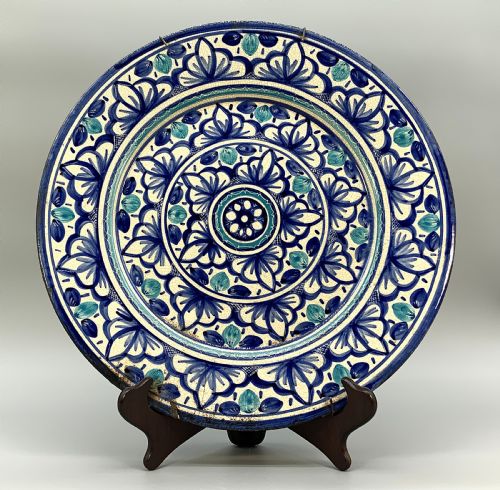
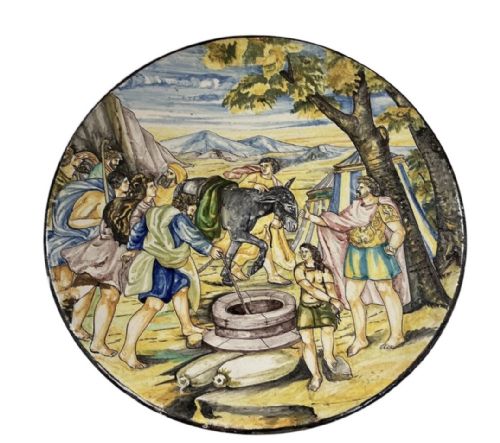
The most common forms on this page are tin-glazed earthenware dishes, often referred to as delftware or faience, alongside later transferware and creamware platters. These large vessels frequently display blue and white or polychrome hand-painted decoration.
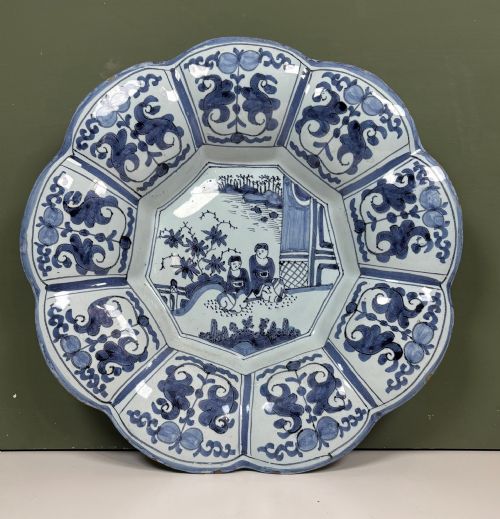
Examples range from early seventeenth-century Dutch chargers to eighteenth-century English delft and nineteenth-century transfer-printed pottery. Buyers encounter various styles including Chinoiserie, floral motifs, and landscape scenes across these broad periods.
How they were made
Makers shaped earthenware bodies from local clays before coating them in tin glaze to create a smooth, opaque white surface for painting. Artisans applied cobalt pigment, manganese, and enamel colours directly onto this absorbent unfired glaze.
Later nineteenth-century pieces utilised industrial transfer-printing techniques to apply intricate blue and white patterns onto creamware and earthenware bodies. Kiln firing fixed these pigments permanently into the glaze layer.
Seventeenth-century potters shaped lobed dishes to mimic exotic imported porcelain without ever seeing the distant East.
What varies in quality
Quality rests in the precision and confidence of the brushwork on hand-painted tin-glazed surfaces, where fluid lines distinguish superior artist execution from stiffer workshop output. The purity of the white glaze ground and the vibrancy of polychrome enamels also define the upper tier of pieces.
Structural stability and the crispness of transfer-printed detail separate standard utilitarian wares from exceptional decorative plates. Firing uniformity across wide diameters indicates superior kiln management during production.
Seaton Pottery·John Rogers and Son
The Antique Earthenware Chargers Glossary
- Tin-Glaze
- A ceramic glaze made opaque by the addition of tin oxide, providing a white background for painted decoration. This technique defines traditional delftware and faience production.
- Charger
- A large decorative plate or serving platter exceeding standard dinner plate diameters. These pieces were historically used for ceremonial service or wall display.
- Polychrome
- Decoration employing multiple distinct colours, typically applied by hand over a tin glaze. Eighteenth-century examples frequently combine blue, yellow, green, and manganese pigments.
- Transferware
- Pottery decorated by pressing a design engraved on a copper plate onto tissue paper, which was then transferred onto the ceramic body. This process allowed intricate scenes to be reproduced consistently.
- Creamware
- A refined earthenware developed in England during the eighteenth century, characterised by a pale yellowish-buff glaze. It offered a lighter and more durable alternative to traditional tin-glazed pottery.
Antique Earthenware Chargers: Frequently Asked Questions
What is an antique earthenware charger?
An antique earthenware charger is a large decorative dish produced from local clay bodies, often coated in tin glaze and painted by hand. These substantial vessels were traditionally made for ceremonial table service or prominent wall display.
Surviving examples demonstrate centuries of shifting ceramic techniques, from seventeenth-century Dutch delftware to nineteenth-century English transfer-printed earthenware.
How do I tell seventeenth-century chargers apart from eighteenth-century ones?
Seventeenth-century pieces often feature heavier earthenware bodies, lobed rims, and distinct Kraak-influenced styles derived from imported porcelain. Tin glazes from this earlier era tend to show specific thickness variations and characteristic tonal depths.
Eighteenth-century chargers frequently display refined shapes, lighter creamware bodies, or more naturalistic floral and Chinoiserie polychrome decoration painted across the tin glaze.
Were these chargers used for food?
Many large chargers served primarily as decorative showpieces on sideboards or walls during feasts and formal gatherings. Some forms, however, also functioned as serving platters for communal meats and course dishes.
Because tin glaze and earthenware can craze or chip with heavy utensil use, surviving examples often retain their decorative appeal through limited handling.
How do I display antique chargers safely?
Displaying antique earthenware chargers requires secure wall-mounting brackets designed specifically for wide, heavy ceramic platters without putting pressure on the rim. Alternatively, stable plate stands support large chargers safely on sturdy surfaces.
Keeping pieces away from direct sunlight and sudden temperature fluctuations protects the tin glaze and hand-painted pigments from environmental stress.