



Antique Dutch Secretary Desk
An antique dutch secretary desk brings substantial cabinetry and intricate floral inlay into a room, offering a functional writing slope alongside concealed drawers.
Antique Dutch Secretary Desk
An antique dutch secretary desk encompasses bureau bookcases, fall-front escritoires, and slant-front desks designed for domestic correspondence and storage. These pieces primarily date from the eighteenth and nineteenth centuries, spanning distinct stylistic phases from the baroque period through the rococo revival.
How they were made
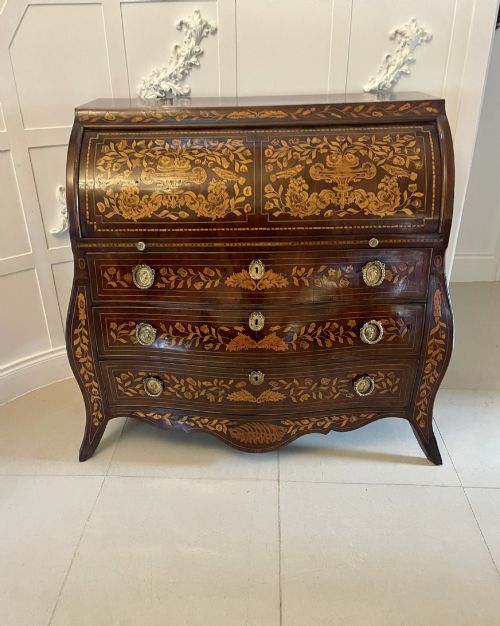
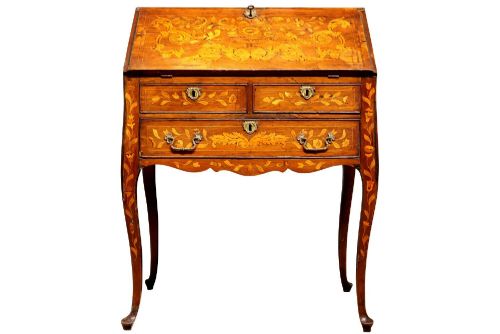
Cabinetmakers constructed the carcase using structural timbers such as oak and mahogany, applying choice veneers of walnut, burr walnut, and fruitwood to the exterior surfaces. Intricate floral marquetry utilised varied fruitwood inlays, carefully cut and fitted by hand to create elaborate botanical displays across the fall fronts and drawer banks.
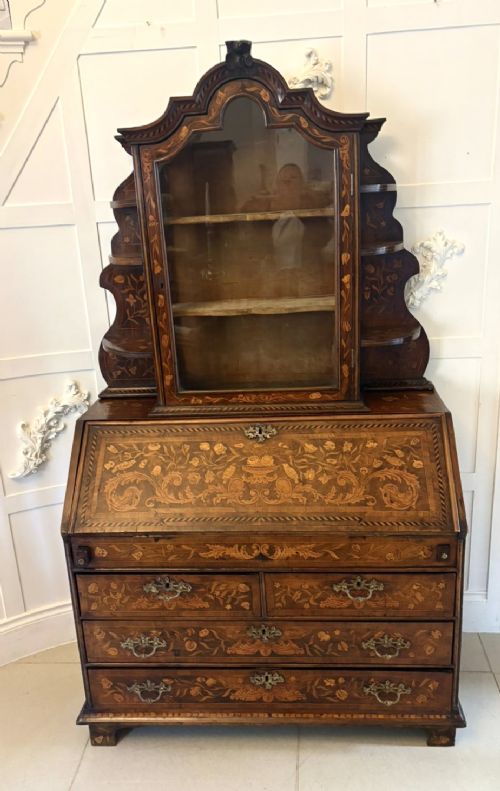
Brass hardware, including key escutcheons and drop handles, was cast and fitted to secure the compartments and drawers. Glass panels were incorporated into the upper bookcase doors to display books and porcelain.
Many pieces hide secret compartments behind dummy drawers, originally designed to keep family love letters safe from prying housemaids.
What varies in quality
The refinement of the floral marquetry dictates much of the visual distinction across these pieces, with finer examples displaying complex, multi-toned fruitwood inlays that cover the entire facade. The presence of a bombé shape, requiring advanced joinery to curve the timber outwards, elevates the architectural ambition of the desk.
Cabinet proportion and the choice of primary timber also differentiate the range, as burr walnut and rich mahogany veneers combined with taller bureau bookcase configurations represent more elaborate workshop production.
The Antique Dutch Secretary Desk Glossary
- Marquetry
- Decorative veneer work forming pictorial patterns using various woods. In these pieces, floral motifs dominate the surface design.
- Bombe
- A bulging or swelling contour found on the lower drawer section of certain desks. This curved profile demands specialist carpentry.
- Bureau bookcase
- A writing desk with a fitted slope combined with an upper shelved cabinet for books. These tall two-part pieces provide combined storage and workspace.
- Escritoire
- A writing cabinet featuring a fall-front flap that lowers to reveal inner pigeonholes and small drawers. It serves the same function as a bureau.
- Burr walnut
- Wood harvested from walnut tree growths, producing swirling, highly figured grain patterns. Cabinetmakers prized this veneer for high-end furniture facades.
Antique Dutch Secretary Desk: Frequently Asked Questions
How were these desks used originally?
These pieces served primarily for private correspondence, record-keeping, and the storage of valuable papers within affluent households. The sloping fall-front provided a dedicated writing surface, while internal compartments secured letters and documents.
The upper bookcase sections allowed owners to display leather-bound volumes and prized objects. Writing drawers and secret compartments kept personal items hidden from casual view.
How do I tell an eighteenth-century desk from a later piece?
Eighteenth-century examples often display deep cabinet proportions, rich walnut or mahogany primary timbers, and hand-cut floral marquetry with organic botanical variations. Construction methods utilise traditional hand-planed secondary woods and early dovetail joints.
Nineteenth-century pieces and later revivals can incorporate altered proportions, machine-sawn elements, or differing marquetry styles. Examining the interior secondary framing helps clarify the period of manufacture.
How do I care for burr walnut veneer?
Burr walnut veneer requires stable room humidity and protection from direct sunlight to prevent the thin decorative wood from drying out or splitting. Gentle dusting with a dry cloth preserves the polished surface without introducing moisture.
Avoid placing these desks near direct heat sources such as radiators or fireplaces. Occasional application of appropriate furniture wax maintains the lustre of the timber.