




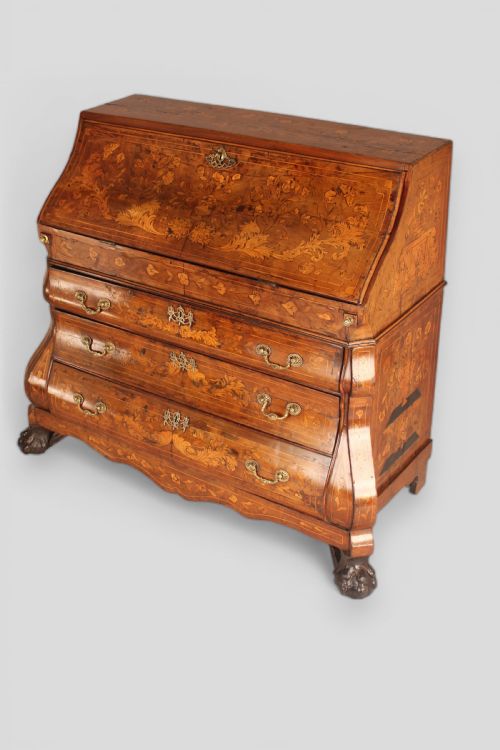


Antique Dutch Bureau
An antique dutch bureau brings sculptural timber and intricate floral marquetry to a room, offering a fitted writing space with hidden compartments.
Antique Dutch Bureau
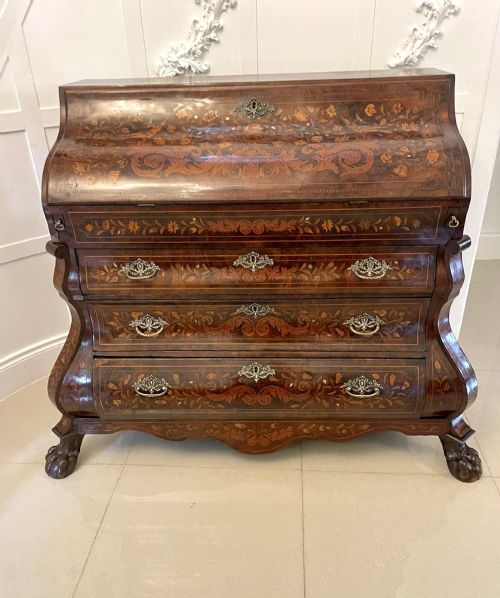
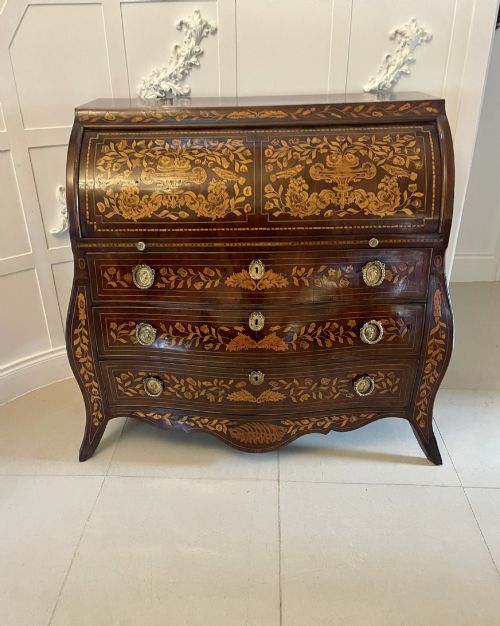
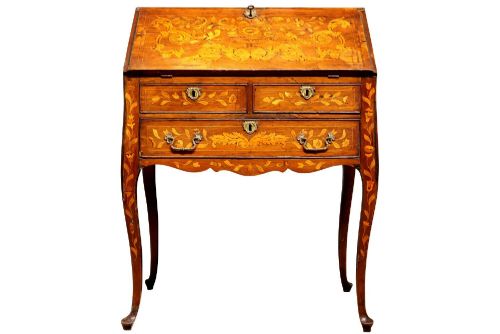
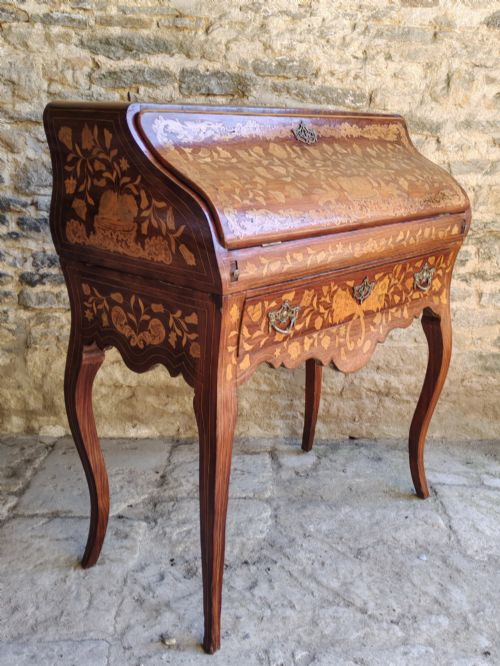
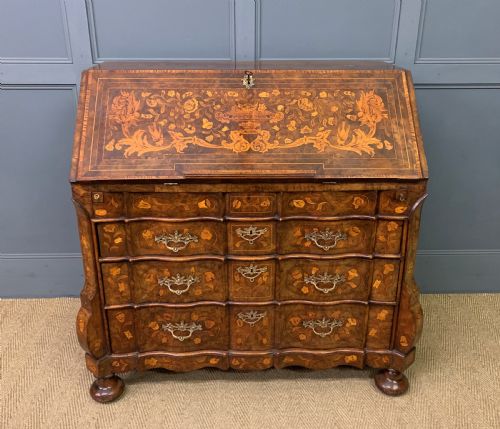
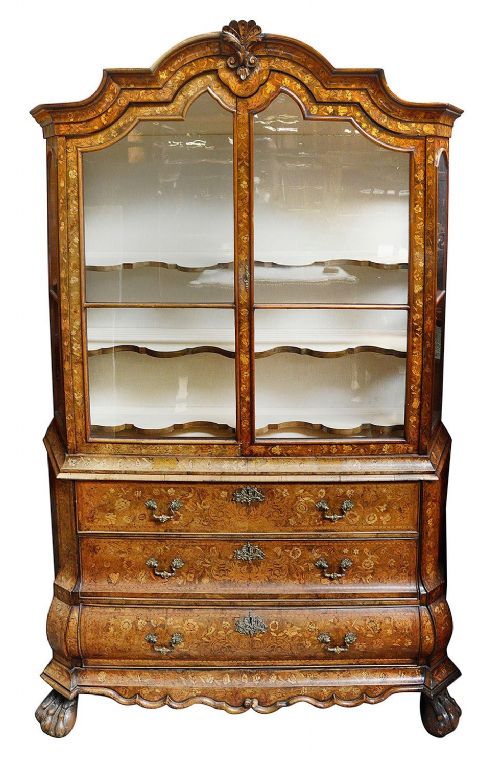
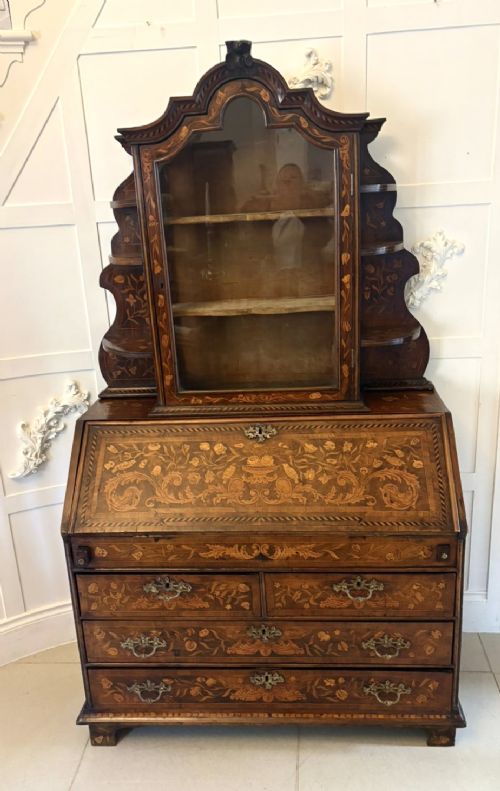
When someone searches for an antique dutch bureau, they encounter timber writing furniture spanning the eighteenth and nineteenth centuries, often showing the dramatic curved lines of the bombe profile. The most common form on this page combines a sloping fall-front desk with multiple lower drawers, while taller bureau bookcases and display cabinets also appear.
These pieces emerge from periods including Dutch Baroque, Dutch Rococo, and later nineteenth-century revivals. Walnut and burr walnut dominate the selection, frequently decorated with elaborate fruitwood marquetry or floral inlay that covers the entire exterior surface.
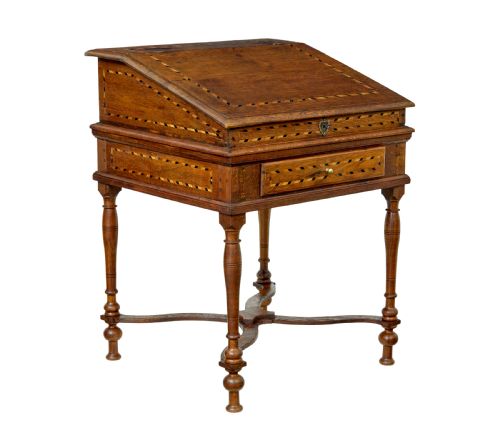
Beyond the standard fall-front desk, the records show related forms such as cylinder bureaux, writing slopes, and secretaires. Cabinet variations include upper glazed sections designed for book storage or the display of porcelain.
Materials and construction
Cabinet makers built the carcase using structural timbers such as oak or elm, applying rich veneers of walnut and burr walnut across the visible surfaces. Fruitwood inlay and marquetry form elaborate floral and botanical patterns, contrasting light and dark botanical tones against the figured walnut ground.
The characteristic bombe shape relies on complex curved framing and shaped drawer fronts that swell outward toward the base. Brass handles, escutcheons, and hinges secure the drawers and fall-front while providing functional contrast to the dark timber.
The documented periods span the eighteenth century, the nineteenth century, and specific years including seventeen-fifty, eighteen-hundred, and nineteen-twenty.
Distinctions in quality
The standard of an antique dutch bureau rests upon the precision and complexity of its marquetry work. Finely executed floral motifs across curved surfaces demonstrate superior cabinet-making skill compared to simpler veneer arrangements.
Proportion and the handling of the bombe swell define the visual success of the piece. The alignment of grain patterns across moving parts and drawers indicates the care taken during construction.
Morison of Edinburgh
The Antique Dutch Bureau Glossary
- Bombe
- A bulging or outward-curving profile characteristic of continental furniture. This swelling shape requires advanced woodworking techniques to shape the drawers and carcase.
- Marquetry
- The art of applying pieces of veneer to a structure to form decorative patterns. Artisans use various fruitwoods to create intricate floral displays.
- Bureau bookcase
- A writing desk with a fitted bureau base surmounted by an enclosed set of shelves or display cabinets. These taller combination pieces provide both working and storage capacity.
- Fall-front
- A hinged writing flap that lowers to provide a horizontal surface for correspondence. Inside, this flap reveals small pigeonholes, secret compartments, and small drawers.
- Escutcheon
- A flat plate of brass surrounding a keyhole. It protects the surrounding wood from wear caused by the insertion of keys.
Antique Dutch Bureau: Frequently Asked Questions
What is inside an antique dutch bureau?
Lower drawers provide general storage for household items or linens, while the main writing flap drops to reveal an internal arrangement of small drawers, pigeonholes, and occasionally hidden compartments.
Upper sections on bureau bookcase variants provide shelved space behind glazed doors for displaying books or collection objects.
How do I care for burr walnut and marquetry?
Keep wooden furniture away from direct sunlight and heat sources to prevent the burr walnut veneer from drying and splitting over time. Regular dusting with a soft, dry cloth preserves the polished surface without moisture damage.
Apply occasional appropriate wax polish to nourish the timber and maintain the natural lustre of the fruitwood marquetry.
What distinguishes eighteenth century pieces from later ones?
Eighteenth-century examples often exhibit deeper hand-carving, natural timber patination, and organic integration of floral marquetry across bombe forms. Cabinet makers of this era relied on solid construction methods specific to Georgian and Baroque workshops.
Nineteenth-century pieces, including revivals around eighteen-hundred and later decades, sometimes utilise machine-cut veneers or stylistic revivals that combine earlier decorative motifs on standard oak or walnut carcases.
Where were these bureaux placed in a home?
These pieces served as principal writing and administrative furniture in private studies, libraries, or formal reception rooms. The locking fall-front kept private correspondence and financial records secure.
Bookcase variants functioned additionally as display furniture where owners could present valued books and decorative objects.