


Antique Dumbwaiter
An antique dumbwaiter serves food and drink across tiers without needing a servant at the table.
Antique Dumbwaiter
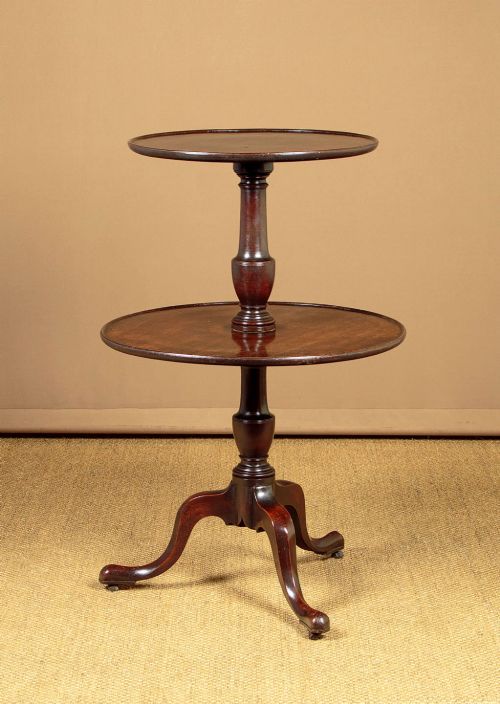
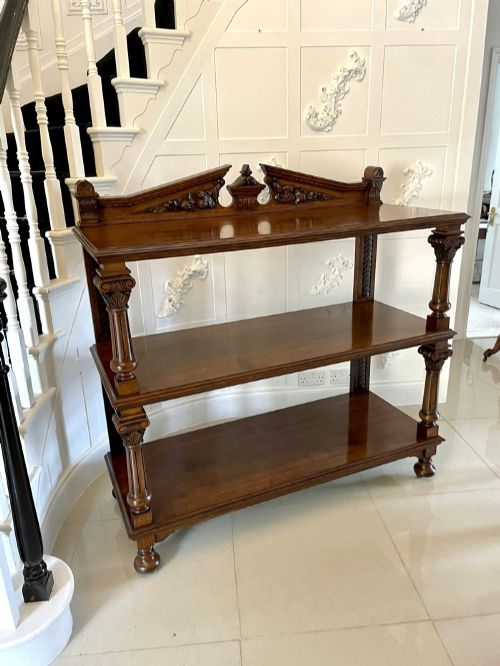
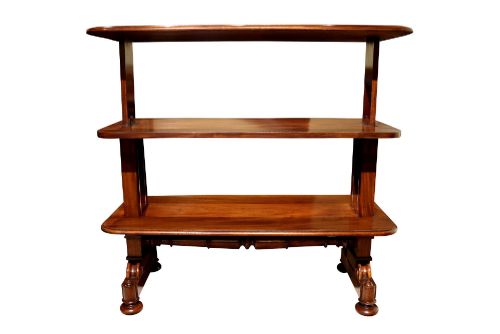
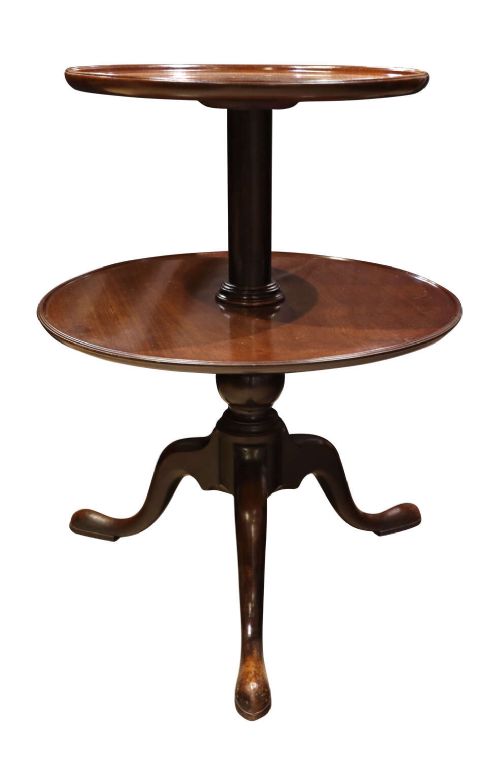
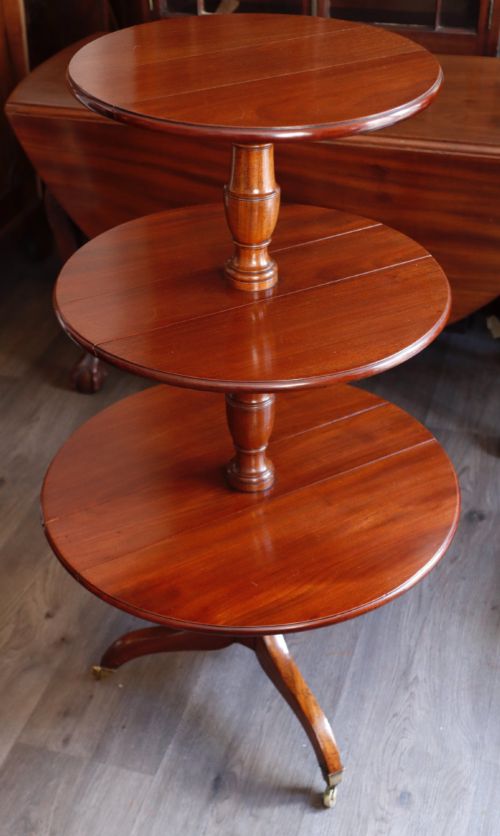
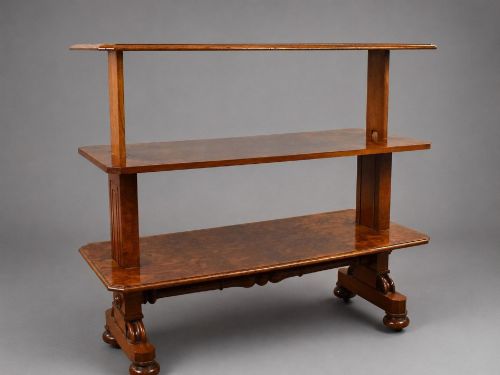
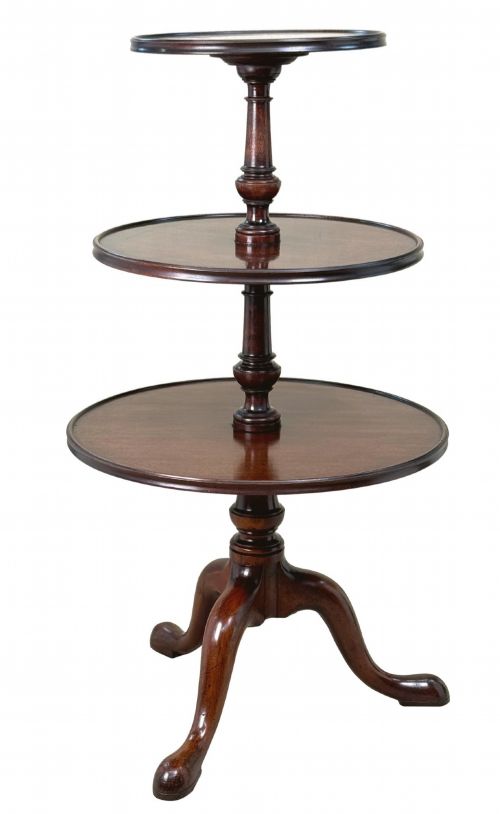
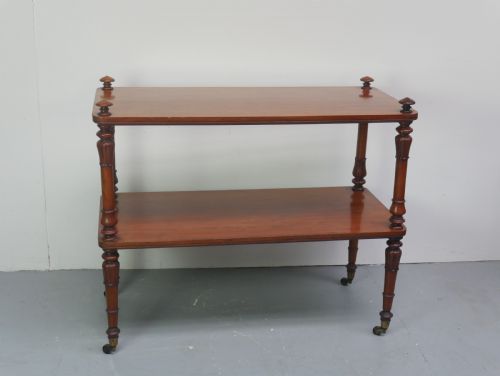
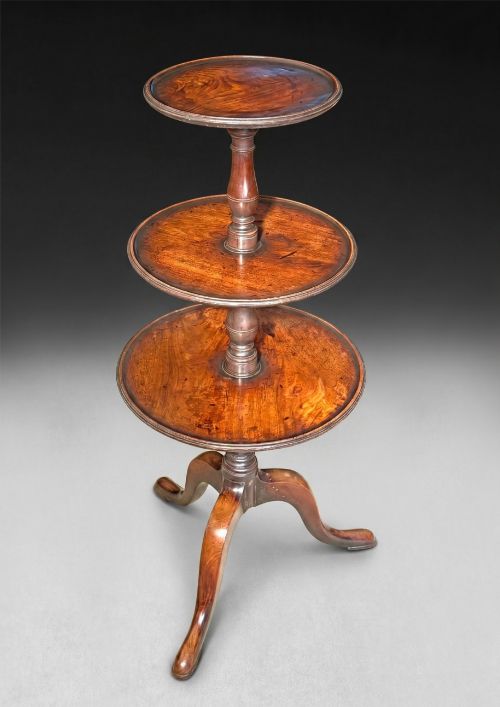
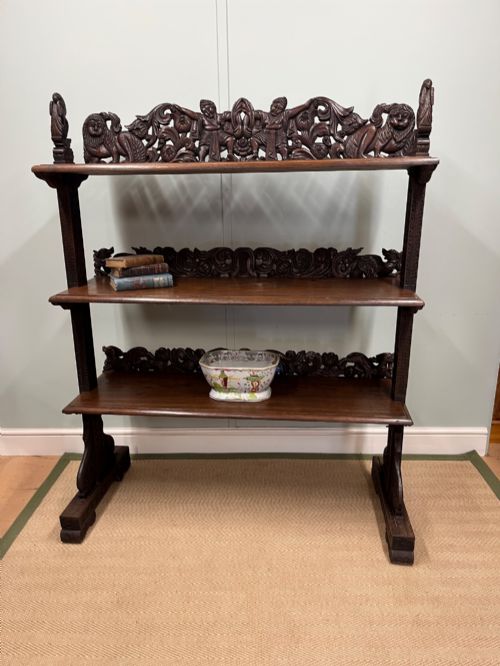
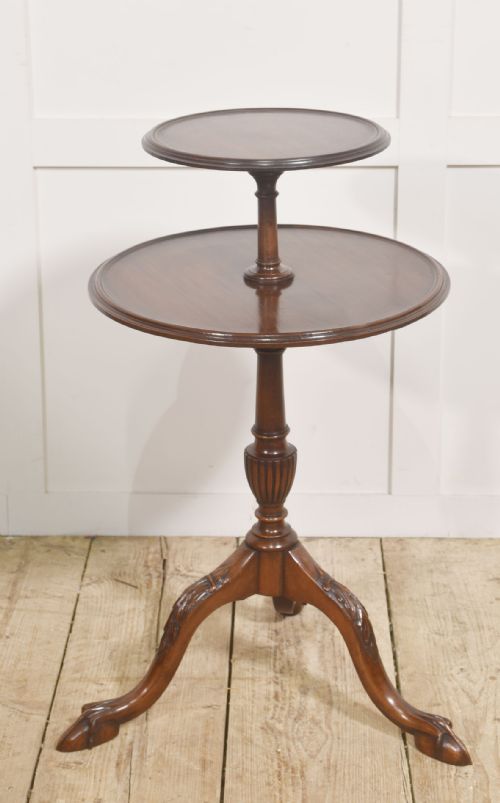
An antique dumbwaiter is a tiered serving table designed to hold dishes, glassware, and bottles during meals. The forms range from circular revolving trays on central tripod pedestals to multi-tiered rectangular sideboards and buffets.
The pieces appearing most frequently on this page date from the eighteenth and nineteenth centuries, spanning the Georgian, Regency, and Victorian eras. These items served dining rooms where guests preferred to help themselves to wine and courses without domestic staff present.
Makers constructed these serving pieces primarily in mahogany, oak, and walnut, employing folding actions, rising mechanisms, and castors to make them portable and adaptable. They function today as side tables, occasional stands, or display tiers in modern rooms.
What varies in quality
The merit of an antique dumbwaiter rests upon the selection of timber, such as fiddleback mahogany or burr walnut, and the precision of its joinery. Cabinet makers who turned solid pedestals with clean lines and balanced proportions produced pieces that endure stably across centuries.
Mechanical complexity separates standard servers from superior pieces, particularly in adjustable rising columns, revolving mechanisms, and folding tiers. Smooth movement in the brass or wooden fittings indicates high standards of original construction.
Listings feature eighteenth-century Georgian tripod tables alongside nineteenth-century Victorian walnut buffets and brass-mounted campaign stands.
Oetzmann & Co
The Antique Dumbwaiter Glossary
- Dumbwaiter
- A multi-tiered piece of dining furniture designed to hold food and drink without the presence of servants. They typically feature graduated circular trays on a central pedestal or rectangular shelves on a buffet base.
- Tripod
- A three-legged base commonly found supporting the central pillar of Georgian and Regency revolving dumbwaiters. This construction ensures stability on uneven dining room floors.
- Etagere
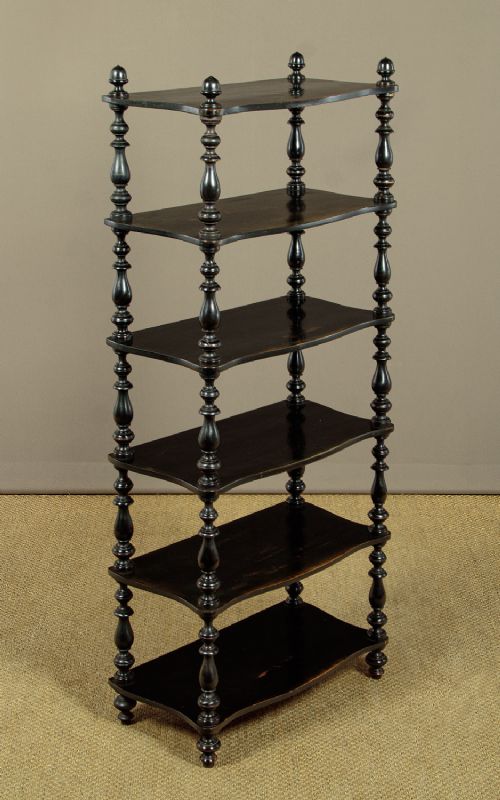
- A set of open shelves or tiers used for displaying or serving items. These pieces often share similar tiered formats with traditional dumbwaiters.
- Rise and fall
- A mechanical function allowing the tiers of a dumbwaiter to adjust in height. This mechanism uses internal screws or ratchets operated by a central spindle.
- Fiddleback mahogany
- A figured timber grain displaying ripples resembling the back of a violin. Cabinet makers prized this wood for decorative table tops and serving tiers.
Antique Dumbwaiter: Frequently Asked Questions
How were antique dumbwaiters used?
Dining hosts placed extra bottles of wine, glasses, and side dishes on the tiered shelves of a dumbwaiter so guests could serve themselves during a meal. This allowed dinner parties to proceed without servants lingering in the room.
Over time, these serving stands moved from the dining table perimeter to hallways and living spaces, functioning as general display and occasional tables.
How do I tell a Georgian dumbwaiter from a Victorian one?
Georgian examples usually feature simple circular tiers graduated in size, mounted on slim tripod pedestals with spade or pad feet. Mahogany is the predominant timber from this period.
Victorian pieces tend to be heavier, often incorporating burr walnut, elaborate carving, gallery backs, or mechanical rising actions with brass castors.
What is a metamorphic dumbwaiter?
A metamorphic dumbwaiter contains hidden mechanical parts that alter its shape, such as shelves that fold flat or columns that extend upwards. These pieces demonstrate nineteenth-century ingenuity in multi-functional furniture.
Collectors value these mechanical variants for their complexity and the clever engineering applied to domestic dining items.
Where should I place a dumbwaiter at home?
A revolving circular dumbwaiter fits well in a corner or beside seating as an occasional table for books and drinks. Tiered sideboards and buffets work effectively against dining room walls to display ceramics or glassware.
The smaller folding versions can stand flat against a wall until needed for entertaining.