


Antique Duet Bench
An antique duet bench provides shared seating for two musicians at a keyboard or elegant placement by a window.
Antique Duet Bench
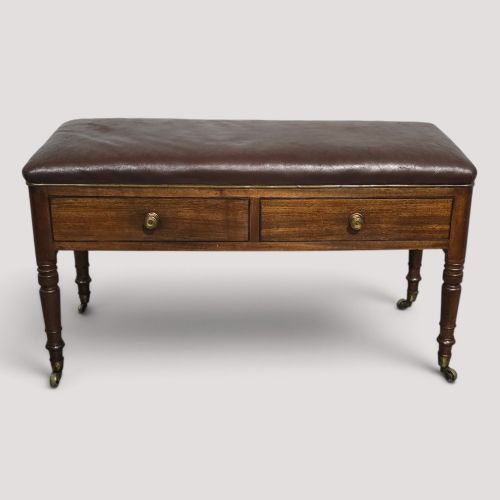
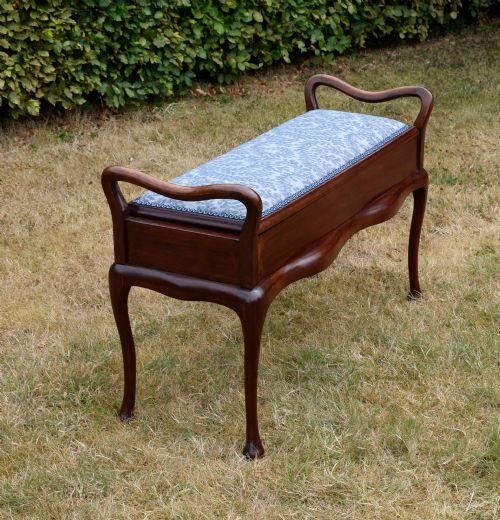
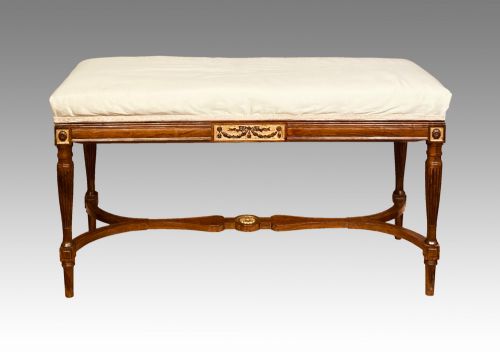
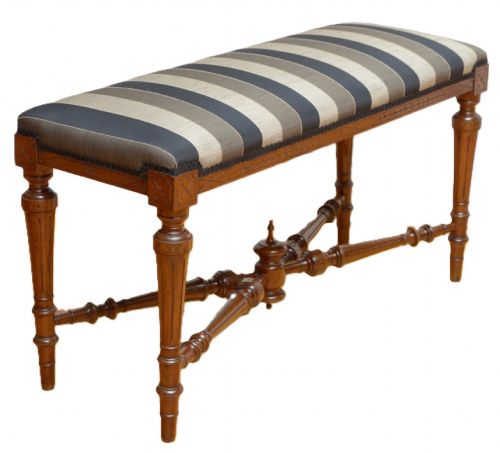
The selections span piano stools, music stools, window seats, and freestanding benches in woods like mahogany, walnut, and rosewood. Examples range from plain timber frames to inlaid mahogany or gilded French models.
Many specimens incorporate practical storage beneath hinged seats, intended originally for sheet music and recital books. Edwardian and 19th-century variants dominate the available selections on the market.
Materials and construction
Cabinetmakers utilised solid hardwoods such as mahogany, walnut, and rosewood to construct the structural frames of a duet bench. Giltwood and metal also appear in specific French provincial and revival styles.
Upholstery traditionally involves fabrics like velvet, tapestry, and plain textiles fastened across the seat frame. Brass hardware frequently secures the hinged mechanisms that lift the seat for internal storage.
Mahogany and walnut are the most common timbers seen across these listings, spanning the Victorian and Edwardian periods.
Judging the quality
The refinement of the timber grain and the crispness of inlaid details distinguish superior pieces from standard workshop output. Finely figured mahogany or walnut elevates the visual weight of the bench.
Mechanical integrity in the hinged seat mechanism and the stability of the joinery mark the difference between everyday utility and finer cabinetmaking. Original upholstery or sympathetic reupholstery preserves the historical character.
Charles Nosotti
The Antique Duet Bench Glossary
- Duet stool
- A wide seat designed for two players sharing a piano bench. These items often feature internal compartments for sheet music.
- Window seat
- A long bench intended for placement beneath a window recess. They share similar proportions with duet benches.
- Inlaid
- Woodwork decorated by inserting contrasting strips of timber into depressions within the primary surface. Edwardian makers utilised this method extensively on mahogany frames.
- Hinged seat
- A top panel attached with metal pivots that lifts upward to reveal a storage well. This feature is common on piano and music stools.
Antique Duet Bench: Frequently Asked Questions
What is a duet bench used for?
These benches were originally built for two people to sit together at a piano during musical recitals or practice sessions.
Today, they function equally well as window seats or hallway benches while providing useful internal storage.
How do I date an antique duet bench?
Dating relies upon stylistic markers such as Edwardian inlaid mahogany, Victorian walnut carving, or earlier rosewood frames.
Hardware details and secondary woods inside the storage compartment also help determine the period of manufacture.
Are all duet benches for pianos?
Many examples are explicitly constructed as piano or music stools with hinged tops for scores.
Other variants serve as window seats or freestanding benches without music storage compartments.
What woods were used for these benches?
Cabinetmakers primarily worked with mahogany, walnut, and rosewood for structural durability and rich grain patterns.
Giltwood and brass accents appear on specific decorative French and revival pieces.