


Antique Drop in Chair
An antique drop in chair offers practical seating with a removable upholstered pad, spanning periods from George I through the Edwardian era.
Antique Drop in Chair
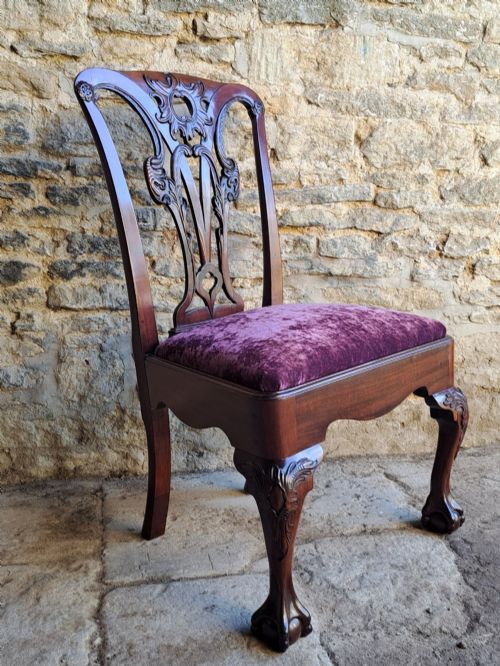
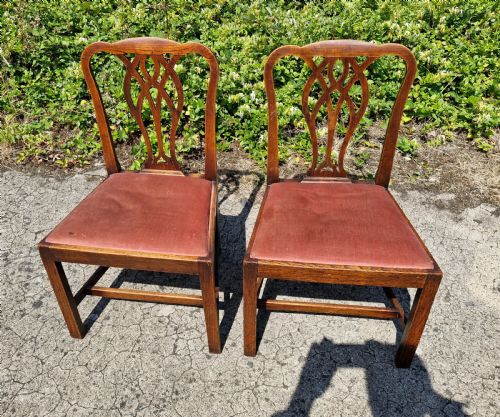
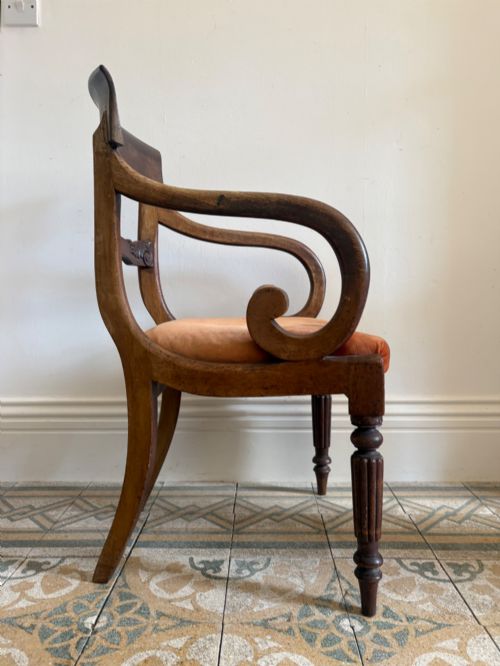
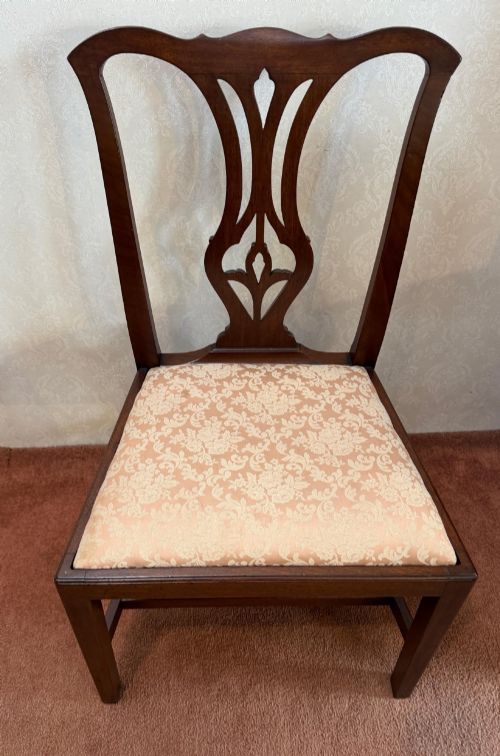
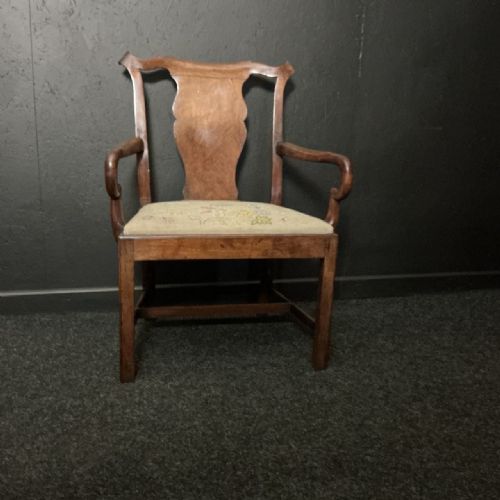
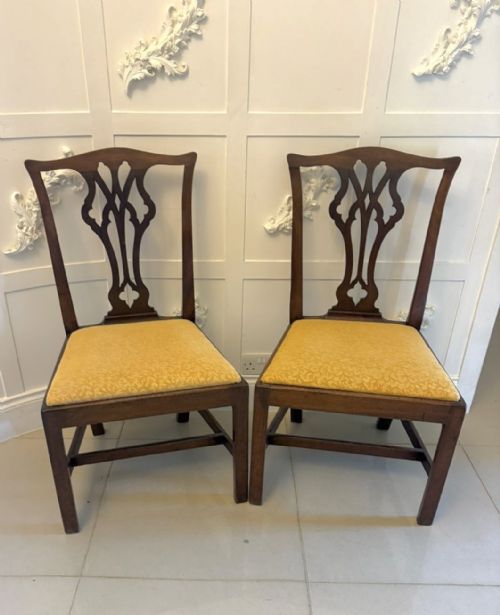
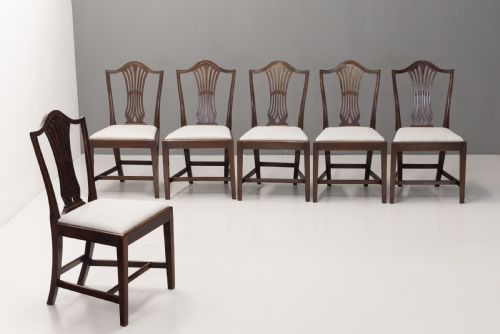
When you search for an antique drop in chair, you encounter seating designed around a loose upholstered frame that lifts directly out of the wooden chassis. The pieces on this page span the eighteenth century to the early twentieth century, taking the form of single side chairs, carver armchairs, and matching dining sets.
The most frequent examples found here are mahogany and walnut dining chairs from the Georgian and Regency periods, alongside later revival pieces in oak and elm. Makers fashioned these forms for everyday dining, desk use, and parlour seating, relying on the removable seat frame to ease reupholstery over generations.
How they were made
Cabinetmakers constructed the frames primarily from dense hardwoods like mahogany, walnut, and oak, occasionally turning to elm for regional pieces. Joints were typically pegged and tenoned to withstand the daily weight placed upon the seat frame.
Drop in seats were built as separate wooden frames dropped into a rebate in the chair rails, then webbed, stuffed, and covered in textiles, leather, velvet, or needlework tapestry.
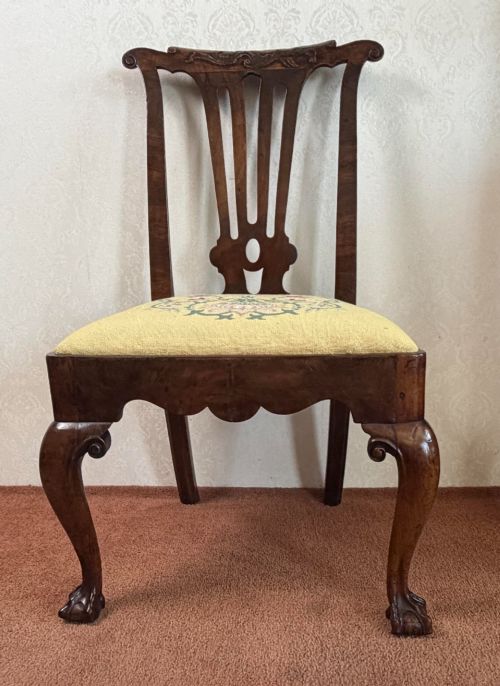
Several chairs include needlework drop in seats stitched by hands long forgotten, hiding decades of dining room history beneath the cushion.
What varies in quality
Quality rests in the timber selection and the crispness of the carving on splats, knees, and legs, distinguishing standard production from exceptional workshops. Walnut and early mahogany chairs often display finer grain figures and more complex cabriole or ribbon back designs.
The precision of the joinery where the seat frame meets the rebated rail indicates the original tier of manufacture, with superior examples maintaining tight, seamless tolerances without excessive gap-filling.
Gillows·William Walker & Sons
The Antique Drop in Chair Glossary
- Drop in seat
- A separate wooden frame holding upholstery that rests inside a recess in the chair seat rails. This design allows the upholstered pad to be lifted out easily for recovering.
- Cabriole leg
- A furniture leg that curves outward at the knee and tapers inward toward the foot, often ending in a pad or claw and ball. It is characteristic of early eighteenth-century styles.
- Carver armchair
- An English term for an armchair, often matching a set of single dining chairs. They were traditionally placed at the head of the dining table.
- Splats
- The central vertical wooden strip down the back of a chair. Georgian makers shaped these into vase, fiddle, or ribbon forms.
- Needlework
- Hand-stitched textile work utilised for seat covers, commonly seen in wool or silk petit point and gros point.
Antique Drop in Chair: Frequently Asked Questions
How do I date an antique chair?
Dating relies on identifying timber species, structural joinery methods, and stylistic cues such as splat shapes and leg designs.
Earlier eighteenth-century pieces often utilise walnut with cabriole legs, while nineteenth-century examples frequently show mahogany construction with turned or sabre supports.
Can I use these chairs daily?
Most antique dining chairs and armchairs remain structurally robust enough for regular domestic use.
Checking that the frame joints and drop in seat frames are secure ensures they handle everyday sitting safely.
Were these chairs made in sets?
Cabinetmakers produced matching dining chairs in sets of varying sizes, ranging from pairs to groups of twelve or more.
Single armchairs and carvers were frequently made to accompany larger sets of side chairs for the head of a table.