


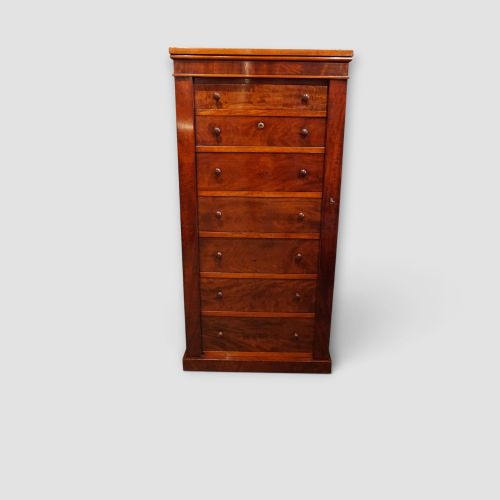
Antique Drop Desk
An antique drop desk is a practical writing cabinet with a sloping fall front, and you are most likely to encounter Edwardian and Georgian mahogany or oak versions on this page.
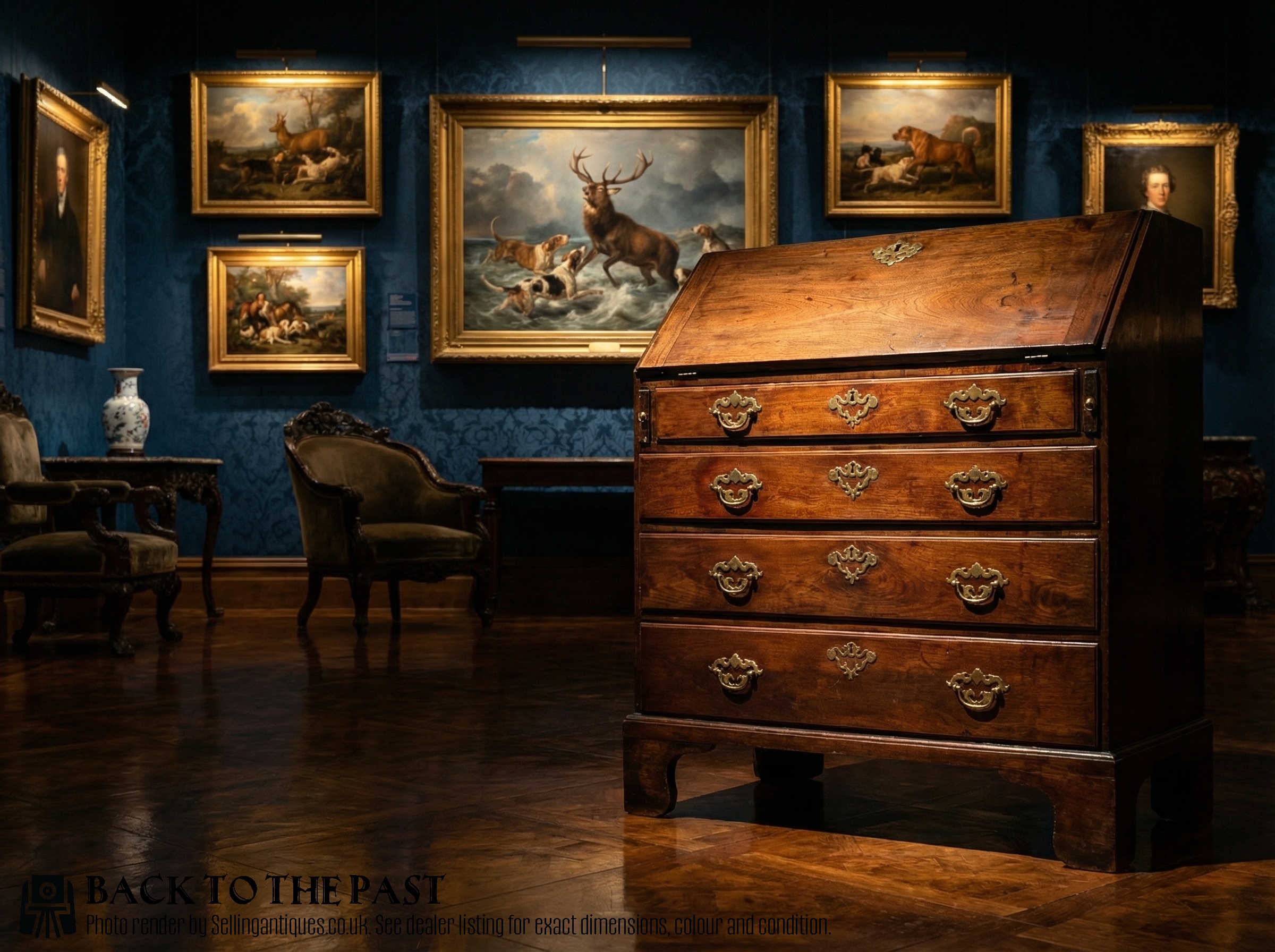
Antique Drop Desk
An antique drop desk is a piece of furniture designed for correspondence and storage, featuring a hinged writing flap that opens forward to form a flat surface. These pieces appear across multiple eras, spanning from the seventeenth century through to the twentieth century.
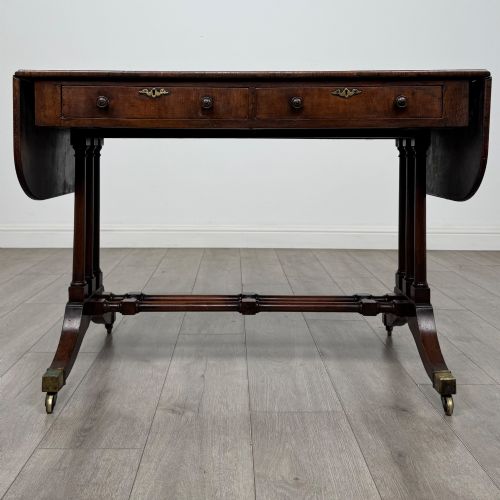
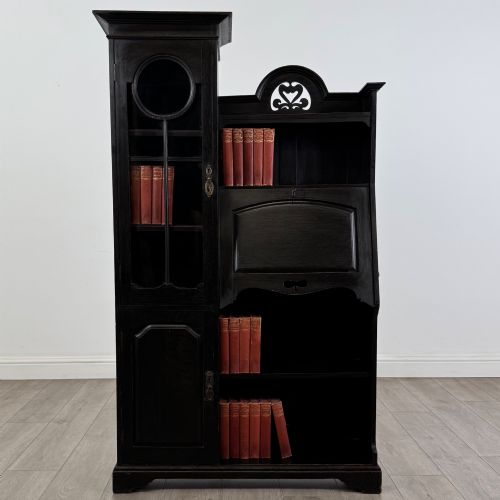
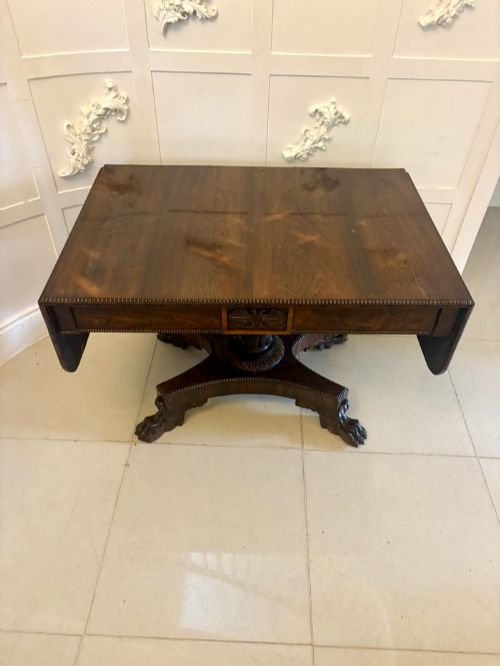
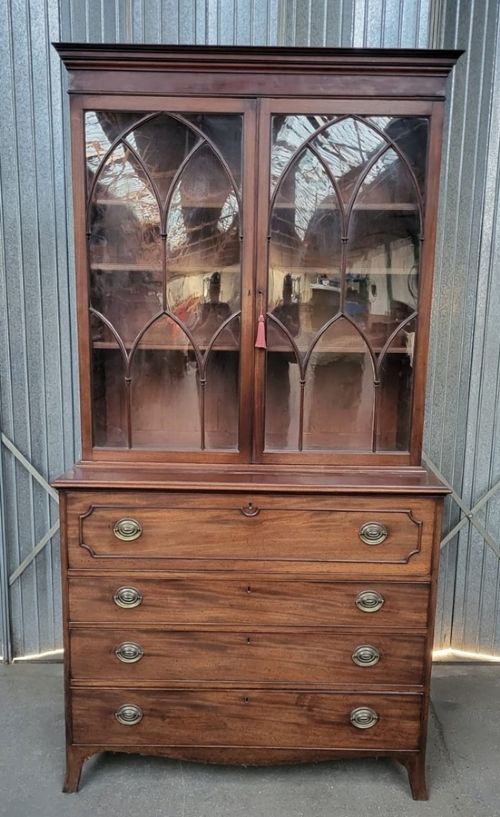
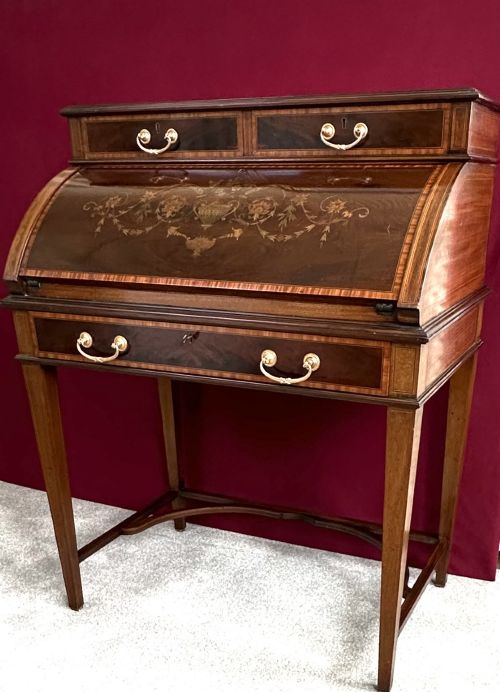
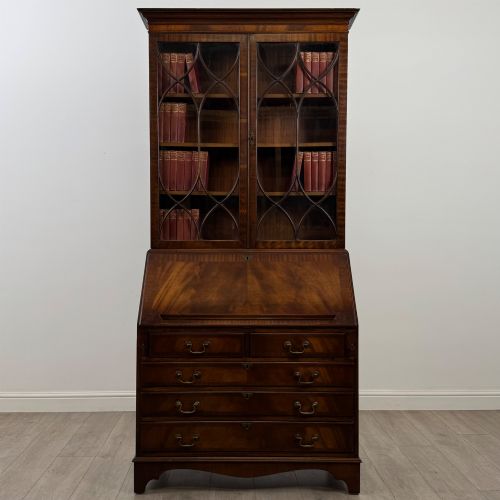
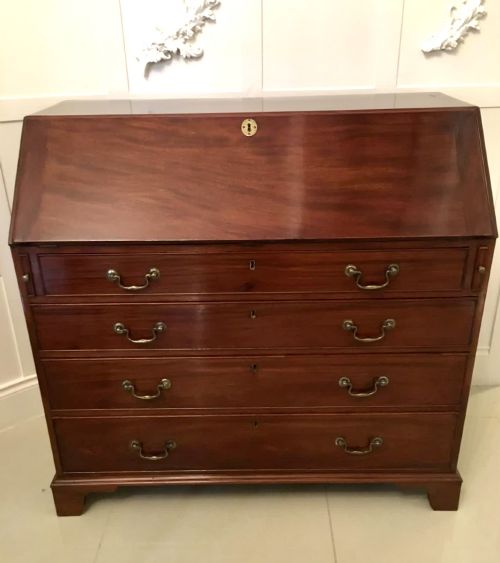
The versions most commonly found here are Edwardian and Georgian oak or mahogany bureaux, alongside nineteenth-century secretaire bookcases and abattants. Buyers also encounter related writing forms such as sofa tables, Pembroke tables, and bureau bookcases with fitted interiors.
Originating in domestic and formal settings, these desks often incorporate pigeonholes, small drawers, and secret compartments behind the fall front. They range from compact freestanding Edwardian items in golden oak to large, two-part seventeenth-century burr walnut pieces.
Materials and construction
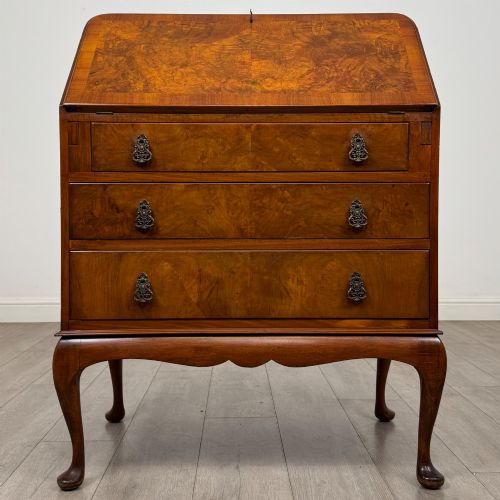
Cabinet makers utilised dense hardwoods such as mahogany, walnut, rosewood, and oak for the primary carcases and fall fronts. Timber selection often included figured mahogany, burr walnut, and inlaid veneers to create decorative grain patterns across the writing surface and drawers.
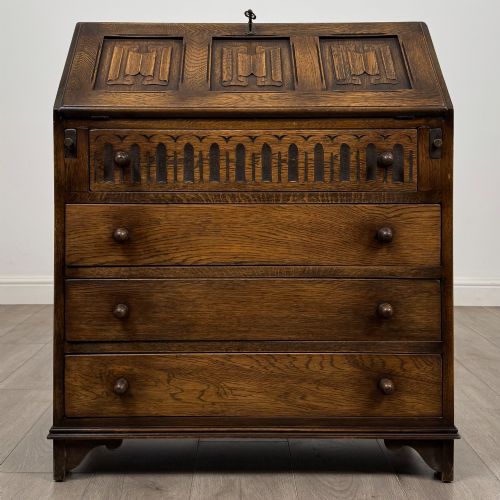
Secondary construction details involve brass hardware, glass panels for bookcase doors, and leather writing inserts. Specialised joinery techniques such as herringbone inlay, linenfold carving, and marquetry ornament the exterior surfaces of finer examples.
Listings feature pieces spanning multiple centuries, from seventeenth-century William and Mary burr walnut to twentieth-century Edwardian oak bureaux.
Judging quality
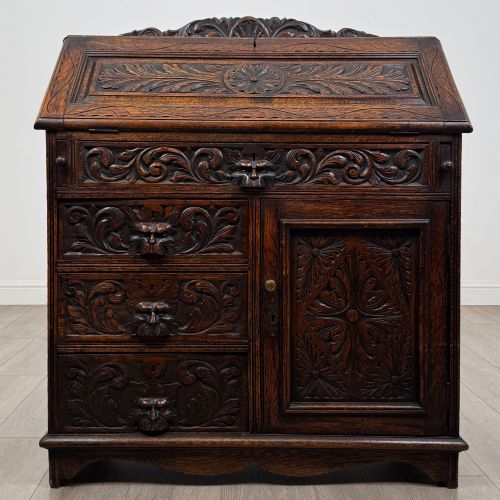
Quality in an antique drop desk rests upon the selection of timber figures and the precision of the cabinet work. Pieces featuring matched veneers, intricate herringbone inlay, and finely carved details such as Green Man motifs sit at the higher end of the range.
The interior arrangement also dictates distinction, where fitted compartments, secret drawers, and subsidiary pigeonholes demonstrate greater artisanal effort. Structural integrity, original brasses, and the harmonious proportion of the writing flap relative to the base further separate standard production from superior examples.
ARTHUR BASIL REYNOLDS·GEORGE OAKLEY·LARKIN
The Antique Drop Desk Glossary
- Bureau
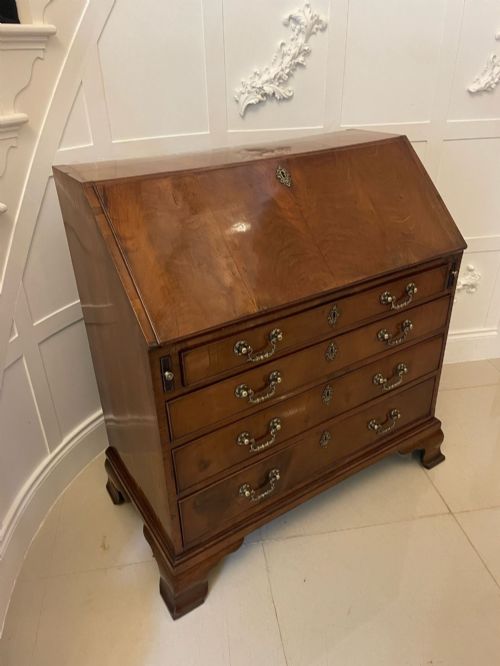
- A desk with a sloping hinged lid that drops down to provide a writing surface. It usually encloses a set of small drawers and pigeonholes.
- Secretaire abattant
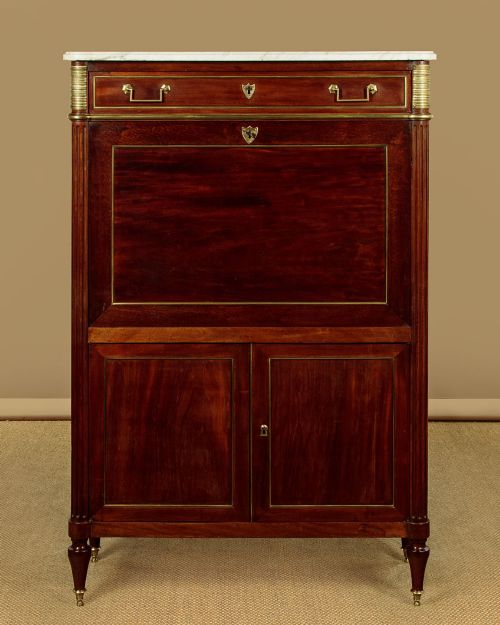
- An upright fall-front cabinet concealing a writing desk and internal compartments. This form frequently incorporates a marble top on continental examples.
- Fall front
- The hinged panel on a desk or cabinet that drops down into a horizontal position for writing. It conceals the fitted interior when closed.
- Herringbone inlay
- A decorative wood-veneering technique arranged in a V-shaped pattern resembling a fish skeleton. It frames drawer fronts and panel borders on walnut pieces.
- Sofa table
- A rectangular occasional table designed to stand in front of a sofa, typically featuring drop leaves and two small drawers. Some versions incorporate writing fittings.
Antique Drop Desk: Frequently Asked Questions
What is a drop desk called?
A drop desk is most frequently designated as a bureau or a secretaire in antique furniture terminology. These terms describe a cabinet with a hinged writing flap.
Depending on the specific form, they may also be catalogued as secretaire bookcases, abattants, or writing tables according to their upper sections and overall construction.
How do I use a bureau desk?
To use the desk, you unlock and lower the fall-front flap until it rests horizontally on supporting desk arms. This reveals an internal arrangement of small drawers and pigeonholes for stationery.
When writing is complete, you return your papers to the interior compartments and lift the fall front back into its vertical position, securing it with a key if fitted.
Where should I place an antique bureau?
These desks suit studies, living rooms, and bedrooms where their compact vertical footprint utilises wall space efficiently. Freestanding versions also function well positioned away from walls.
Because they incorporate polished wood and sometimes leather writing inserts, keep them away from direct sunlight and strong heat sources to protect the finish.
How do I date an antique drop desk?
Dating relies on identifying the prevailing wood choices, hardware styles, and construction methods characteristic of different periods. Oak and walnut predominate in earlier centuries, while mahogany and rosewood rise in prominence later.
Stylistic indicators such as Edwardian inlaid details, Georgian bracket feet, or seventeenth-century herringbone banding help establish the era of manufacture.