
Antique Dressing Box Mirror
An antique dressing box mirror sits on a chest or table, combining a swing glass with small storage drawers for daily grooming.
Antique Dressing Box Mirror
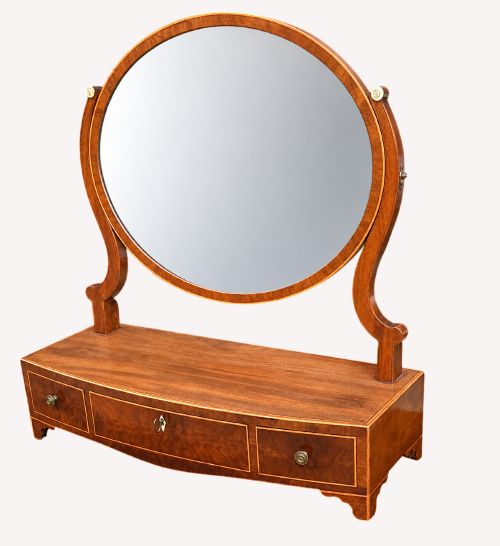
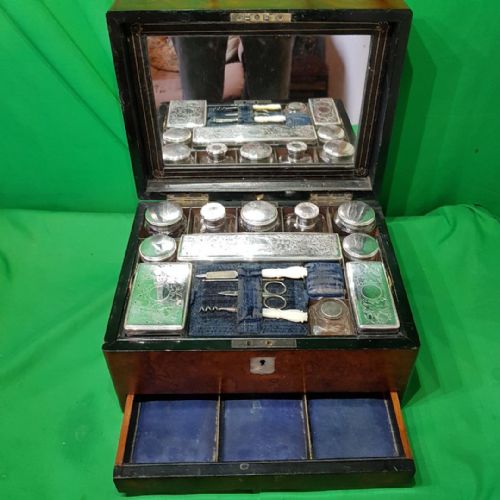
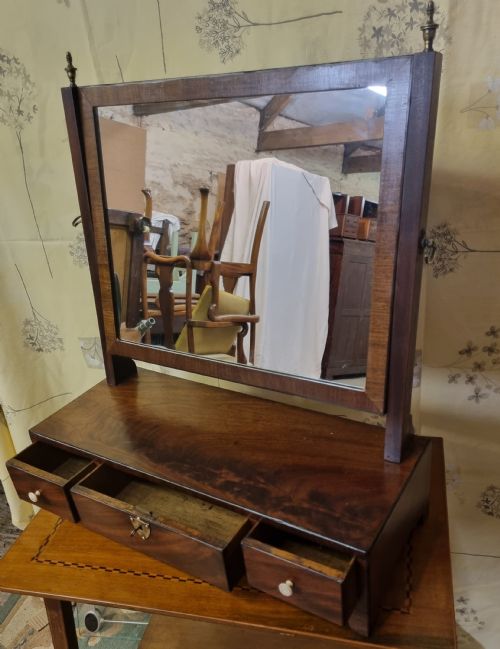
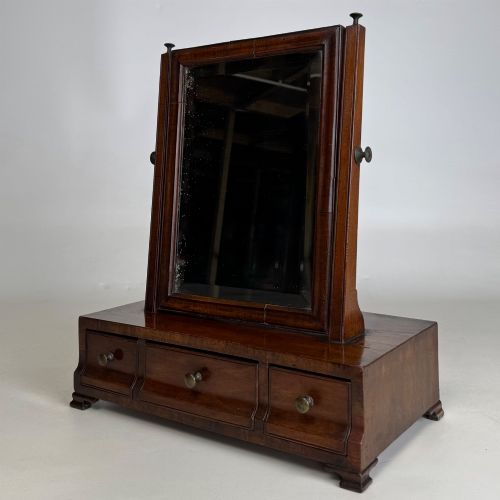
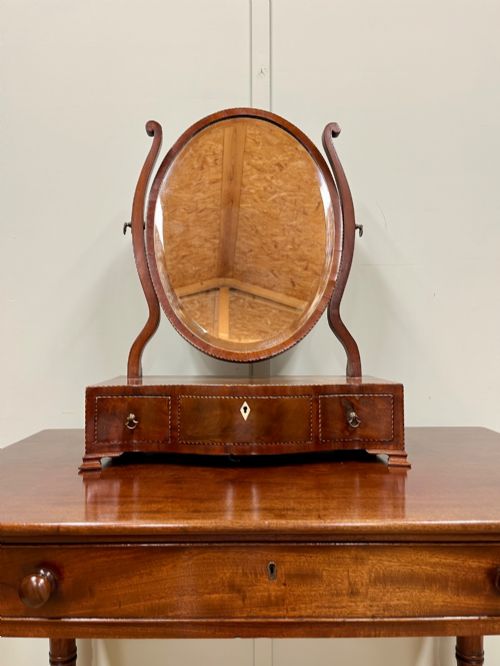
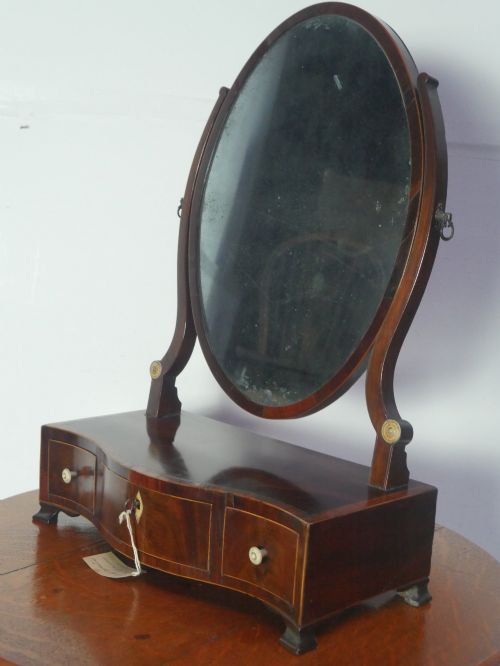
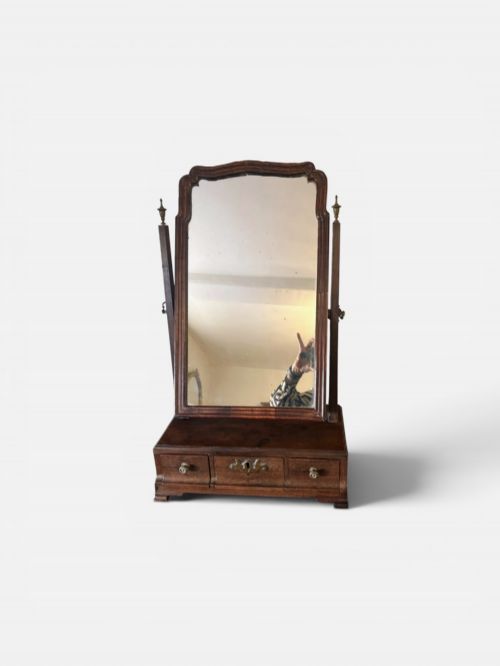
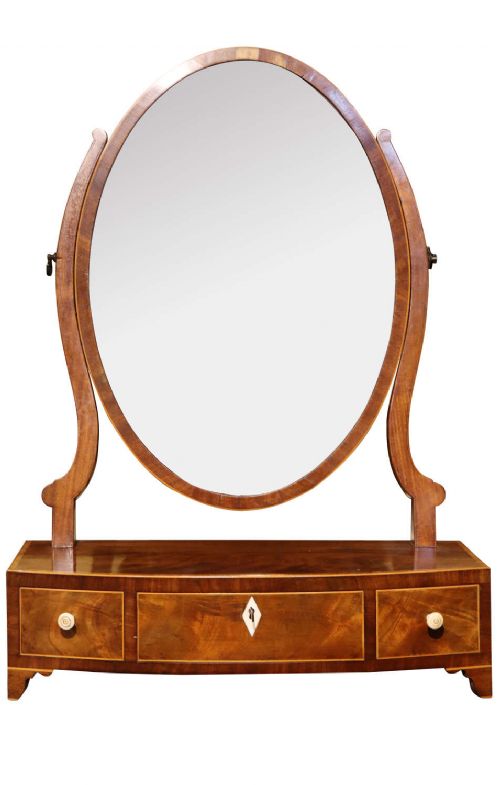
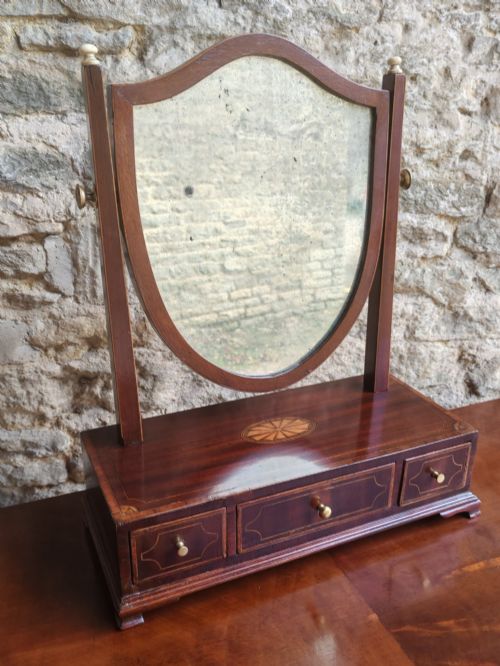
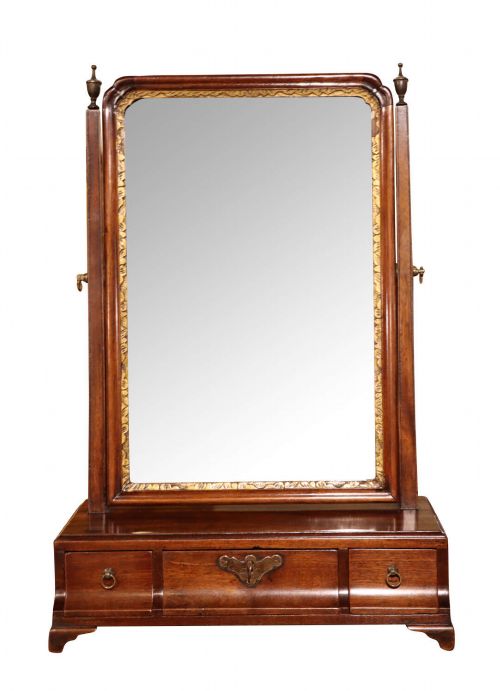
The phrase antique dressing box mirror covers small table-top toilet glasses designed to sit in bedrooms and boudoirs during the eighteenth and nineteenth centuries. You meet these primarily as mahogany or walnut upright swing mirrors mounted on box bases fitted with small drawers.
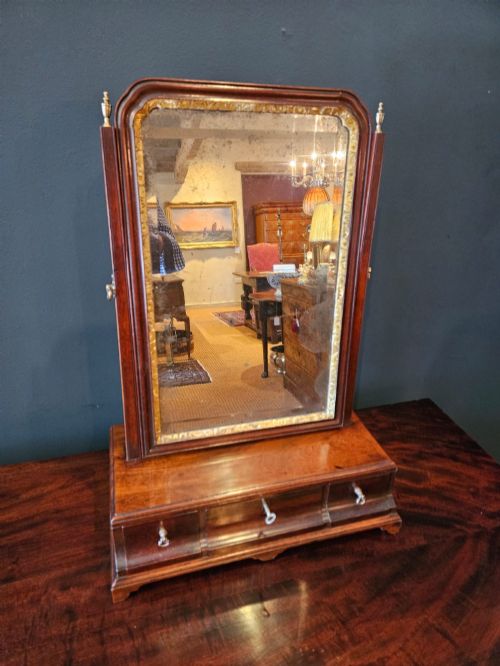
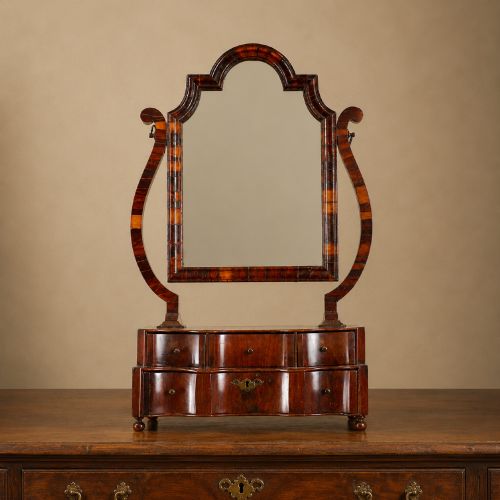
The selection ranges from early walnut pieces of the Queen Anne and George II periods through to bolder Regency styles and later Victorian examples. Many incorporate shallow compartments or jewellery drawers beneath the swivelling glass frame.
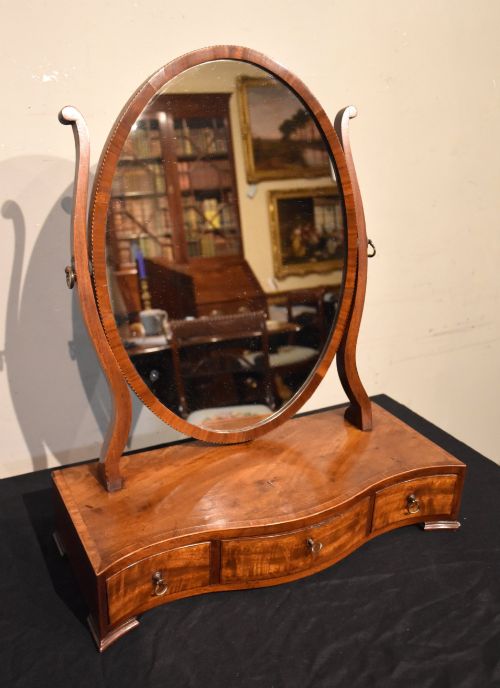
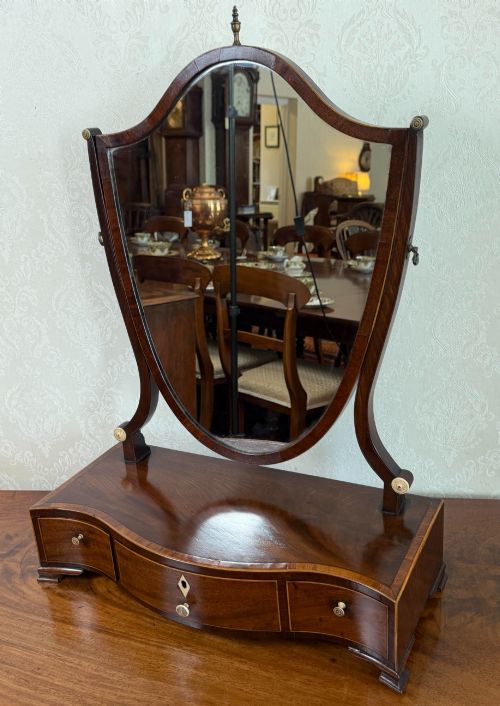
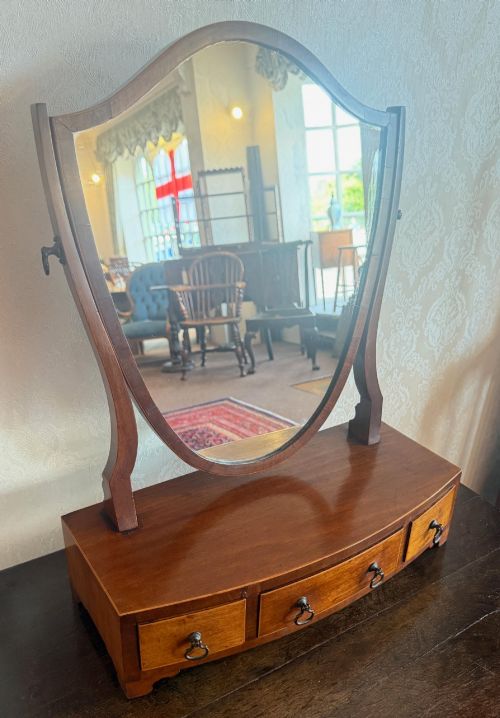
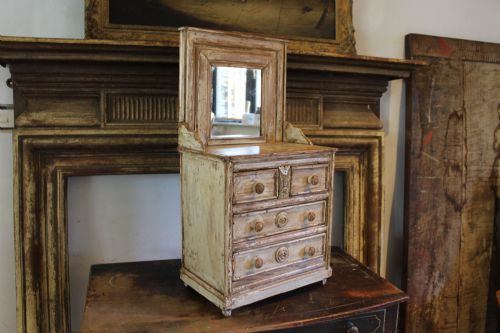
Makers produced these mirrors in rectangular, oval, shield, and serpentine shapes to suit changing interior fashions. Smaller travelling sets and miniature chests with integrated mirrors also appear within this group.
Materials and Technique
Cabinetmakers built the frames and box bases using dense timbers such as mahogany and walnut, frequently incorporating decorative crossbanding, veneers, or harewood. Brass is common for pivot screws, tiny knob handles, and candle arms, while bone details occasionally accent the drawer escutcheons.
The mirror glass itself sits inside a movable wooden frame connected by brass side pins that allow the user to adjust the tilt. Giltwood accents appear on parcel-gilt examples, and some Victorian pieces utilise burr walnut over fitted interior compartments.
Listings feature mahogany, walnut, burr walnut, harewood, and satinwood, spanning the eighteenth and nineteenth centuries.
Standards of Construction
Quality rests in the crispness of the timber figuring, the elegance of the frame proportions, and the joinery of the miniature drawers. Finer examples display subtle crossbanding, well-figured mahogany or walnut grains, and neatly dovetailed box construction.
The handling of the mirror frame profile, from simple rectangular shapes to complex serpentine and shield outlines, dictates the refinement of the piece. Original brass hardware and undamaged mirror glass further distinguish standard items from the finest surviving specimens.
The Antique Dressing Box Mirror Glossary
- Toilet mirror
- A small mirror designed to stand on a dressing table or chest. These pieces typically feature a swivelling glass mounted on a compartmented box base.
- Crossbanding
- A decorative border of veneer laid with the grain running perpendicular to the main surface. It frames the drawer fronts and top edges of better-quality cabinet work.
- Parcel-gilt
- Partially gilded woodwork where gold leaf highlights specific carved details. This treatment is often found on walnut and mahogany mirrors from the George II period.
- Serpentine
- A curved line that bends outward in the centre and inward at the sides. This contour appears on the drawer fronts of more ambitious Georgian dressing mirrors.
- Swing mirror
- A glass plate hung on horizontal pivots between two upright posts. This mechanism allows the user to alter the angle of reflection.
Antique Dressing Box Mirror: Frequently Asked Questions
Where were these mirrors placed?
These pieces sat upon dressing tables, tallboys, or chests of drawers in bedrooms and dressing rooms. Their compact box bases allowed them to be moved easily around the home.
Some portable variants served travellers who needed personal grooming facilities while away from permanent lodgings.
What is the difference between a toilet mirror and a dressing box?
A toilet mirror focuses primarily on the swivelling glass mounted above a simple drawer base. A dressing box incorporates deeper compartments, fitted trays, and sometimes a concealed mirror designed for storing cosmetics and jewellery.
Many surviving pieces combine both forms by placing a swing glass atop a fitted vanity box.
How do I maintain an antique mirror glass?
Keep the piece away from direct sunlight and damp environments to protect the antique wood finish and the original mirror silvering. Dust the frame gently with a dry, soft cloth.
Avoid using modern chemical sprays on the old wood or the glass plate to preserve the surface patina.