






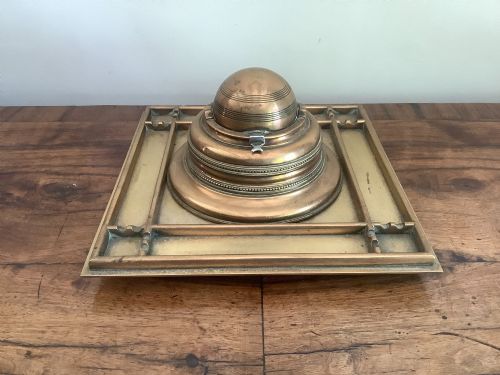


Antique Double Inkwell
These heavy desktop companions keep twin glass reservoirs ready for correspondence, making an antique double inkwell a commanding centrepiece for any traditional writing table.
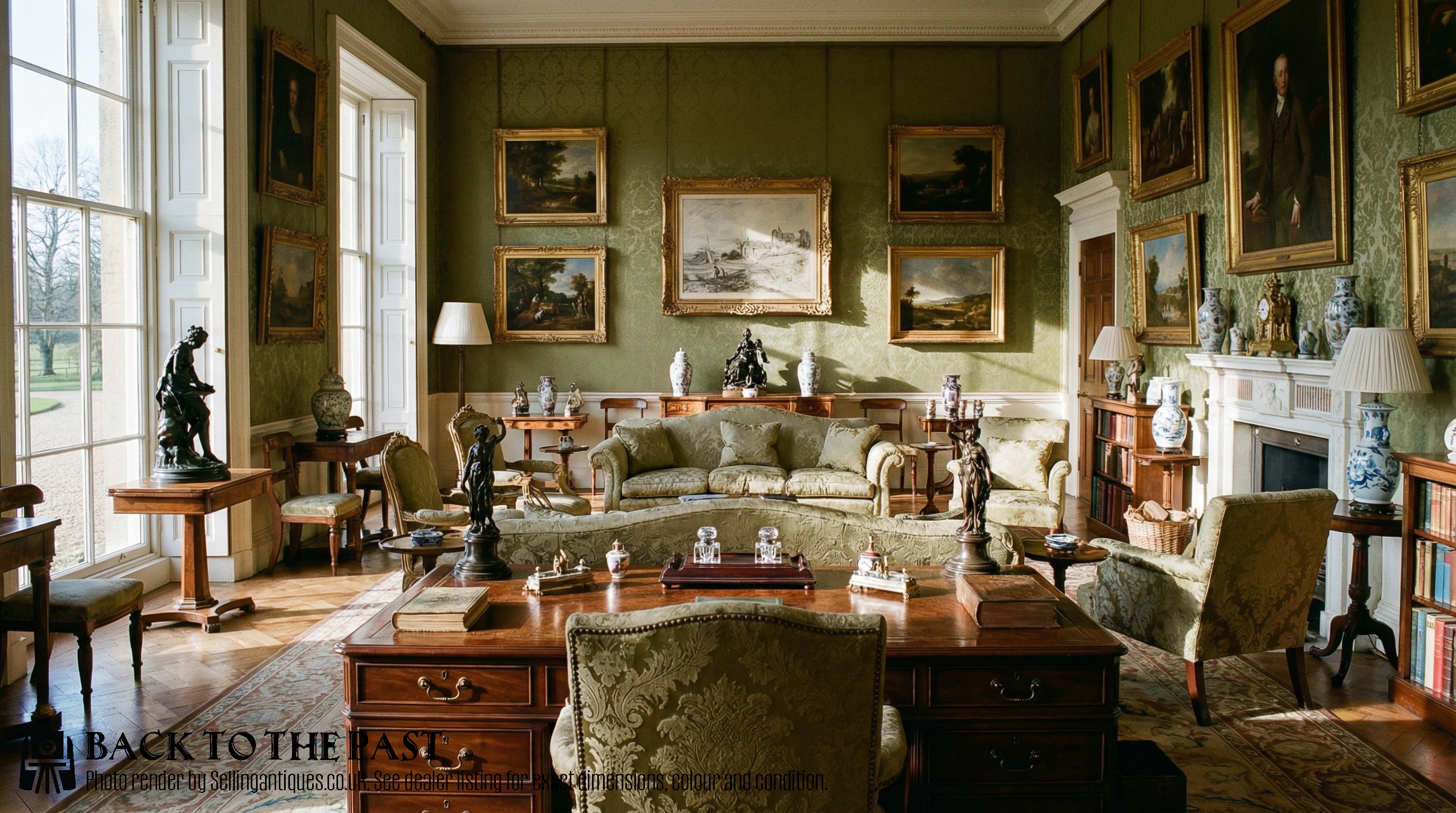
Antique Double Inkwell
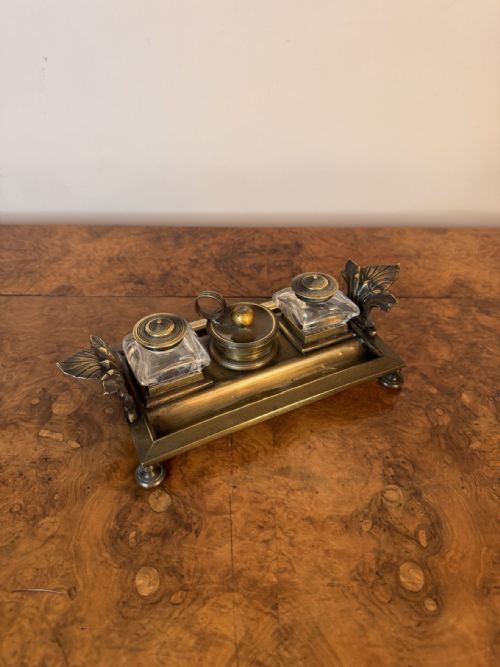
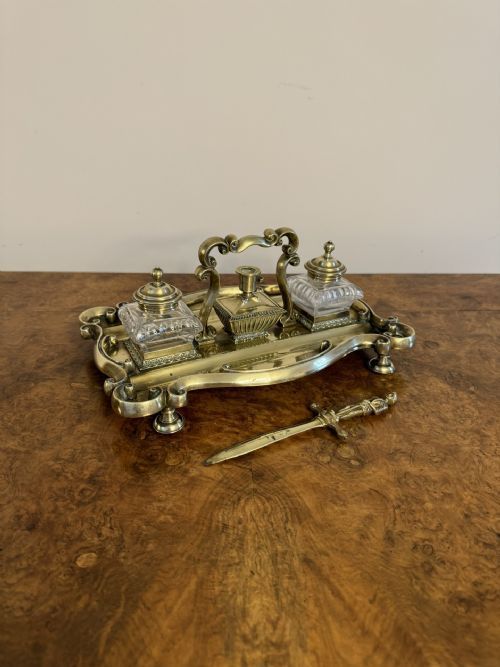
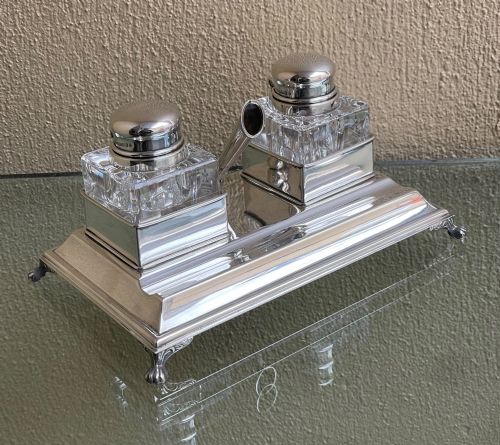
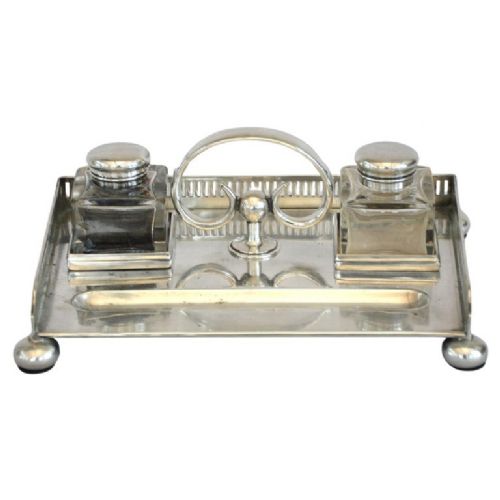
An antique double inkwell provides two distinct receptacles for ink, usually positioned alongside pen rests and stamp compartments on a shared base or standish. You will frequently encounter Victorian and Edwardian examples fashioned from brass, silver plate, or carved wood.
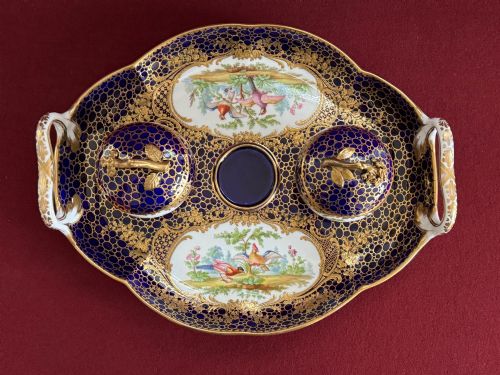
The objects span simpler desk tidies to elaborate French ormolu and marble desk sets designed for formal writing rooms. Most pieces incorporate lidded glass inserts that protect the ink from drying out while resting securely within fitted mounts.
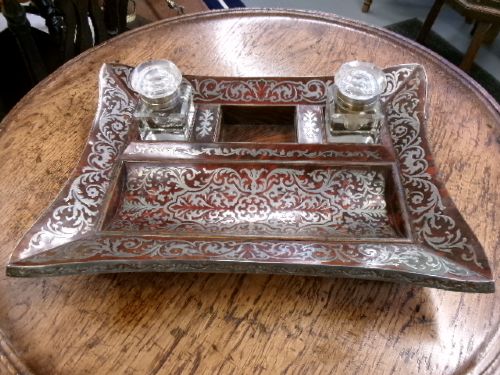
Makers utilised diverse regional styles ranging from British architectural brasswork to ornate continental Boulle marquetry and carved Black Forest animal figures. These desk furnishings reflect the formal correspondence habits of nineteenth and early twentieth century households.
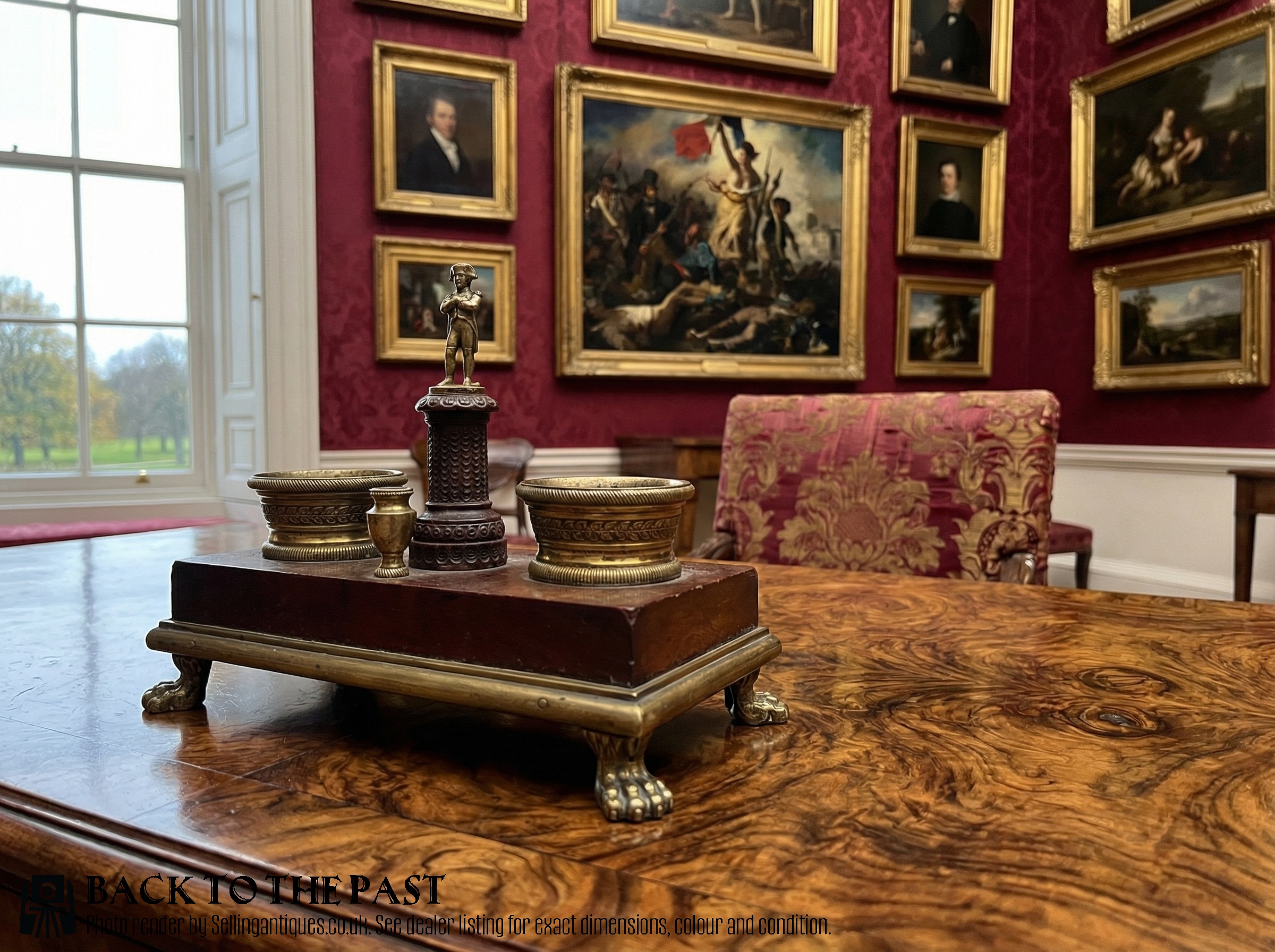
Materials and construction
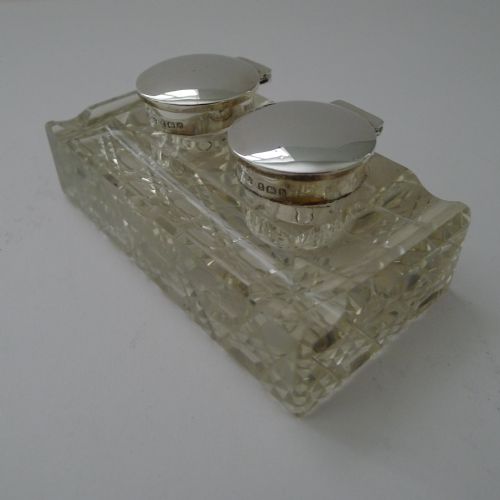
Metals form the structural backbone of these pieces, with cast brass, gilded bronze, and silver plate providing durable foundations for daily use. Smiths combined these metallic frames with heavy cut glass or crystal ink inserts that withstood corrosive iron gall inks.
Cabinetmakers built wooden bases from walnut, mahogany, oak, and ebony, frequently embellishing them with brass mounts, intricate hand carving, or tortoiseshell inlay. Silversmiths hammered and hallmarked solid silver trays, incorporating pen channels and stamp compartments into cohesive desk accessories.
Antique Double Inkwell Retail Price Guide 2026
Typical asking prices for double inkwell among the pieces listed under this phrase on Sellingantiques today, from the lower quarter to the upper quarter. They describe what is for sale here now, not the wider market.
Some Victorian desks featured carved wooden bears or alert dogs keeping watch beside the ink.
Determining quality and craftsmanship
Quality rests in the crispness of the casting and the integration of the materials, where finely chased brass and heavy fire gilding indicate superior workshop output. Mass-produced late nineteenth century items often display softer relief and simpler joints compared to bespoke older commissions.
Walker And Hall·Harrods·James Cartland And Sons·Daniel Holy·Moser
The Antique Double Inkwell Glossary
- Standish
- A portable tray or stand holding inkwells, sanders, and pens. It served as a complete writing station on wealthy desks.
- Ormolu
- Gilded bronze popular in French decorative arts. This technique applied a gold-mercury amalgam to cast brass or bronze components.
- Boulle work
- Marquetry technique utilising tortoiseshell and brass inlay. Developed in France, it decorated luxurious nineteenth-century desk boxes.
- Faience
- Tin-glazed earthenware pottery. Dutch examples often display blue and white decorative patterns.
- Sheffield plate
- Fused layer of silver over a copper core. This early plating method preceded modern electroplating.
Antique Double Inkwell: Frequently Asked Questions
Are these inkwells still usable today?
Glass reservoirs can hold modern fountain pen inks provided the interior lacks chips or cracks that might leak onto fine furniture.
Original metal collars and hinged lids protect the contents effectively, though corrosive antique inks should be discarded in favour of modern formulations.
What is the difference between a desk set and an inkstand?
Desk sets typically include broader accessories such as candlesticks, blotters, and stamp boxes mounted on a matching tray.
Inkstands focus primarily on ink reservoirs and pen rests, though larger Victorian examples frequently integrated chambersticks or drawer compartments.
How do I date a brass inkstand?
Examine the casting quality, fastening screws, and any registry marks stamped into the underside of the metal base. Victorian pieces often display Victorian design diamond marks or clear maker stamps.
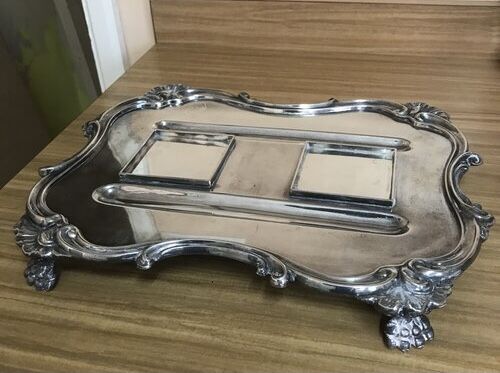
Compare the overall decorative style, such as rococo revival curves or later art nouveau asymmetry, against known production periods.