
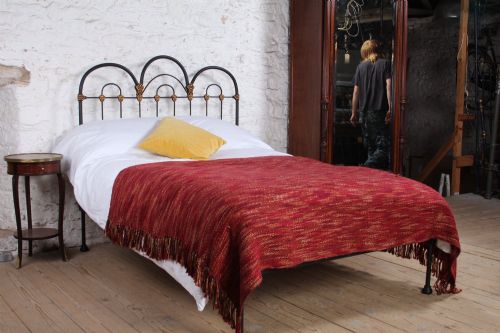


Antique Double Bedframe
An antique double bedframe brings solid timber, iron and brass into a bedroom, offering a substantial centrepiece with history.
Antique Double Bedframe
The selections available on this page lean heavily towards wood and metal designs from the nineteenth and early twentieth centuries. Pieces range from French Louis XVI revival marquetry examples to straightforward iron and brass bedsteads.
Makers and designers from periods like the Edwardian era and the Art Deco movement left distinct marks on these bed frames. Walnut, burr walnut, mahogany and cast iron appear frequently across the available stock.
Construction and materials
Wood construction relies on substantial timbers like walnut, burr walnut, fruitwood veneers, Hungarian ash and mahogany, often enhanced with marquetry or inlays. Cabinetmakers shaped these materials into headboards and footboards, sometimes incorporating integral cabinets.
Metal frames utilise cast iron, wrought iron and brass, frequently detailed with ormolu mounts to create robust structural forms. These metallic components provide the durability that has allowed the bedsteads to survive over a century of use.
Listings include pieces spanning from the 1870s Victorian period through Edwardian designs to 1930s Art Deco styles.
Judging quality in antique bedframes
Quality rests upon the crispness of detail in the timber marquetry or the casting of the metalwork. Pieces with intricate carvings, decorative ormolu and well-figured burr walnut stand apart from simpler iterations.
The integrity of the construction, from the stability of the side rails to the precision of the joints, dictates the durability of the frame. Superior examples maintain balanced proportions across the headboard and footboard.
The Antique Double Bedframe Glossary
- Half tester
- A bedstead featuring a partial canopy extending only partway over the head of the bed. This style is often seen on Victorian examples.
- Marquetry
- Decorative patterns formed by small pieces of veneer fitted into wooden panels. It frequently defines French revival furniture.
- Ormolu
- Gilded bronze mounts applied to furniture for decoration. This technique appears on revival pieces from the nineteenth century.
- Burr walnut
- Timber taken from a walnut tree growth, showing intricate swirling grain patterns. It provides a highly decorative surface for bed panels.
- Vono
- A proprietary brand of bedstead fittings and mechanisms commonly found on Edwardian and Victorian frames. These metal joints secured the side rails to the posts.
Antique Double Bedframe: Frequently Asked Questions
How do I know the size of an antique double bedframe?
Antique double bed dimensions can differ slightly from modern standard mattresses due to historical sizing variations.
It is essential to check the specific internal measurements for mattress placement before purchasing a frame.
Do these bedframes come with side rails?
Many listings include the necessary side rails to assemble the structure, though configurations vary between wood and metal pieces.
Checking the description ensures you know whether the rails and support slats are part of the sale.
How do I care for a walnut bed frame?
Walnut and burr walnut surfaces require regular dusting with a soft cloth and protection from direct sunlight and excessive heat.
Applying a traditional wax polish occasionally maintains the lustre of the timber veneers without building up residue.
Can I use a modern mattress on an antique bed?
Modern mattresses generally fit within these frames, provided the internal length and width match standard specifications.
Some older frames may require custom-made mattresses or additional wooden slats to support modern pocket-sprung units.
How do I distinguish an Art Deco bed?
Art Deco bedframes from the 1930s typically feature geometric lines, smooth maple or walnut surfaces, and sometimes built-in cabinetry.
They lack the ornate carving of Victorian pieces, focusing instead on streamlined forms and figured wood grain.