
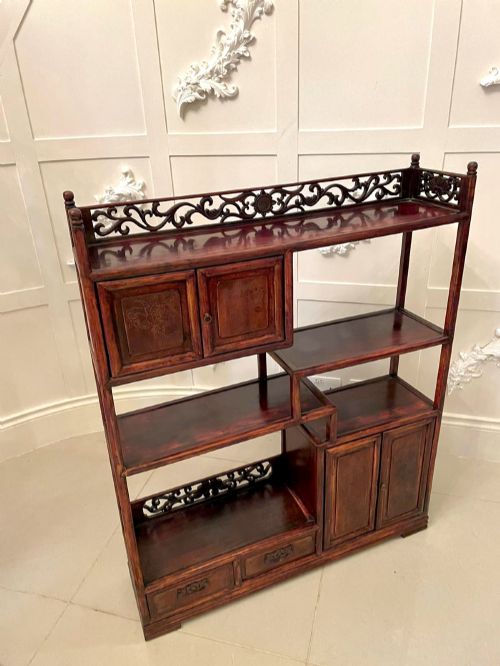
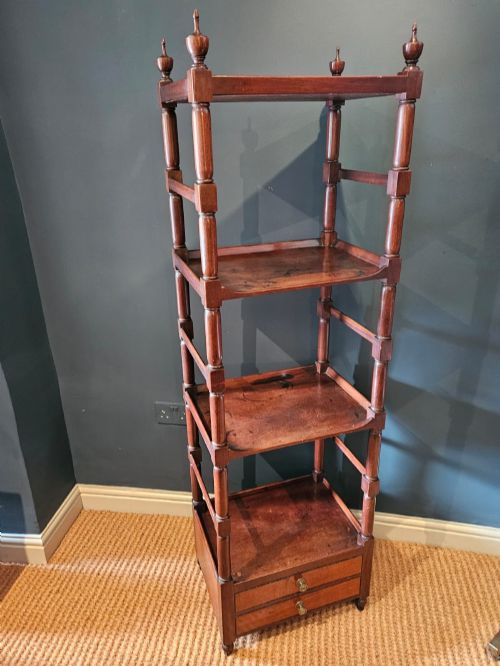
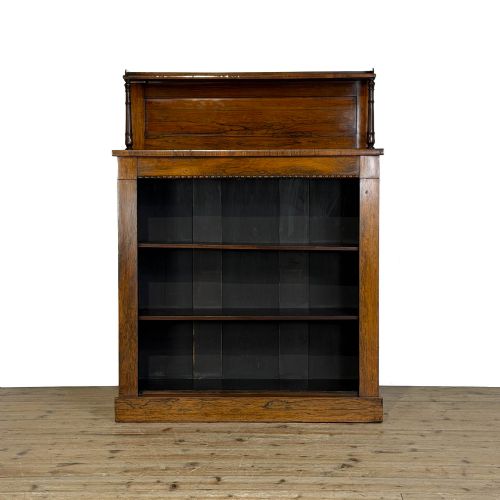
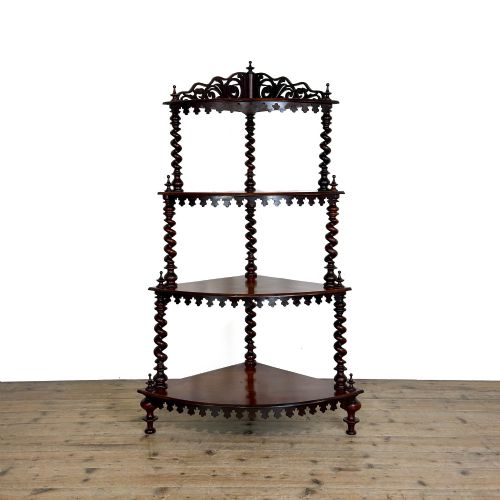


Antique Display Standing Shelves
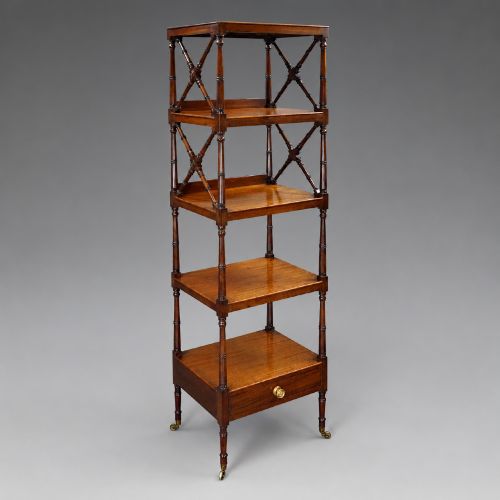
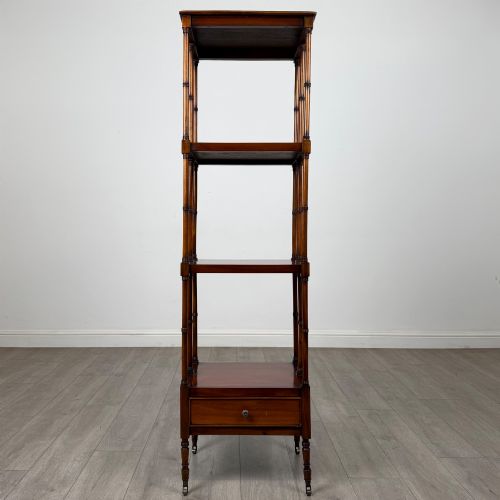
These antique display standing shelves bring vertical storage and open display space into a room, offering tiered architecture for books and ornaments.
Antique Display Standing Shelves
When searching for antique display standing shelves, buyers encounter a diverse selection of multi-tiered furniture designed to hold books, ceramics, and ornaments in plain view. The pieces available here span several centuries and styles, ranging from Georgian and Regency forms to Victorian and Edwardian examples.
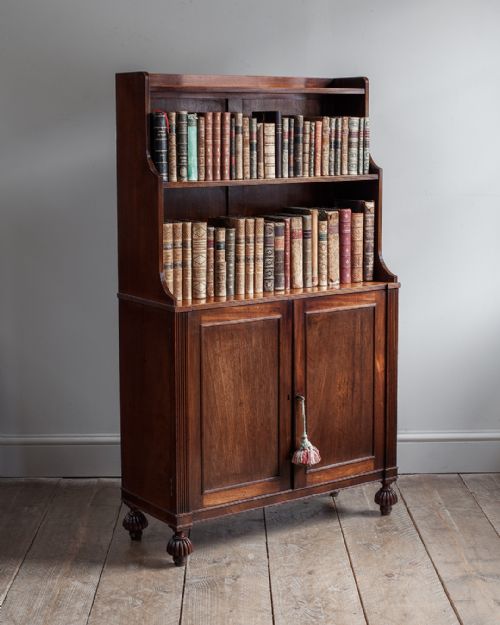
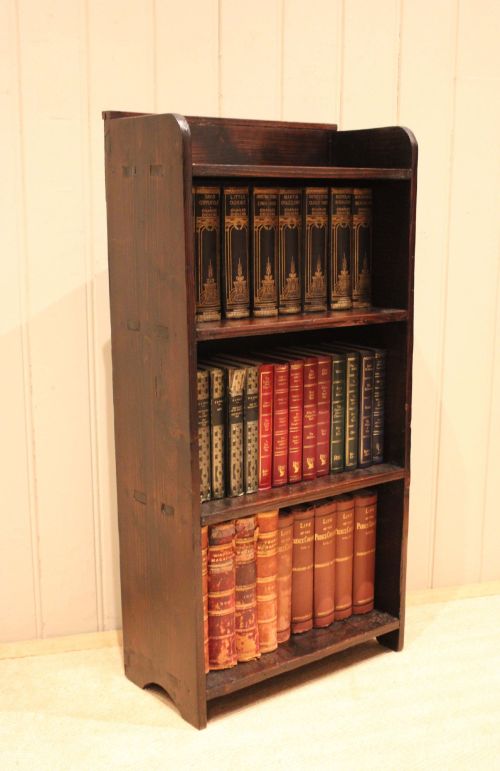
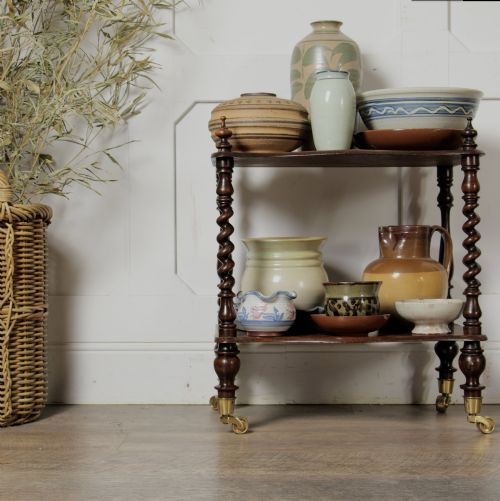
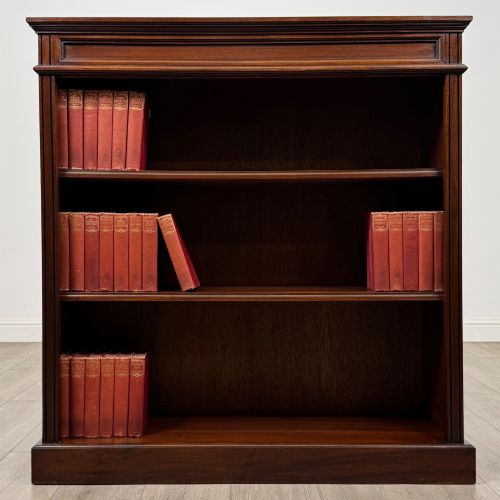
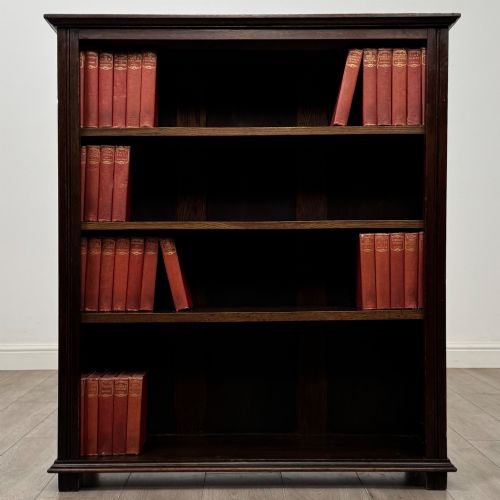
The most common formats you will meet on this page include open bookcases, whatnots, etageres, and waterfall bookcases. These freestanding units utilise vertical space efficiently, providing multiple levels of open shelving supported by slender uprights or columns.
Origins stretch across various British and international design traditions, including Arts and Crafts, Anglo-Indian, and rustic country aesthetics. Each piece reflects the interior demands of its period, whether built for formal drawing rooms or functional libraries.
Materials and construction
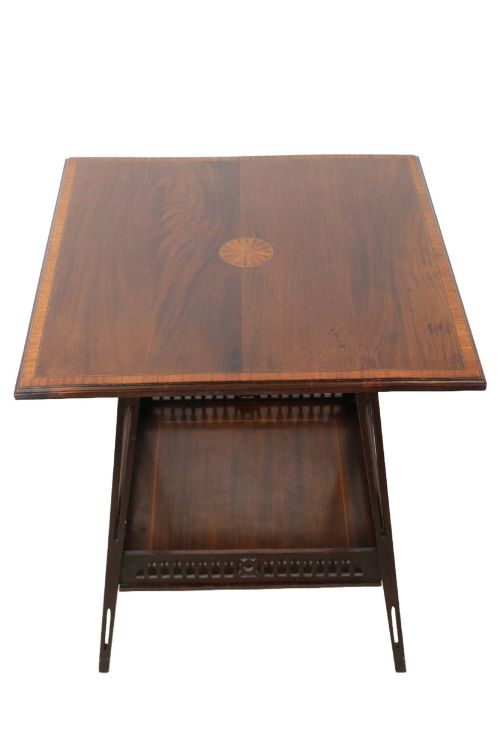
Cabinetmakers constructed these shelves using a variety of timbers, with mahogany, oak, and burr walnut appearing frequently alongside rosewood, satinwood, and padauk. Finer examples incorporate decorative elements such as brass castors, brass mounts, inlay work, and parcel gilding.
Structural methods vary from sturdy open oak frameworks to delicate tiered etageres featuring turned supports like barley twist columns. Timbers were selected for their grain pattern and colour, then polished or waxed to highlight the natural qualities of the wood.
Some Victorian whatnots feature barley twist columns so enthusiastically carved they practically sway when you walk past them.
Judging quality
The distinction between standard pieces and top-tier examples lies in the selection of timbers and the refinement of the joinery. Figures in wood, such as the rich grain of burr walnut or figured mahogany, elevate a piece significantly.
Proportion and decorative detail separate ordinary utility furniture from exceptional design. Pieces featuring thoughtful inlays, carved ornamentation, or specialised structural forms like serpentine shapes and revolving mechanisms demonstrate superior craftsmanship.
Trevor Page And Co·Gabriel Viardot
The Antique Display Standing Shelves Glossary
- Whatnot
- A piece of furniture consisting of a set of open shelves for displaying small objects, popular during the Victorian and Georgian periods. These tier upwards to maximise display space.
- Etagere
- A set of ornamental open shelves for knick-knacks and small ornaments. Originating in France, these often incorporate mirrors or delicate brass details.
- Waterfall bookcase
- A standing bookcase where each successive shelf is set back from the one below, creating a stepped, sloping profile. They often feature small cupboards at the base.
- Barley twist
- A turned wooden column carved in a spiral shape resembling twisted barley sugar. This decorative feature appears frequently on Victorian supports and legs.
- Anglo-Indian
- Furniture made in India by local craftsmen using traditional British forms combined with native timber and carving styles. Padauk is a common wood found in these pieces.
Antique Display Standing Shelves: Frequently Asked Questions
What is the difference between a whatnot and an etagere?
A whatnot is typically a multi-tiered wooden shelving unit designed for books and ornaments in British interiors. An etagere often shares a similar open structure but leans towards decorative display and lighter framing.
Both serve the same fundamental purpose of vertical display, though etageres frequently incorporate more ornamental brass, inlay, or exotic woods.
How were waterfall bookcases used?
Waterfall bookcases were placed against walls in parlours, studies, and drawing rooms to hold cherished books and decorative items. The stepped shelves allowed owners to view book spines easily from above.
Some variations included small enclosed cupboards at the bottom for items needing protection from dust.
Are these shelves suitable for heavy books?
Sturdy oak and mahogany iterations built during the Victorian and Edwardian eras easily support standard volumes. Open bookcases with adjustable wooden shelves offer practical utility for modern libraries.
Lighter etageres and delicate rosewood whatnots are better suited to lighter display pieces and smaller collections rather than heavy folio volumes.
How do I identify a Regency period piece?
Regency shelving often exhibits classical restraint, utilising figured mahogany and clean architectural lines. Proportions tend to be precise, drawing influence from ancient Greek and Roman design.
Look for refined turned supports and unadorned surfaces that let the quality of the timber grain take precedence.