




Antique Display Pillar
An antique display pillar raises a cherished bust or urn above the floor, bringing height and architectural weight to a room.
Antique Display Pillar
An antique display pillar serves to elevate decorative objects, plants, and sculptures within a room. Buyers searching for an antique display pillar will encounter varied forms ranging from architectural columns to turned wooden pedestals.
The pieces on this page span the eighteenth, nineteenth, and early twentieth centuries, covering styles from Neoclassical and Baroque to Art Deco and Victorian. Materials shift between solid woods, painted finishes, and various marbles.
The selection includes single columns, pairs, and larger sets originating from English, French, and Italian workshops. Forms such as plant stands and architectural salvage appear frequently among the listings.
What varies in quality
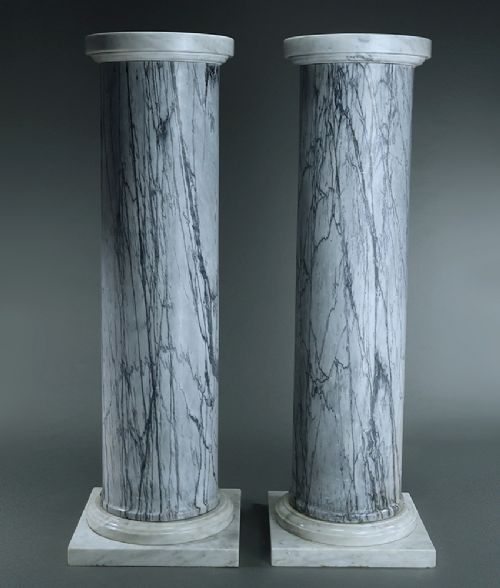
Quality rests upon the execution of the carving, the selection of the marble or timber, and the balance of the proportions. Heavy stones and dense hardwoods require skilled joinery or masonry to ensure the column stands true without listing.
Surface treatments create another distinction, particularly where artists applied faux finishes like simulated verde antico or intricate parcel gilding. Hand-carved details in wood or stone show the precision of the maker's hand against simpler machine turnings.
The inventory spans the eighteenth century through to the Art Deco period of nineteen-thirty.
Marguerite
The Antique Display Pillar Glossary
- Scagliola
- A composite material made from pigmented plaster and glue, applied to mimic genuine marble columns. It allows artisans to create intricate stone-like pillars with complex veining.
- Verde Antico
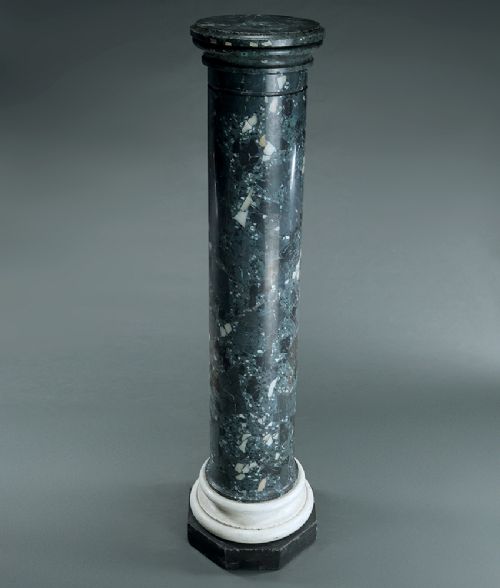
- A dark green serpentine marble often used in classical and revival decorative columns. Italian workshops favoured this stone for Grand Tour pieces.
- Solomonic
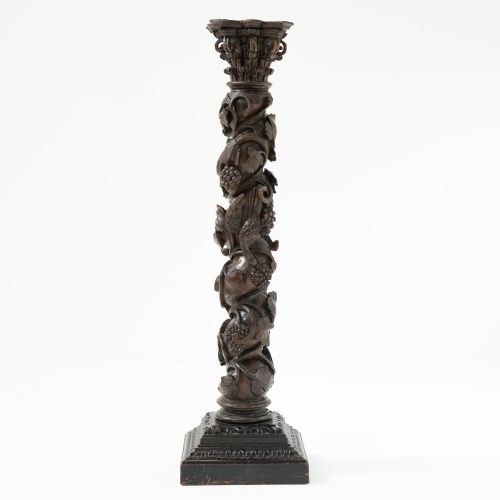
- A column shaft characterised by a helix or spiral twist running from base to capital. This form gained popularity during the Baroque period.
- Torchiere
- A tall stand originally designed to hold a torch or candle, later adapted as a display pedestal for lamps and urns. Art Deco examples often pair exotic veneers with slender profiles.
- Socle
- A short plinth or pedestal supporting a column or bust. It provides a stable footing on the floor.
Antique Display Pillar: Frequently Asked Questions
What holds an antique display pillar stable?
Most antique display pillars rely on a broad base or heavy plinth to distribute weight safely across the floor. Materials like marble and dense stone add natural gravity, whilst wooden versions often feature internal bracing.
Placing the pillar on level ground ensures that tall or heavy items remain secure. Care must be taken with uneven antique flooring to prevent any sway.
How do I clean a marble pillar?
Marble columns require dusting with a soft, dry cloth to remove surface grit. Avoid acidic household cleaners, which etch the polished stone surface.
For scagliola or painted wood surfaces, wiping with a damp cloth without harsh detergents preserves the finish. Professional conservation wax can maintain wood sheens safely over time.
Can these pillars support heavy sculptures?
Solid stone, scagliola, and thick oak columns easily bear the weight of heavy bronze sculptures, large urns, or jardinières. The construction material dictates the load capacity.
Lighter plant stands or hollow theatrical columns suit potted plants and ceramics rather than massive masonry. Checking the base footprint helps determine stability for top-heavy objects.
Where should I place a display pillar?
Display pillars anchor room corners, frame doorways, or highlight focal points against plain walls. Placing them out of main walkways protects both the pillar and the object it carries.
Good lighting enhances the fluting, marbling, or carved details of the column. Natural daylight from a nearby window highlights subtle surface colours and textures.