



Antique Dining Urn
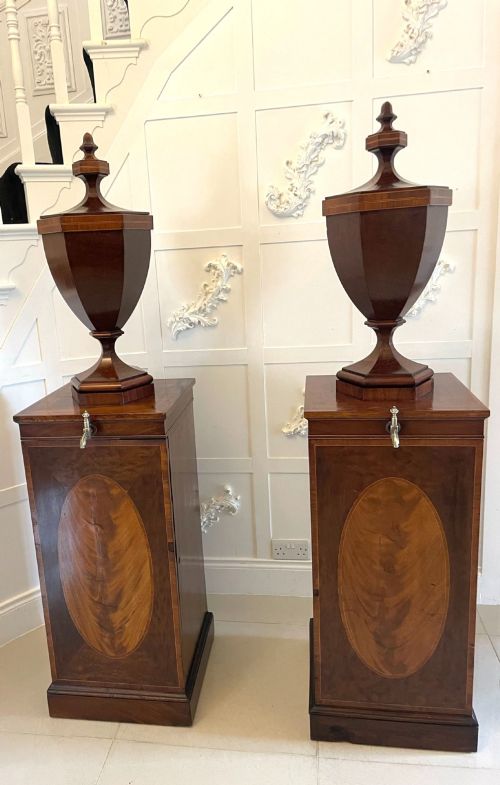
These antique dining urns are formal serving vessels and pedestals in mahogany, bringing classic neoclassical proportion and practical storage to a dining room.
Antique Dining Urn
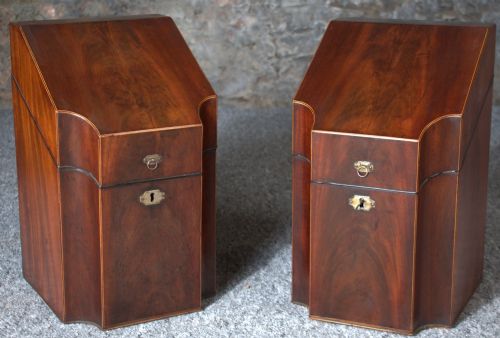
When you search for an antique dining urn, you encounter formal vessels and pedestals intended for dining rooms. The pieces appearing here span the eighteenth century and the nineteenth century, alongside later revivals, and typically take the form of lidded urns or paired pedestals. These objects served to store cutlery or wine during formal meals, functioning as architectural focal points within large dining spaces.
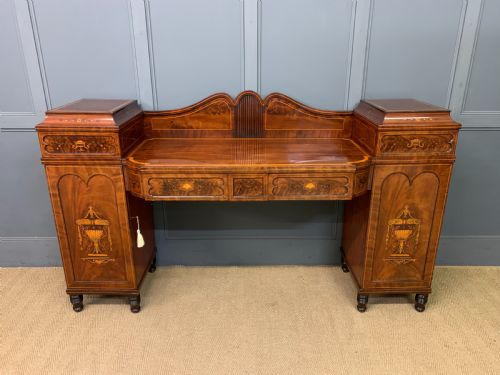
The most common examples you meet on this page are mahogany vessels, often inlaid with boxwood or satinwood. Some versions sit directly upon original pedestal cupboards, while others appear as standalone knife boxes or table centrepieces. Styles range from strict George III neoclassical designs through to later Sheraton and Federal revivals.
Materials and construction
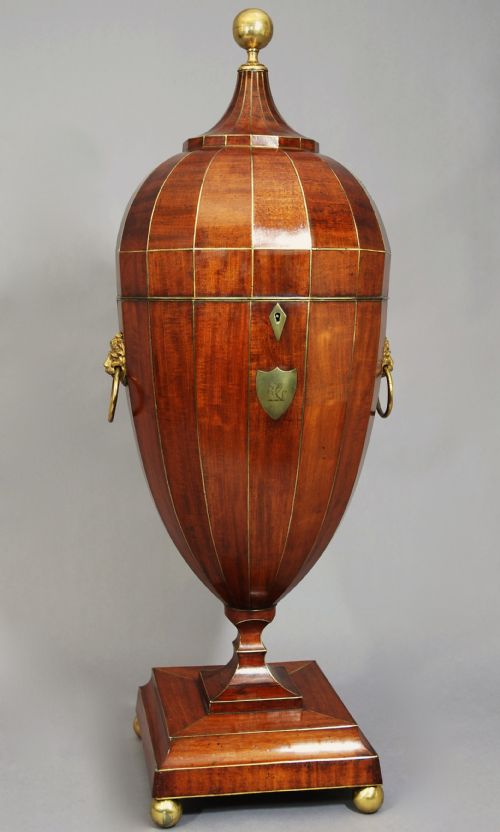
Makers constructed these urns primarily from solid mahogany, selected for its rich grain and structural stability. Workshops applied fine veneers of satinwood and boxwood to create intricate inlay work and contrasting borders along the surfaces. Brass handles, escutcheons and mounts often finished the construction, adding functional strength and decorative contrast to the dark timber.
The method relies on traditional cabinetmaking techniques, shaping solid timber and curved staves to form the distinctive classical vase profile. Inlaid sections required precise hand-cutting and fitting of lighter woods into recessed channels within the primary mahogany body. Lids were frequently turned on a lathe and fitted with internal compartments designed specifically to hold cutlery handles upright.
The listings on this page span the 18th century through to the 20th century, predominantly featuring mahogany construction paired with boxwood and satinwood inlay.
Markers of quality
The distinction between tiers rests upon the crispness of the timber selection and the precision of the inlay. Superior examples display tightly figured mahogany and impeccably matched boxwood lines that remain flush with the surrounding wood over centuries of shifting humidity. Finer pieces also retain their original fitted internal compartments and matching pedestal cupboards rather than relying on later adaptations.
Proportion and architectural balance dictate the upper echelon of these forms. The best urns maintain a fluid, convincing neoclassical silhouette without appearing clumsy or over-restored. Original brass hardware, unblemished by modern replacements, further separates the standard production from the exceptional survival.
Edwards and Roberts
The Antique Dining Urn Glossary
- Neoclassical
- A style drawing inspiration from classical antiquity, marked by symmetry, urn motifs, and clean architectural lines. This aesthetic dominates the design of eighteenth-century dining furniture.
- Pedestal
- A supporting column or cupboard base designed to elevate an urn or serving piece. These elements ground the taller dining room arrangements.
- Inlay
- A technique where pieces of contrasting timber, such as boxwood or satinwood, are inserted into the main surface to create decorative patterns. It defines the enriched surfaces of Sheraton and Federal revival pieces.
- Cutlery Urn
- A vase-shaped wooden vessel fitted internally to store knives and forks securely. They sat upon sideboards or separate pedestals during formal dining.
- Sheraton Style
- A neoclassical furniture design characterised by elegant proportions, straight tapered legs, and delicate marquetry. It forms a key stylistic reference for the urns listed here.
Antique Dining Urn: Frequently Asked Questions
What is an antique dining urn used for?
These vessels were historically used in wealthy dining rooms to store cutlery or wine during formal meals. They stood upon pedestals or sideboards as part of a matched architectural suite.
Today, collectors use them primarily as decorative focal points that anchor a room's period aesthetic, though some still utilise the internal compartments for storage.
How do I tell an 18th-century urn from a revival piece?
Eighteenth-century originals display hand-cut joinery, older secondary timbers on the interior, and the natural patina that develops over centuries of handling. Revival pieces, such as those from the Edwardian or Federal revival periods, often show more uniform machine-processed internal components.
Examining the underside, hinges, and the ageing of the brass hardware helps confirm the actual period of manufacture.
Are dining urns always sold in pairs?
While many survive as matched pairs designed to flank a serving table or sideboard, single examples also appear in the historical record. Pairs generally command greater interest because they reflect the original symmetrical layout of a Georgian dining room.
Individual urns often function well as standalone display pieces on side tables or pedestals.
How should I care for mahogany urns?
Mahogany requires stable indoor humidity and protection from direct sunlight to prevent the timber and delicate boxwood inlay from drying out or fading. Gentle dusting with a dry, soft cloth is sufficient for routine maintenance.
Avoid liquid polishes containing silicone, choosing instead a traditional beeswax applied sparingly to nourish the grain.