


Antique Dining Table Candelabra
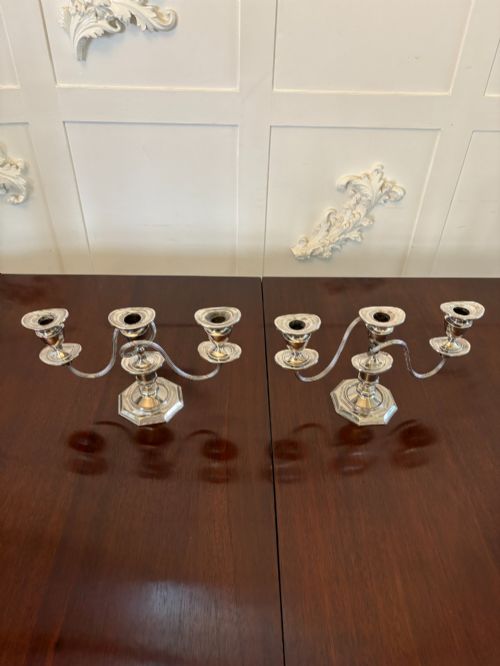
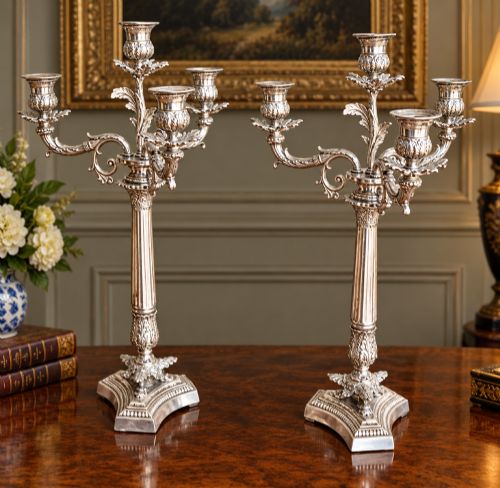
An antique dining table candelabra sits central on the board, holding candles aloft to cast a warm glow over evening meals.
Antique Dining Table Candelabra
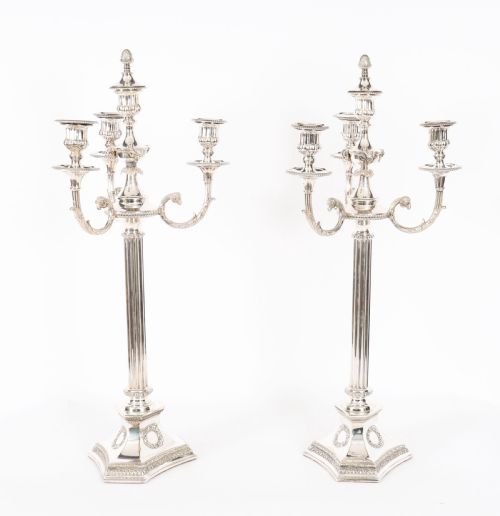
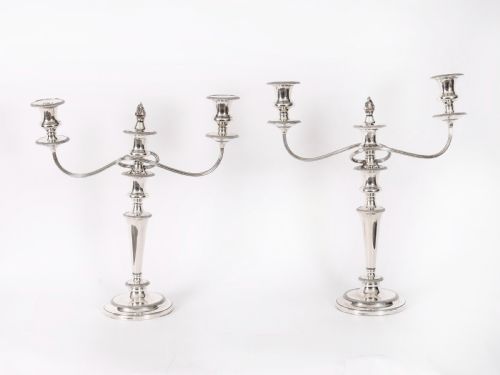
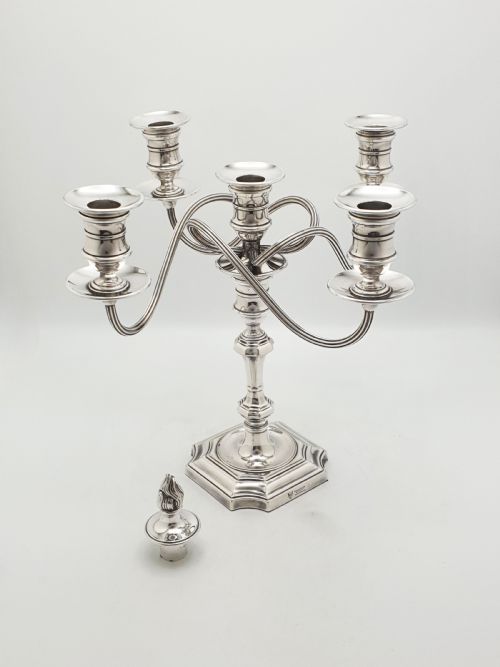
These pieces are lighting devices designed to sit directly on a dining table, branching into multiple arms to hold several candles at once. When buyers search for antique dining table candelabra, they encounter forms ranging from low two-branch table variants to grand five-branch centrepieces with detachable sconces.
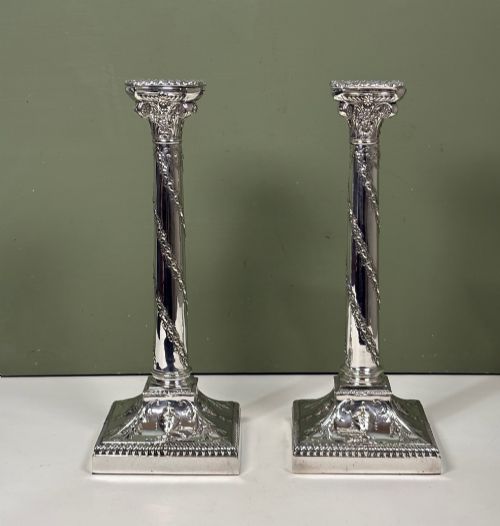
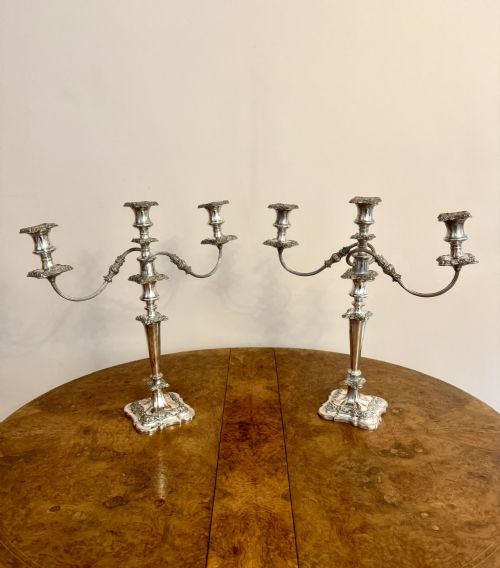
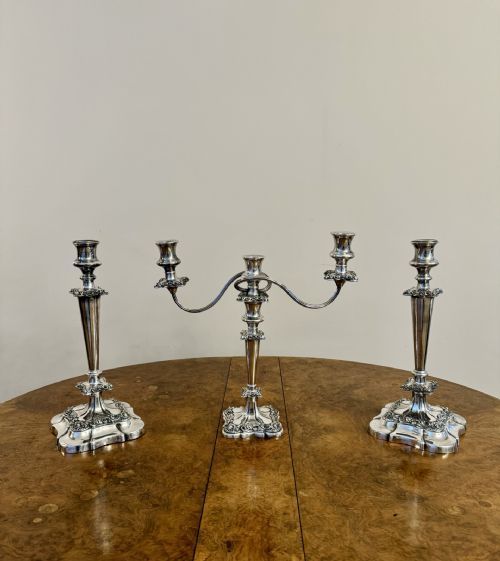
The selections found here lean heavily towards Victorian and Edwardian periods, alongside Georgian style revivals and later twentieth-century iterations. Most examples discovered on this page take the form of paired candlesticks fitted with matching removable branches to convert them into multi-light candelabras.
Materials and construction
Makers utilised sterling silver and various plated methods, including old Sheffield plate, silver plate, electroplated nickel silver, and standard metal bases. Many nineteenth-century and early twentieth-century examples combine a solid base weight with silver plating over a supportive metal core.
Construction techniques involved casting structural elements, such as cherub figural stems or lyre frames, and soldering separate parts together, including the drip pans and detachable nozzles. Glass components also appear in specific Edwardian variants, adding variety to the standard metalwork.
Listings span from the 1850s through to the 1960s, encompassing sterling silver, silver plate, brass, and glass materials across Victorian and Edwardian eras.
Distinctions in quality
The tier of workmanship depends heavily upon the crispness of the chased or cast ornamentation, particularly in ornate Victorian Rococo revival pieces and classical motifs. Superior examples maintain balance and sturdiness across their branching arms without listing or leaning.
The integrity of the silver coating over base metals dictates longevity, while maker marks from established workshops elevate historical interest. Heavier gauge metalwork and fully detachable, matching sconces indicate a higher standard of original production.
Garrard & Co·Smith & Sissons & Co·Elkington Sheffield·Blagden Hodgson & Co
The Antique Dining Table Candelabra Glossary
- Sconce
- The detachable nozzle or cup at the top of a branch that catches dripping wax and holds the candle in place. These removable parts are frequently lost or mismatched over time.
- Sheffield Plate
- An early fusing technique where a thin sheet of silver is fused to a thicker copper core by heat and pressure. This method predates modern electroplating.
- EPNS
- Electroplated nickel silver, a common base material introduced in the nineteenth century where a thin layer of silver is deposited via electrical current onto a nickel brass alloy.
- Centrepiece
- A large decorative object placed in the middle of a dining table, which often takes the form of a grand multi-light candelabra.
- Branch
- The removable arm or arms fitted to a basic candlestick to transform it into a candelabra.
Antique Dining Table Candelabra: Frequently Asked Questions
How do I clean an antique silver plated candelabra?
Use a soft cloth and a gentle, non-abrasive silver cleaner formulated specifically for plated items to preserve the thin metallic surface.
Avoid aggressive scrubbing, especially around soldered joints and ornate chased details where the underlying metal might become exposed.
Can these candelabras hold modern standard candles?
Many older pieces feature sconces sized for historical taper diameters which differ slightly from contemporary candle widths.
Utilising small candle rings or gently trimming the base of standard candles ensures a secure upright fit in older sockets.
Are the branching arms removable on all models?
Most convertible Victorian and Edwardian examples feature a central drop-in branch system that lifts away from the primary candlestick base.
This modular design allowed nineteenth-century households to use the items as simple single candlesticks or full multi-light candelabras depending on the dining occasion.
What styles are most common for dining tables?
Victorian Rococo revival, Edwardian neoclassical, and Georgian style reproductions dominate the available forms on the dining table.
These traditional designs prioritise symmetrical branching arms and decorative motifs like floral chasing or classical fluting.