
Antique Dining Room Dresser
An antique dining room dresser grounds the room, offering heavy timber storage and display space handed down from earlier centuries.
Antique Dining Room Dresser
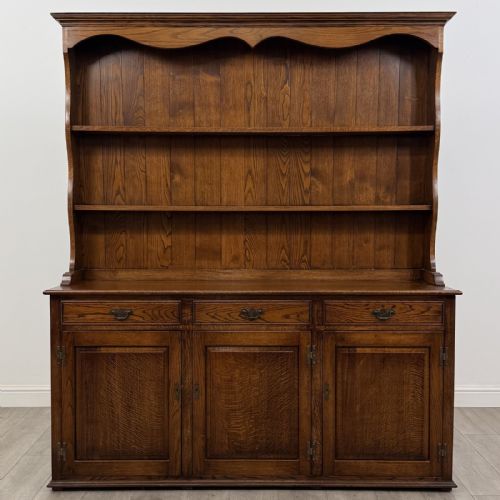
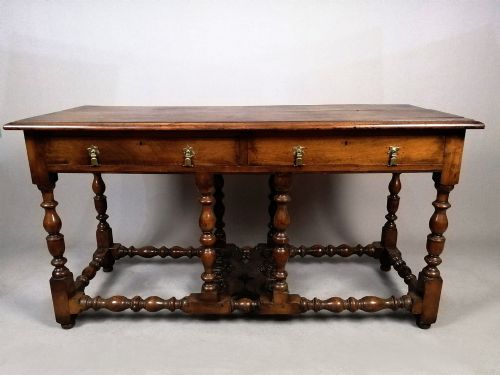
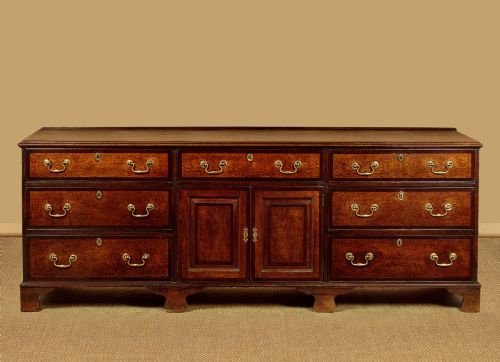
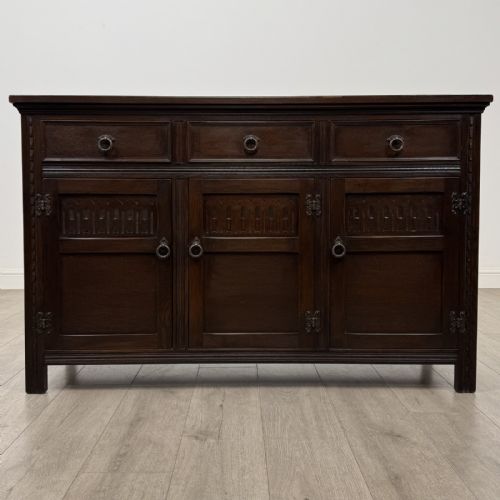
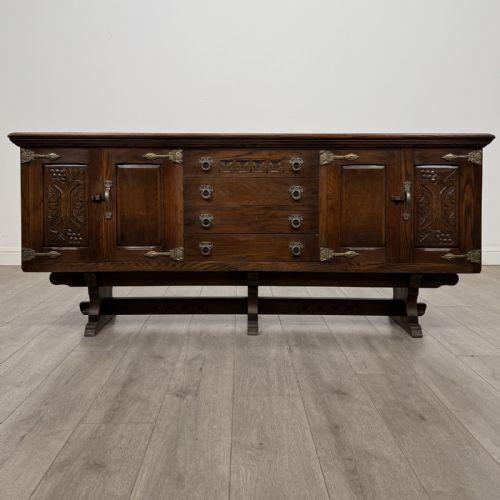
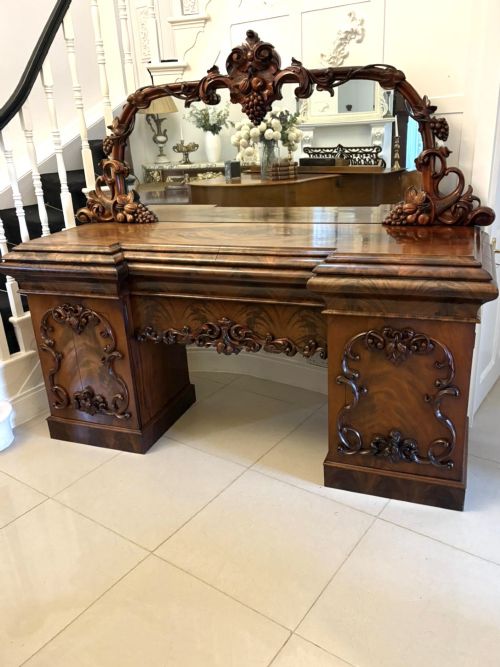
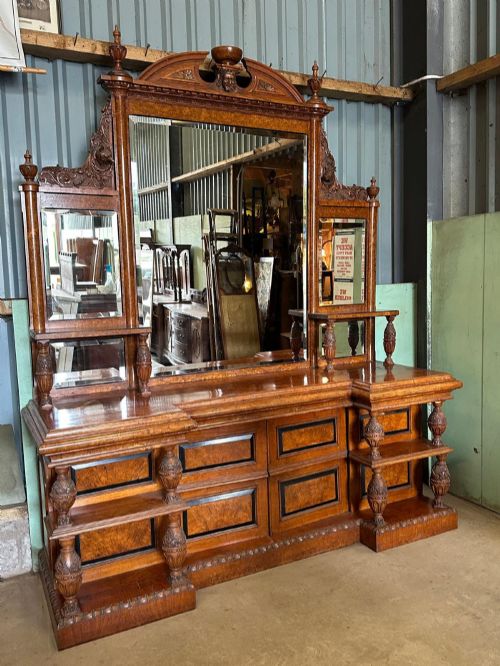
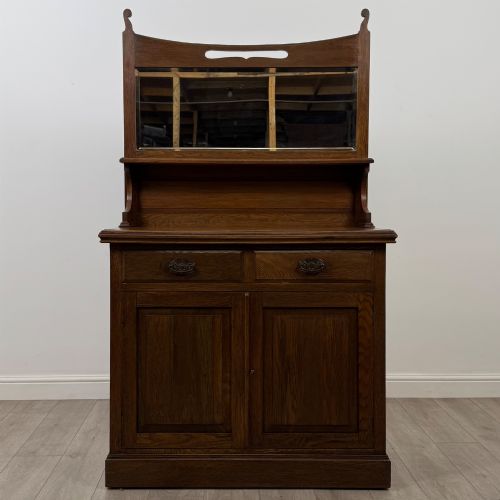
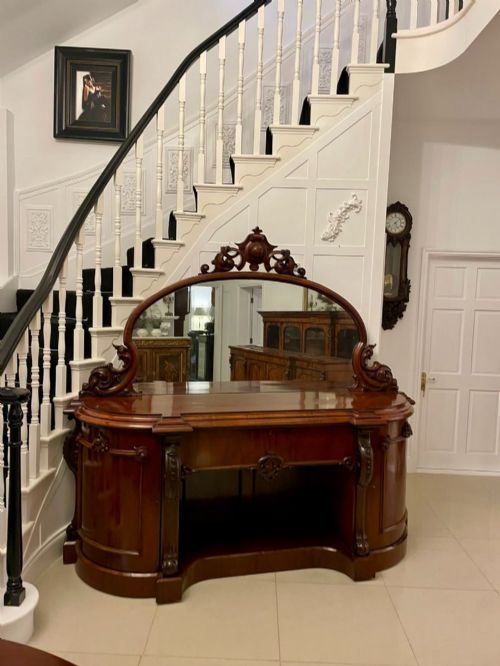
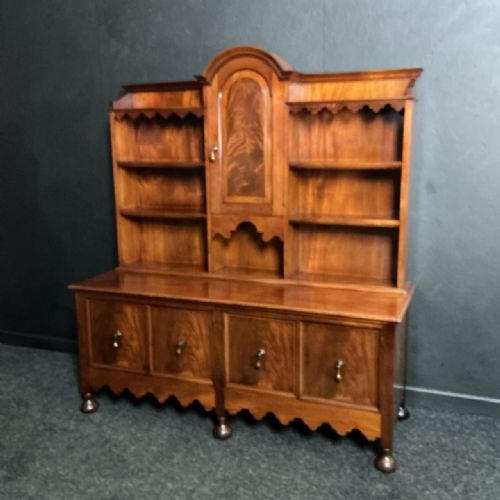
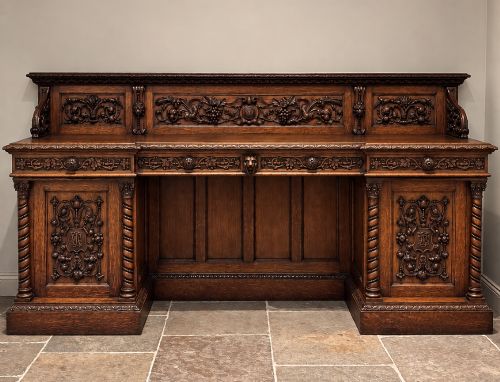
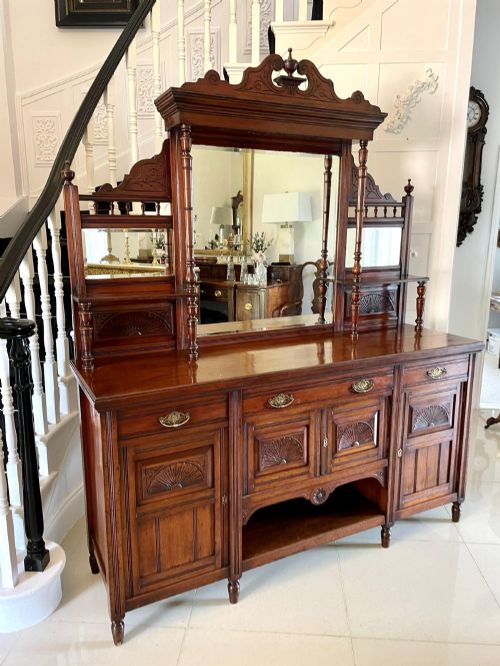
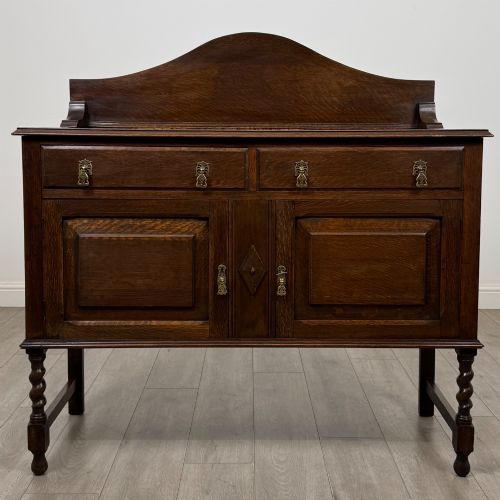
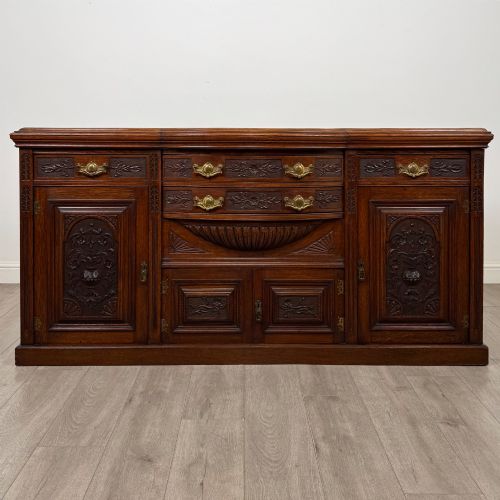
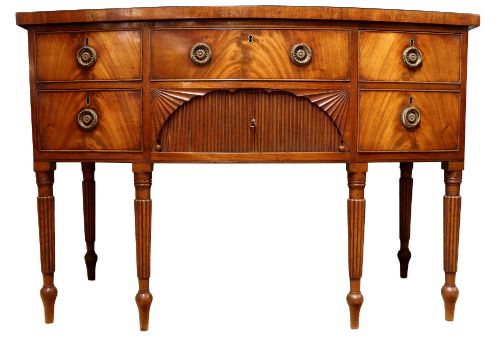
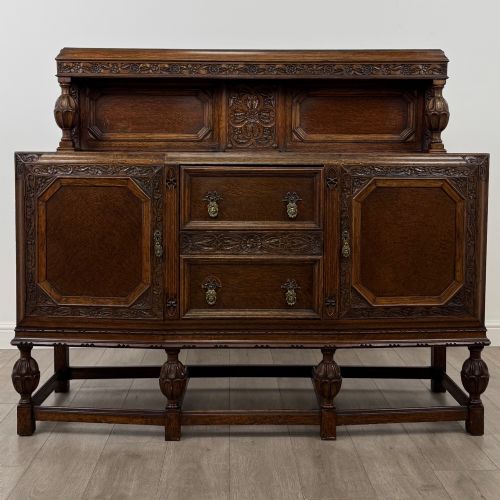
When you search for an antique dining room dresser, you encounter heavy timber storage furniture designed for serving food and displaying plate in the principal dining rooms of houses. The pieces on this page span the Victorian and Edwardian eras alongside earlier Georgian and Regency periods, recorded as sideboards, dresser bases, and Welsh dressers.
Earlier formats include dresser bases in oak and bow fronted server units inlaid with contrasting timbers. These heavy serving pieces reflect formal dining habits of the nineteenth and early twentieth centuries, providing substantial timber presence.
How they were made
Cabinet makers constructed these pieces primarily from solid oak and mahogany, frequently applying flame mahogany veneer to prominent drawer fronts and doors. Timber selection governed the visual weight of the furniture, with golden oak and pollard oak providing distinctive grain patterns.
Joinery techniques relied on traditional frame and panel construction for stability across wide sideboard bases. Carved ornamentation, barley twist supports, and Sheraton style inlay work were applied by hand to enrich the structural timber surfaces.
Several pieces include secret cellaret drawers designed specifically for cooling wine bottles beside the dining table.
What varies in quality
Quality rests upon the selection of timber figures and the crispness of hand carving on mirror frames and drawer rails. Pieces featuring figured mahogany or pollard oak display greater depth of grain than plain secondary woods.
Construction methods also separate standard production from superior cabinet work, seen in the tight fit of dovetailed drawer boxes and the integration of bevelled mirror glass within carved wooden hoods.
T Simpson and Son
The Antique Dining Room Dresser Glossary
- Sideboard
- A long low dining room piece used for serving food and storing tableware. It typically combines cupboards and central drawers.
- Dresser base
- An open lower cabinet featuring rows of drawers above enclosed storage space. This form predates many nineteenth century sideboard designs.
- Welsh dresser
- A traditional timber storage unit combining a lower base of drawers and cupboards with open shelving above. These pieces originate from earlier rural vernacular traditions.
- Bow front
- A convex curved cabinet front that projects outward in a smooth arc. This profile appears frequently on Regency and Georgian serving pieces.
- Barley twist
- A turned wooden column carved in a spiral rope pattern. This decorative motif appears on the upright supports of Edwardian and Victorian oak cabinets.
Antique Dining Room Dresser: Frequently Asked Questions
Where do I put a sideboard?
Place your sideboard against a main dining room wall where it can function as a serving surface during meals.
Ensure there is sufficient floor clearance for doors and drawers to open fully without obstruction from dining chairs.
How do I clean mahogany?
Dust the polished mahogany surfaces regularly with a soft dry cloth to prevent grit accumulation.
Apply a traditional beeswax polish sparingly when the timber appears dry, buffing it gently to maintain the lustre.
What is a mirror back?
A mirror back incorporates a large glass plate within a carved wooden superstructure mounted to the top of the sideboard. This feature reflects light and displays decorative ceramics placed on the rear shelf.
Mirror back designs became particularly popular during the Victorian and Edwardian periods.
How do I date oak furniture?
Examine the construction methods inside the drawers and the colour of the timber grain. Hand cut dovetails and darker patination typically indicate an earlier age.
Compare the overall style, such as Jacobean revival twists or Arts and Crafts simplicity, against known period characteristics.