


Edwardian Plate Rack Dresser
An edwardian plate rack dresser combines generous display shelving with practical storage, offering the ideal centrepiece for a traditional kitchen.
Edwardian Plate Rack Dresser
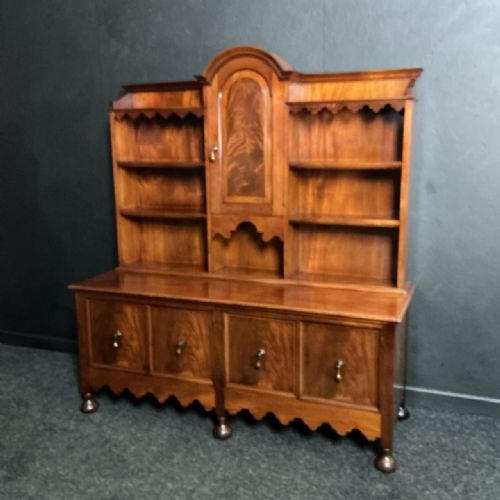
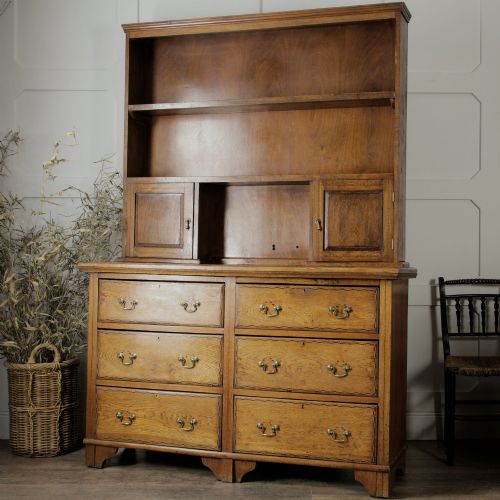
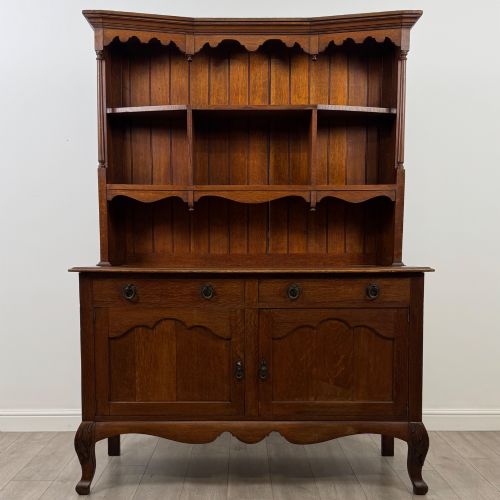
An edwardian plate rack dresser combines a functional base unit with open upper shelving designed specifically to display ceramic plates and platters. These forms emerge in oak, mahogany, and painted pine, ranging from slim cottage variants to substantial country house proportions.
The pieces appearing on this page span the Edwardian period alongside earlier and later examples, reflecting the enduring utility of kitchen dressers and wall shelves. Makers adopted traditional regional forms as well as revivalist aesthetics.
Buyers encounter variations including pot board bases, carved detailing, and integrated plate racks. Each version provides both display space for porcelain and enclosed storage for dining utensils.
How they were made
Cabinet makers utilised solid oak, flame mahogany, and pine, often combining sturdy structural timbers with finer veneers for visible surfaces. Brass fittings appear on drawers and cupboards, adding functional contrast to the wooden construction.
Joinery methods range from traditional pegged mortise and tenon joints in country furniture to more refined cabinet work in Edwardian pieces. Surfaces show finishes including natural polish, staining, and painted treatments.
A solitary silver plate toast rack by Christopher Dresser occasionally slips in among the timber furniture.
What varies in quality
Quality rests upon the selection of timber, the integrity of the structural joinery, and the harmony of the proportions. Superior pieces display thoughtful grain matching and well-executed carving rather than hurried assembly.
The distinction between standard utility furniture and finer examples lies in the detailing of the cornices, the weight of the hardware, and the preservation of original finishes.
The Edwardian Plate Rack Dresser Glossary
- Pot board
- A lower slatted shelf beneath a dresser base traditionally used for storing pots and pans. This feature dates back to earlier centuries but persists in revivalist designs.
- Plate rack
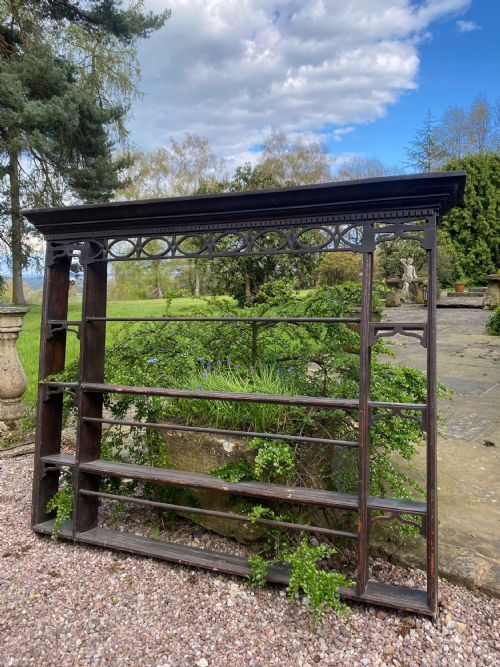
- A set of vertical wooden slats or grooves designed to hold ceramic plates upright for display and drying. It forms the upper superstructure of many traditional dressers.
- Flame mahogany
- A decorative veneer cut from wood where the branch meets the trunk, producing a rippling, flame-like pattern. Cabinet makers used it to create striking visual movement on drawer fronts and doors.
- Arts and Crafts
- A design movement prioritising traditional craftsmanship and simple forms over mass production. Pieces from this tradition often feature unpretentious oak construction and subtle hand-finished details.
Edwardian Plate Rack Dresser: Frequently Asked Questions
What is an edwardian plate rack dresser used for?
These pieces serve as both display furniture and practical storage for dining rooms and kitchens. The upper racks hold ceramic plates securely while the lower cupboards and drawers conceal tableware.
They function equally well in modern homes for organising everyday crockery or exhibiting decorative porcelain collections.
How do I identify an edwardian piece?
Edwardian furniture often displays lighter construction and cleaner lines compared to heavy Victorian predecessors. Look for stylistic influences such as Georgian revival or Arts and Crafts simplicity.
Timber selection typically favours oak and mahogany, sometimes paired with subtle carving or brass hardware characteristic of the early twentieth century.
Can these dressers fit in modern kitchens?
Many examples come in varied proportions, ranging from slim cottage variants to larger country house formats. Measuring available wall space and ceiling height ensures the superstructure integrates smoothly.
Their combination of open shelving and enclosed storage makes them practical additions to contemporary dining spaces.
What materials are common in these listings?
Solid oak and mahogany form the foundation of most traditional pieces, alongside painted pine in vernacular examples. Brass hardware frequently appears on drawers and cupboard doors.
Finishes range from polished wood grain to painted surfaces reflecting different regional traditions.