


Antique Diamond Choker
An antique diamond choker sits close to the throat, combining lustrous pearls or precious metals with brilliant stones.
Antique Diamond Choker
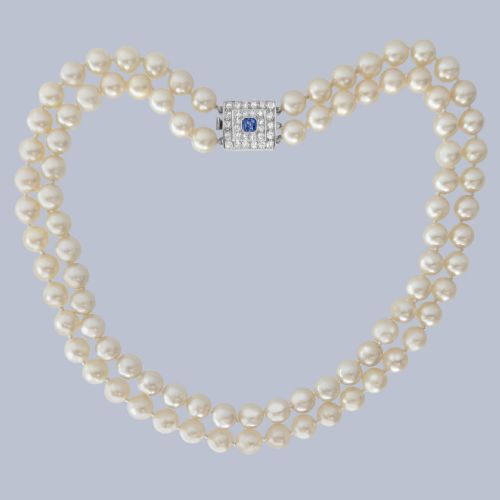
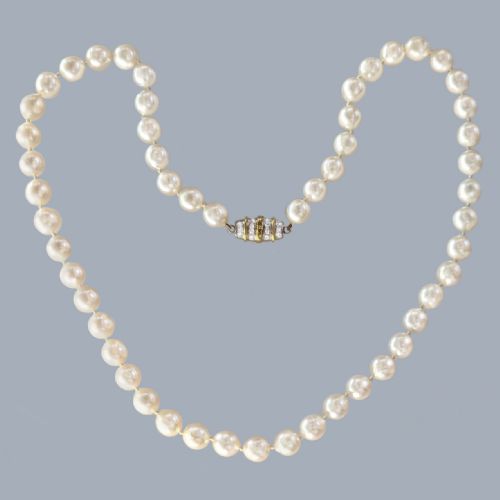
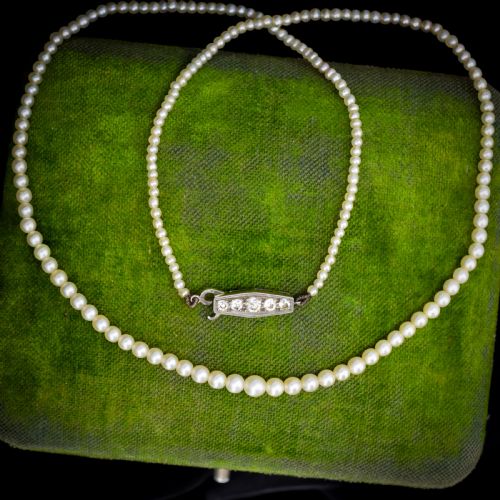
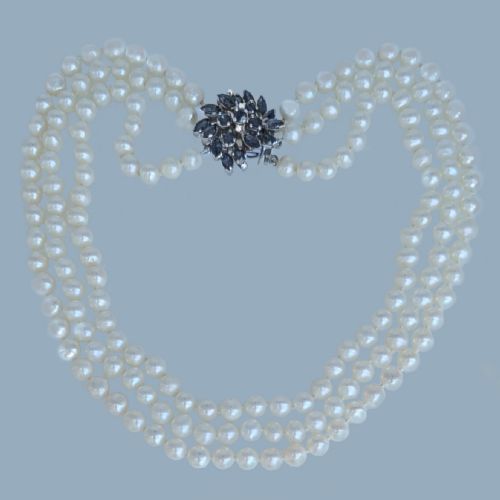
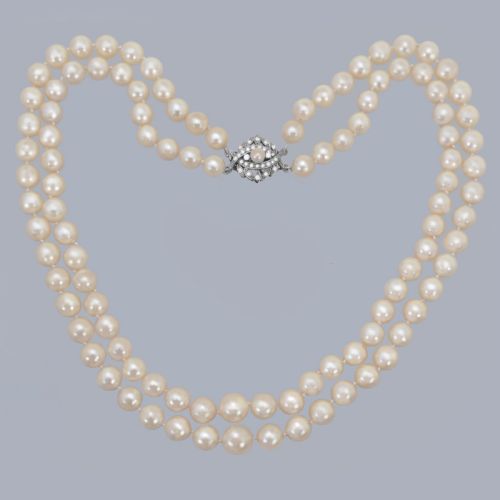
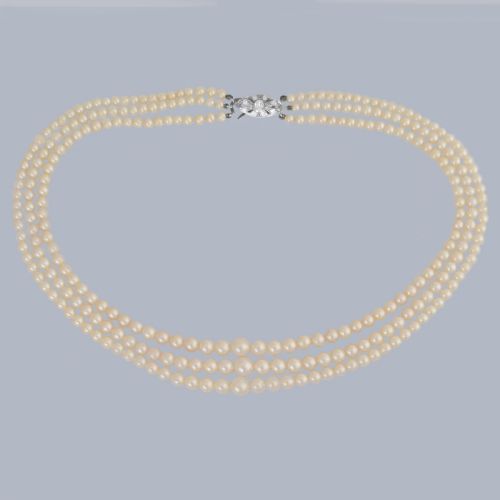
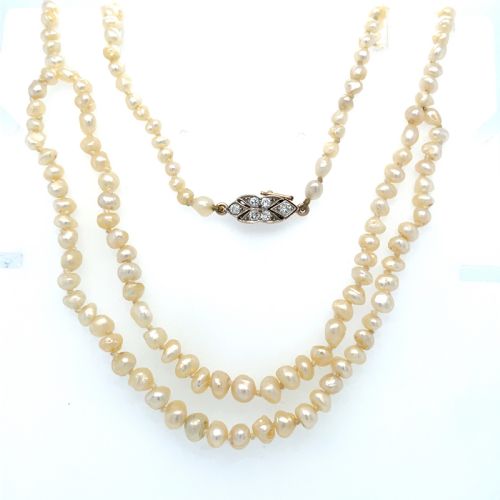
When searching for an antique diamond choker, buyers examine neckpieces that sit high on the collarbone, often featuring multiple strands of pearls secured by gemstone clasps. The pieces seen here span from the Victorian and Edwardian eras through the Art Deco period and into the mid-century decades.
The most common form on this page pairs graduated or uniform pearls with intricate central clasps of platinum or gold set with diamonds, sapphires, emeralds, or rubies. Some examples rely entirely on platinum and gold settings carrying substantial diamond carat weights without pearl strands.
How they were made
Goldsmiths and platinumsmiths constructed these chokers using durable precious metals to hold small diamonds and coloured gemstones securely. Platinum gained favour during the Edwardian and Art Deco periods for its strength, allowing fine, lace-like metalwork around stones.
Pearl strands were traditionally strung on silk thread, often with knots between each pearl to protect them from rubbing together. Clasps incorporated box mechanisms or safety chains to ensure the heavy multi-strand necklaces remained secure when worn.
Materials documented across the inventory include platinum, yellow gold, white gold, pearls, diamonds, emeralds, sapphires, and rubies.
What varies in quality
Quality in these chokers rests on the matching, lustre, and origin of the pearls alongside the cut and clarity of the diamonds. Natural saltwater pearls command greater attention than cultured varieties, while certified stones carry documented pedigree.
The artistry of the clasp metalwork dictates the overall grade of the piece, distinguishing standard commercial production from bespoke Parisian or British workshop output. Balance in the weight and the smoothness of the articulation separate superior chokers from simpler iterations.
Chaumet
The Antique Diamond Choker Glossary
- Clasp
- The fastening mechanism, which in these pieces frequently serves as the visual focal point through diamond and gemstone settings.
- Natural saltwater pearl
- A pearl formed organically in ocean molluscs without human intervention, highly prized in early twentieth-century jewellery.
- Platinum
- A dense, white precious metal utilised extensively in Edwardian and Art Deco mounts for its ability to hold tiny pavé-set diamonds.
- Rose cut
- An antique diamond cut featuring a flat base and a domed crown with triangular facets, common in Victorian work.
Antique Diamond Choker: Frequently Asked Questions
How do I wear a choker?
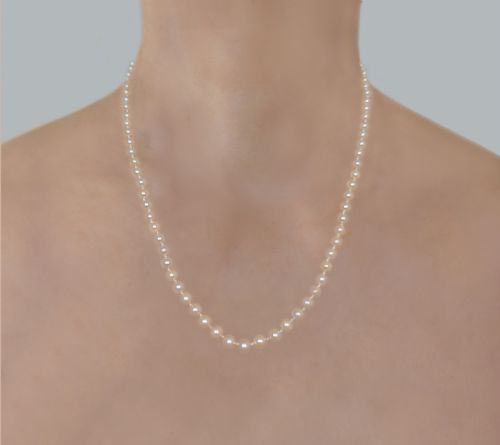
An antique diamond choker is designed to sit high against the neck, typically measuring shorter than standard pendant chains. They pair well with open necklines that allow the clasp and pearl strands to rest centrally.
Because these necklaces have historical clasps, fastening them carefully in front of a mirror helps prevent strain on the silk threads or metal hinges.
Are the pearls natural?
The listings include both natural saltwater pearls and cultured pearls depending on the decade of manufacture. Edwardian examples frequently feature natural saltwater pearls, while later pieces often utilise cultured varieties.
Gemological certificates accompanying specific pieces verify whether pearls are natural or cultured, and detail treatments.
How do I date a choker?
Dating relies on the materials, fastening styles, and overall design aesthetics present in the mount and clasp. Edwardian pieces display delicate platinum filigree, whereas Art Deco examples utilise geometric patterns.
Victorian necklaces often incorporate yellow or rose gold with ornate floral motifs, while mid-century designs favour heavier gold settings and textured finishes.
Can chokers be restrung?
Pearl strands require periodic restringing to maintain the integrity of the silk thread holding the pearls. Many pieces have recent restringing noted in their descriptions to ensure safe wear.
Professional jewellers can match original silk colours and knotting distances when maintenance becomes necessary over time.