


Estate Diamond Necklace
An estate diamond necklace brings together historic sparkle and enduring craft, offering buyers a wearable piece of history.
Estate Diamond Necklace
An estate diamond necklace encompasses a broad range of historic neckwear, featuring diamonds set alongside pearls, sapphires, rubies, and emeralds in various forms. When searching for an estate diamond necklace, buyers encounter diverse designs spanning the Victorian era through the mid-twentieth century.
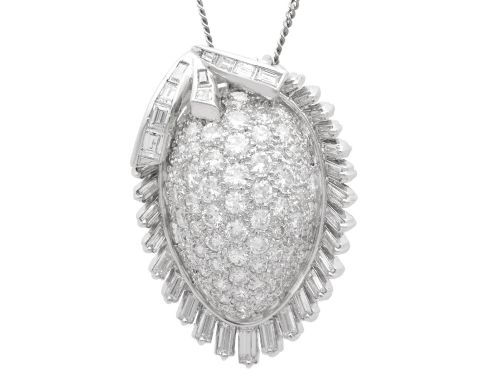
The selections on this page heavily feature mid-century creations, vintage pieces, and Art Deco works. Common configurations include delicate pendants, beaded pearl strands with jewelled clasps, and substantial platinum collars.
Originating from periods such as the 1920s, 1930s, 1940s, 1950s, and 1960s, these necklaces reflect the changing tastes of past decades. Buyers frequently find combinations of 18ct white gold, 14ct gold, and platinum holding the gemstones in place.
How they were made
Craftsmen built these pieces using precious metals such as platinum, 18ct white gold, and 14ct gold to securely house diamonds and coloured stones. Metalwork techniques from the Victorian era to the mid-century modern period involved precise setting methods for clusters, strands, and collars.
Gemstones including basaltic sapphires, carved tourmalines, emeralds, and rubies were integrated alongside pearls and opals. Jewellers balanced the weight of heavy diamond clusters with durable stringing and precious metal chains to ensure structural integrity.
Listings span the Victorian era, the 1920s, 1930s, 1940s, 1950s, and 1960s, utilising platinum, 18ct white gold, and 14ct gold.
What varies in quality
The distinction between tiers of work rests on the scale of the gemstones and the complexity of the metal setting. Pieces featuring large carat weights in platinum demand greater technical skill from the jeweller than smaller gold configurations.
Artistic execution and material combination dictate the standing of a piece, from simple beaded pearl strands to elaborate Art Deco platinum constructions. The harmony between central stones like sapphires or emeralds and the surrounding diamond work defines the overall standard.
Chaumet
The Estate Diamond Necklace Glossary
- Art Deco
- A design style prominent in the 1920s and 1930s characterised by geometric symmetry, clean lines, and extensive use of platinum. This aesthetic defines many notable pieces from that era.
- Platinum
- A dense, durable, and naturally white precious metal favoured in fine jewellery for securely holding large diamond configurations without adding excessive bulk. Its strength allowed for delicate-looking settings.
- Cluster pendant
- A central grouping of gemstones, typically featuring a larger stone surrounded by smaller diamonds, suspended from a chain. This form maximises visual impact and light reflection.
- Cabochon
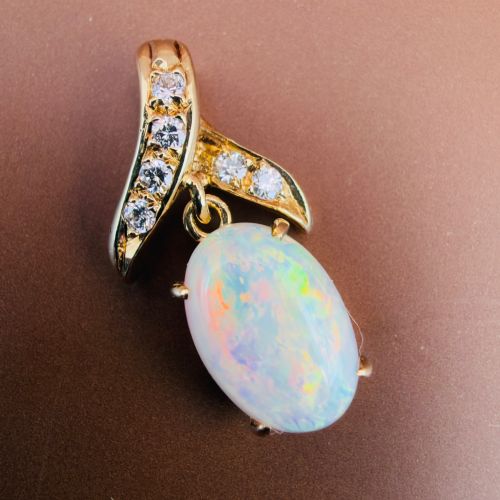
- A gemstone shaped and polished with a smooth, rounded surface rather than faceted. This cut is frequently seen on opals and coloured stones in mid-century designs.
- Strand
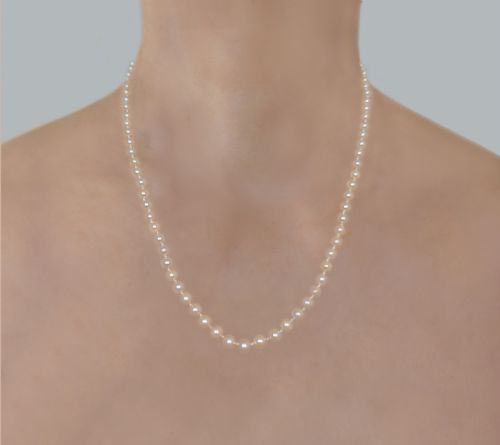
- A continuous line of pearls or beads threaded together, often terminating in a decorative diamond and precious metal clasp. Multiple strands are frequently combined for added volume.
Estate Diamond Necklace: Frequently Asked Questions
What is an estate diamond necklace?
An estate diamond necklace is a previously owned piece of neckwear containing diamonds, created during a specific historic period such as the Victorian era or the mid-twentieth century.
These items range from simple gold pendants to elaborate platinum Art Deco collars set with sapphires, pearls, and emeralds.
How do I care for a pearl and diamond necklace?
Pearls require gentle cleaning with a soft, damp cloth and should be stored flat to prevent stretching the silk thread. Diamonds and precious metals benefit from professional periodic checks to ensure settings remain secure.
Keeping pearls away from perfumes and cosmetics preserves their natural lustre over time.
How can I tell the period of a necklace?
Periods are identified through a combination of metal types, gemstone cuts, and distinct stylistic markers. For example, geometric platinum settings typically point to the Art Deco era.
Examining the clasp construction and overall design proportions also helps link a piece to eras like the 1950s or the 19th century.
Are these necklaces suitable for daily wear?
Many sturdy platinum and gold pieces tolerate regular wear, provided they receive proper maintenance and gentle handling. Delicate pearl strands or intricate antique designs require more cautious treatment.
Consider the mounting and the presence of softer stones like opals when deciding how often to wear a specific piece.