



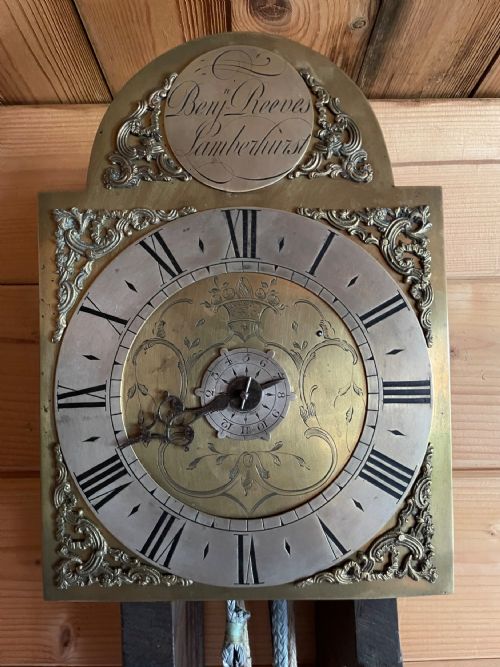
Antique Dial Wall Timepiece
An antique dial wall timepiece is a circular timekeeper built to hang, driven by a reliable fusee movement.
Antique Dial Wall Timepiece
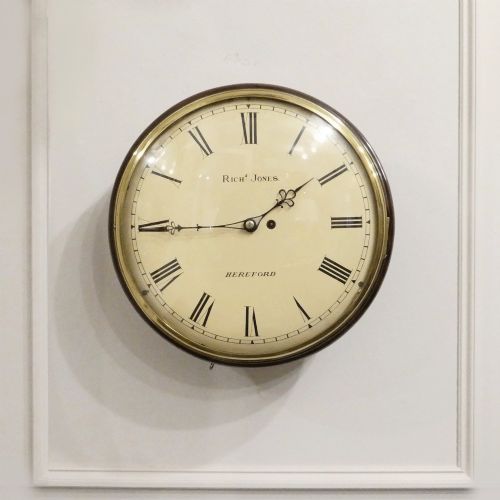
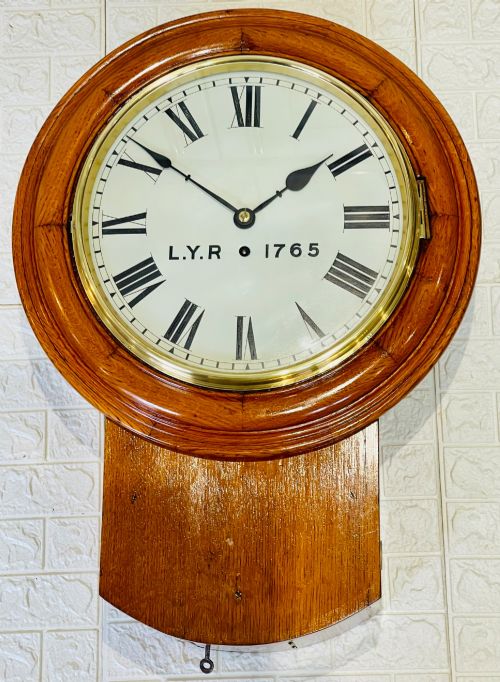
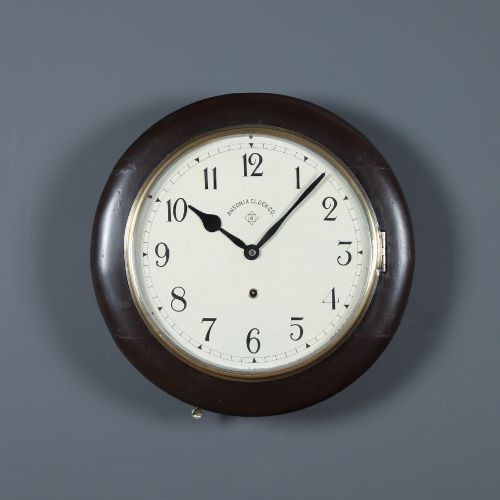
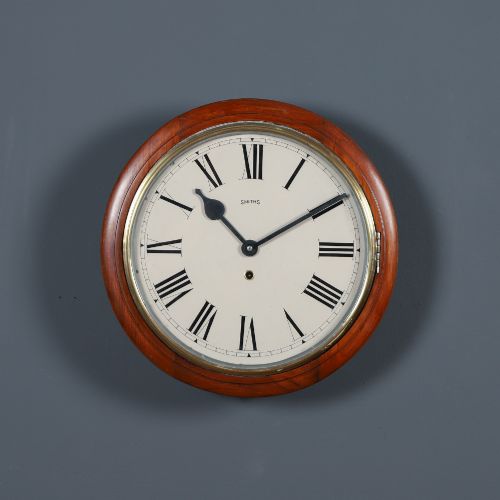
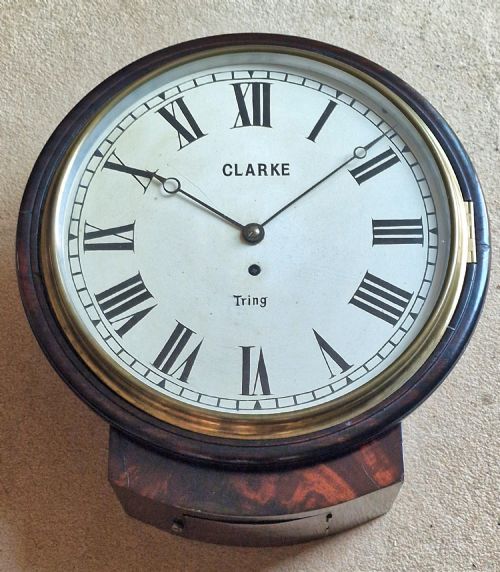
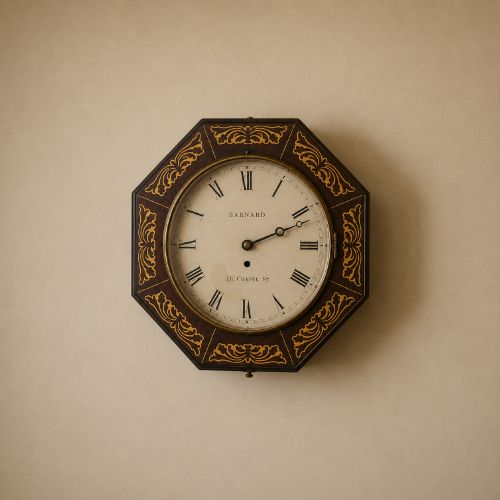
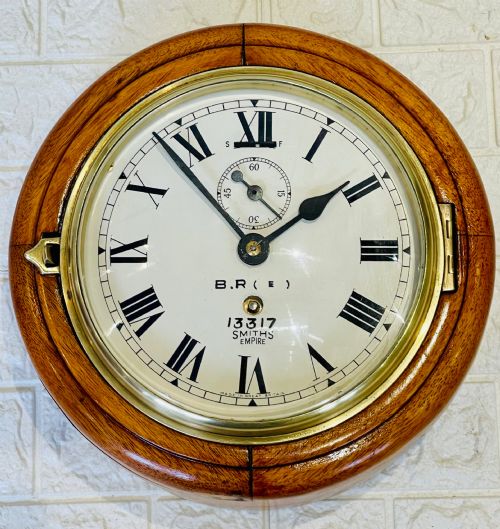
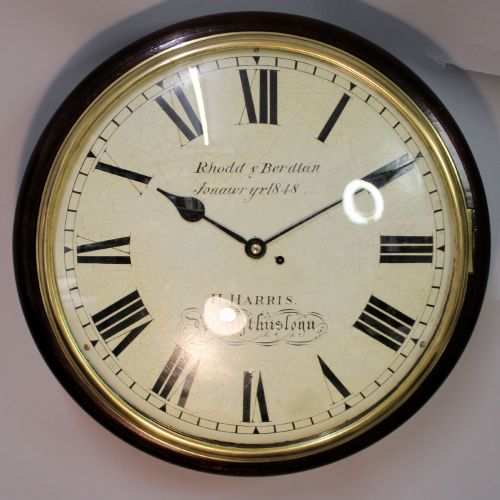
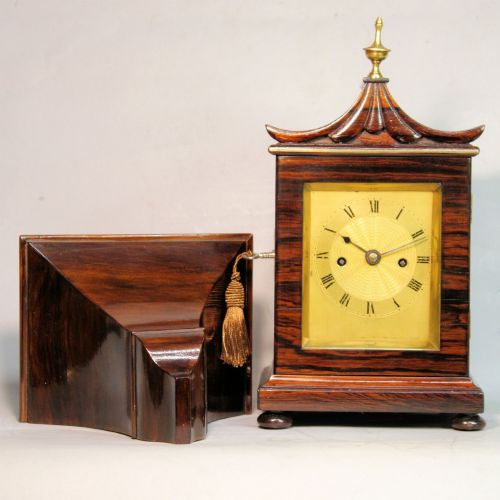
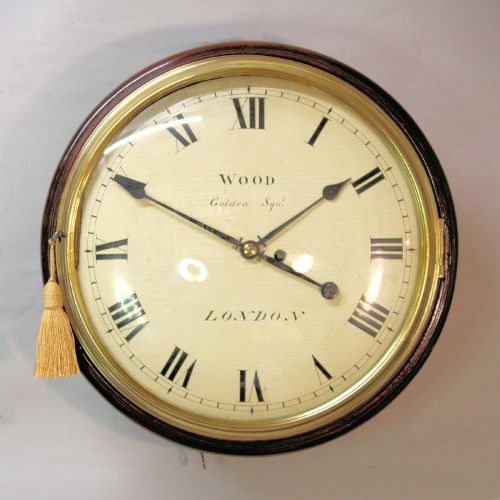
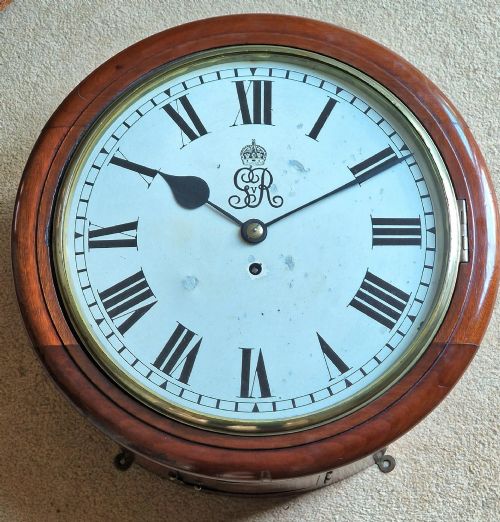
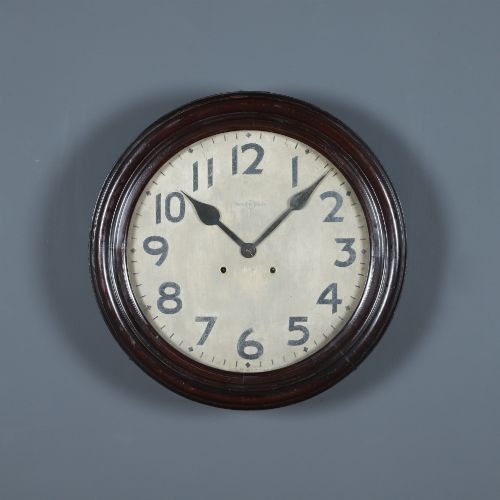
An antique dial wall timepiece is a circular wall-mounted clock designed to keep time without striking mechanisms, often originating from railway stations, offices, and homes. The pieces seen on this page span the Georgian, Victorian, and Edwardian eras, through to the mid-twentieth century.
Mahogany and oak round-case models predominate, alongside drop-dial variants and octagonal frames. Many bear the names of regional makers or railway companies such as the GWR and LMS.
Simpler dial clocks sit alongside brass-inlaid Regency examples and robust industrial timepieces from makers across Britain.
Materials and movement construction
Cases are predominantly constructed from timber, utilising solid mahogany, oak, and rosewood, frequently paired with brass bezels and protective glass covers. Dial faces utilise painted wood, metal, or enamel to display the hours.
Movements rely on chain or wire fusee mechanisms to maintain even power delivery as the mainspring unwinds, driving the hands across circular dials.
Some railway clocks survived decades of platform steam and soot just to end up ticking quietly in someone's modern kitchen.
Distinguishing quality in dial clocks
Quality rests in the precision and finish of the fusee movement, the crispness of the engraved or painted dial, and the integrity of the timber case. Finer pieces display well-proportioned bezels with secure side doors and original brasswork.
Simpler utilitarian station clocks prioritise robust legibility over decorative cabinetwork, whereas domestic and Regency examples exhibit refined brass inlay, polished mahogany veneers, and finely shaped plates.
Richard Jones of Hereford·George Clarke·Henry Harris·John Spershott·Dent of London·Benj Reeves Lamberhurst·John Walker·Zenith·Kleyser of London·Haley & Milner
The Antique Dial Wall Timepiece Glossary
- Fusee
- A conical pulley used in mechanical clocks to equalise the torque of the mainspring as it runs down. This mechanism ensures consistent force is applied to the gear train for accurate timekeeping.
- Drop dial
- A clock case featuring a circular dial at the top and an extended trunk below to house a longer pendulum. This form became common in British public buildings and railway offices.
- Bezel
- The brass or wooden ring that holds the glass door in front of the clock face. It usually hinges open to allow hand-setting.
- Timepiece
- A clock that tells the time without striking hours or quarters. These movements are dedicated solely to tracking time.
- Convex dial
- A clock face that curves outward toward the viewer. This design reduces glare from windows and gas lighting.
Antique Dial Wall Timepiece: Frequently Asked Questions
What is a fusee wall clock?
A fusee wall clock is a timekeeper driven by a fusee movement, which uses a conical drum and a chain to regulate the pull of the mainspring. This keeps the driving force constant as the spring relaxes.
Such clocks were built for precision and reliability in places like railway offices, stations, and formal rooms.
How do I wind a wall timepiece?
Winding requires inserting a matching key into the winding hole on the dial face and turning it gently until resistance is felt. Care must be taken not to overwind the mainspring.
Most traditional fusee movements require attention once a week to keep accurate time.
How can I date an antique dial clock?
Dating relies on examining the timber of the case, the style of the bezel, the construction of the brass movement plates, and any retailer signatures on the dial. Georgian and Regency pieces typically show finer cabinetwork, while Victorian and later railway examples focus on robust utility.
Inscribed names of makers or railway companies also provide clear historical markers.