




Antique Desk Inkpot
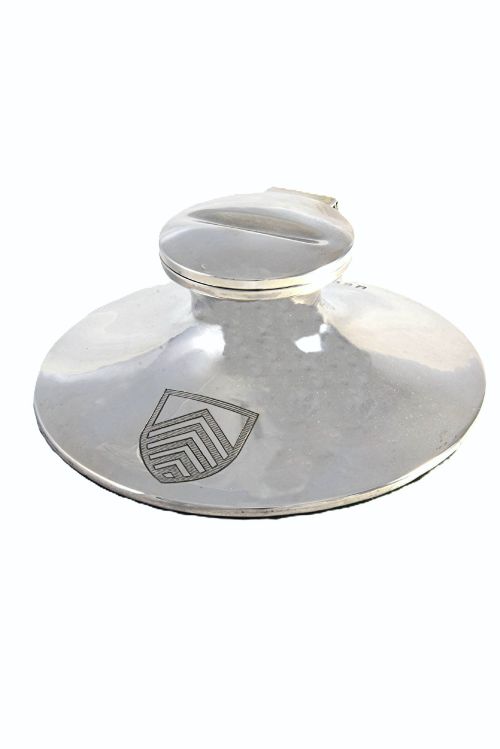
An antique desk inkpot is a functional desktop centrepiece, ranging from simple cut glass to elaborate silver capstans.
Antique Desk Inkpot
When you search for an antique desk inkpot, you encounter a wide selection of receptacles designed to hold liquid ink for dipping pens. These desk accessories appear in various formats, from solitary glass pots to comprehensive double inkstands holding multiple reservoirs.
The pieces on this page span the Victorian and Edwardian eras, alongside earlier Georgian and 19th-century examples, reflecting the widespread daily use of writing fluids before the invention of the fountain pen. Common forms include the domed capstan shape, novelty figures such as animals or bells, and fitted desk stands complete with pen rests.
Materials and construction methods
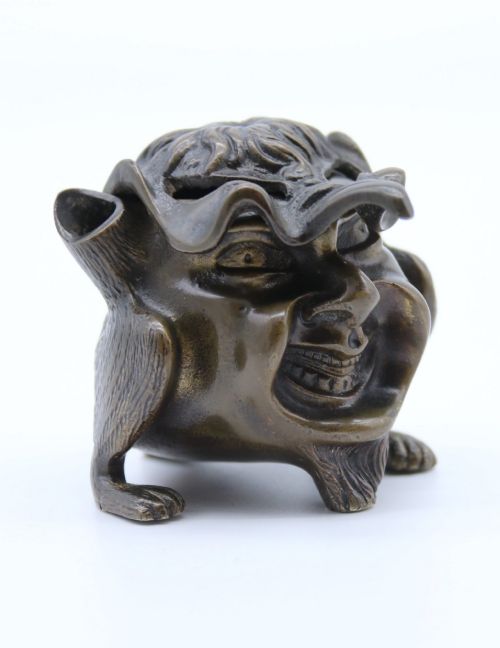
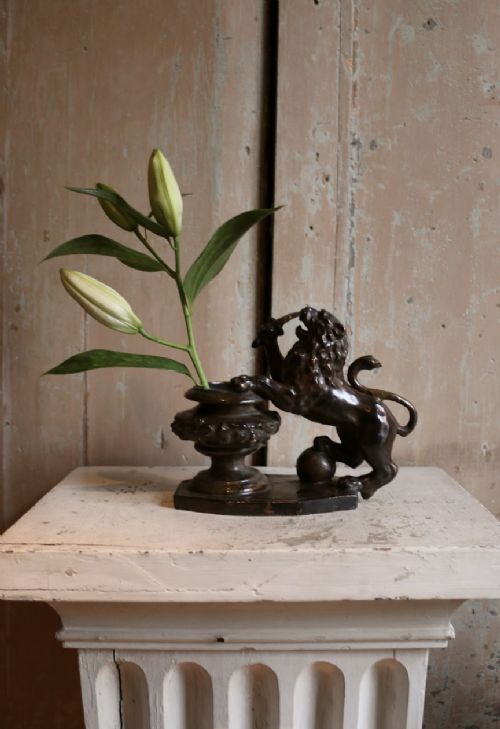
Makers utilised a diverse array of materials, combining sterling silver, silver plate, and pewter with heavy cut glass, ceramic, porcelain, and stoneware bodies. Bronze and brass frequently served as structural mounts or sculptural bases for figurative pieces like Black Forest bears or French grotesque creatures.
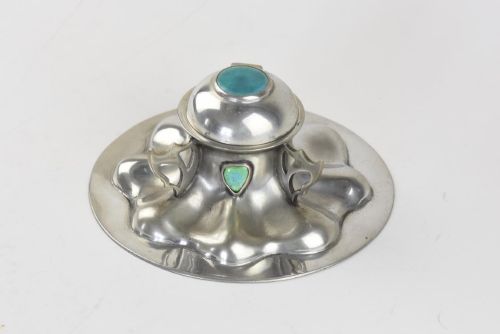
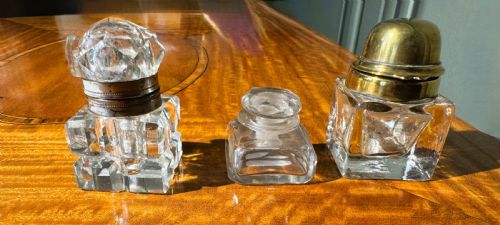
Surface decoration involved specialist techniques such as guilloche enamel, hand-painted porcelain scenes, ormolu gilding, and intricate pewter work set with cabochons. Many glass inkwells incorporate heavy pressed or cut facets to catch the light on a writing desk.
Listings feature desk accessories spanning the 17th century through to the 1920s, incorporating brass, bronze, sterling silver, and cut glass.
Assessing quality and execution
The distinction between standard utility items and superior examples lies in the weight of the materials and the crispness of the casting. Heavy gauge sterling silver, deeply cut crystal, and finely detailed bronze or pewter chasing indicate a higher grade of production.
Artistic ambition also sets pieces apart, demonstrated through sculptural novelty designs, specialist ceramic bodies from known potteries, and integrated components like fully functioning hinged lids with original glass inserts.
William Hutton·Henry Matthews·Walker And Hall·Tiffany And Co·Albert Marionnet·Daniel Holy·Kralik·Loetz
The Antique Desk Inkpot Glossary
- Capstan inkwell
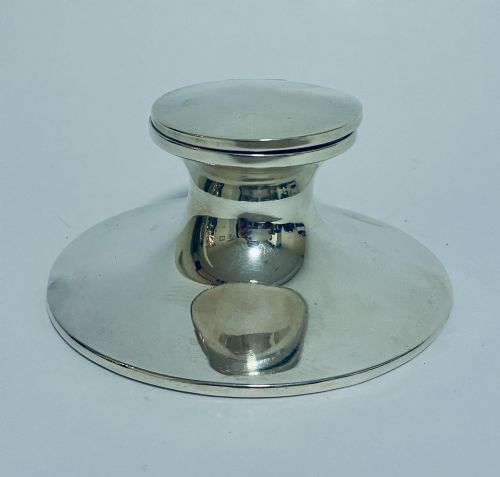
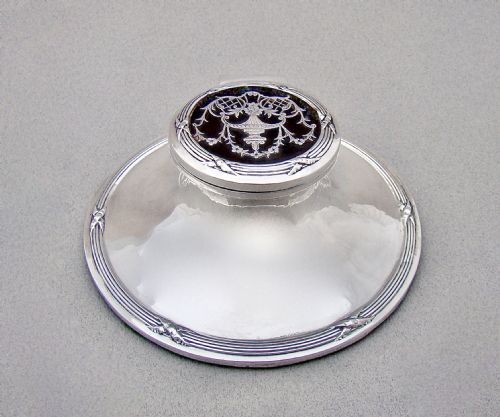
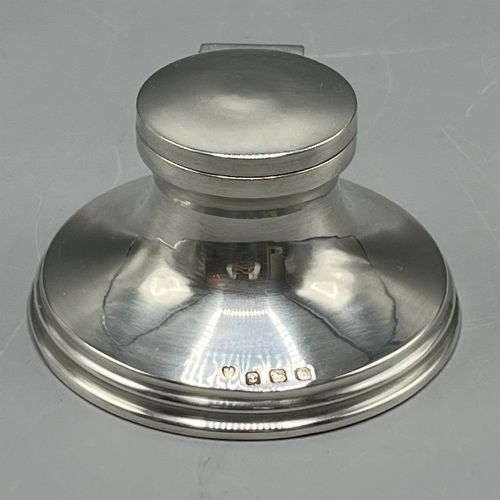
- A desk inkpot shaped like a ship's capstan, featuring a wide circular base tapering upwards towards a hinged lid. This profile provides stability on a moving surface or a busy desk.
- Inkstand
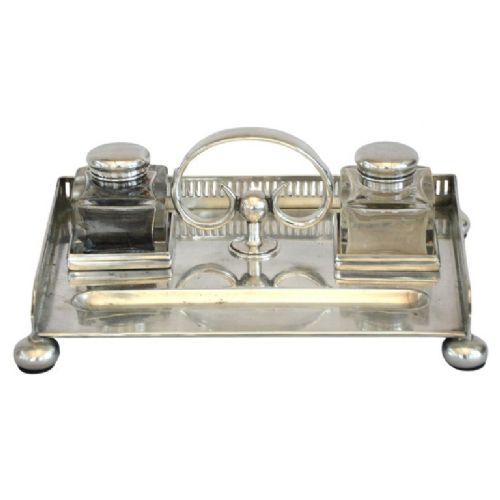
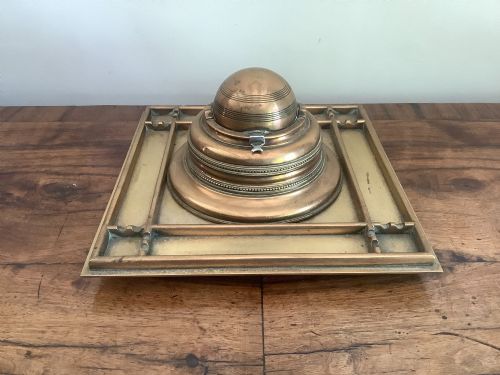
- A comprehensive tray or stand holding one or more inkpots, often incorporating dedicated troughs for dipping pens and compartments for stamps or wafers.
- Guilloche
- A decorative technique involving precise, intricate mechanical patterns engraved into metal beneath a translucent layer of enamel. It frequently appears on Edwardian silver lids.
- Ormolu
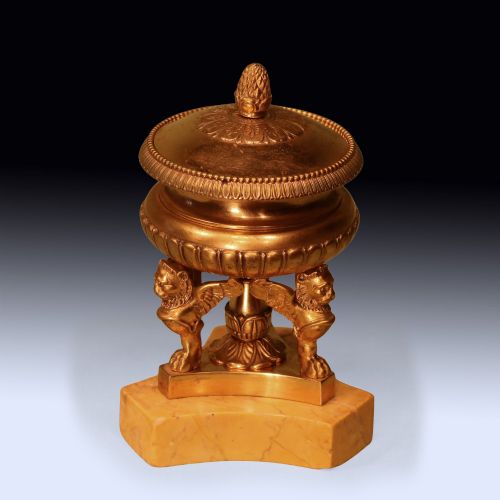
- Finely ground high-carat gold applied to a bronze base using a mercury amalgam technique. This finish gives desk mounts a rich, warm lustre.
- Cabochon
- A gemstone or decorative glass element polished into a smooth, convex shape rather than faceted. These are typically set into Arts and Crafts metalwork.
Antique Desk Inkpot: Frequently Asked Questions
Are these inkpots still usable today?
Most antique desk inkpots function adequately for modern fountain pen users, provided the glass insert remains free of cracks and the hinged lid seals correctly. Many collectors prefer to display them as decorative objects rather than filling them with modern inks.
If you choose to use one, ensure you wash out any dried historical ink residue first to prevent clogging. Select a water-based ink that will not react poorly with historic glass or metal surfaces.
How do I date a silver capstan inkwell?
British silver pieces typically feature a series of hallmarks stamped directly onto the metal, including a maker's mark, a standard purity mark, a city assay office mark, and a date letter. These stamps provide an exact year of manufacture and identify the silversmith.
If hallmarks are absent, rely on stylistic clues such as the height of the collar, the presence of enamel work, or the weight of the glass liner. Edwardian examples often display wider proportions compared to Victorian equivalents.
What is a novelty inkwell?
A novelty inkwell is a desk accessory cast or carved into an imaginative shape unrelated to standard office equipment. Popular Victorian and Edwardian examples depict animals, figures, fruit, or everyday objects like sports equipment.
These pieces were conversation starters in studies and drawing rooms, combining whimsical design with practical utility. Collectors prize them for their sculptural detail and narrative charm.