



Antique Demitasse Spoons
These antique demitasse spoons are miniature vessels of daily ritual, prized for intricate enamel work and gleaming sterling silver.
Antique Demitasse Spoons
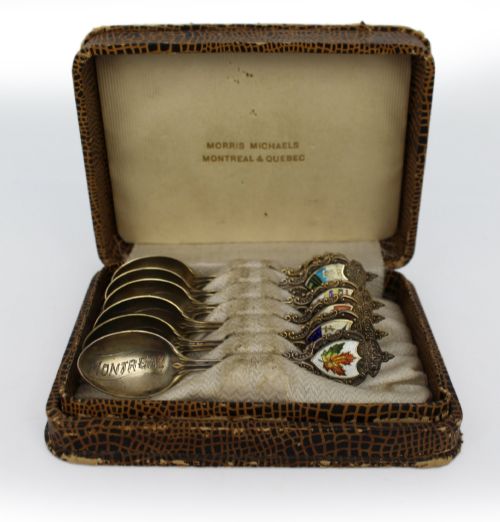
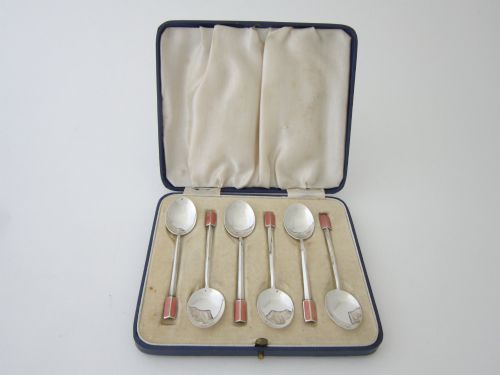
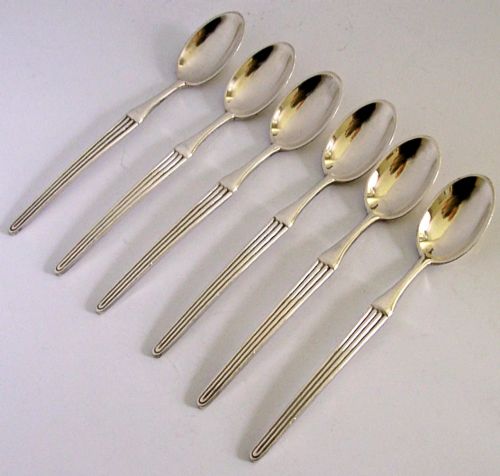
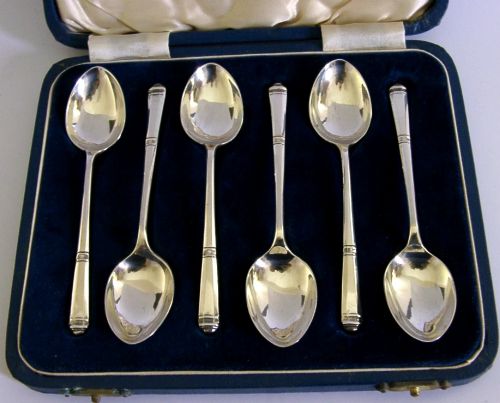
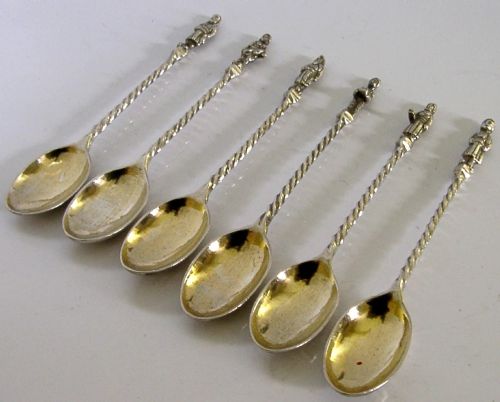
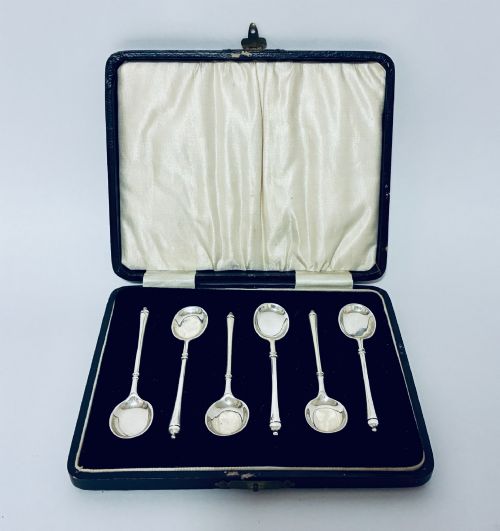
When you search for antique demitasse spoons, you encounter small serving pieces designed specifically for after-dinner coffee cups. These items appear primarily in cased sets of six or twelve, often accompanied by fitted presentation boxes lined in velvet, satin, or silk.
The pieces on this page span the Victorian, Edwardian, and Art Deco periods, stretching from the late nineteenth century through to the middle of the twentieth century. Alongside standard flatware, the selection includes related forms such as tea spoons, silver-gilt spoons with tongs, and complete coffee service sets.
Origins vary widely across the inventory, ranging from English workshops and provincial makers to Scandinavian, Ottoman, and Imperial Russian silversmiths. Many examples arrive complete with leatherette cases bearing the original retailer stamps.
How they were made
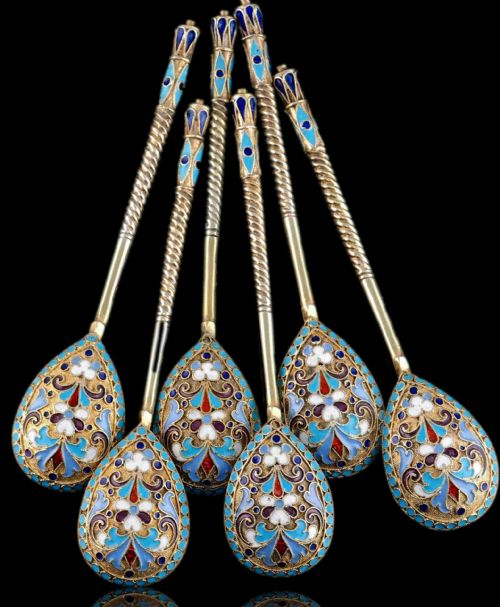
Silversmiths constructed these items predominantly from sterling silver and silver gilt, shaping the metal through casting, hammering, and detailed hallmarking. Many pieces incorporate specialised techniques such as cloisonne enamel to decorate the bowls and handles in vibrant colours.
Makers housed these delicate utensils in custom presentation boxes constructed from wood and cardboard, lined with fabrics like velvet and satin, and protected by exterior coverings of leatherette.
Many sets survived decades tucked inside plush velvet boxes simply because nobody drank coffee small enough to justify using them.
What varies in quality
The standard of workmanship separates basic utilitarian flatware from masterworks featuring intricate cloisonne enamel and heavy gauge silver construction. Preservation of the original fitted case and the integrity of the delicate enamel surfaces define the upper echelon of these items.
The distinction also rests on the weight of the silver and the clarity of the maker marks or town hallmarks stamped into the metal.
Dmitrii Nikolaevich Nikolaev·David Andersen·Vasily Agafonov·Walker and Hall·Liberty and Co·Cooper Brothers and Sons
The Antique Demitasse Spoons Glossary
- Demitasse
- A small cup used for serving after-dinner coffee, which these miniature spoons accompany. The term literally translates from French to mean half-cup.
- Silver gilt
- Sterling silver that has been coated with a thin layer of gold on the surface. This technique provides a rich golden appearance while retaining a solid silver base.
- Cloisonne
- An ancient enamelling technique where thin metal wires are soldered to the metal base to create compartments filled with glass paste and fired. This method produces intricate geometric or floral patterns in bright colours.
- Hallmark
- An official stamp or marks struck on items made of precious metals, indicating the purity, the maker, and the year of assay. English pieces typically show a lion passant and a date letter.
- Cased set
- A collection of tableware sold together inside a dedicated fitted box lined with soft fabric. These presentation boxes often feature velvet or satin interiors.
Antique Demitasse Spoons: Frequently Asked Questions
What are demitasse spoons used for?
These small spoons are designed specifically for stirring sugar into demitasse cups of strong after-dinner coffee.
Because of their diminutive size, they are rarely used for standard tea or dessert service.
How do I identify Art Deco spoons?
Art Deco examples typically display clean geometric lines, stylised motifs, and enamel work characteristic of the 1920s and 1930s.
They often appear in cased sets with bold typography on the interior satin lining.
Are these spoons made of solid silver?
The listings include solid sterling silver and silver-gilt items, frequently stamped with official town marks and maker initials.
Some pieces also incorporate decorative elements like coloured enamel fused directly to the metal.
How should I store cased silver spoons?
Keep the items inside their original fitted cases, which protect the delicate silver and enamel from scratches and tarnishing.
Store the boxes in a dry environment away from direct sunlight to preserve the velvet, satin, and leatherette linings.