


Antique Decorative Flask
An antique decorative flask brings cabinet-scale craftsmanship and vivid colour to a mantelpiece, offering collectors a tangible slice of nineteenth-century artistry.
Antique Decorative Flask
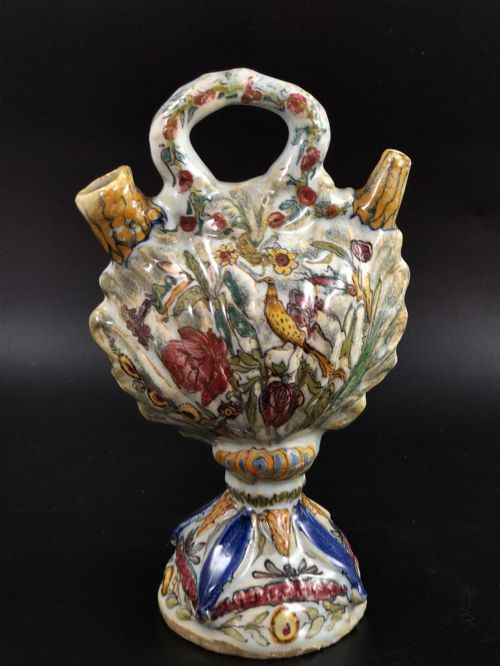
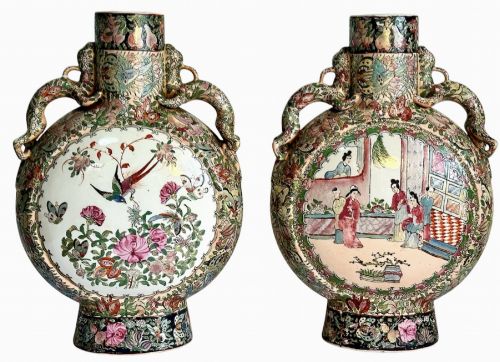
When you search for an antique decorative flask, you encounter a varied selection of vessels, including moon flasks, pilgrim flasks, and snuff bottles originating from nineteenth-century Europe and Asia. These objects range from Italian majolica scallop-shell jugs to Chinese porcelain moon flasks and Venetian black glass bottles.
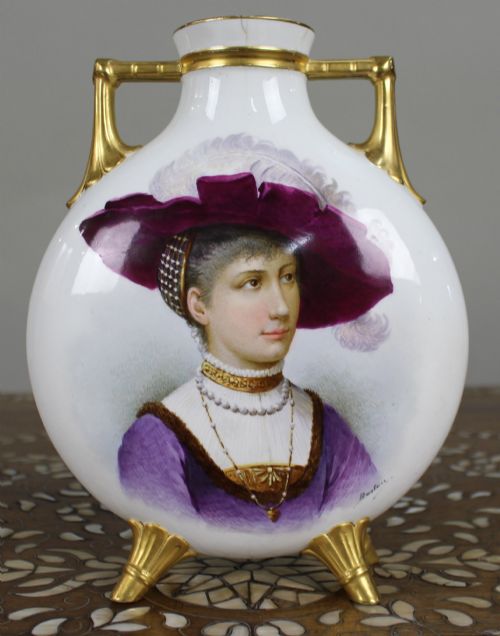
The most common forms on this page include pairs of porcelain moon flasks and ceramic vases decorated with painted scenes, often bearing Victorian or Qing dynasty styling. Makers utilised distinct shapes like the flattened pilgrim flask to create surfaces suited for detailed pictorial artwork.
How they were made
Potters and artisans formed these pieces from porcelain, earthenware, and glass, applying tin glazes, enamel, and gold leaf to enrich the surface. Hand-painting and gilding dominate the techniques recorded in the listings, bringing intricate figural and floral scenes to life.
Specialised methods such as pate-sur-pate build up layers of slip in low relief on ceramic bodies, while Venetian glass incorporates aventurine inclusions for a sparkling internal depth.
Listings span the eighteenth, nineteenth, and early twentieth centuries, featuring porcelain, earthenware, jade, and glass.
What varies in quality
The distinction between standard production wares and exceptional pieces rests in the execution of the hand-painted details and the crispness of the moulded form. Signed works and items featuring complex polychrome enamel or raised gilding demonstrate superior workshop standards.
Proportion and symmetry define the better examples, particularly in matched pairs where the painted narrative or floral composition must balance across both vessels.
Doulton Lambeth·Royal Worcester·Minton·Wedgwood·Coalport
The Antique Decorative Flask Glossary
- Moon flask
- A flat-backed ceramic vessel with a circular body, often fitted with small side handles and supported on a narrow foot.
- Pilgrim flask
- A traditional travel bottle shape adapted for decorative display, featuring side loops for suspension cords and a rounded or shell-moulded body.
- Majolica
- Tin-glazed earthenware decorated with brightly coloured metal oxides, widely utilised in Italian ceramic traditions.
- Pate-sur-pate
- A ceramic technique where successive layers of liquid clay slip are applied to a contrasting body to build a cameo-like relief design.
- Famille rose
- A Chinese porcelain palette dominated by opaque pink enamel, introduced during the Qing dynasty and widely imitated in later European wares.
Antique Decorative Flask: Frequently Asked Questions
What is a moon flask used for?
Historically derived from leather or metal canteens used by travellers, these flattened vessels evolved into purely decorative cabinet pieces during the nineteenth century. Makers designed them to sit stably on sideboards or mantelpieces.
Their circular bodies provided a wide, flat canvas for elaborate hand-painted landscapes, floral arrangements, and figural scenes rather than practical storage.
Are these flasks meant to hold liquid?
Most decorative flasks on this page function as ornamental vases or display objects rather than functional containers. Their delicate gilding, enamel work, and handles suggest interior decoration.
Some ceramic and glass examples are watertight, but their painted surfaces require careful handling and gentle cleaning without harsh detergents.
How can I tell the period of a flask?
Dating relies on material composition, maker marks, and stylistic indicators such as Victorian aesthetic details or Qing dynasty motifs. Glaze types and signature styles also point to specific decades.
Comparing the manufacturing technique, such as tin glazing versus modern porcelain bodies, helps narrow down the era of production.