
Antique Decanter Set
An antique decanter set brings together matching bottles and fitted frames for the dining table or sideboard, offering both practical service and period charm.
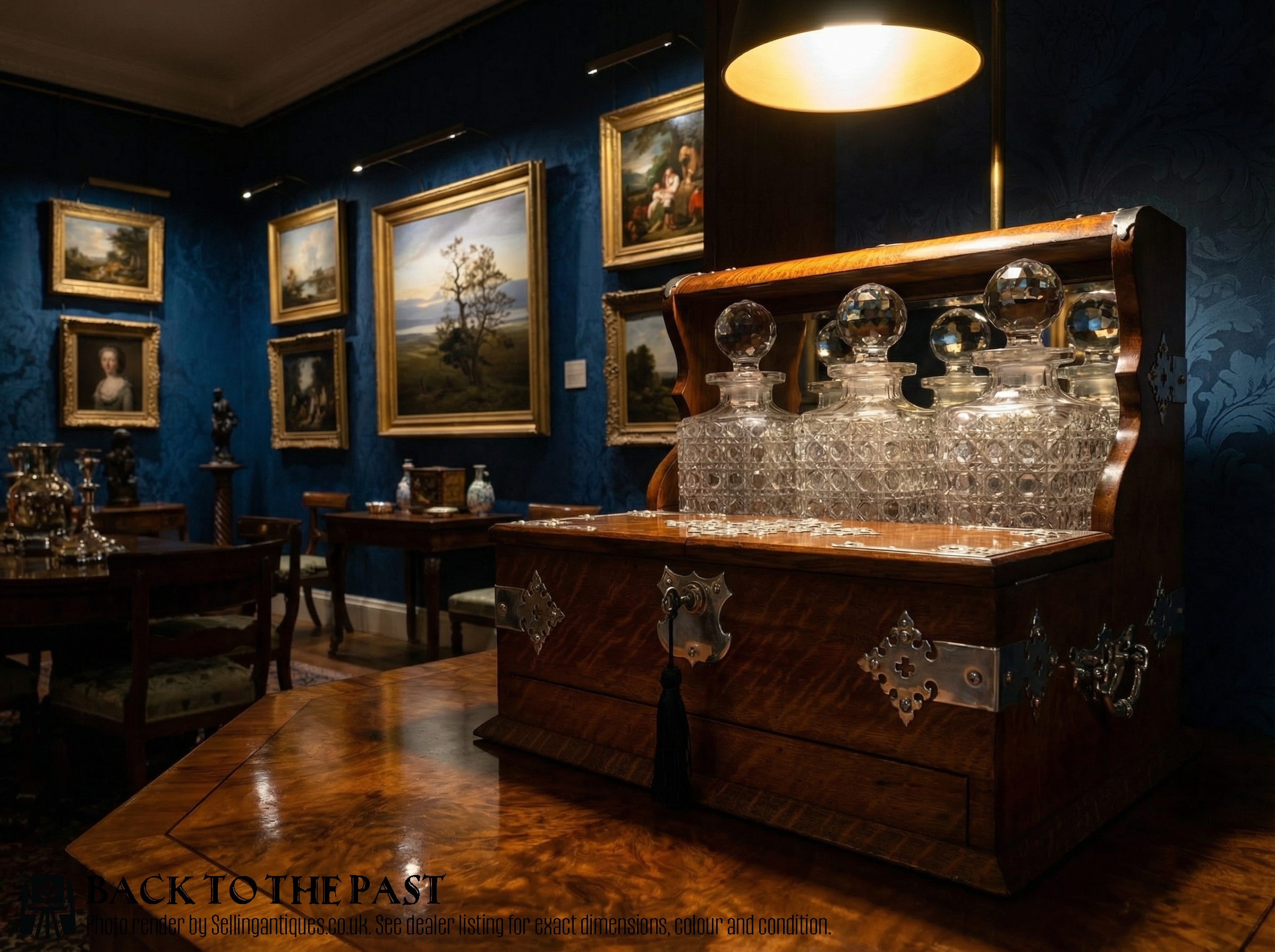
What an antique decanter set is
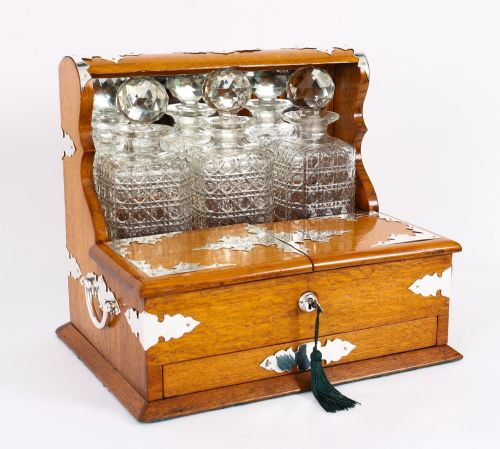
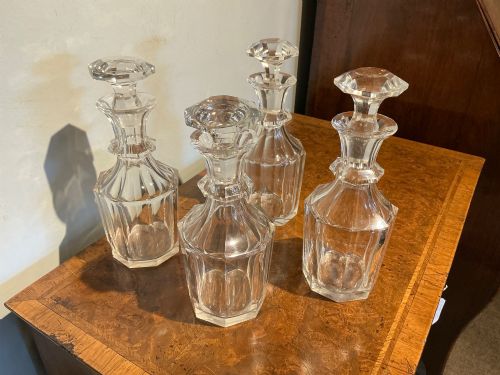
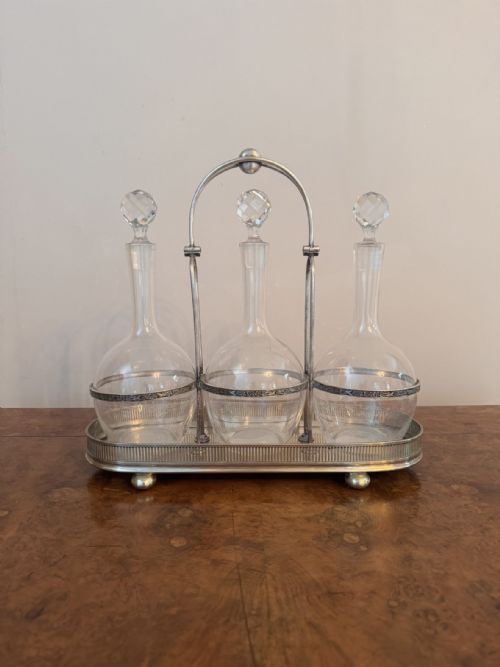
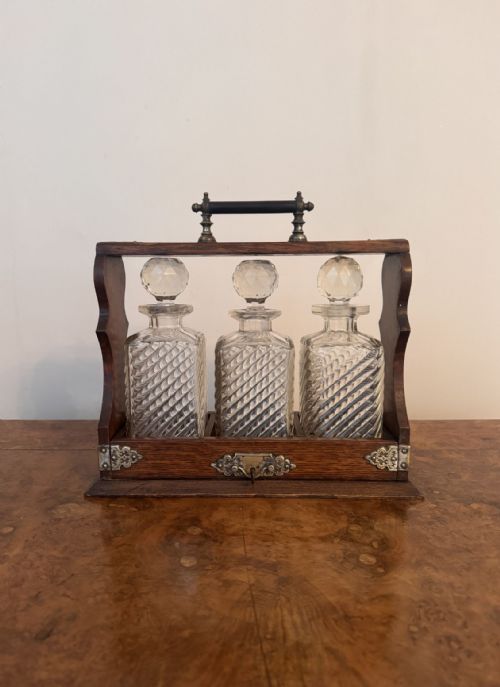
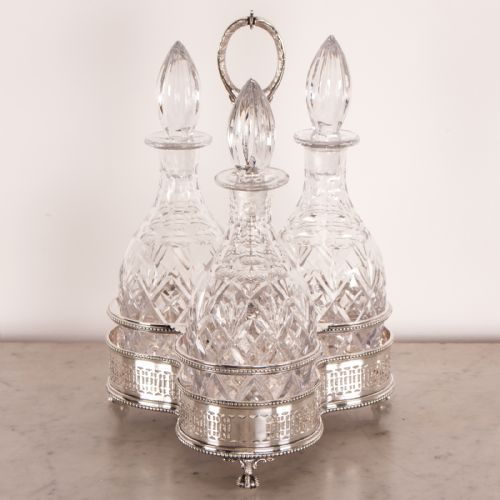
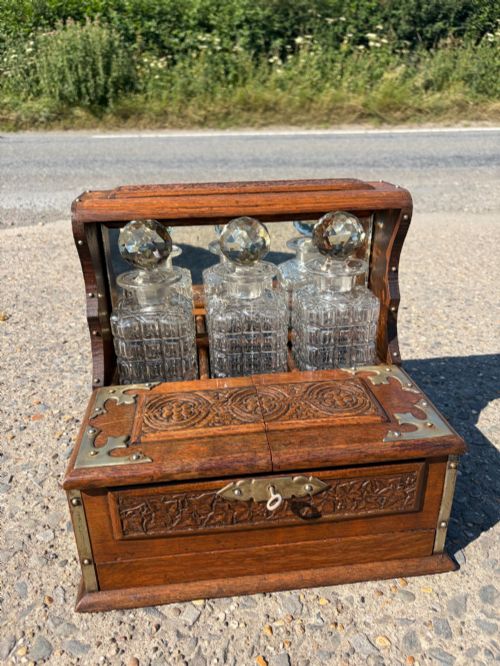
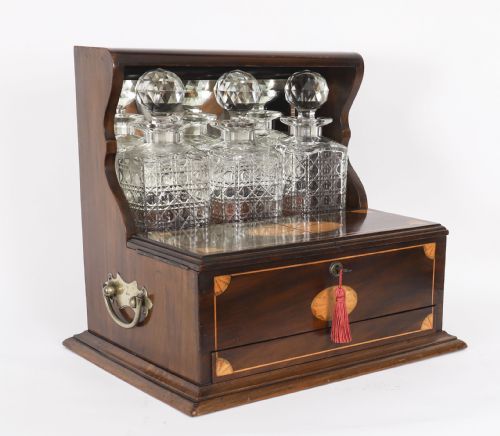
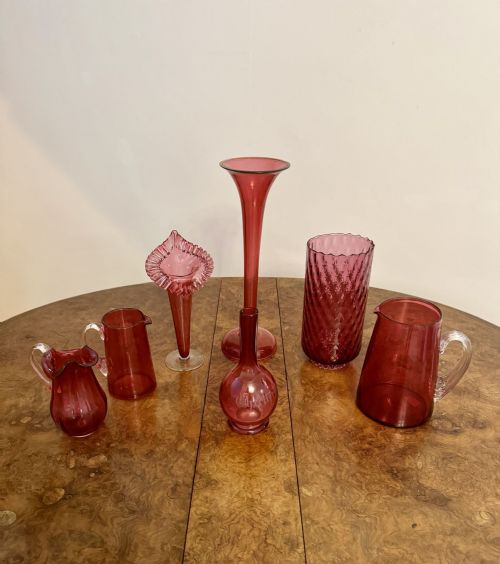
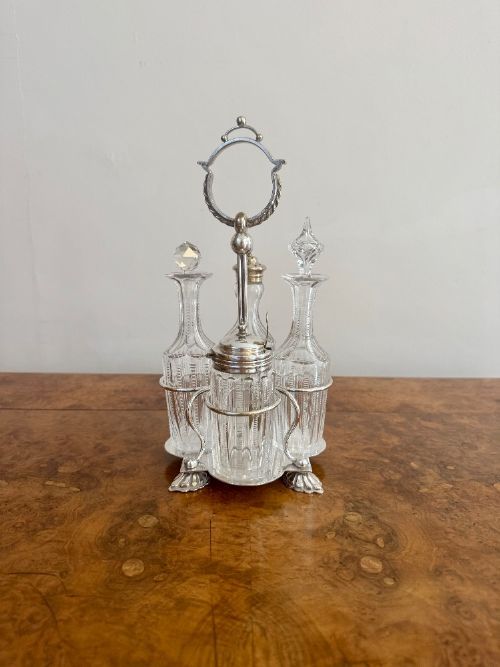
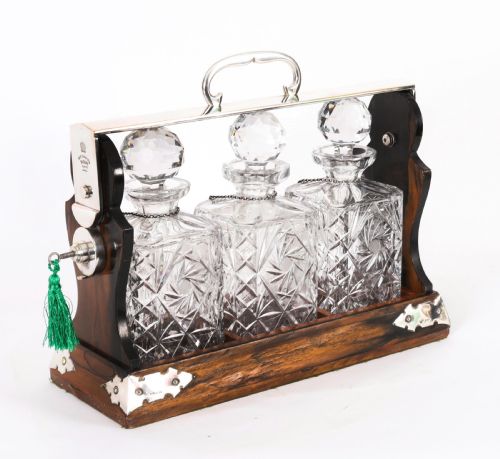
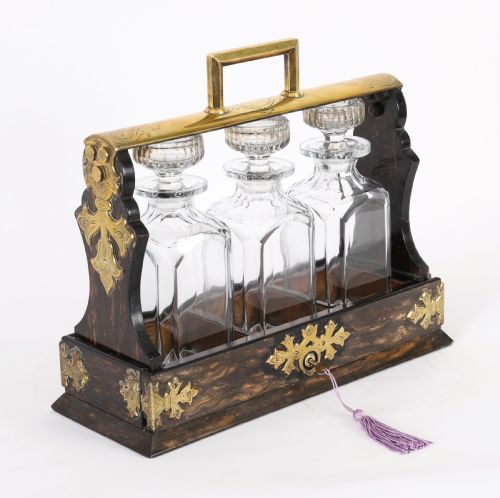
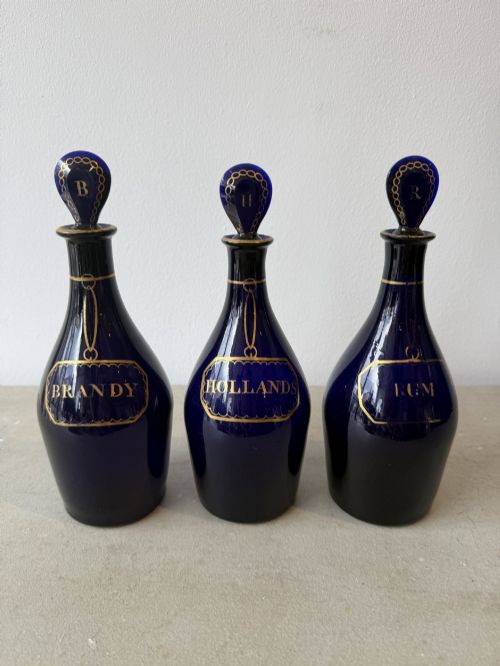
An antique decanter set comprises matched serving vessels alongside fitted wooden canteens, silver-plated stands, or locking tantalus frames designed to hold spirits securely. These assemblies range from Georgian Bristol blue bottles and Victorian oak cased sets to Edwardian crystal services housed in frames of coromandel or brass.
The most common formats met on this page include three-bottle configurations set within secure locking mounts, alongside travelling bar services and open coaster sets. They span the Georgian, Victorian, and Edwardian eras, reflecting changing social habits around entertaining and hospitality.
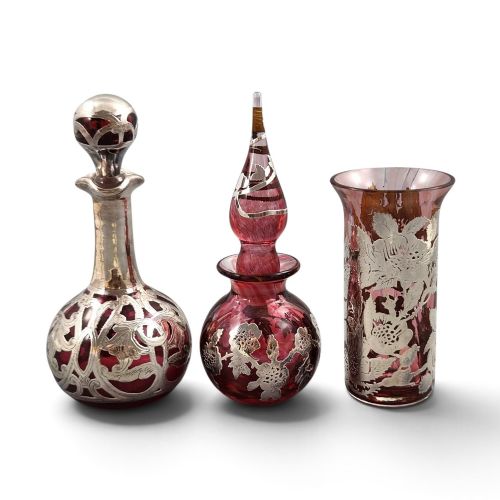
Victorian examples frequently utilise robust hardwoods like oak and coromandel to encase cut crystal bottles, while earlier Georgian items rely on coloured glass forms and delicate silver labels. Later Edwardian iterations combine hobnail-cut vessels with silver-plated hardware for refined display.

Materials and construction
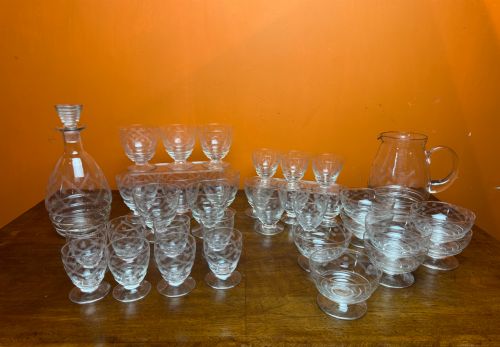
Makers shaped the drinking vessels from heavy crystal or coloured glass, employing deep cutting, hobnail patterns, and mould-blown techniques to catch the light. Ormolu mounts, brass handles, and silver-plated hardware added structural reinforcement and decorative contrast to the glass.
Wooden housings were built from seasoned oak, coromandel, and hardwood, often incorporating internal dividers, games compendiums, and locking mechanisms to protect the bottles. Metal components were cast, chased, and plated to complement the sheen of the glass containers and polished wood.
Retail Price Guide 2026
Typical UK retail prices for decanter set, calculated from the Sellingantiques database of over a million retail prices indexed since 2003. This retail price guide relies exclusively on Sellingantiques data; no external sources or auction records are used, so the figures do not describe the wider market.
Victorian hosts locked their spirits away in tantalus frames not just from thirsty guests, but to keep the household butler honest.
What distinguishes finer examples
The distinction between ordinary and superior pieces rests on the weight and clarity of the crystal, the depth of its cutting, and the integrity of the fitted case. Heavier glass bodies with crisp hobnail or thistle engraving indicate more accomplished workshop output.
Cabinetwork elevates certain sets above others, particularly where the timber grain is carefully matched and the locking mechanisms, hinges, and silver-plated mounts are robustly engineered. Complete sets retaining their original keys, stoppers, and associated liqueur glasses or labels command greater regard.
Mappin and Webb·Mappin Brothers
The Antique Decanter Set Glossary
- Tantalus
- A locking wooden or metal frame that secures decanters by their necks to prevent unauthorized access to the contents while still displaying the bottles.
- Hobnail cut
- A faceted glass pattern resembling the hobnails on sturdy boots, creating sharp pyramidal points that refract light across the decanter surface.
- Ormolu
- Gilded bronze or brass mounts used extensively on French nineteenth-century liquor caskets and frames for decorative enrichment.
- Coromandel wood
- A dense, heavily figured tropical hardwood featuring dark brown and black stripes, utilised for luxury Victorian boxes and tantalus frames.
- Cave a liqueur
- A French fitted liqueur service containing decanters and matching glasses within an ornate locking wooden or ormolu-mounted case.
Frequently Asked Questions
What is a tantalus?
A tantalus is a locking wooden or metal frame that holds decanters firmly by their stoppers and necks, preventing anyone from pouring a drink without a key.
Victorian hosts used these locking frames on sideboards to secure expensive spirits from household staff while keeping the bottles openly displayed.
How do I date an antique decanter set?
Dating relies on combining the style of the wooden case, the depth of the glass cutting, and any accompanying metalwork or silver hallmarks.
Georgian sets often feature free-standing coloured glass bottles, whereas Victorian and Edwardian examples lean heavily toward fitted oak canteens, locking mechanisms, and silver-plated stands.
Are original stoppers important?
Original stoppers that match the cut and tint of the decanter body are essential for authenticity and completeness.
Because glass stoppers were easily broken or misplaced over time, finding a set where every bottle retains its matching stopper adds significantly to its character.
How should I clean antique decanters?
Cleaning antique glass requires warm water and mild soap, avoiding harsh scrubbing brushes or abrasive chemical agents that might damage old surfaces.
Wooden cases and metal mounts should be dusted gently and treated with appropriate furniture wax, keeping moisture away from sensitive joints and locks.