


Antique Davenport Bureau
An antique davenport bureau combines a compact pedestal desk with a sloping writing surface, offering a clever workspace designed for the nineteenth-century writer.
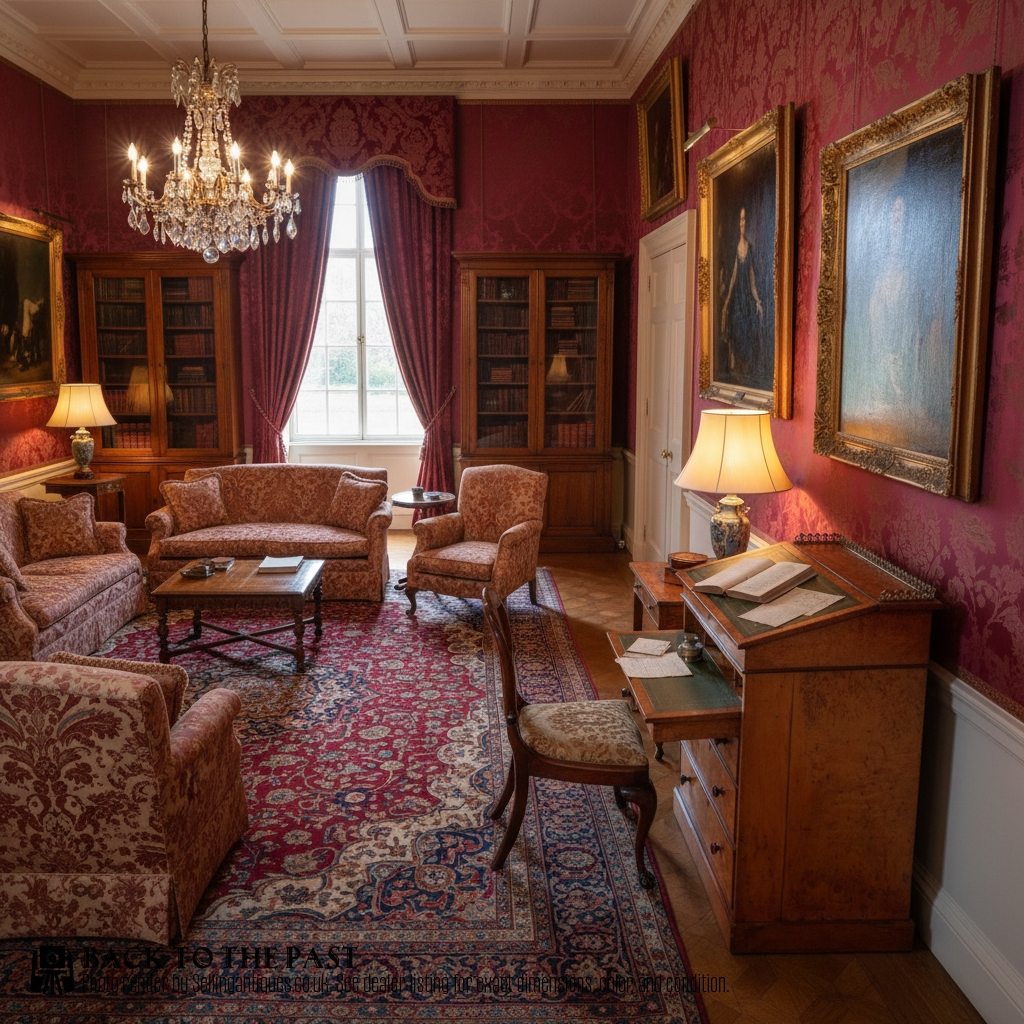
Antique Davenport Bureau
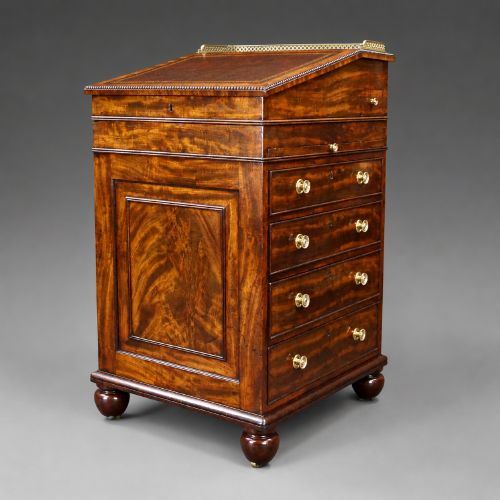
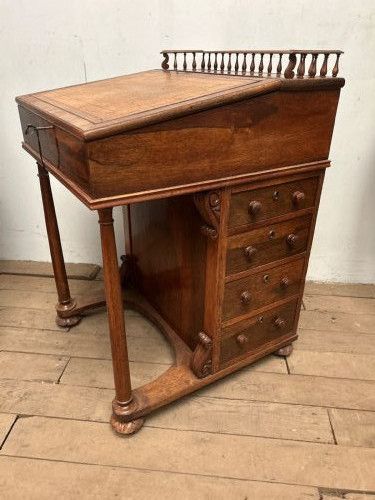
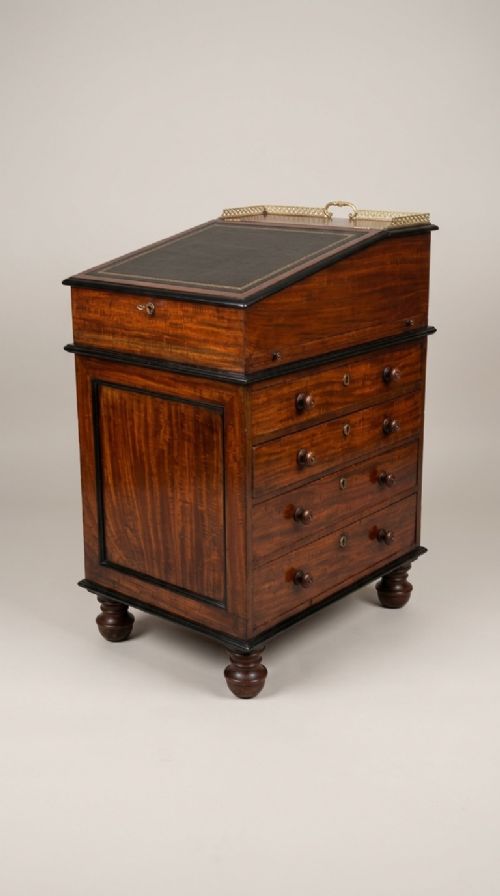
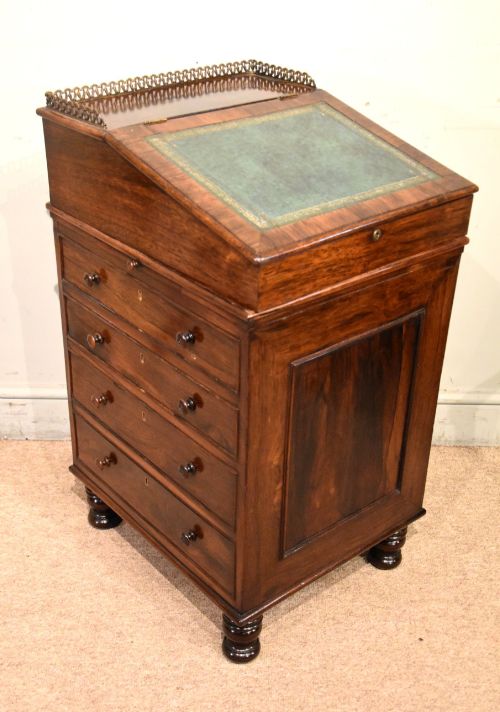
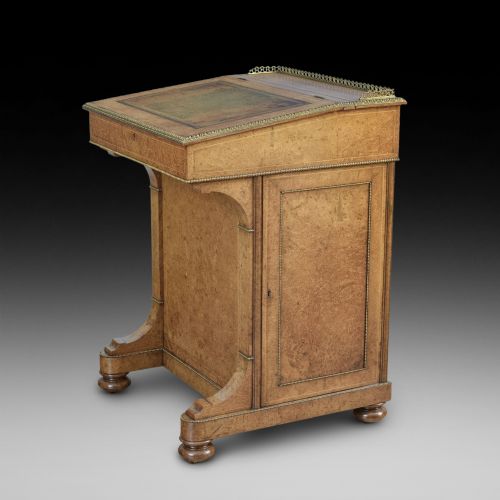
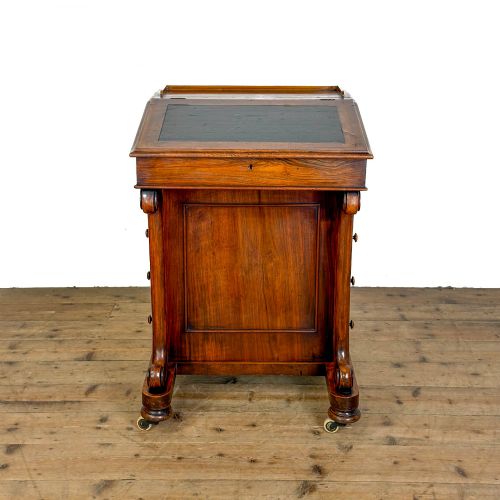
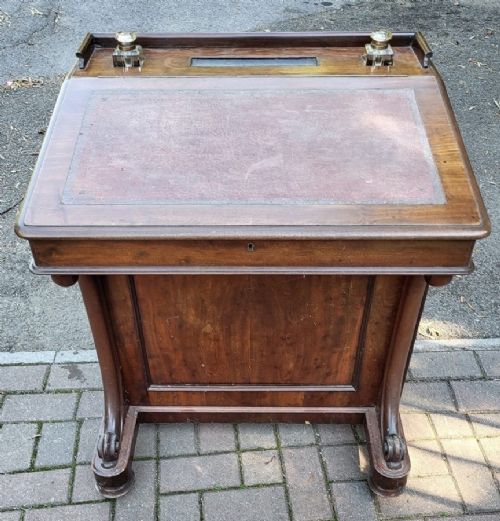
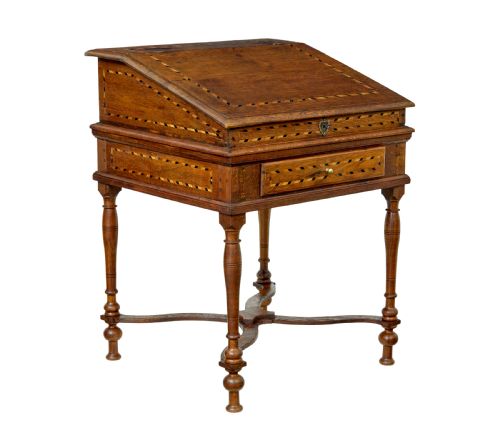
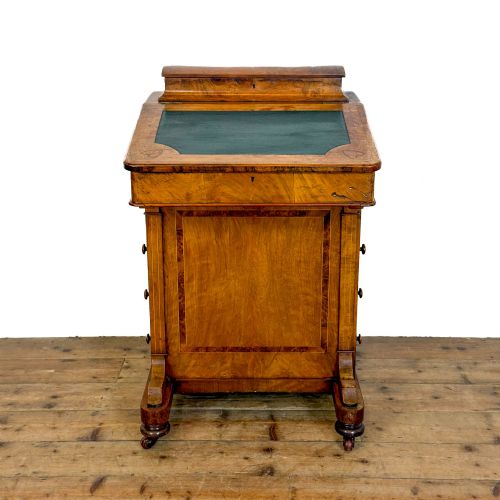
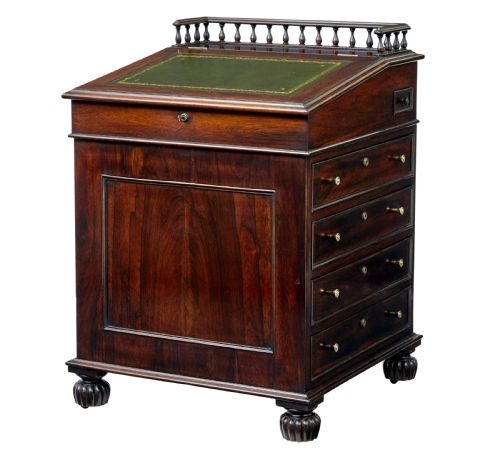
The antique davenport bureau is a compact writing desk built upon a pedestal base with side drawers, emerging primarily during the Regency and Victorian eras. These pieces serve as efficient writing stations designed for domestic spaces where floor space is at a premium.
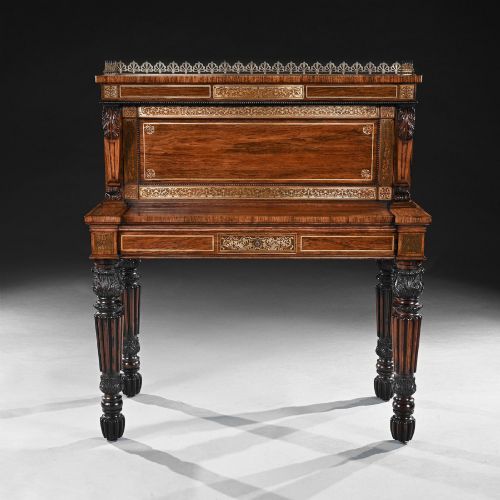
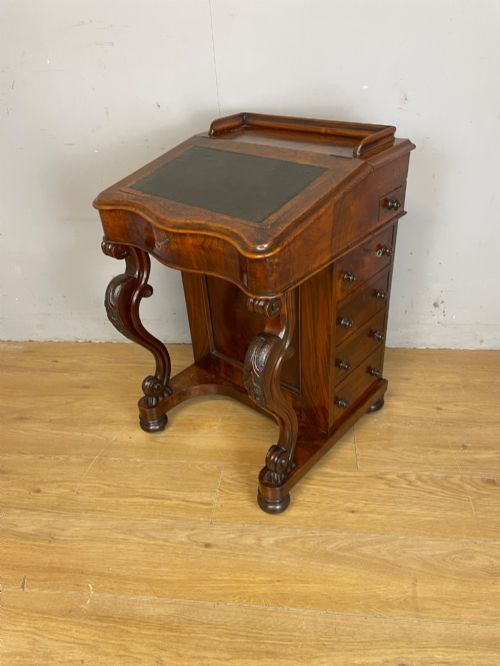
The version most commonly encountered on this page is the Victorian walnut or burr walnut model, often featuring a stationery compartment above the sloped writing lid. Earlier Regency and Georgian examples frequently employ rich mahogany, rosewood, or pollard oak with fine brass and boxwood inlay.
Materials and Construction
Cabinet makers utilised dense native and exotic timbers, notably figured mahogany, rosewood, and burr walnut, chosen for their striking grain patterns. These showy veneers are applied to sturdy secondary woods, forming stable carcasses that withstand decades of daily use.
Fine examples incorporate brass mounts, leather writing inserts, and intricate boxwood stringing or marquetry. Interiors often reveal satinwood secondary drawers and clever sliding mechanisms designed to maximise storage within a tight footprint.
Antique Davenport Bureau Retail Price Guide 2026
Typical asking prices for davenport bureau among the pieces listed under this phrase on Sellingantiques today, from the lower quarter to the upper quarter. They describe what is for sale here now, not the wider market.
Some desks hide secret compartments and spring-loaded stationery wells behind the primary drawers for private letters.
Distinctions in Craftsmanship
The division between standard production and top-tier work rests on the selection of timber and the precision of the joinery. Superior pieces display book-matched burr veneers and finely figured grains that wrap continuously around the pedestal.
Makers such as Gillows elevate the standard through sophisticated interior fittings, robust sliding top mechanisms, and meticulous secondary drawer construction. Lesser pieces rely on simpler cuts of timber and lack the refined hardware found on workshop-attributed desks.
Gillows
The Antique Davenport Bureau Glossary
- Davenport bureau
- A compact pedestal desk featuring a sloped writing surface that typically lifts or hinges to reveal an organised interior. This form combines the storage of a small chest of drawers with the function of a writing slope.
- Burr walnut
- A prized timber cut from the gnarled growth knots of the walnut tree, displaying swirling, highly decorative grain patterns. Cabinet makers selected these figured veneers for the principal exterior surfaces of high-status desks.
- Pedestal base
- The supporting structure beneath the writing box, fitted with functional drawers opening to one side. This configuration gives the davenport its characteristic space-saving footprint.
- Stationery cabinet
- A lidded superstructure positioned at the rear of the writing desk to hold paper and pens. It often incorporates pigeonholes and small drawers accessed from the top.
Antique Davenport Bureau: Frequently Asked Questions
What is an antique davenport bureau?
An antique davenport bureau is a small pedestal writing desk featuring a sloping lid and side drawers. It was originally designed as a compact, portable desk for use in drawing rooms or private chambers.
The form typically includes a stationery box mounted on top and a pull-out or sliding writing surface lined with leather. Inside, small drawers and pigeonholes provide organised storage for correspondence.
How were these desks used?
These desks served as private writing stations for personal correspondence, accounts, and diary keeping. Their compact size allowed them to sit comfortably in parlours or bedrooms rather than dedicated libraries.
The side drawers swung out or pulled straight, while the sloping top offered a comfortable angle for writing by hand before the widespread use of fountain pens.
How do I date a davenport?
Dating relies on timber choice, hardware style, and decorative details seen across different periods. Regency examples often use rosewood or mahogany with delicate brass feet, while Victorian versions favour heavily figured burr walnut.
Interior construction also provides clues, as earlier Georgian and Regency pieces feature simpler internal layouts compared to the elaborate satinwood compartments found in mid-Victorian models.
Where should I place a davenport?
Because these desks are finished on all sides, they can sit freestanding in the middle of a room rather than pushed flat against a wall. Their modest dimensions make them suitable for studies, living rooms, or hallways.
When positioning the desk, consider natural light sources to illuminate the sloped writing surface and ensure the side drawers have sufficient clearance to open fully.