

Antique Cylinder Top Bureau
An antique cylinder top bureau offers a clever curved shutter to conceal your correspondence, combining secure privacy with a dignified writing surface.

Antique Cylinder Top Bureau
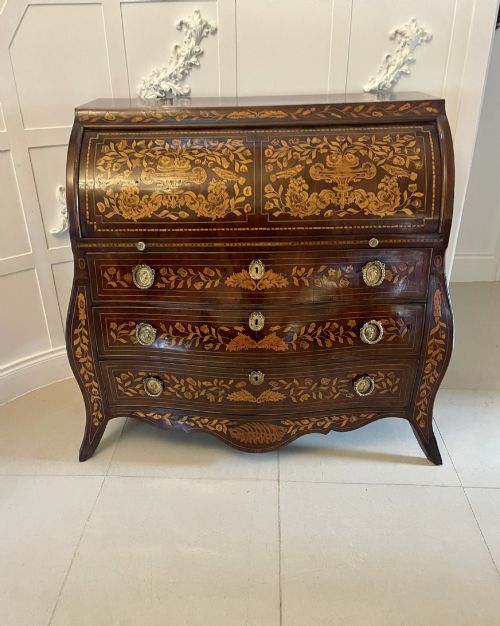
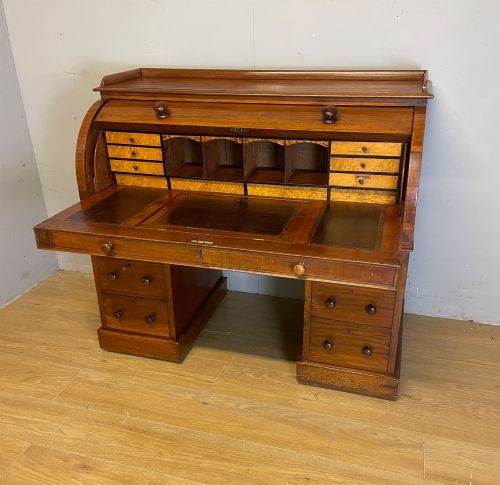
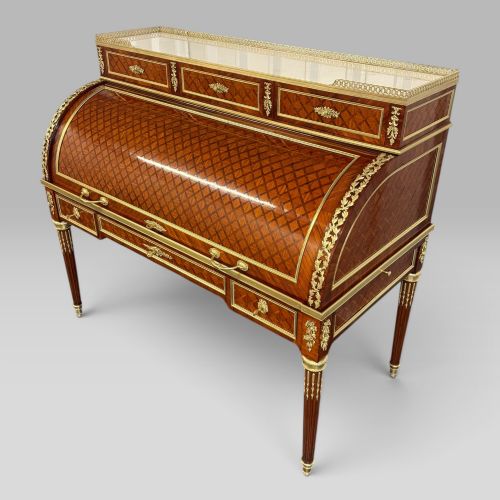
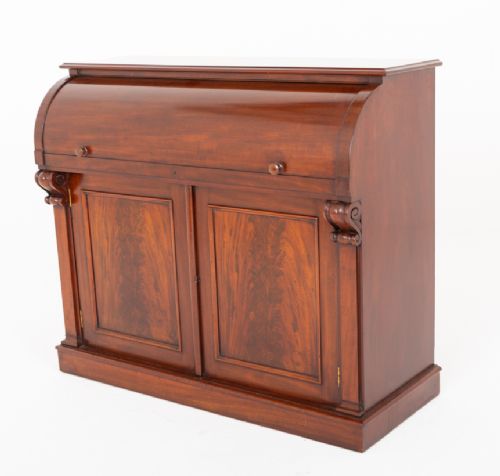
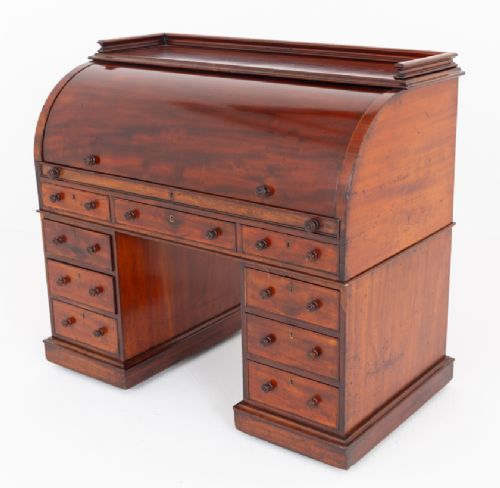
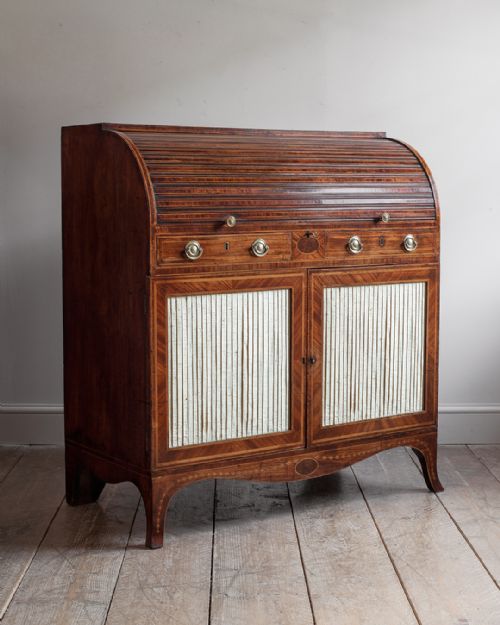
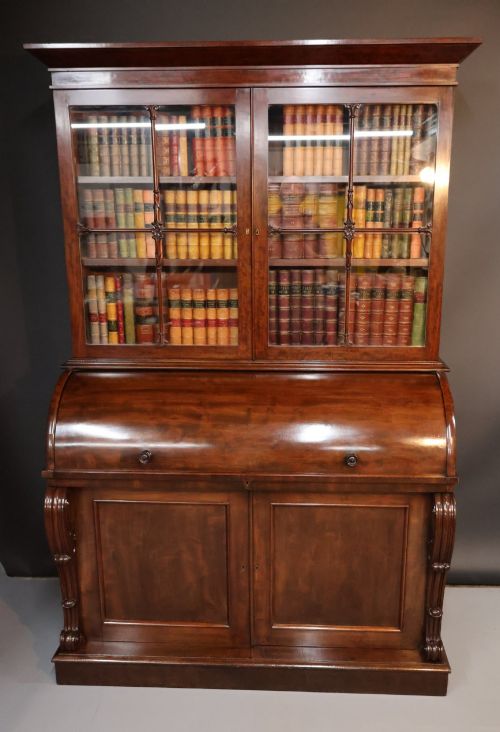
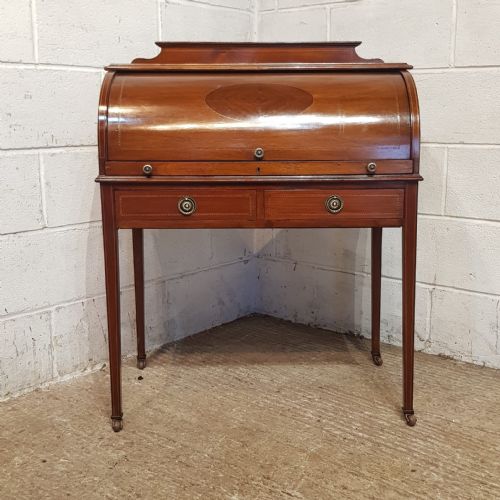
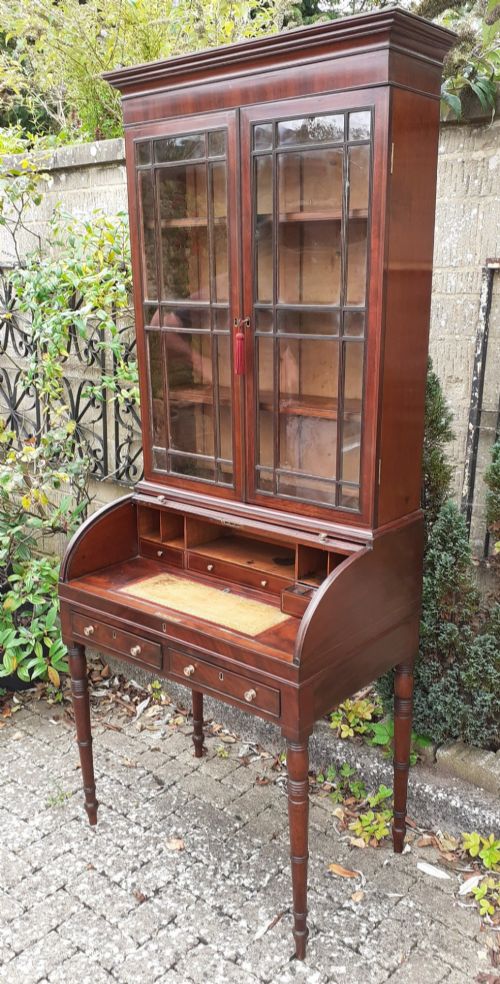
An antique cylinder top bureau is a specialised writing desk enclosed by a rotating curved wooden shutter that conceals fitted interior pigeonholes and drawers. When you search for this phrase, you encounter pieces spanning the Georgian, Victorian, and Edwardian eras, produced in British, French, and Dutch workshops.
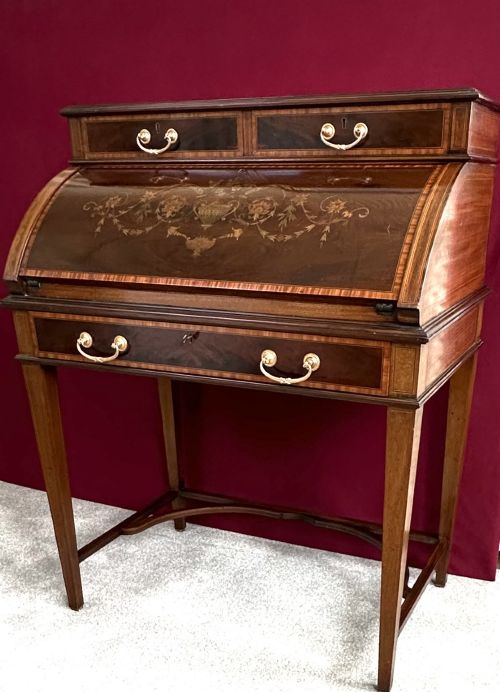
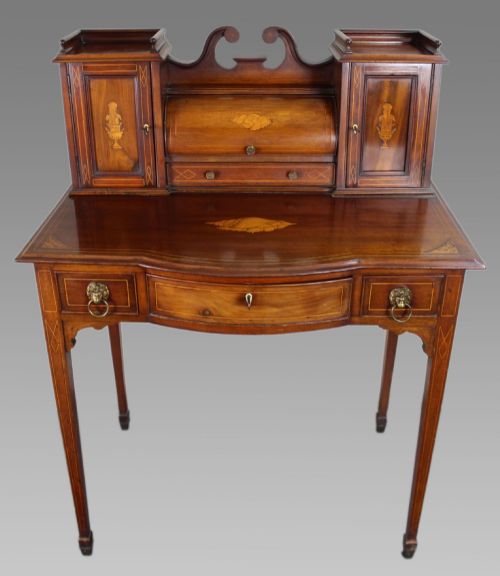
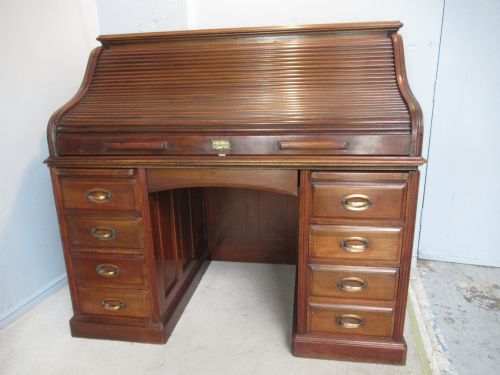
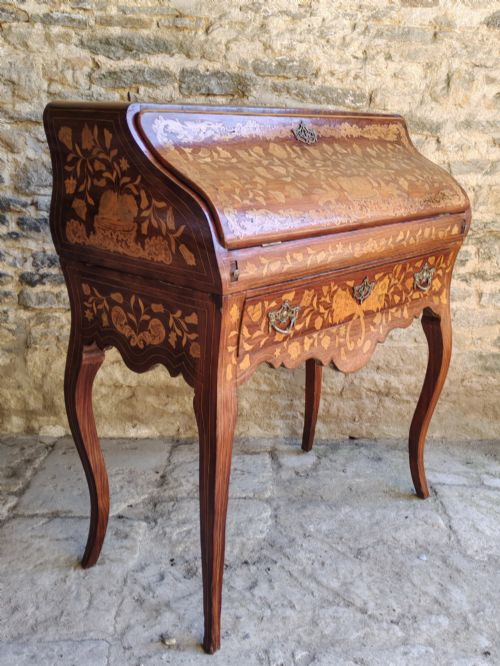
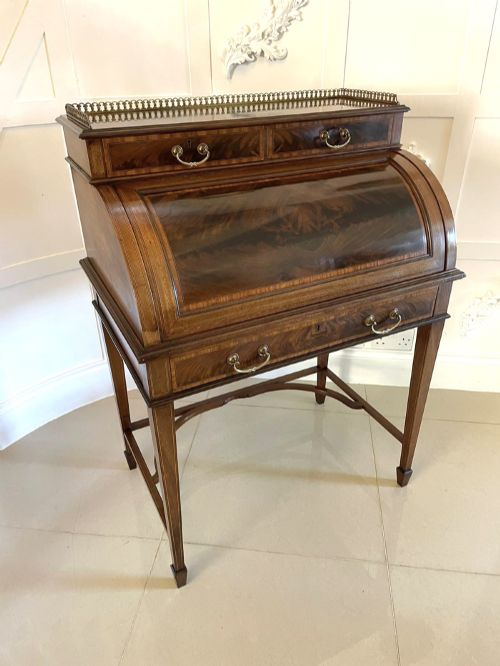
The most common examples on this page are freestanding mahogany or satinwood desks from the nineteenth century, often featuring inlaid details or delicate satinwood crossbanding. Larger bureau bookcases and compact ladies desks also appear, showing how cabinetmakers adapted the rolling cylinder mechanism for different domestic spaces.
Materials and Construction
Cabinetmakers constructed the rolling cylinder from narrow slats of timber glued to a flexible canvas or leather backing, allowing the curved shutter to glide smoothly in recessed tracks. Primary woods like mahogany, walnut, and satinwood received decorative treatments including floral marquetry, geometric parquetry, and contrasting stringing.
Structural integrity relied on precise joinery within the pull-out writing slide and internal pigeonholes, while decorative accents frequently incorporated cast brass ring handles, ormolu mounts, and glazed upper bookcase sections.
Judging Quality
Quality rests in the precision of the rolling cylinder mechanism and the smoothness of its action along the curved tracks. Superior pieces maintain tight alignment without binding, while lesser examples suffer from warped timber or sticky shutters.
The choice of cabinet woods and the hand-cut execution of marquetry or inlay separate standard utility desks from exceptional cabinet work. Secondary woods used in drawer linings and the depth of figure in flame mahogany further distinguish the finest workshops from mass production.
Maple & Co. London·Tudor & Burrey·Edwards & Roberts
The Antique Cylinder Top Bureau Glossary
- Cylinder top
- A curved wooden shutter that rotates on tracks to enclose the desk interior. This mechanism provides secure concealment for papers while taking up less clearance than a traditional fall-front flap.
- Tambour
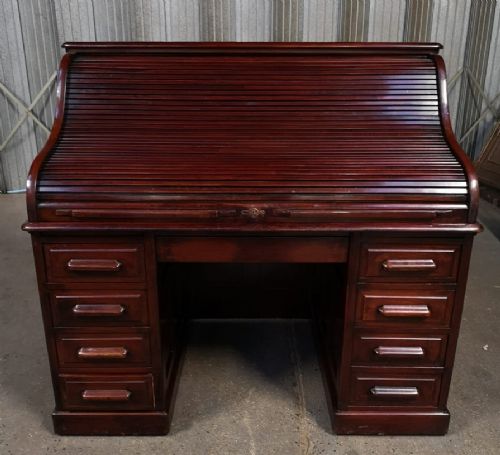
- A flexible shutter made from narrow strips of wood glued to canvas or leather. It operates similarly to a cylinder top but slides horizontally or vertically along grooved channels.
- Marquetry
- Decorative patterns formed by fitting contrasting veneers into a wooden panel. Artisans use various tinted woods to create floral or architectural scenes across the writing surface.
- Secretaire
- A piece of furniture designed specifically for writing and correspondence. It typically includes a fitted interior with small drawers and pigeonholes behind a movable writing surface.
- Parquetry
- Geometric wood mosaic work used for floors and furniture surfaces. Craftsmen arrange small blocks of timber like walnut or mahogany to form repeating triangular or square patterns.
Antique Cylinder Top Bureau: Frequently Asked Questions
How do cylinder top desks work?
A curved wooden shutter slides along recessed tracks within the desk framework, dropping down to reveal the writing surface or rolling upward into the body of the cabinet to expose the interior.
This mechanism links to the pull-out writing slide below, so that drawing the writing surface forward automatically retracts the cylinder shutter on certain designs.
What is the difference between a cylinder desk and a roll top?
A cylinder desk utilises a smooth, solid curved wooden panel veneered in fine timbers such as mahogany or satinwood, presenting a refined architectural appearance.
A roll top desk employs tambour construction made from many narrow wooden slats joined together, which is more commonly found in later Victorian and Edwardian office furniture.
Where were these desks placed in a home?
Georgian and Victorian households positioned these pieces in studies, libraries, or private drawing rooms where correspondence and household accounts were managed.
Freestanding models were often placed away from walls to display finished mahogany backs and polished ormolu mounts to the entire room.
How do I care for the sliding mechanism?
Keep the wooden tracks clean and free from dust accumulation to ensure the curved shutter glides smoothly without catching against the interior framing.
Maintain stable room humidity levels to prevent the timber slats from expanding or warping within the curved runners over time.