


Linke Style Desk
A linke style desk brings opulent French revival craftsmanship into your study, offering the dramatic gilt bronze mounts and exotic wood veneers of the nineteenth century.

Linke Style Desk
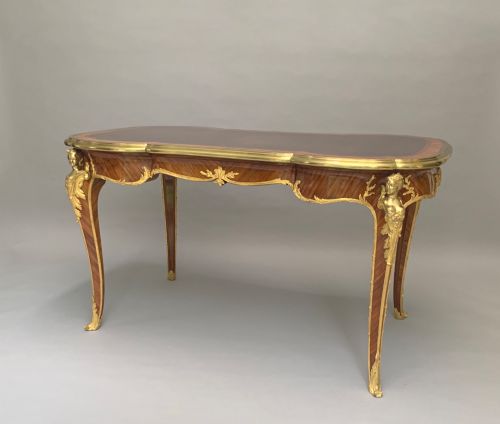
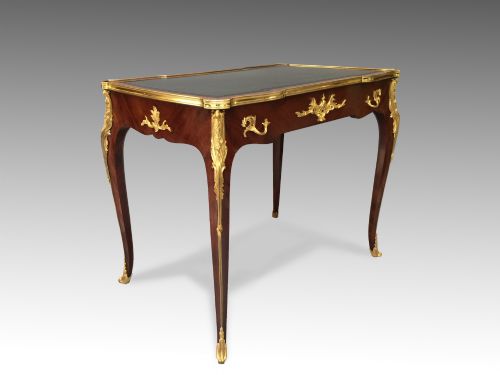
When you search for a linke style desk, you encounter nineteenth century writing tables and bureau plat forms shaped by the extravagant aesthetics of Louis XV and Louis XVI revivals. These pieces draw directly from the elaborate furniture production associated with Francois Linke and his contemporaries, capturing the grand scale of French Rococo and neoclassical design.
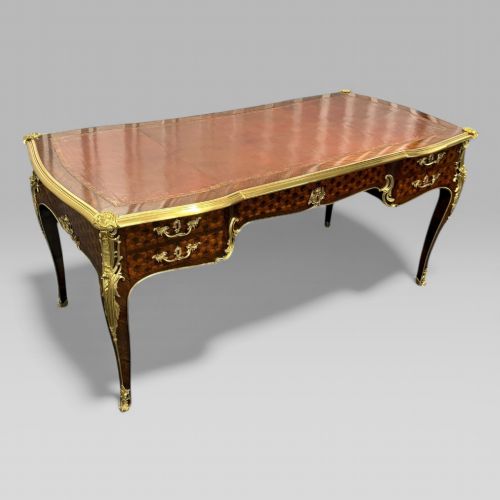
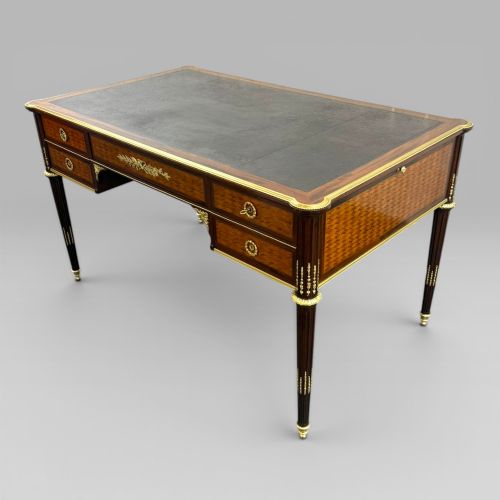
The desks and writing tables available here display sophisticated parquetry and marquetry across surfaces of kingwood, rosewood, mahogany, and satine. Many incorporate shaped tops inset with leather writing surfaces, bordered by heavy cast metal mounts.
You will also find side tables, centre tables, and side cabinets created in the same workshop traditions, echoing the intricate details of the primary desk forms. These smaller items share the characteristic use of gilt bronze and ormolu that defines the overall aesthetic.
Materials and construction methods
Craftsmen built these pieces using substantial timber carcasses veneered in exotic hardwoods like kingwood, rosewood, and mahogany, often arranged in geometric parquetry or floral marquetry patterns. The structural elements support complex serpentine or kidney-shaped outlines that demand precise carpentry.
Gilt bronze and ormolu mounts form an integral part of the construction, cast with deep relief and hand-chiseled before being applied to the angles, aprons, and legs. Brass detailing and fitted leather writing panels complete the material palette.
The joinery relies on traditional French cabinet-making techniques, ensuring the carcasses withstand the weight of heavy cast mounts and intricate surface veneers without warping.
Several desks manage to pack more bronze foliage onto a single drawer front than an entire French garden.
Measures of quality and execution
Quality rests heavily on the crispness of the cast bronze mounts and the depth of their subsequent hand-chording, which separates standard decorative items from masterwork productions. Superior pieces display lively, sharply defined foliate scrolls and figural elements rather than soft, muddy casting details.
The precision of the timber veneers dictates the visual success of the piece, with finer examples exhibiting seamless parquetry alignment across complex curved drawer fronts and aprons. Secondary timbers and internal drawer construction also reveal the diligence of the cabinet maker.
Signed works or pieces bearing specific workshop numbers carry a distinct provenance that influences their standing among collectors, separating attributed items from general period interpretations.
Francois Linke·Edwards and Roberts
The Linke Style Desk Glossary
- Bureau plat
- A freestanding double-sided writing desk with a flat top, typically featuring one or more drawers in the frieze. These tables were designed to sit in the centre of a room rather than against a wall.
- Ormolu
- Gilded bronze used extensively for decorative mounts on nineteenth century furniture. The term derives from the French for milled or ground gold, describing the surface finish achieved through mercury amalgamation or electroplating.
- Parquetry
- Geometric mosaic woodwork arranged in repeating patterns such as cubes, lozenges, or chequers. Craftsmen used contrasting veneers like kingwood, mahogany, and satine to create these optical surface designs.
- Marquetry
- Elaborate veneer patterns depicting pictorial scenes, floral sprays, or scrolling foliage using various coloured woods. This technique differs from parquetry through its organic and flowing pictorial nature.
- Satine
- A lustrous tropical hardwood utilised for its warm yellowish-brown tone and fine grain. It frequently appears alongside darker woods in nineteenth century parquetry borders.
Linke Style Desk: Frequently Asked Questions
What defines a linke style desk?
These pieces are characterised by nineteenth century French revival designs, heavily influenced by the luxurious output of Francois Linke. They combine extravagant ormolu mounts with intricate kingwood and mahogany parquetry.
Such desks typically take the form of a bureau plat with leather-inset tops and cabriole or tapered legs. The aesthetic borrows heavily from Louis XV and Louis XVI vocabularies.
Where should I place a centre table?
Centre tables and freestanding bureau plat desks work best in open spaces where all four sides remain visible. Because these pieces feature finished marquetry and bronze mounts on the back as well as the front, they suit the middle of a study or reception room.
Avoid pushing them flat against a wall, as this obscures the detailed parquetry and chased bronze work that defines their design.
How do I care for ormolu mounts?
Maintain gilt bronze mounts by dusting them gently with a soft, dry brush to prevent dirt accumulation in the recessed chasings. Avoid harsh commercial metal cleaners that can strip the delicate gold gilding from the bronze surface.
Keep the timber surfaces conditioned with appropriate furniture wax, ensuring no polish transfers onto the adjacent metal mounts or leather inserts.
How do I distinguish Louis XV from Louis XVI styles?
Louis XV revival pieces display asymmetrical curves, flowing rococo scrolls, and prominent cabriole legs without straight lines. The overall movement feels organic and exuberant.
Louis XVI revival pieces introduce neoclassical restraint, featuring straight fluted legs, geometric symmetry, and architectural motifs like Greek key borders and urns.