




Antique Curved Console Table
An antique curved console table brings elegance to a hallway or drawing room through its sweeping profile and practical wall-hugging shape.
Antique Curved Console Table
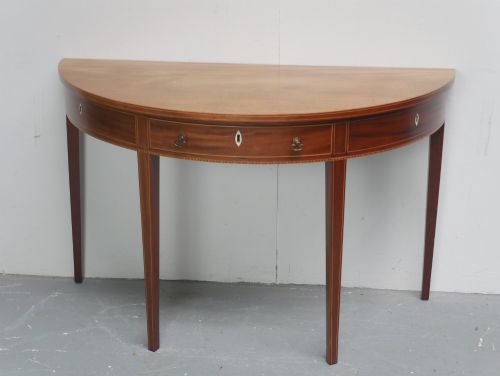
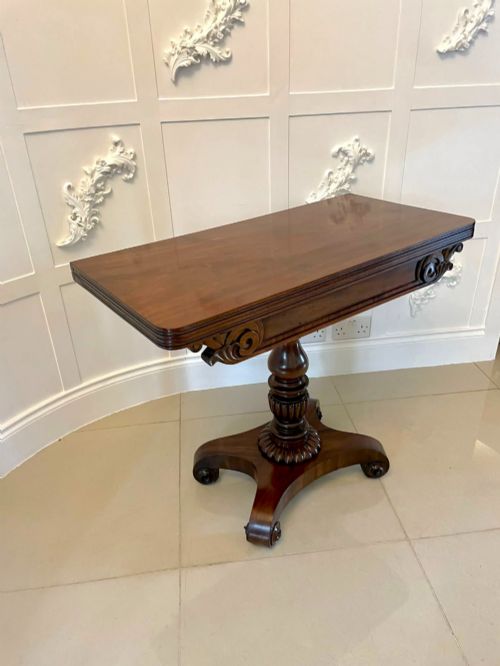
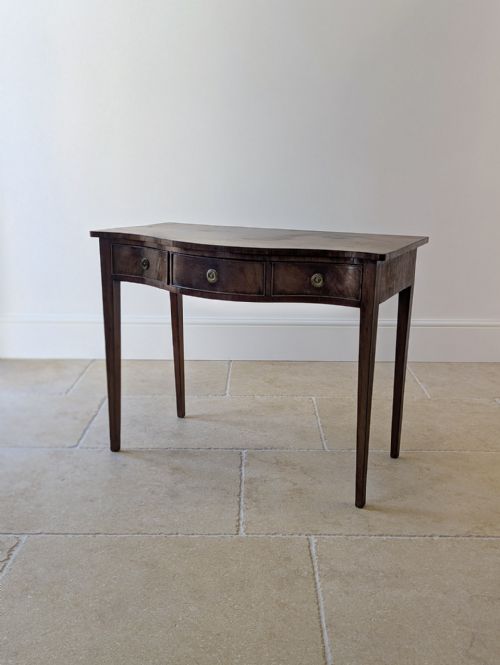
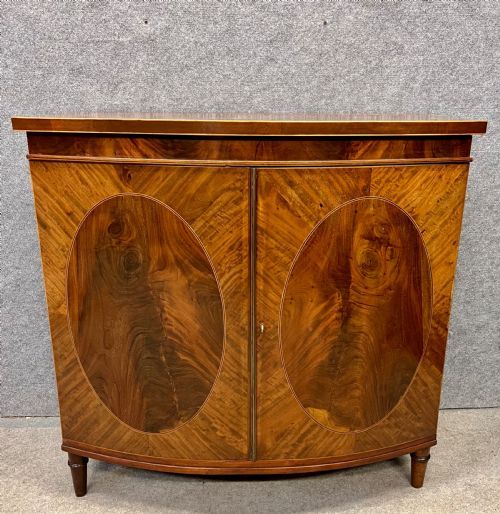
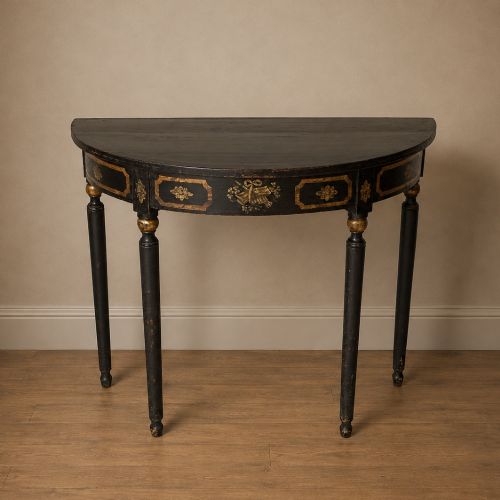
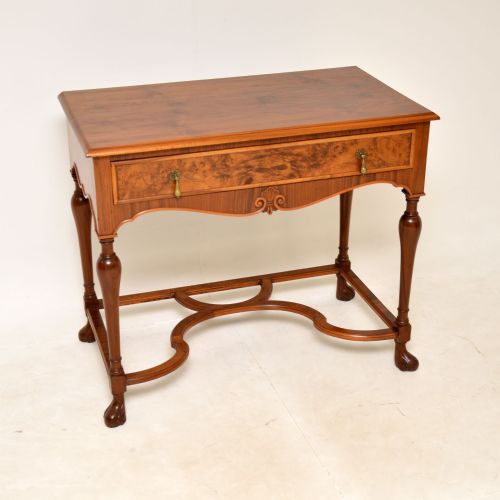
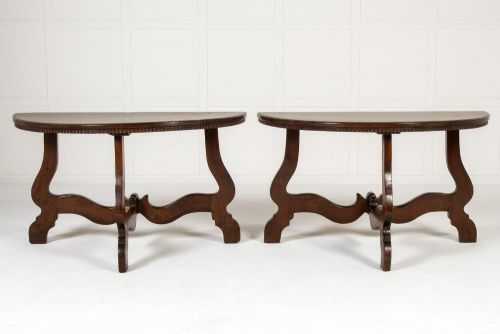
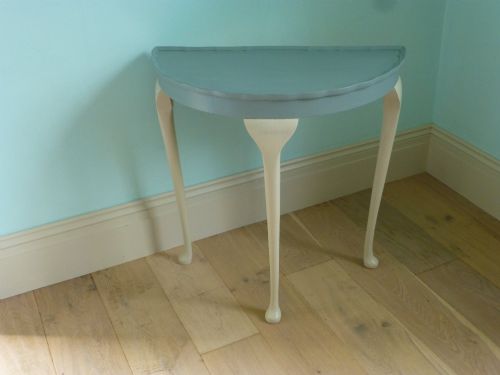
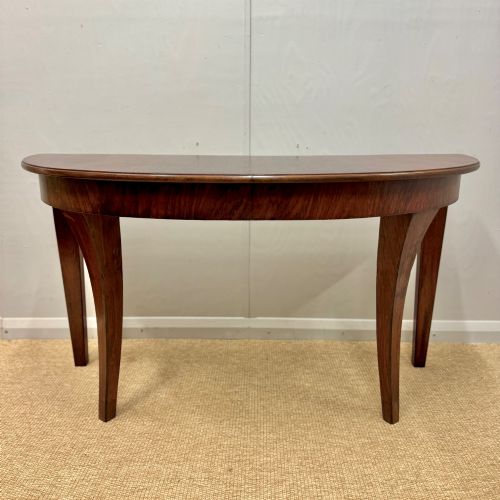
An antique curved console table takes several forms across this selection, most commonly appearing as a demi-lune, bowfront, or serpentine shape designed to sit flush against a wall. These pieces emerge from periods spanning the eighteenth century through to the Art Deco era of the 1930s, reflecting shifts in interior taste.
Makers and craftsmen utilised various regional styles, including Georgian, Regency, and Sheraton Revival, alongside continental French and Italian influences. The primary function remains a surface for display or service, often paired with matching mirrors or arranged as pairs in grand reception rooms.
How they were made
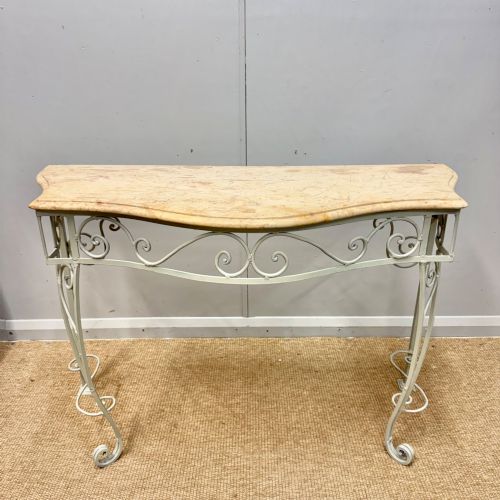
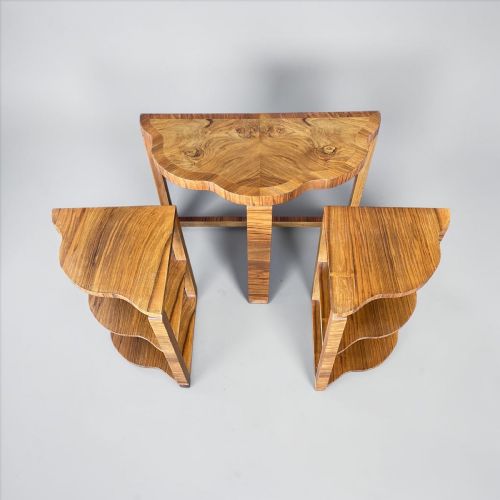
Cabinetmakers constructed these frames using timber such as mahogany, walnut, and oak, frequently selecting figured veneers and burr walnut to create striking surface patterns. Satinwood inlay and parcel gilding added decorative contrast, while specialised examples incorporated marble tops and wrought iron supports.
Curved profiles required specialised joinery and steam bending techniques to shape the rails and tabletops accurately. Surface finishes relied on traditional polish applied to bring out the natural grain and depth of the wood.
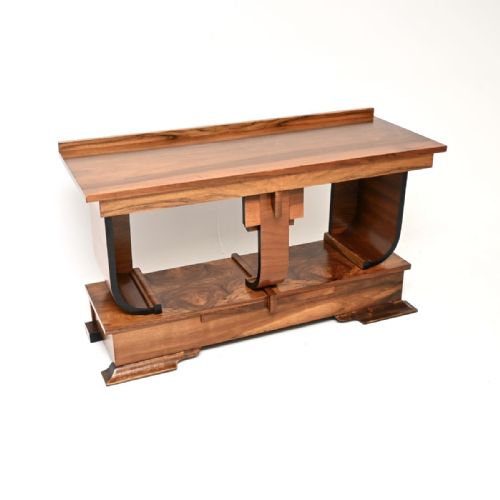
Listings span multiple eras from the eighteenth century through to Art Deco pieces dated around 1930.
What varies in quality
The distinction between standard examples and superior pieces rests on the choice of timber and the precision of the cabinetwork. Heavily figured veneers, delicate inlay work, and robust structural joinery separate workshop items from masterworks.
Proportion and the handling of curved elements dictate visual success. Pieces retaining their original marble tops, gilding, or maker signatures demonstrate higher integrity.
Hille·Maple and Co·Waring and Gillows
The Antique Curved Console Table Glossary
- Demi-lune
- A half-moon shape popular for console tables and sideboards designed to fit against flat walls. This profile allows the piece to project minimally into a room.
- Serpentine
- A curved line that undulates inwards and outwards, typically forming the front edge of a table or cabinet. It requires skilled woodworking to achieve smoothly.
- Bowfront
- A convex curved front that projects outward in an arc. This form softens the corners of furniture placed in narrow corridors.
- Parcel gilt
- Partially gilded surfaces where gold leaf highlights specific carved details or mouldings. It contrasts with dark polished wood.
Antique Curved Console Table: Frequently Asked Questions
Where should I place a console table?
These tables suit entrance halls, narrow corridors, and reception rooms where floor space is limited. Their curved profiles allow them to project smoothly from the wall without blocking walkways.
They also function effectively beneath large wall mirrors or paintings, serving as display surfaces for lighting or decorative objects.
How do I identify a Georgian console table?
Georgian examples often feature solid mahogany construction, precise hand-cut dovetails, and restrained classical carving. Look for proportions typical of the eighteenth century and period timber patination.
Secondary woods like oak or pine often appear in the interior framing of drawers and carcases on these earlier pieces.
What is the difference between a console and a side table?
Console tables traditionally rely on a wall for stability, sometimes featuring brackets or legs only at the front. Side tables are fully freestanding with four supporting legs.
In modern usage, the terms frequently overlap, particularly with curved furniture designed to sit against vertical surfaces.
How do I care for antique wood surfaces?
Maintain polished timber surfaces by dusting with a soft, dry cloth and avoiding direct sunlight or excessive moisture. Periodic application of quality wax preserves the finish.
Keep wooden console tables away from direct heat sources to prevent timber shrinkage and veneer lifting.