

Antique Cupboard Pedestal Desk
An antique cupboard pedestal desk delivers serious gravitas to a study, offering concealed storage beneath a generous writing surface.
Antique Cupboard Pedestal Desk
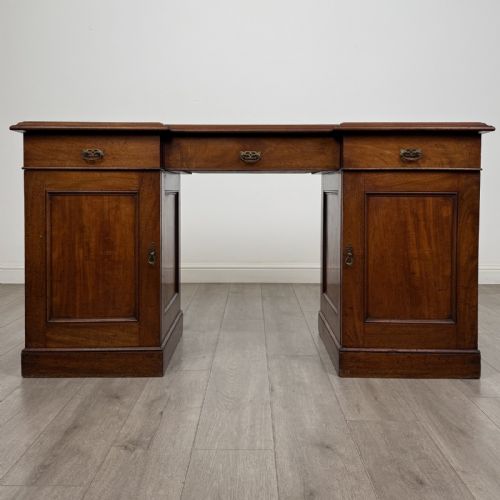
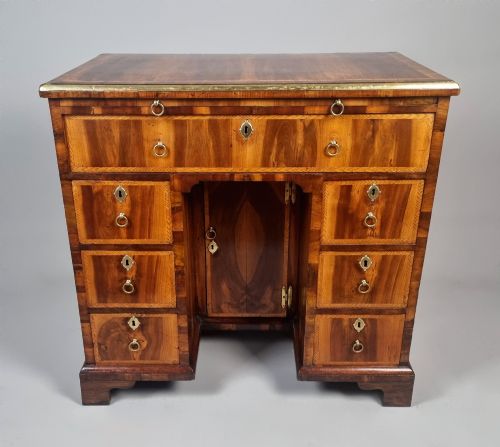
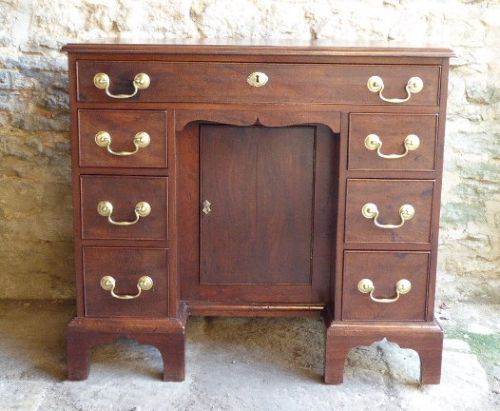
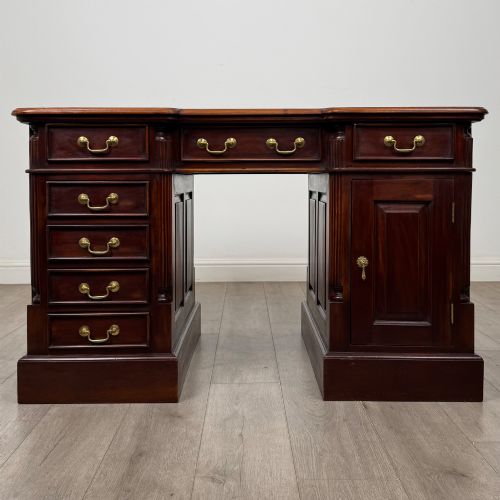
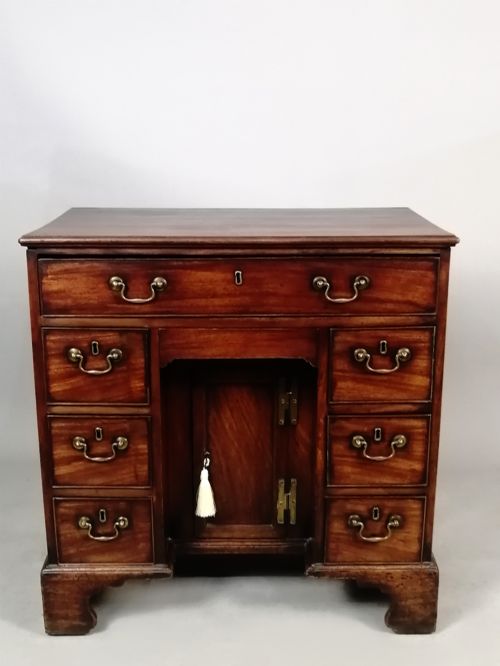
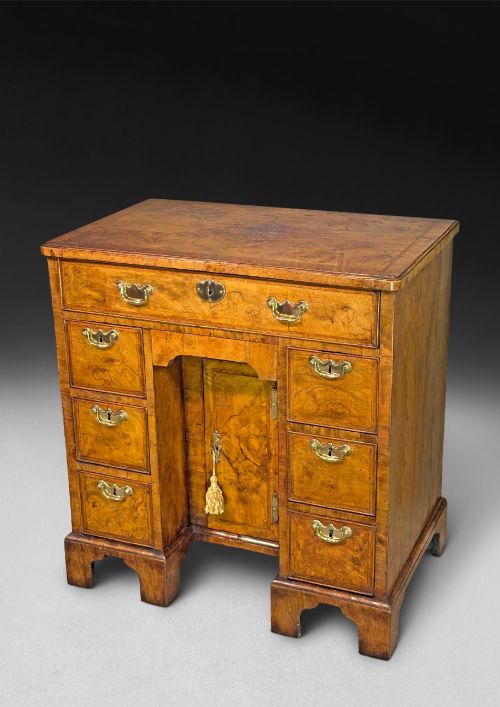
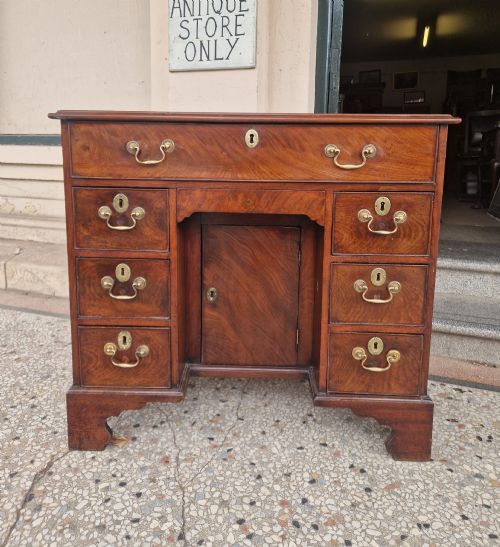
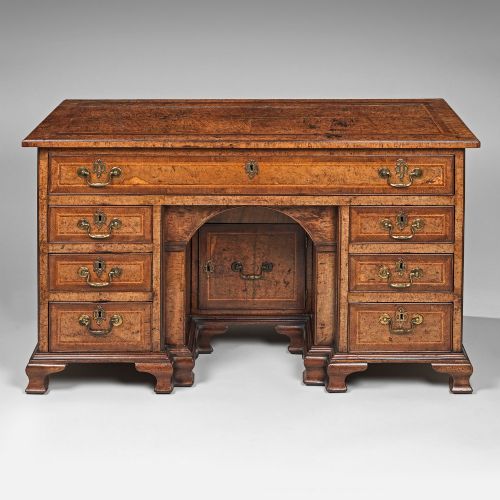
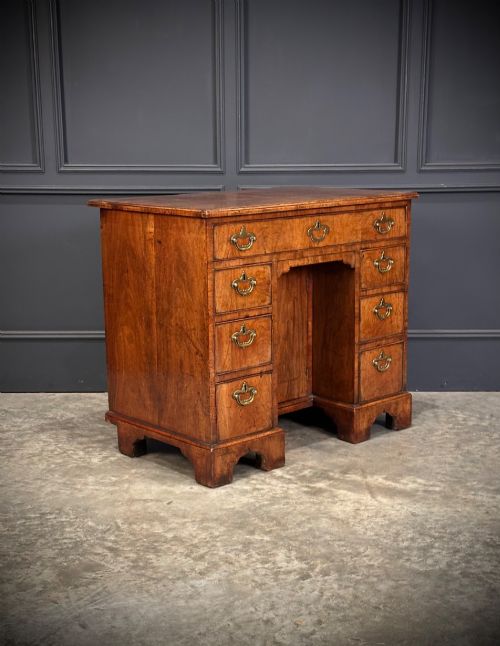
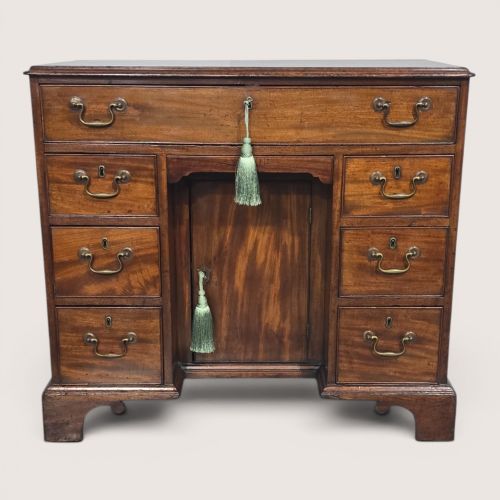
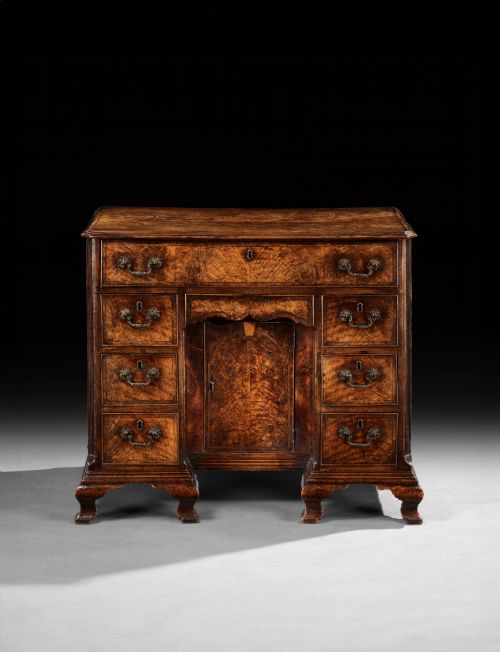
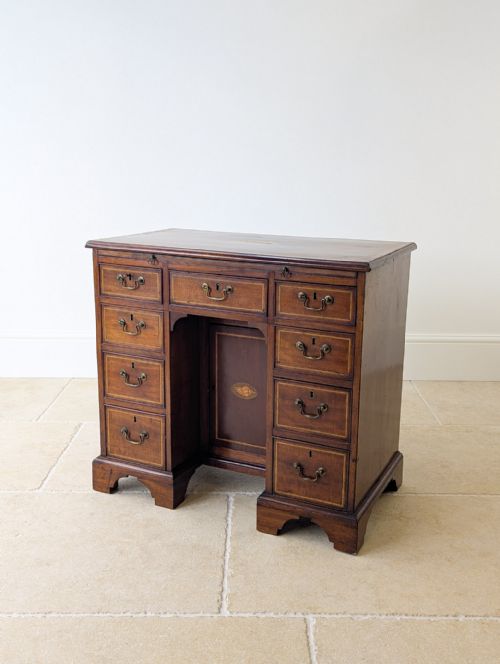
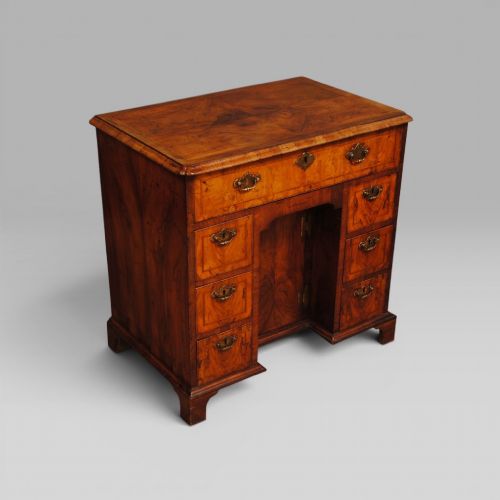
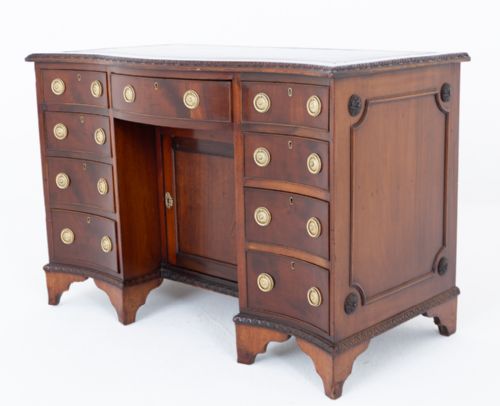
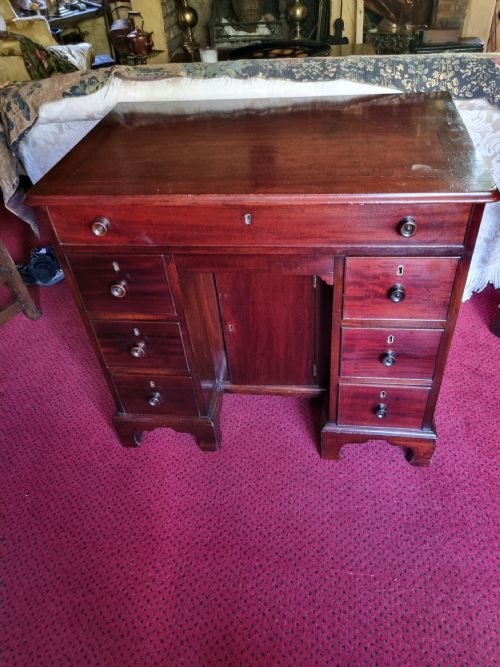
When someone hunts for an antique cupboard pedestal desk, they typically find compact writing pieces structured with twin stacks of drawers or a central recess flanked by cupboards, often referred to in listings as kneehole desks. These pieces originate primarily from the Georgian and Victorian eras, spanning from the early eighteenth century through to the nineteenth century, with craftsmanship rooted in English and occasionally Italian workshops.
The layout almost universally places a recessed cupboard or small drawer behind a central kneehole, masked by banks of smaller side drawers on either pedestal. Surviving examples demonstrate how deeply these forms served domestic writing and dressing tasks, frequently doubling as dressing tables depending on the internal drawer configuration and fitted compartments.
Materials and construction
Cabinetmakers constructed these pieces predominantly using dense timbers like mahogany, walnut, and yew wood, frequently selecting figured veneers such as burr walnut, fiddleback walnut, and burr elm to catch the light on primary surfaces. Secondary structural elements relied on sturdy native woods like pine and oak, whilst brass featured heavily in handles, escutcheons, and occasional bracket feet.
The joinery matches the period of origin, employing fine dovetailing on drawer carcasses and secure panel construction for the central cupboard doors. Surfaces were finished with traditional polish or wax, highlighting the natural grain patterns of Cuban mahogany and satinwood without obscuring the underlying timber.
Listings demonstrate a strong preference for eighteenth-century walnut and mahogany, alongside Victorian interpretations in mahogany, pine, and yew wood.
The markers of finer execution
Quality reveals itself in the selection of timber figure, such as the deliberate choice of highly figured fiddleback walnut or dense Cuban mahogany across the primary facade. Cabinetmakers who invested time in matching veneers symmetrically across drawer fronts and cupboard doors produced pieces of significantly higher visual harmony.
The refinement of internal secondary woods and the crispness of carved details, such as carved pillars or bracket feet, distinguish standard utility furniture from exceptional workshop output. Furthermore, intact original brass hardware and untouched patination elevate the standing of a desk above those altered or re-finished in later decades.
Johnstone & Jeanes
The Antique Cupboard Pedestal Desk Glossary
- Kneehole desk
- A compact writing table featuring a central recess for the legs, flanked on either side by pedestals containing multiple drawers or cupboards.
- Pedestal desk
- A heavy freestanding writing desk supported by two distinct banks of drawers or columns reaching down to the floor.
- Burr walnut
- A highly prized wood veneer harvested from the gnarled growths of walnut trees, displaying intricate, swirling grain patterns.
- Fiddleback
- A type of timber figure characterised by fine, undulating cross-grain ripples that resemble the back of a violin.
- Breakfront
- A piece of furniture whose facade projects forward in sections, creating architectural depth across the front elevation.
Antique Cupboard Pedestal Desk: Frequently Asked Questions
Were these desks used as dressing tables?
Many examples from the Georgian period served a dual purpose as both writing desks and dressing tables. The central recess and surrounding drawers accommodated washing basins, mirrors, or cosmetic bottles.
Examining the internal layout and fitted compartments often reveals whether a particular piece was designed with grooming in mind.
How do I date an antique pedestal desk?
Dating relies on observing structural timbers, such as the shift from early walnut and yew wood to later mahogany and satinwood. Cabinet construction methods, including hand-cut dovetails and the style of brass hardware, provide clear chronological markers.
Design styles also shift across periods, moving from Queen Anne and George II forms toward Victorian and Edwardian interpretations.
How do I care for a walnut pedestal desk?
Protect the polished timber surfaces by keeping the desk away from direct sunlight and maintaining a stable room humidity. Applying occasional traditional wax feeds the wood and preserves the depth of the finish.
Avoid placing damp items directly onto the timber or the leather writing surfaces to prevent staining.