
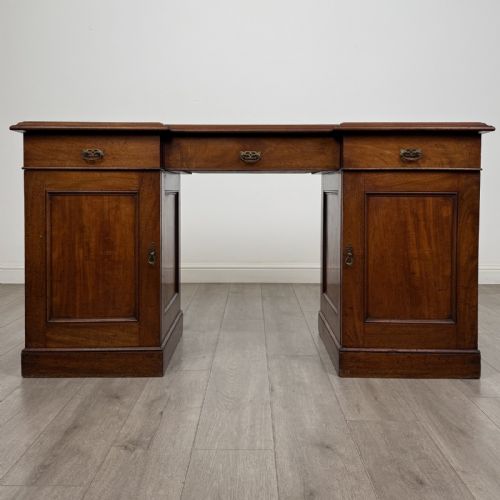
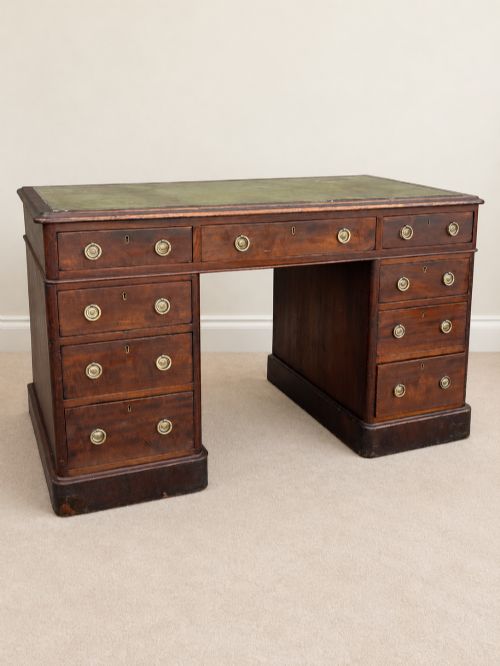
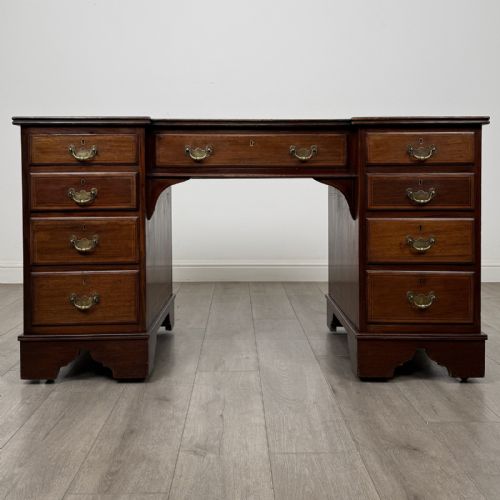
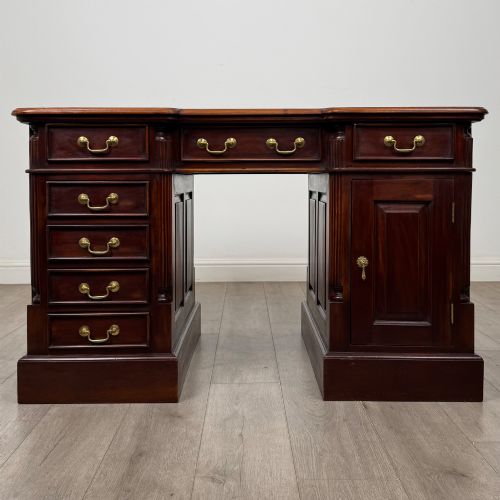




Dark Mahogany Partner Desk
A dark mahogany partner desk provides workspace on both sides, built for shared use in libraries and studies.
Dark Mahogany Partner Desk
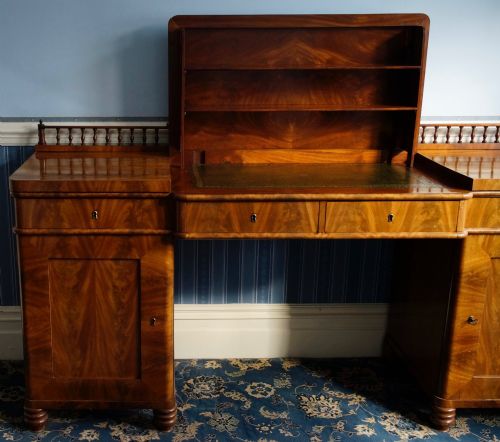
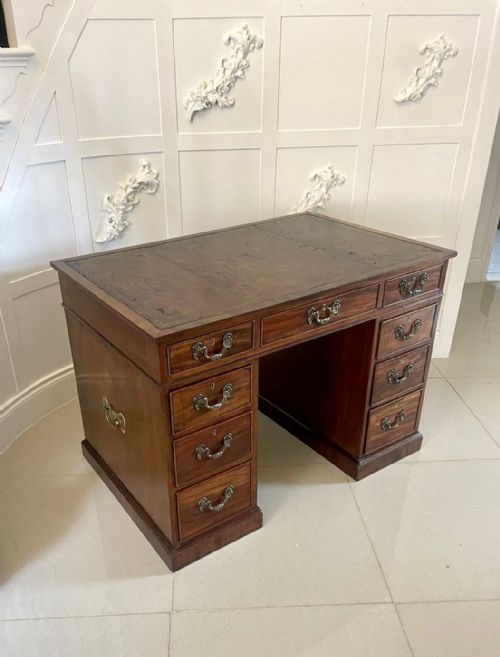
A dark mahogany partner desk is a substantial double-sided workstation designed for two people to sit opposite each other, featuring drawers and cupboards on both faces. These pieces primarily emerge from the nineteenth century, including Victorian and Edwardian periods, alongside Georgian and Regency examples.
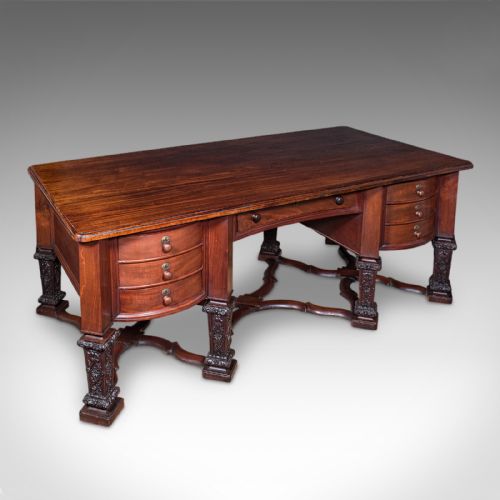
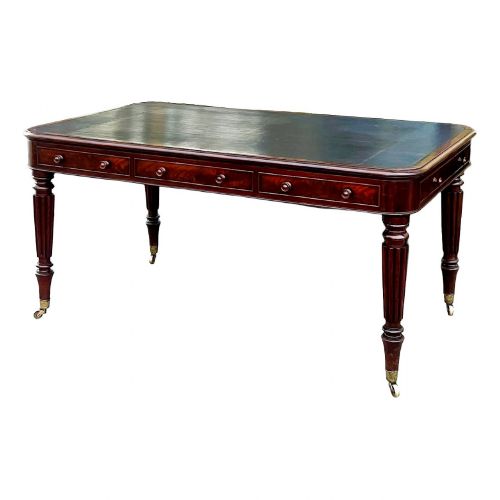
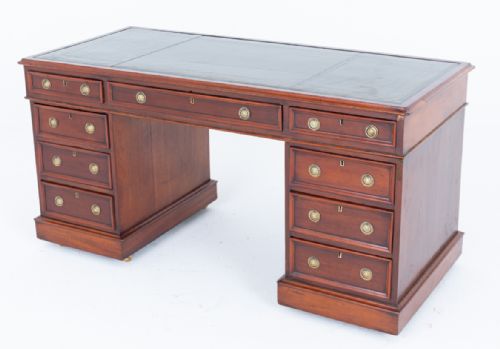
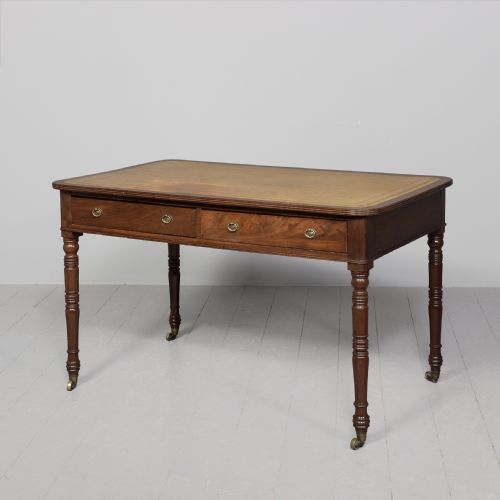
The form appears in various configurations, from twin pedestal arrangements with carved pillars and breakfront profiles to freestanding library tables. Many examples incorporate inset leather writing surfaces and numbered drawers suited to estate or office management.
Materials and construction
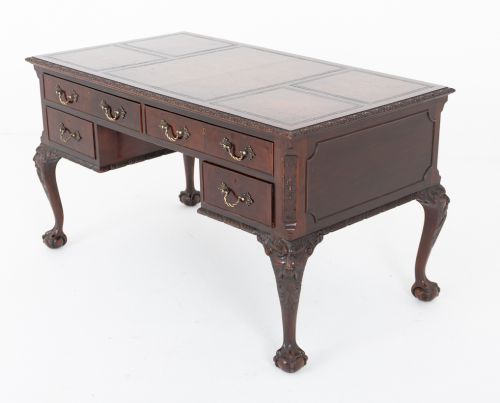
Cabinet makers utilised dense mahogany timbers, sometimes enhanced with ebony inlay, brass hardware, and gilt bronze details to construct these large frames. Writing surfaces typically feature inset leather tops framed by polished wood borders.
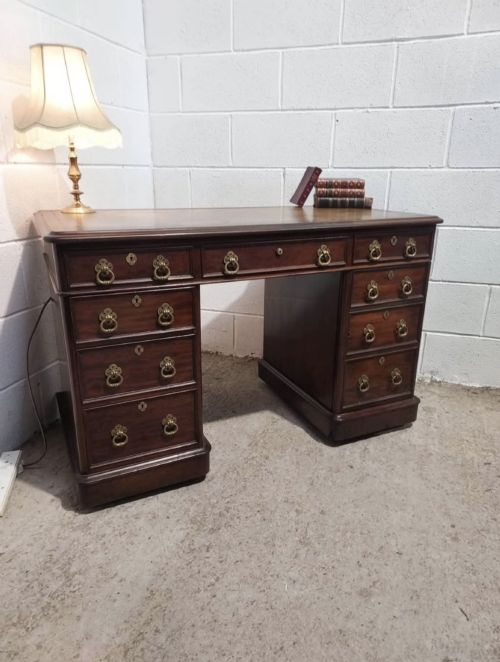
Pedestal construction incorporates banks of drawers on both sides, occasionally supported by carved pillars or serpentine shaping that demands precise joinery to maintain structural stability across a freestanding body.
Listings feature pieces spanning the Georgian, Regency, Victorian, and Edwardian periods, constructed from mahogany, elm, oak, and ebony.
Distinctions in quality
Quality rests upon the selection of figured mahogany timbers and the crispness of carved pillars, serpentine shaping, or inlaid details across all four sides. Superior examples display symmetrical grain patterns and careful execution in secondary woods.
The integration of double-sided functionality distinguishes standard desks from higher workshop productions, where internal drawer divisions and hardware remain uniform and robust on both working faces.
Trollope & sons·Cookes of Finsbury London·Gillows·Hobbs & Co
The Dark Mahogany Partner Desk Glossary
- Partner desk
- A double-sided writing table with drawers and cupboards accessible from both the front and rear. This form allows two people to work face to face.
- Pedestal desk
- A heavy writing desk supported by two pedestals or columns of drawers flanking a central kneehole. The top sits directly upon these twin drawer units.
- Breakfront
- A piece of furniture whose central section projects forward from the flanking wings. This configuration adds architectural depth to large library desks.
- Library table
- A freestanding large table used for reading and writing, finished on all sides so it can sit in the middle of a room. These often lack the pedestal drawer stacks found on desks.
- Bureau plat
- A flat-topped writing table originating in France, featuring drawers in the frieze and standing on slender legs rather than pedestals.
Dark Mahogany Partner Desk: Frequently Asked Questions
What is a dark mahogany partner desk?
A dark mahogany partner desk is a large, double-sided writing table featuring drawers and cupboards on opposite faces for two users. These pieces date principally from the Georgian, Victorian, and Edwardian eras.
They stand away from walls as centrepieces in libraries and studies, constructed from dense mahogany with fitted leather writing surfaces.
How do you use a partner desk?
Partner desks accommodate two people working simultaneously opposite each other, with matching drawer space and kneeholes on both sides. They serve well in open room layouts where the furniture sits exposed to view from all angles.
The large surface area also suits general administrative tasks, sorting documents, or displaying books in a study.
How do I care for mahogany and leather?
Mahogany surfaces respond well to light dusting and occasional waxing to preserve the deep grain and polished finish. Avoid placing these pieces in direct sunlight or near heat sources to prevent the wood from drying.
Leather writing inserts benefit from gentle cleaning and leather balms to maintain flexibility and prevent cracking across the writing surface.
How do I tell Georgian from Victorian desks?
Georgian desks typically exhibit restrained proportions, simpler bracket feet or straight legs, and understated cockbeaded drawer framing. Their mahogany tends to have a rich, mellow patina developed over a longer period.
Victorian and Edwardian examples often introduce heavier proportions, breakfront configurations, carved pillars, and more elaborate secondary woods or inlay work.