




Antique Cranberry Glass Bottle
These antique cranberry glass bottle examples range from scent flasks to decanters, combining deep pink hues with silver mounts for display and daily dressing table use.
Antique Cranberry Glass Bottle
When searching for an antique cranberry glass bottle, a buyer encounters domestic tablewares and personal dressing accessories primarily from the Victorian and Edwardian eras. The selection spans utilitarian serving pieces and decorative items.
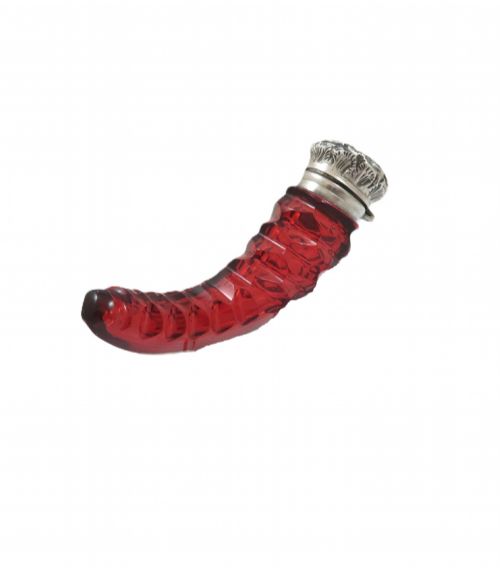
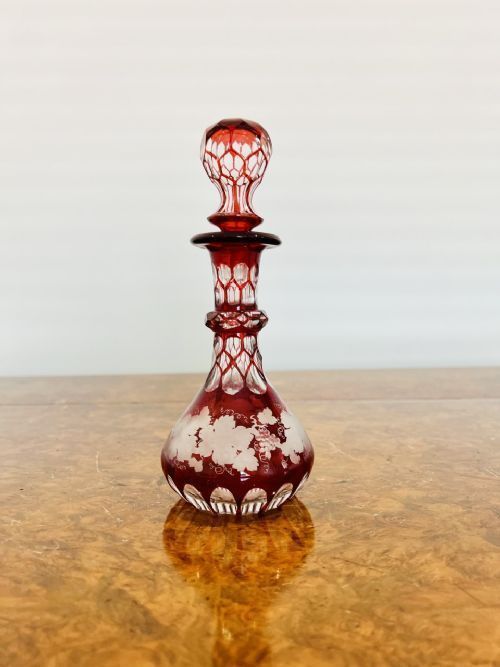
The most frequent items met on this page are small scent and perfume bottles alongside larger decanters and carafes. These span English and continental workshops, often featuring threaded stoppers and hinged metal lids.
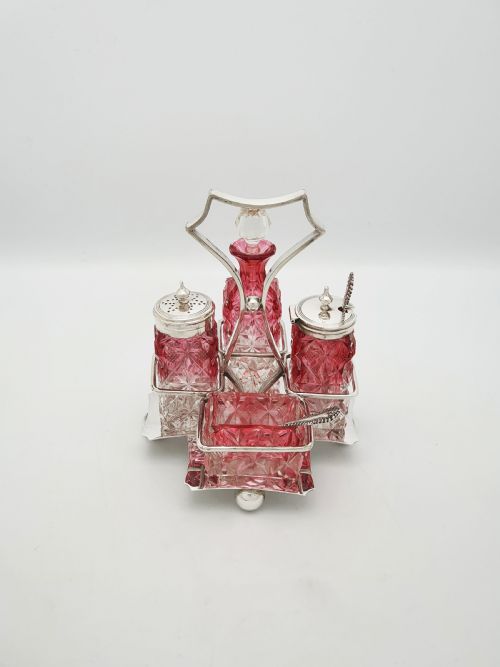
Vessels take many forms, including cruet sets, bitters bottles for barware, and tall hock decanters. Production dates cluster heavily in the nineteenth century and the early twentieth century.
Materials and construction
Makers produced this characteristic deep red ware by adding gold chloride to molten glass during formulation. The resulting metal was then blown into moulds or shaped by hand.
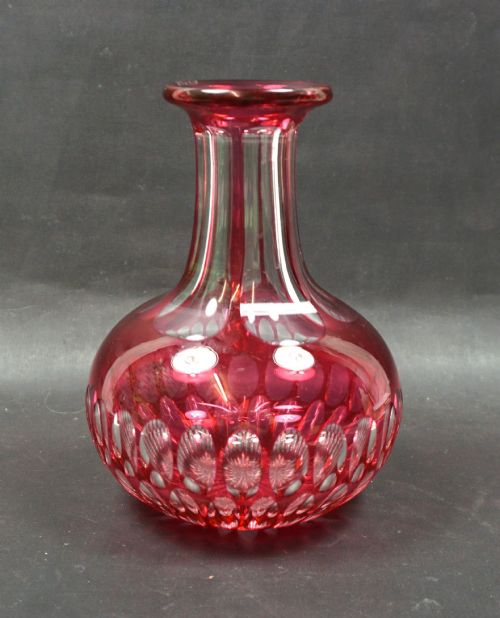
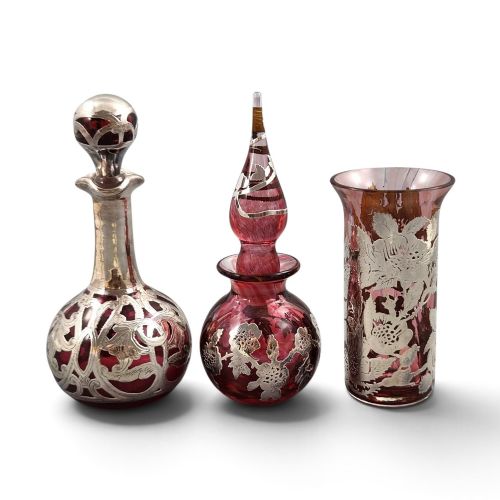
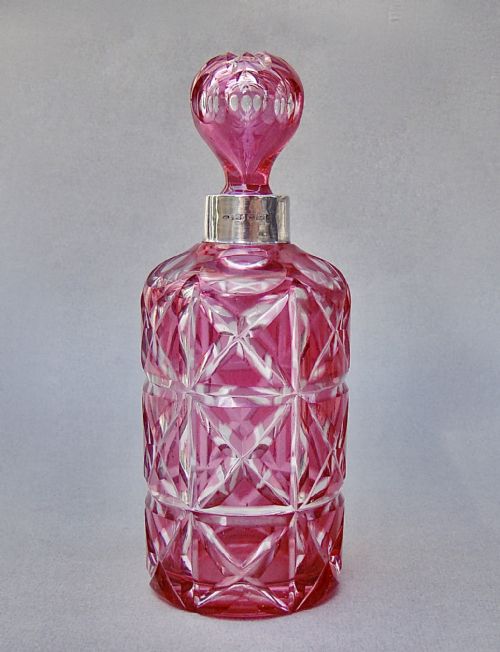
Many examples incorporate clear glass overlays, cut crystal details, or flash layers that craftsmen carved away to expose contrasting depths of colour. Mounts of sterling silver and silver plate frequently secure the necks and lids.
Listings feature items produced across the Victorian and Edwardian periods, utilising sterling silver, silver plate, and cut crystal.
Assessing the craftsmanship
Quality depends upon the depth and evenness of the colour saturation within the glass body. Superior pieces display crisp wheel cutting and precise overlay work without cloudiness.
Metal fittings also distinguish finer examples, particularly where hallmarked sterling silver mounts are tightly fitted and retain original engraving or gilding.
Harold Bushell Co
The Antique Cranberry Glass Bottle Glossary
- Cranberry glass
- A transparent, pinkish-red glass coloured by the addition of gold chloride to the batch. It became particularly popular during the Victorian period for tableware and dressing items.
- Overlay
- A technique where a layer of coloured glass is cased over a clear or contrasting body. Craftsmen then cut through the outer layer to create patterns.
- Decanter
- A vessel used for holding and serving wine or spirits. These frequently feature matching glass stoppers and may include silver collars.
- Cruet set
- A collection of small bottles or jars held in a stand for condiments, often incorporating silver-plated frames and glass bodies.
Antique Cranberry Glass Bottle: Frequently Asked Questions
What is an antique cranberry glass bottle?
These items are nineteenth and early twentieth-century glass vessels tinted with gold to achieve a rich pink or red tone. They were produced as personal scent flasks, dressing table bottles, and dining table decanters.
Collectors find them in various shapes, from tiny pocket perfume containers to tall serving carafes. Many incorporate silver mounts, stoppers, and cut crystal details.
How do I date an antique cranberry glass bottle?
Dating relies on stylistic clues, mounting metal types, and hallmarks stamped onto silver collars. Victorian and Edwardian examples show distinct manufacturing traits in their glassblowing and cutting techniques.
Silver mounts often bear assay office marks and date letters that pinpoint the exact year of manufacture. French and Bohemian pieces from the mid-nineteenth century exhibit specific gilding and overlay styles.
Were these bottles used for perfume?
Many smaller surviving examples served as scent or perfume bottles on Victorian dressing tables. Their tight stoppers and hinged silver lids prevented evaporation.
Some larger versions functioned as double-ended bottles holding smelling salts alongside liquid perfume. Others served as bitters bottles for barware or cruet containers for dining.
How should I clean my glass bottle?
Maintenance requires gentle washing in lukewarm water with mild soap. Harsh chemicals and abrasive scourers damage the delicate glass surface and historic silver mounts.
Silver components benefit from careful polishing away from the glass to prevent staining. Removing stoppers during storage prevents them from becoming permanently stuck.